
Reviewed · VALLEY OF THE KINGS TOURS
2-Day Tour: Karnak & Luxor Temples Valley of the Kings Hatshepsut Temple &Memnon
Luxor rewards a slower pace. This private two-day tour gives you time to see Karnak and Luxor Temple on the East Bank, then explore the Valley of the Kings and nearby monuments on the West Bank. I especially like the private air-conditioned vehicle and the chance to shape the schedule with an Egyptologist guide.
The split itinerary is another strong point. You avoid trying to cram every major sight into one long day, and the midday finish on some schedules leaves time for your hotel pool or a quiet afternoon. The main catch is that the wording around the Valley of the Queens is unclear: it appears in the tour overview, but the detailed stops and one direct review indicate it is not included. The tour also does not include food or drinks.
In This Review
- Key points at a glance
- Why two days works well in Luxor
- Day 1: Karnak’s giant columns and Luxor Temple
- Karnak Temple: give the complex time
- Luxor Temple: a smaller site with a grand setting
- Day 2: the West Bank and the Valley of the Kings
- Valley of the Kings: tombs beneath the desert hills
- Hatshepsut Temple: a different kind of royal monument
- Colossi of Memnon: a short, worthwhile stop
- What the private format really adds
- Shopping stops, lunch, and extras to handle carefully
- Price and value at $115 per person
- Who should book this Luxor tour?
- Final verdict: a relaxed way to see Luxor
- FAQ
- How long is the Luxor tour?
- What sites are visited on Day 1?
- What sites are visited on Day 2?
- Is the Valley of the Queens included?
- Is transportation included?
- Are meals and drinks included?
- Can I cancel for a full refund?
Key points at a glance
- Two clear sightseeing days: Day 1 covers the East Bank, while Day 2 focuses on the West Bank.
- Private transport: Pickup and return are provided in a private air-conditioned vehicle, with only your group taking part.
- Strong guide reports: Guides named Hany, Roshdy, Mohsen, Barry, Huni, Sayed, and Ali received repeated praise for their explanations, humor, patience, and help.
- A gentler schedule: Several guests preferred two days because the sites felt less rushed and afternoons remained free.
- Tickets included: Entrance fees, transfers, taxes, and service charges are covered.
- Check the Valley of the Queens: Do not assume it is included. Ask for written confirmation before paying.
Why two days works well in Luxor
Luxor is not a place where the biggest sights are packed into one small historic center. The East Bank and West Bank sit on opposite sides of the Nile, and each has enough major monuments to fill a day without much effort.
A one-day visit can work if you have no choice. You can see Karnak, Luxor Temple, the Valley of the Kings, Hatshepsut Temple, and the Colossi of Memnon in a long push. But you would spend more time moving around and less time looking closely at carved walls, painted chambers, and enormous columns.
I like the two-day design because it separates the religious center of ancient Thebes from the royal burial zone. You can give Karnak the attention it deserves instead of treating it as a quick photo stop. The same goes for the tombs on the West Bank, where heat, walking, and underground rooms can wear you down.
The schedule is also useful for couples, families, and older visitors who prefer not to spend every daylight hour on their feet. Several reported schedules finished around 12:30 p.m., leaving time to eat independently, rest, or use the hotel pool. That shorter day is not a weakness if you value breathing room. It may feel less satisfying if you expected two full days of sightseeing.
More Valley of the Kings tours:
- Hurghada: Luxor Valley of the Kings & Tutankhamun Tomb Trip
★ 4.7 · 13,208 reviews - Luxor Day Tour: Valley of Kings & Queens & Hatchepsut Temples
★ 5.0 · 1,496 reviews - Luxor: Valley of the Kings and Hatshepsut Temple Day Tour
★ 4.4 · 1,404 reviews
Day 1: Karnak’s giant columns and Luxor Temple
Your guide picks you up from your starting point in Luxor and takes you to the East Bank in a private air-conditioned vehicle. The exact pickup time is arranged after booking, but the supplied schedule allows about two hours at Karnak and one hour at Luxor Temple.
Karnak Temple: give the complex time
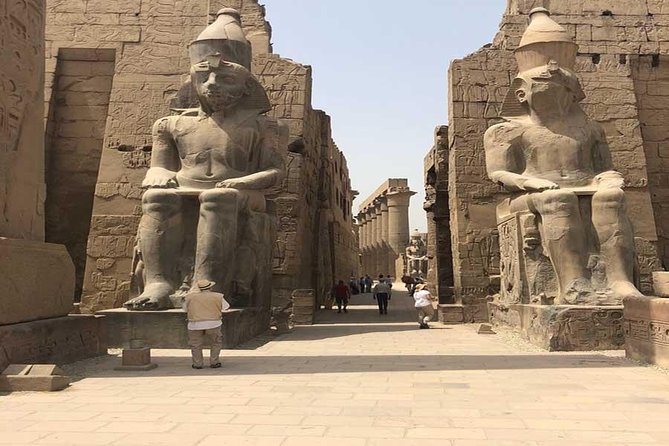
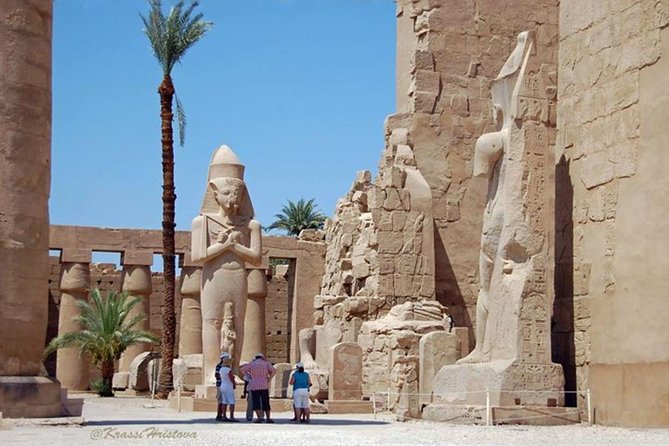
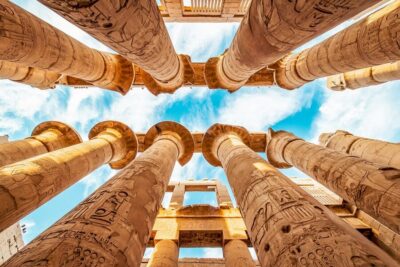
Karnak is the larger and more demanding site. It was built and expanded over many generations and was dedicated to Amun, along with Mut and Khonsu, the Theban divine family. The site feels less like a single temple and more like a huge sacred precinct made up of pylons, courts, halls, columns, and sanctuaries.
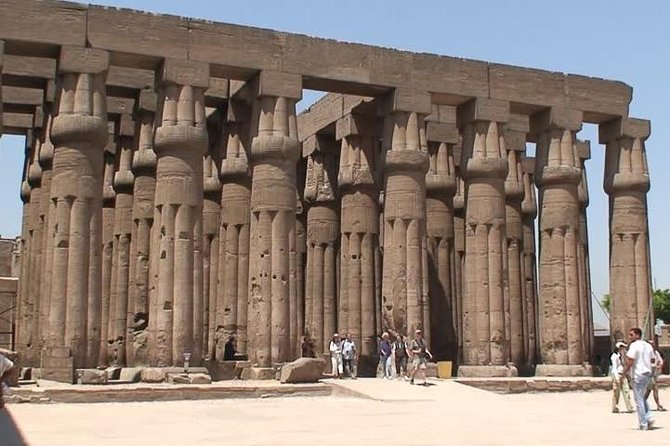
The two-hour visit is useful. You can walk through the monumental approach and spend time in the Great Hypostyle Hall, where dense rows of towering columns create one of Egypt’s most memorable spaces. Your guide should explain how the temple changed under different rulers, rather than presenting it as the work of one king.
This is where a private guide earns much of the tour price. You can ask about the reliefs, the religious purpose of the complex, and the changing names and roles of the pharaohs. Guides such as Roshdy, Mohsen, Huni, and Sayed were praised for making the ancient material easier to follow and for adding humor to the explanations.
Still, keep your expectations realistic. Two hours gives you a good introduction, not an exhaustive visit to every corner. Karnak is so large that you could easily spend longer there if your guide and schedule allow it. If you care most about photography, tell the guide early so you are not hurried through the areas you want to see.
Luxor Temple: a smaller site with a grand setting
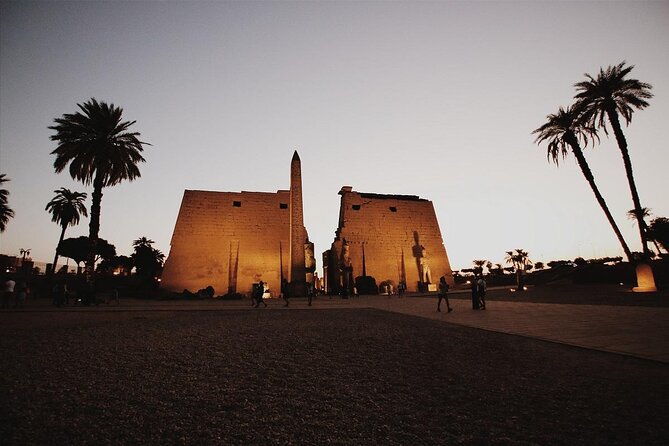
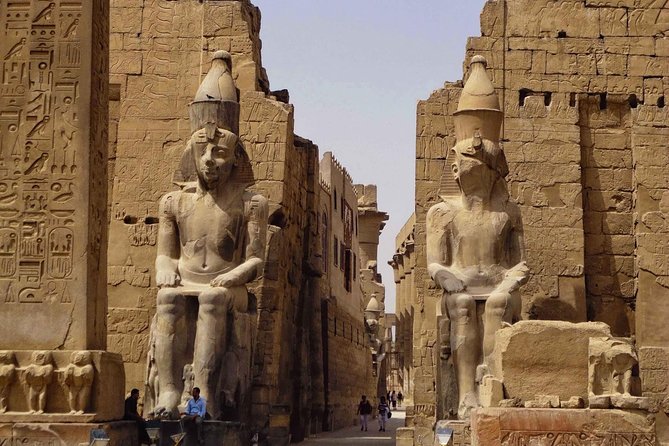
Luxor Temple is more compact than Karnak, so the one-hour stop makes sense. It was begun under Amenhotep III in the 18th Dynasty and completed in important part under Ramesses II in the 19th Dynasty. The temple honored Amun, Mut, and Khonsu, known together as the Theban triad.
The entrance area is especially striking. You will see the obelisk associated with Ramesses II in front of the first pylon, along with monumental statues and carved surfaces that show the power of the pharaohs. The temple’s location near modern Luxor also gives it a different feel from Karnak. Ancient stone and present-day city life are close together.
One hour is enough to understand the layout and hear the main stories, but it may feel brief if you want a slow look at every relief. The private format helps here because you can ask your guide to focus on what interests you instead of following a fixed group lecture.
After Luxor Temple, you return to your starting point. Food and drinks are not included, so plan for your own meal and water. The tour description does not provide a restaurant arrangement, and one poor experience involved an expensive lunch stop recommended during a tour. I would ask in advance whether lunch is planned, and I would confirm the price before sitting down.
More Karnak and Luxor Temple visits:
- Hurghada: Luxor Tour with Valley of Kings, Karnak & Tut Tomb
★ 4.6 · 1,082 reviews - Luxor: Valley of Kings, Hatchepsut Temple ,Karnak & Luxor-DayTour
★ 5.0 · 735 reviews - Luxor: Karnak Temple and Luxor Temple Tour with Lunch
★ 4.4 · 658 reviews - Hurghada: Valley of Kings Hatshepsut & Karnak Luxor Day Trip
★ 4.5 · 375 reviews
Day 2: the West Bank and the Valley of the Kings
The second pickup takes you across to Luxor’s West Bank. This is the day most visitors anticipate, with royal tombs, Hatshepsut’s dramatic temple, and the two stone figures at Memnon.
The published schedule allows about two hours at the Valley of the Kings, one hour at Hatshepsut Temple, and 20 minutes at the Colossi of Memnon. That creates a manageable morning, though your actual time may depend on the guide, site conditions, and the tombs open that day.
Valley of the Kings: tombs beneath the desert hills
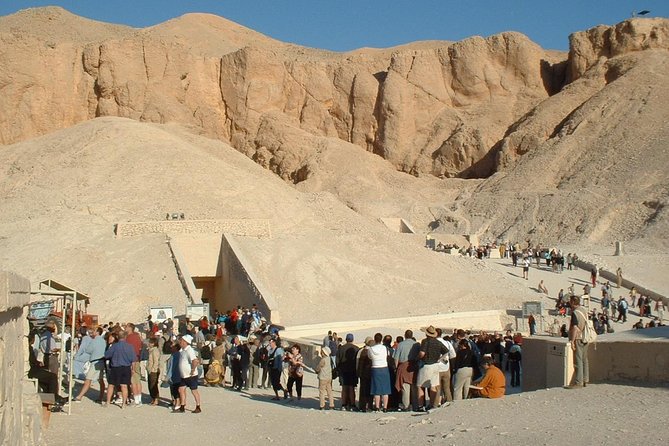
The Valley of the Kings was used for royal burials, and its tombs are the reason many people come to Luxor. The route takes you into a dry valley where the tomb entrances lead down into painted chambers beneath the hills.
The tour information names tombs connected with Thutmose I, Thutmose III, Tutankhamun, Ramesses VI, Merenptah, and Amenhotep II. That list does not mean every one will be open or included in your entry arrangements. Tomb access can vary, and special tombs may require an extra ticket, so ask your guide which chambers your admission covers.
This is a site where explanations matter. Without help, it can be hard to understand why an apparently plain entrance leads to rooms covered with images, inscriptions, and scenes tied to the pharaoh’s journey after death. A private Egyptologist can also help you decide how to use your time among the available tombs.
The heat is an important practical issue. Even though the tombs are underground, you still move through an exposed, dry setting between entrances. The air-conditioned car is more than a comfort here. It gives you a cool place to recover between stops.
If Tutankhamun is your main goal, confirm the ticket details before the day begins. The tour names his tomb among the famous examples, but the provided information does not say that a special entrance fee is included. Do not assume every notable tomb is covered by the standard admission.
Hatshepsut Temple: a different kind of royal monument
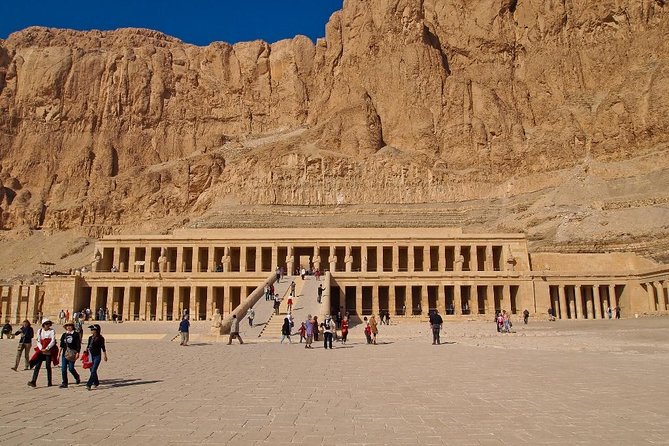
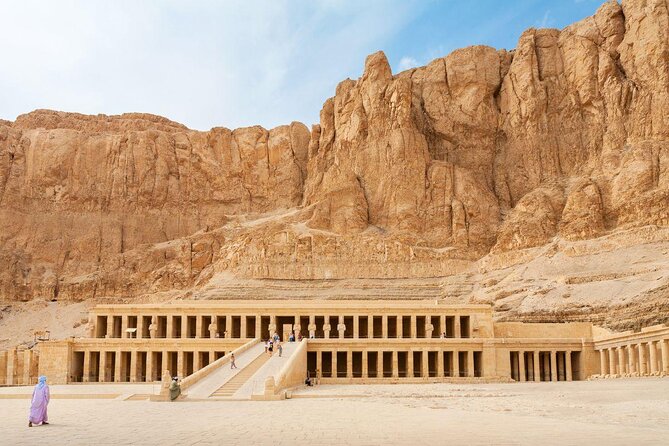
The Temple of Hatshepsut at Deir el-Bahari looks unlike Karnak or Luxor Temple. Its terraces rise against the cliffs, giving the site a strong sense of order and scale. The setting helps explain why this monument feels more like a carefully planned memorial than a crowded collection of pylons.
Hatshepsut’s name is often translated as Foremost of Noble Ladies. She ruled as pharaoh and is linked in the tour information with early trading routes. Your guide can place her reign within the wider story of Egypt’s New Kingdom and explain the challenges surrounding a woman ruling in the role of king.
The one-hour visit should allow time for the main terraces, reliefs, and views toward the surrounding cliffs. The site involves walking across open ground, so a hat, water, and comfortable shoes are sensible. The tour does not provide food or drinks, and it is best not to rely on finding refreshments exactly when you want them.
I would also pay attention to the balance between guiding and free time. Some people want a clear explanation at each terrace, while others prefer to wander and take photographs. The private setup makes it easier to ask for either approach.
Colossi of Memnon: a short, worthwhile stop
The Colossi of Memnon are twin statues made from quartzite sandstone. They once guarded the entrance to the memorial temple of Amenhotep III, though the temple itself is not preserved in the same way.
The scheduled visit lasts about 20 minutes, which is enough for photographs and a short explanation. This is not a place where you need a long stop. The statues are large, visible, and easy to appreciate quickly.
The brief visit also breaks up the longer West Bank route. You can get out, stretch your legs, hear the basic story, and take photographs before returning to the vehicle. If you are hoping for an extended archaeological visit here, you may find the stop too short, but the schedule is sensible for the monument as presented.
What the private format really adds
The private arrangement is one of the tour’s best features. Only your group takes part, and transport is provided door to door. That means you are not waiting for a large coach to fill, and you can ask for a slower explanation or a short pause when needed.
The strongest practical benefit is flexibility. One guide, Hany, was praised for adjusting the schedule, arriving on time, and communicating well. Roshdy was credited with showing extra areas of the sites and helping decide what to prioritize. Mohsen was praised for making the subject friendly and easy to follow. Barry was described as both entertaining and well informed.
The guides are not necessarily the same on every departure. Names connected with positive experiences include Hany, Roshdy, Mohsen, Barry, Huni, Sayed, and Ali, while one experience had a less satisfactory French-speaking guide. If language ability matters to you, state your preferred language clearly at booking and ask who is assigned.
The vehicle is another practical plus. In Luxor’s heat, traveling between monuments in air conditioning can make the difference between enjoying the next site and simply enduring it. The private car also lets you return to your hotel after the morning visits instead of staying out all day.
Shopping stops, lunch, and extras to handle carefully
A standard tour can sometimes include stops at shops or workshops, and this experience appears to have done so for some groups. Alabaster factories and perfumeries were described by some as interesting, while one direct warning advised skipping an alabaster factory because of hard selling. Papyrus shops may also be suggested.
You are not required to treat a shopping stop as part of the ancient-site experience. If you do not want one, say so plainly. If you are interested, take your time, compare prices, and remember that negotiation may be expected.
One especially serious complaint involved a French-language guide, poor explanations, and expensive objects sold as authentic when the buyer later believed they were made from resin and plaster. This does not mean every workshop is deceptive, but it is a good reason to avoid pressure purchases. Ask what the material is, request a receipt, and buy only if you genuinely want the item.
Lunch is not included. One person reported being charged 60 euros for disappointing food at a recommended restaurant. That is a sharp warning to confirm the menu and total price before ordering. Since the tour covers the main sites without meals, you may prefer to eat at your hotel or choose your own restaurant.
The light and sound show is also an optional extra, not part of the listed inclusions. One poor experience came from spending money on a show that did not feel worthwhile. Ask about the cost, length, and exact content before agreeing.
Price and value at $115 per person
At $115 per person, the tour’s value depends on how much you value ease and private attention. The price includes pickup and return, private air-conditioned transfers, a private Egyptologist guide, entrance fees, taxes, and service charges. Food and drinks are excluded.
For a couple or small group, that package can be fair because transport, site entry, and guiding are bundled together. You are also paying to avoid arranging separate taxis, finding the right entrances, and working out how to divide the East and West Banks.
The value is strongest if you have only a short stay in Luxor or do not want to plan ancient sites on your own. It is less convincing if you are comfortable arranging local transport and reading about the monuments independently. One person felt the two-day layout added little because Karnak and Luxor Temple are close together and the days ended early.
I see that criticism, but I think the slower design suits many people. You are not buying two packed days. You are buying a private structure with free time left around the main visits. That is useful if you want to return to your hotel, avoid exhaustion, or travel with someone who cannot manage a full-day sightseeing marathon.
The tour has a 4.8 rating from 70 reviews and a 96 percent recommendation figure. Those numbers point to strong overall satisfaction, while the low ratings highlight the issues worth checking: guide language, shopping stops, optional extras, and the unclear Valley of the Queens inclusion.
Who should book this Luxor tour?
I would choose this experience if you want the major Luxor monuments arranged for you but do not want the rigid feel of a big group tour. It is a good match for first-time visitors, couples, families, and anyone who values an air-conditioned car and a guide who can adjust the pace.
It also suits people who want free afternoons. The two-day plan lets you see the main sites without treating every hour as a race. Guides such as Hany, Roshdy, Mohsen, Barry, Huni, and Sayed were repeatedly praised for clear explanations, kindness, humor, and help with photographs and small practical needs.
I would hesitate if you want long, self-directed visits at every monument, or if your priority is the lowest possible cost. I would also be cautious if you are uncomfortable with possible shopping recommendations. Set that boundary before departure.
Ask these questions before booking:
- Is the Valley of the Queens included in my exact booking?
- Which tombs and special entrances are covered?
- Who will guide the tour, and what language will be used?
- Are any shop or factory stops planned?
- Will lunch be arranged, and what will it cost?
You can cancel for a full refund up to 24 hours before the local start time. Changes or cancellations inside that window are not accepted for a refund.
Final verdict: a relaxed way to see Luxor
I would recommend this tour for most first-time visitors who want Luxor’s main sights handled with little planning. The private car, included entrance fees, and two separate sightseeing days make the experience comfortable and useful, especially in the heat.
Book it if you want clear guidance and a gentle pace. Skip it if you prefer to travel independently or want two long, full days of monuments. Before paying, confirm the Valley of the Queens, guide language, lunch arrangements, and shopping policy. Those few checks can turn a good-value tour into a much better one.
FAQ
How long is the Luxor tour?
The experience lasts approximately two days. Day 1 covers the East Bank, and Day 2 covers the West Bank.
What sites are visited on Day 1?
Day 1 includes the Temple of Karnak for about two hours and Luxor Temple for about one hour. Entrance fees are included.
What sites are visited on Day 2?
Day 2 includes the Valley of the Kings, Temple of Hatshepsut, and Colossi of Memnon. The scheduled times are about two hours, one hour, and 20 minutes respectively.
Is the Valley of the Queens included?
The tour description mentions the Valley of the Queens, but the detailed itinerary does not list it as a stop. One direct comment also says it is excluded, so confirm this with Reflections Travel before booking.
Is transportation included?
Yes. Pickup and return from your starting point are included, along with transfers in a private air-conditioned vehicle.
Are meals and drinks included?
No. Food and drinks are not included in the price.
Can I cancel for a full refund?
Yes, if you cancel at least 24 hours before the experience start time, based on local time. Cancellations or changes made less than 24 hours before the start are not accepted for a refund.
More 2-Day Experiences in Luxor
- Hurghada: 2-Day Luxor Tour with Hotel, Balloon, & Boat Ride
★ 4.5 · 1,113 reviews - 2-Day Top Attractions and Adventures Package in Luxor with Accommodation
★ 5.0 · 178 reviews - Hurghada: 2-Day Luxor Tour with Hotel, Balloon, & Nile Boat
★ 4.8 · 82 reviews - Private 2 Day Luxor Tour
★ 5.0 · 71 reviews
More Hatshepsut Temple Visits
- Shared Day Tour to Valley of the Kings, Hatshepsut ,Memnon &lunch
★ 5.0 · 275 reviews - Private Half Day West Bank Tour to Valley of the Kings Queen Hatshepsut Temple and Colossi of Memnon
★ 5.0 · 268 reviews - Luxor Day Tour: Explore Valley of Kings, Queens, Hatshepsut& More
★ 5.0 · 251 reviews - Luxor: Hot Air Balloon Ride Over Temple of Hatshepsut
★ 4.8 · 185 reviews
Just added around Luxor
- Private Tour foll day to East and West Banks of Luxor★ 5.0 · 23 reviews
- East and West Bank Luxor★ 5.0 · 23 reviews
- Full Day Tour to Luxor (East & West Bank)★ 5.0 · 23 reviews
- Big brother travel★ 5.0 · 23 reviews
- Luxor Day Tour :Valley of Kings & queen & Hatshepsut & Habu city★ 5.0 · 23 reviews
- Luxor: Scenic Camel or Horse Ride★ 3.9 · 24 reviews
- From Cairo: 4-Day Nile Cruise from Aswan to Luxor with Meals★ 4.4 · 24 reviews
- Traditional Egyptian Breakfast at the AlHabib Arabian Horse Farm★ 5.0 · 24 reviews
Valley of the Kings Tours, compared.
Luxor Valley of the Kings & Tutankhamun Tomb Trip
Read our review →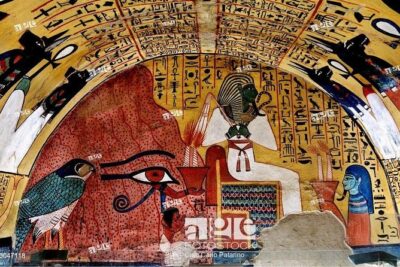
Luxor Day Tour: Valley of Kings & Queens & Hatchepsut Temples
Read our review →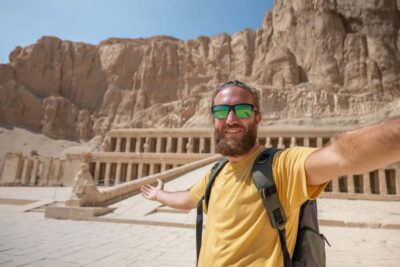
Valley of the Kings and Hatshepsut Temple Day Tour
Read our review →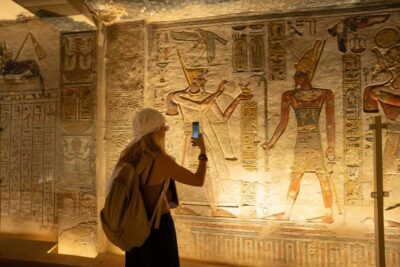
Luxor Tour with Valley of Kings, Karnak & Tut Tomb
Read our review →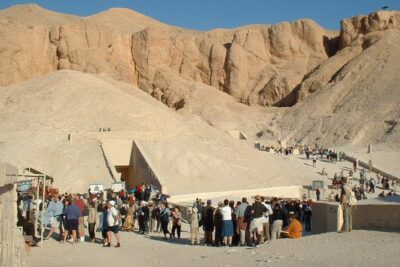
Valley of Kings, Hatchepsut Temple ,Karnak & Luxor-DayTour
Read our review →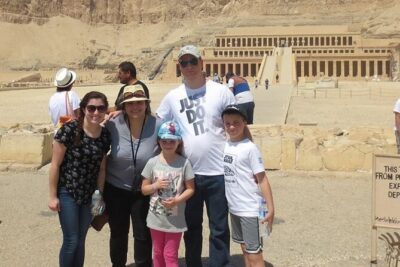
Small Group Excursion to Luxor Valley of the Kings from Hurghada
Read our review →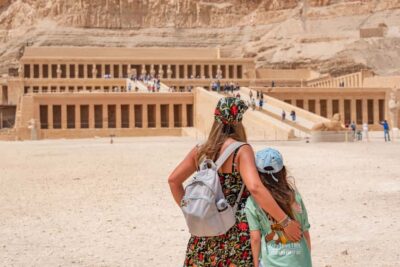
Valley of Kings Hatshepsut & Karnak Luxor Day Trip
Read our review →
Valley of the Kings and Queens Guided Tour with Lunch
Read our review →Browse the lists this tour appears in