
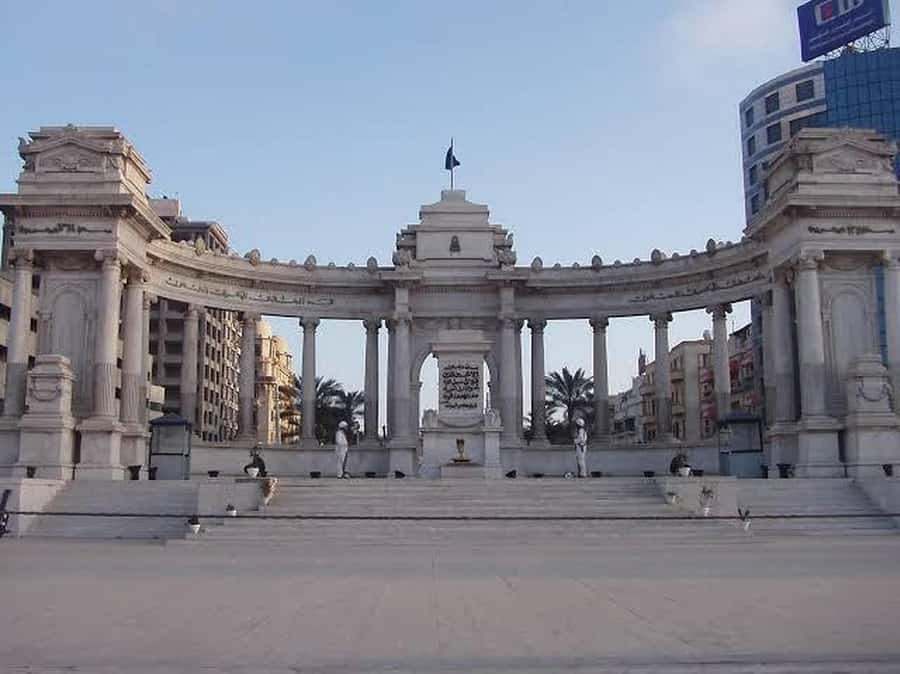
Reviewed · ALEXANDRIA DAY TRIPS
Alexandria: Archeological Day Tour
Alexandria rewards curious eyes. This 6 to 7 hour archaeology tour links underground tombs, Roman ruins, royal gardens, churches, mosques, and the sea in one well-planned day. I like the broad mix, especially the Catacombs of Kom El Shokafa and the old harbor near Abu al-Abbas Mosque. I also like having a guide and driver, since Alexandria’s sights are spread across the city.
The main consideration is pace. You cover a lot of ground, and some Roman excavation areas are viewed only from outside. The Library of Alexandria also closes on Fridays, Saturdays, and public holidays, while the Reading Hall costs extra, so check the date and ticket details before paying.
In This Review
- Key points at a glance
- Why this Alexandria day tour works
- Kom El Shokafa, Alexandria’s underground surprise
- Pompey’s Pillar and the Serapeum area
- The Library of Alexandria and its museums
- Roman Alexandria at Kom El-Deka
- St. Mark’s Cathedral and Alexandria’s Christian story
- Montaza Palace Gardens and King Farouk’s seaside retreat
- Abu al-Abbas Mosque and the old harbor
- Qaitbay Citadel and the lost Lighthouse
- Lunch, traffic, and the real pace of the day
- Guides, drivers, and language choices
- What to bring and what to clarify
- Who should book this tour?
- FAQ
- How long does the Alexandria archaeology tour last?
- Where does pickup take place?
- What languages are available?
- Is lunch included?
- Is the Library of Alexandria open every day?
- Does the tour include the Reading Hall?
- Are entrance fees included?
Key points at a glance
- Three levels below ground: Explore Kom El Shokafa, Alexandria’s largest Roman cemetery, cut into the rock.
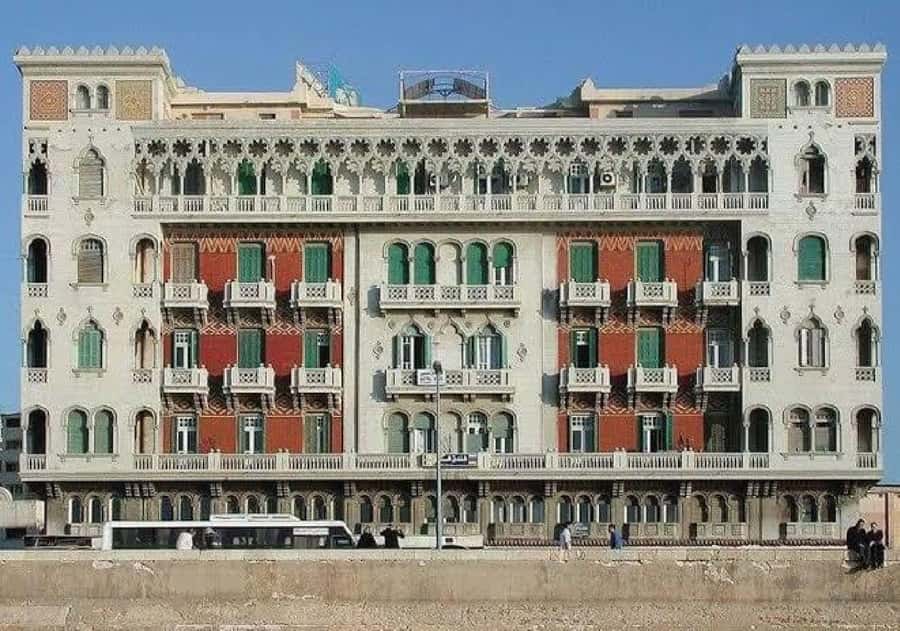
- A city of many traditions: Visit St. Mark’s Cathedral, Abu al-Abbas Mosque, Roman remains, and the modern Library of Alexandria.
- The Lighthouse site survives in another form: See Qaitbay Citadel, built where the ancient Lighthouse of Alexandria once stood.
- Montaza adds royal history: Walk through the gardens and pause outside King Farouk’s palace.
- A strong guide can shape the day: Guides such as Waleed, Eman, Heba, Karim, and Mahmoud Abd Elrahman have been praised for clear explanations and flexible pacing.
- Good value for a private-style day: At $80 per person, the price covers transport, a guide, service charges, and entrance fees when the selected option includes them.
Why this Alexandria day tour works
Alexandria is not a city where the famous sights sit neatly around one square. The Catacombs are inland, the library is on the eastern harbor, Montaza is farther east, and Qaitbay Citadel sits on the western side of the waterfront. Seeing these places independently can mean piecing together taxis, traffic, opening hours, and entrance arrangements.
This tour solves much of that. You are collected from your hotel or residence in Alexandria and driven between the main stops in an air-conditioned vehicle. That matters in warm weather, especially when you have several walking visits in the same day.
The strongest part is the range. You do not spend six hours looking at one type of ruin. Instead, you move from Ptolemaic and Roman Alexandria to Christian Egypt, Islamic Alexandria, royal Egypt, and the city’s modern cultural identity.
At $80 per person, the value depends on what you want included. Transport and a live guide are part of the package, and entrance fees are included if you select the appropriate option. Lunch is extra, and the Reading Hall at the library requires an additional ticket. For someone who wants a full day with several paid sights, the arrangement is practical. If you prefer long, quiet visits at only two or three locations, the packed route may feel too busy.
More Alexandria day trips:
- Alexandria Full Day Trip
★ 4.5 · 191 reviews - Alexandria Full Day Tour
★ 5.0 · 144 reviews - Private Alexandria Highlights Guided Day Tour
★ 4.5 · 121 reviews
Kom El Shokafa, Alexandria’s underground surprise
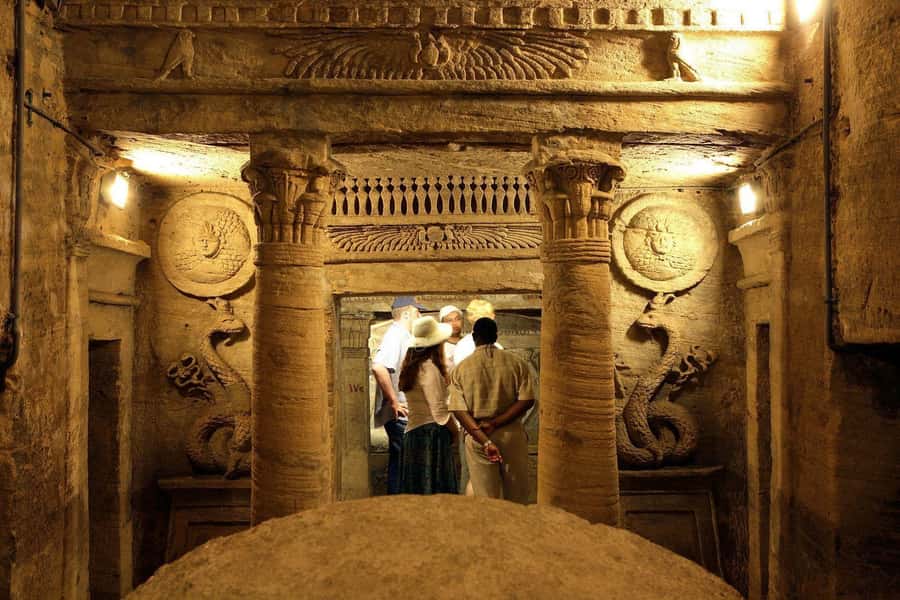
The Catacombs of Kom El Shokafa are the tour’s best archaeological stop. You go inside the largest Roman cemetery in Alexandria, where three levels were cut into the rock.
The site shows how Alexandria blended cultures. Its burial architecture reflects Egyptian, Greek, and Roman influences, which makes it more interesting than a simple line of tombs. The underground setting also gives the visit a different feel from the open-air monuments later in the day.
Wear shoes with a firm sole. You will walk inside the catacombs, and the steps and underground surfaces deserve care. Sunglasses and a hat help outside, but comfortable shoes matter most here and at the other walking stops.
Your guide adds real value in the catacombs. Without explanation, burial chambers can blur into a series of dark rooms. With a good guide, you can follow the purpose of the levels, the mixture of artistic traditions, and the way Alexandria’s communities lived and died.
Pompey’s Pillar and the Serapeum area

The route includes a drive by Pompey’s Pillar, with time to stop for a photograph. This is a shorter visit than the catacombs, but it gives you one of Alexandria’s most recognizable ancient markers.
The itinerary also includes the Serapeum of Alexandria, reached on foot with a guide. Together, these stops connect to the religious side of the ancient city. You should not expect a large intact temple complex. The appeal is in seeing the surviving remains and understanding how the site fitted into Alexandria’s ancient religious world.
The photo stop is useful for anyone who wants a clear picture without spending too much time at one monument. If archaeology is your main reason for booking, ask your guide how much walking time will be available around the Serapeum and Pompey’s Pillar.
The Library of Alexandria and its museums
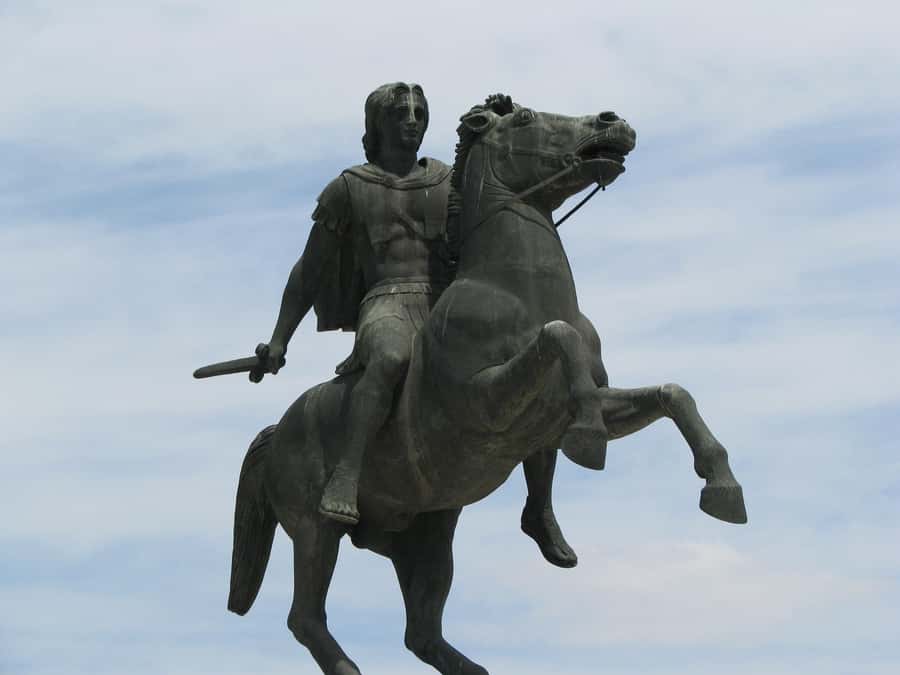
The modern Library of Alexandria gives the day a useful change of tone. The building represents Alexandria’s place as a center of learning, while the open court offers views of a statue of Alexander the Great and a statue of Ptolemy I, found underwater nearby.
The visit can also include the President Sadat Museum and the Impressions of Alexandria Museum inside the library. These additions help connect ancient Alexandria with modern Egyptian history and the city’s changing identity.
The library is often described here as the biggest in the world, with 8 million books. For your visit, the more practical point is that it is a major cultural complex, not simply a book room. The open court is part of the planned experience, while the Reading Hall requires an extra ticket.
Pay close attention to the closing days. The library is closed on Fridays, Saturdays, and public holidays. If the library is central to your plans, confirm that it will be open before booking. A guide can adjust the order of stops, but a closed building cannot be fixed by clever routing.
This is also one place where a rushed schedule can matter. If you want to spend serious time inside the library or see the manuscript section, tell your guide early. Heba, for example, arranged extra time for one participant to explore the ancient manuscript section. That sort of flexibility can make the library visit much more rewarding.
More things to do in Alexandria:
- ALL inclusive Tour to Giza Pyramids Sakkara from Alexandria Port
★ 5.0 · 80 reviews - Alexandria day tour.The catacomb, pompy’s pillar,the citedal
★ 5.0 · 65 reviews - Cairo: 9-day Egypt Private Tour with Flights and Nile Cruise
★ 4.2 · 64 reviews - From Alexandria Port: Alexandria Day Tour
★ 4.0 · 54 reviews
Roman Alexandria at Kom El-Deka
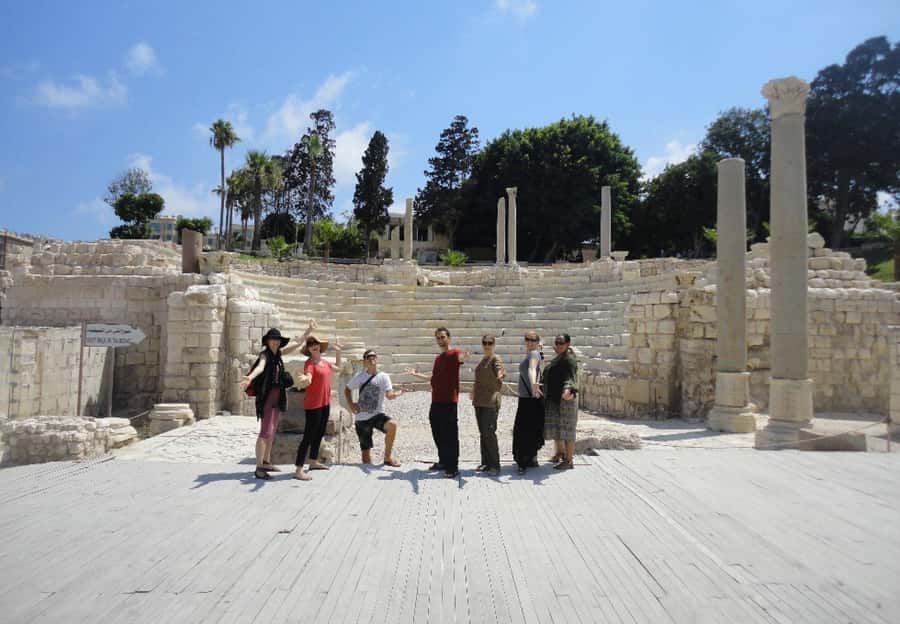
At Kom El-Deka, you walk around the excavation area connected with the old Roman city. The remains include Roman villas, the amphitheater ruins, the Great Tomb excavation site, and other fragments.
There is an important limit here: the excavation areas cannot be entered. You view them from outside and walk by the remains with the guide. Set your expectations accordingly. This is a contextual stop rather than a long interior visit.
I like including Kom El-Deka because it fills in the gap between grand monuments. It gives you a sense of the ancient city as a lived-in place, with homes, public buildings, and performance spaces. The guide’s explanation is especially useful because exposed foundations rarely explain themselves.
St. Mark’s Cathedral and Alexandria’s Christian story
The visit to St. Mark’s Cathedral introduces another side of Alexandria. It is presented as the oldest church in Africa, and the stop adds a living religious dimension to a day otherwise centered on ruins and monuments.
This is a useful reminder that Alexandria is not only an ancient Greek and Roman city. Its Christian history remains part of the city’s identity, and the cathedral gives the route a more human scale.
The visit is guided, so you can ask about the church’s role and local traditions. Dress respectfully, as you should at all religious sites. The tour also includes mosques later in the day, making this a good chance to see several parts of Alexandria’s religious life in one outing.
Montaza Palace Gardens and King Farouk’s seaside retreat
Montaza Palace Gardens are one of the day’s more relaxed stops. These are the royal gardens of King Farouk, the last king in Egypt’s history. You pause for photographs of the palace and see the royal beaches associated with the queens.
The gardens provide a break from underground chambers and stone ruins. There is room for a slower walk, photographs, and a look at Alexandria’s royal past. Some guides may add a small extra stop, such as the tropical plant house, depending on timing and traffic.
The palace itself is mainly an exterior photo stop in this tour. If you are hoping for a full palace interior visit, clarify that before booking. The attraction here is the setting, the gardens, and the connection to Egypt’s twentieth-century monarchy.
Montaza is also a good place for a short rest. The day covers substantial ground, and several stops involve walking. A guide who watches the clock without rushing you can make a big difference. Guests have particularly valued guides who offered extra breaks and adjusted the order to avoid the hottest or most crowded periods.
Abu al-Abbas Mosque and the old harbor
Abu al-Abbas Mosque is described as the prettiest and biggest mosque in Alexandria. The visit brings you into the city’s Islamic architectural tradition, with time to see the mosque and its surroundings.
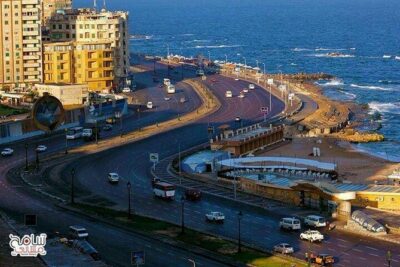
Outside is one of the route’s more unusual contrasts: an old funfair with antique rides and children eating cotton candy. Across the road, the Corniche and old harbor offer a look at fishing boats, men casting lines, and fishermen making nets.
This may be the most ordinary and authentic part of the day. Ancient monuments tell you about Alexandria’s past, but the harbor shows the city being used today. I would pay attention here instead of treating it as a quick transfer between stops.
As at the cathedral, modest clothing is the sensible choice. Your guide can explain local customs and help you understand what you are seeing without turning the stop into a rushed photo opportunity.
Qaitbay Citadel and the lost Lighthouse
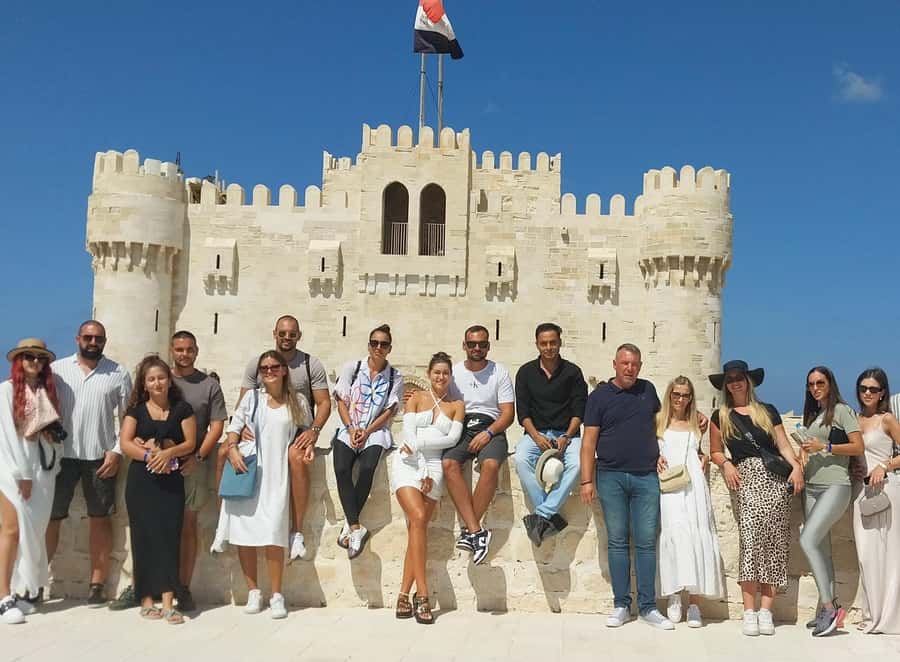
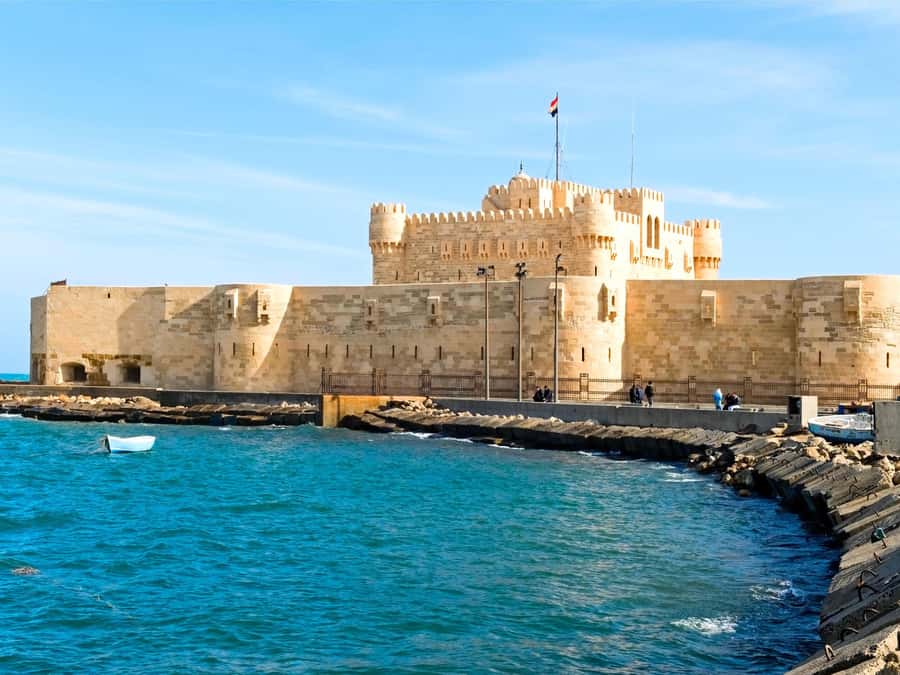
Qaitbay Citadel occupies the site associated with the ancient Lighthouse of Alexandria, one of the Seven Wonders of the Ancient World. The tour focuses on the outside of the citadel, so you should not expect an interior fortress visit unless your selected arrangement says otherwise.
Even from outside, the location is powerful. You are looking across the water from the place where the famous lighthouse once guided ships. The surviving citadel belongs to a later period, but the site ties together Alexandria’s ancient maritime role and its medieval defenses.
The waterfront setting also gives you a change of scenery after the city’s inland monuments. Your guide can explain what is known about the lighthouse and why this point mattered to Alexandria’s history.
Lunch, traffic, and the real pace of the day
Lunch at a modern fish restaurant is optional. This is a sensible choice in Alexandria, but it adds time and cost. If you enjoy seafood and want a sit-down meal, it can round out the day. If you have a train, cruise departure, or fixed evening plan, you may prefer a quicker meal or an early hotel drop-off.
One participant with a time limit was dropped at the hotel before the full route ended. That is worth noting if your schedule is tight. Tell the operator and guide at pickup, not halfway through the day.
Traffic can also change the order. Karim adjusted the route after a delay and still added an unexpected stop at the Montaza tropical plant house. A flexible route is helpful, but you should not assume every stop will receive exactly the same amount of time.
The tour lasts six to seven hours, though a lunch stop, traffic, and extra visits can affect the finish. An early start is wise if you want a less pressured day. One booking issue involved an expected 8 a.m. start becoming a 9 a.m. departure, followed by a long wait for other participants. Confirm your pickup time clearly, especially if you are coming from a cruise ship.
Guides, drivers, and language choices
The guide is the most important part of this experience. Strong guides have included Waleed, Eman, Heba, Karim, Mahmoud Abd Elrahman, Norhan, Macy, and others praised for clear explanations, patience, humor, and attention to comfort.
That personal skill matters in Alexandria. The city’s story includes Greek rulers, Roman engineering, Christian traditions, Islamic architecture, royal history, and modern cultural institutions. A guide who can connect those periods will give you far more than a string of dates.
Drivers also receive consistent praise for courteous service and safe handling of Alexandria’s busy streets. The vehicle is air-conditioned, a welcome detail during warm months. One older comment noted that a shared bus was not especially clean, so vehicle condition can vary. Still, transport is generally treated as a major strength of the experience.
Live guiding is offered in English, Arabic, and French. Other language requests depend on availability and may cost more on certain dates. If the preferred guide is not available, an English-speaking guide may be paired with an audio guide in your requested language.
What to bring and what to clarify
Bring comfortable walking shoes, sunglasses, and a hat. You will move between underground areas, open archaeological sites, gardens, religious buildings, and waterfront locations.
Before booking, clarify four details:
- Library opening day: It is closed Fridays, Saturdays, and public holidays.
- Library access: The Reading Hall requires an extra ticket.
- Entrance fees: They are included when you select the option that includes entrance fees.
- Lunch: A fish restaurant stop is optional and is not listed among the included services.
Free cancellation is available up to 24 hours before the activity for a full refund, and you can reserve now and pay later. Those terms help if your Alexandria schedule is still shifting.
Who should book this tour?
I would choose this tour if you want to see Alexandria’s major sights in one day and prefer having the history explained as you go. It suits first-time visitors, archaeology fans, cruise passengers with limited time, and anyone who would rather not arrange several rides across the city.
It is less suitable if you want long, unhurried visits inside each monument. The Roman excavation sites are exterior views, the citadel is visited from outside, and the library may feel short if you want a serious research-focused visit.
At $80 per person, the best value comes from the combination of a private-style vehicle, guide, several major stops, and help with route planning. I would book it if your goal is a broad, well-explained introduction to Alexandria. I would skip it only if you already know the city well or want to spend a full day at one archaeological site.
FAQ
How long does the Alexandria archaeology tour last?
The tour lasts approximately 6 to 7 hours.
Where does pickup take place?
Pickup is available from your hotel or place of residence in Alexandria.
What languages are available?
Live guides are available in English, Arabic, and French. Other language requests depend on availability, and additional charges may apply on some dates.
Is lunch included?
No. Lunch at a local modern fish restaurant is optional and is not included among the listed services.
Is the Library of Alexandria open every day?
No. The library is closed on Fridays, Saturdays, and public holidays.
Does the tour include the Reading Hall?
The Reading Hall requires an extra ticket, so it is not included in the standard visit.
Are entrance fees included?
Entrance fees are included if you select the option that includes them. Check the booking choice carefully before paying.
Just added around Alexandria
- Trip To Cairo from Alexandria★ 4.5 · 25 reviews
- Private full-Day Sightseeing Tour in Alexandria★ 5.0 · 25 reviews
- Alamein full day tour from Alexandria★ 5.0 · 27 reviews
- Alexandria Experience from Alexandria Hotels & Alexandria Port★ 5.0 · 33 reviews
- Half-Day Guided Tour in Alexandria★ 5.0 · 33 reviews
- From Alexandria: El Alamein Day Trip★ 4.9 · 34 reviews
- Day Tour To Cairo From Alexandria★ 4.5 · 36 reviews
- Mirette Tour in Alexandria from Alexandria hotels and Alexandria Port★ 5.0 · 38 reviews
Alexandria Day Trips, compared.
From Cairo Alexandria Catacombs, Citadel Day Trip with Lunch
Read our review →
Private Full-Day Tour of Historical Alexandria
Read our review →
Day-Trip to Alexandria from Cairo by Private Car
Read our review →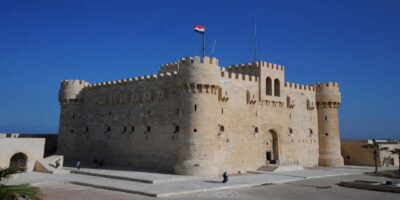
Alexandria Private Day Tour with Guide and Lunch
Read our review →

Browse the lists this tour appears in