
Reviewed · GIZA PYRAMIDS & SPHINX TOURS
Cairo: Grand Egyptian Museum, Giza Pyramids and Sphinx Tour
The ancient world comes together in one day. This seven-hour Cairo outing pairs the still-evolving Grand Egyptian Museum with the Great Pyramids, Sphinx, and Valley Temple, giving you both a modern museum visit and the open-air wonder of Giza. I especially like the rare view beneath the Hanging Obelisk and the chance to see Ramses II before heading to the plateau.
I also like the small-group limit of 10 people, hotel pickup in Cairo, and the strong attention paid by guides such as Paula, Menna, Mahmoud Bahaa, Doaa Sabry, and Ayoup. The main caution is the museum’s changing access: some exhibition areas may remain closed, so you should not book this expecting every collection to be open.
In This Review
- Key points to know before booking
- Why this Cairo combination works
- Starting at the Grand Egyptian Museum
- The Giza Plateau and three great pyramids
- Meeting the Sphinx at close range
- What the Valley Temple reveals
- The guides are a major part of the value
- Transport, group size, and the seven-hour pace
- Who should book this tour
- Should you book the Grand Egyptian Museum and Giza tour?
- FAQ
- How long does the tour last?
- What sights are included?
- Is the entire Grand Egyptian Museum open during the tour?
- What languages are available?
- Is transportation included in the $80 price?
- Can I cancel or pay later?
Key points to know before booking
- Two major Cairo sights in one outing: You visit the Grand Egyptian Museum and the Giza Plateau without arranging separate transport.
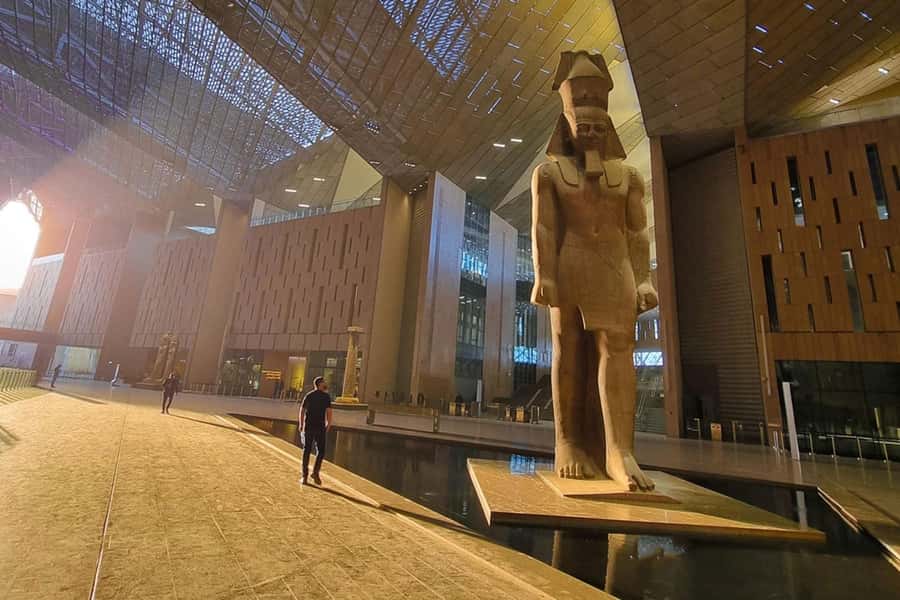
- The museum is still a work in progress: You can enter the Grand Hall, see the Hanging Obelisk and Ramses II, climb the Grand Staircase, and visit 12 halls, but access can change.
- Giza includes more than pyramid photos: The tour covers the three main pyramids, the Sphinx, Valley Temple, and several photo stops.
- Guides make a real difference: Past guide assignments have included Paula, Menna, Mahmoud Bahaa, Doaa Sabry, and Ayoup, with praise for clear explanations and thoughtful pacing.
- The $80 price can be good value: It includes a guide, transport, and entrance fees when that option is selected, but confirm exactly what your booking includes.
- Plan for Cairo traffic and heat: Seven hours is enough for the advertised stops, but it is a full schedule rather than a slow museum day.
Why this Cairo combination works
Cairo can feel scattered on a map and even more scattered from the back seat of a taxi. The Grand Egyptian Museum sits near Giza, while the pyramid complex spreads across a large plateau. Putting both areas into one guided day saves you the trouble of sorting out transport, tickets, and the best order of visits.
I like the contrast. At the museum, you get controlled indoor space, large galleries, and a modern building designed to frame ancient objects. At Giza, the setting takes over. You are outside with enormous stone monuments, wide views, and the Sphinx close to the Valley Temple.
The tour lasts about seven hours, with pickup and return in Cairo. That gives you a useful overview, though not unlimited time at each stop. If you want a long, scholarly examination of every gallery or an unhurried climb around the plateau, you may prefer separate visits.
The advertised price is $80 per person. That is reasonable if your selected option includes the modern air-conditioned vehicle, guide, and entrance fees. Check the exact package before paying, since those inclusions are marked as dependent on the option selected. Pickup from Heliopolis, the airport area, 6th of October City, or similar outlying areas may cost extra.
More Museums in Cairo
- Tour to Giza Pyramids and The Egyptian Museum
★ 5.0 · 6,016 reviews - Cairo 8 Hour Private Tour of Pyramids, Egyptian Museum and Bazaar
★ 5.0 · 2,931 reviews - Cairo: Grand Egyptian Museum, Pyramids, Sphinx Tour & Lunch
★ 4.7 · 2,282 reviews
Starting at the Grand Egyptian Museum
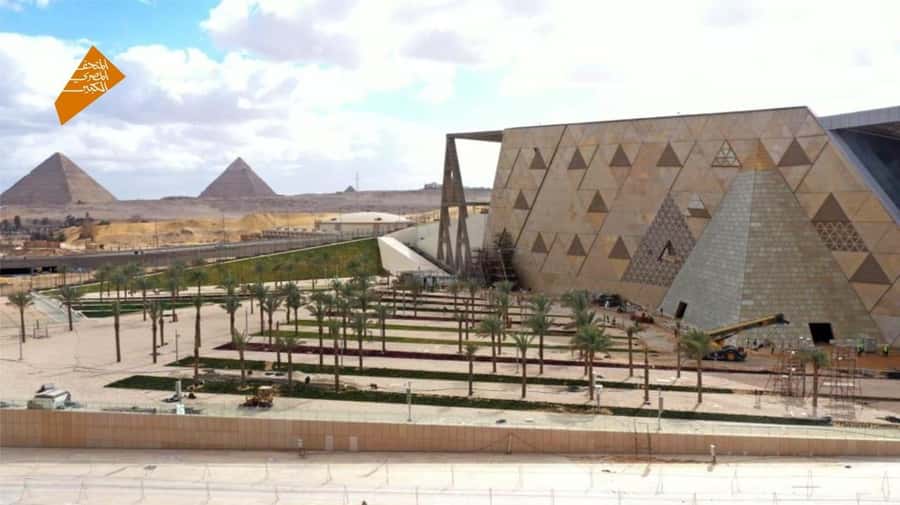
The museum visit begins outside, where you can take in the building’s scale and its gardens. The exterior is part of the experience, not just a walkway to the door. The design gives you time to get oriented before the ancient objects begin competing for your attention.
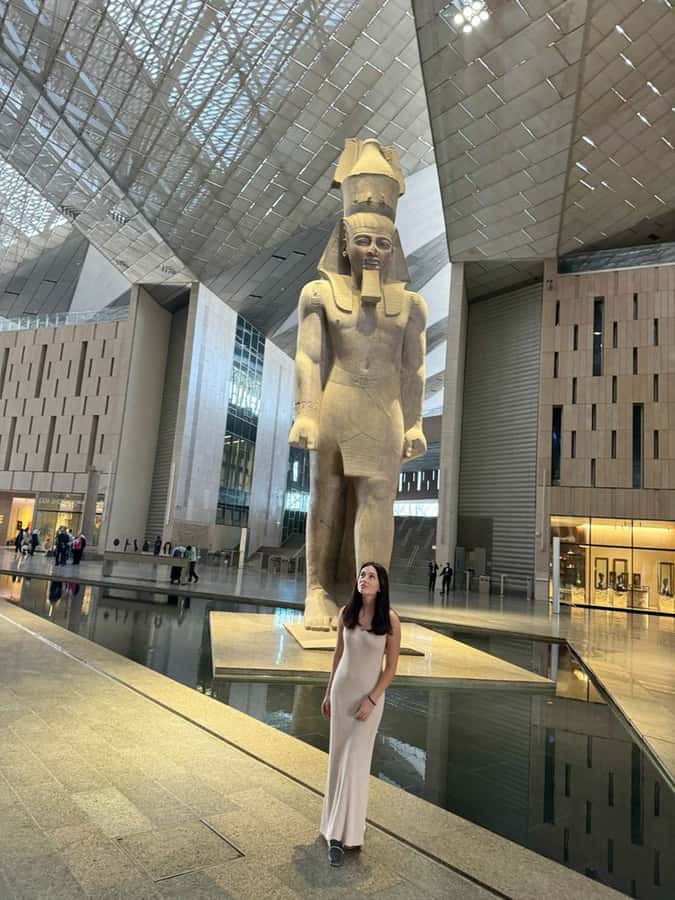
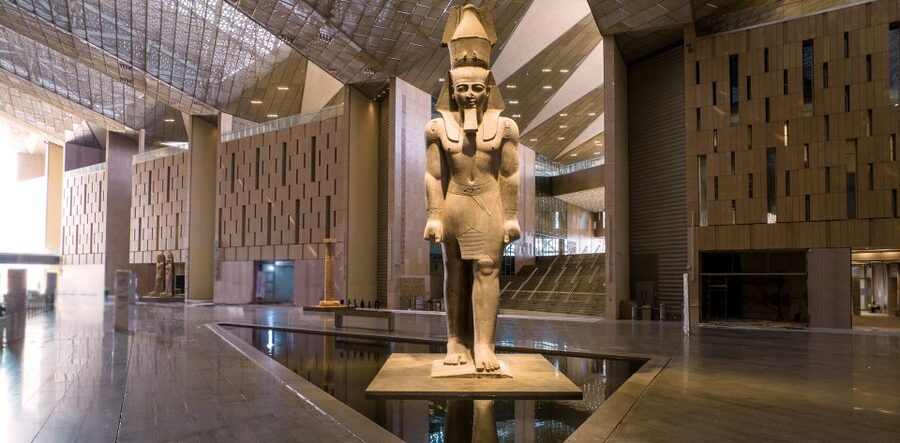
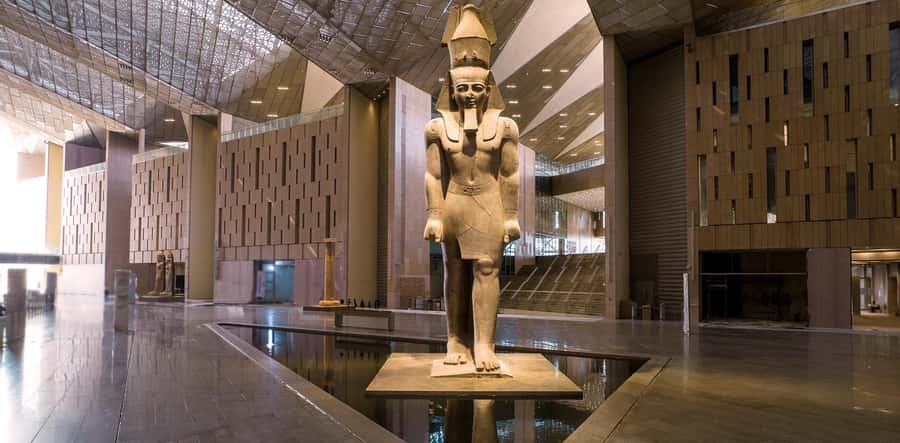
Inside the Grand Hall, you see displays explaining the museum and its purpose. The first major sights include the Hanging Obelisk and the statue of Ramses II. The obelisk is especially unusual because it is suspended above an open area, allowing you to look at its underside. That viewpoint gives an architectural feature to an object that you might otherwise see only from ground level.
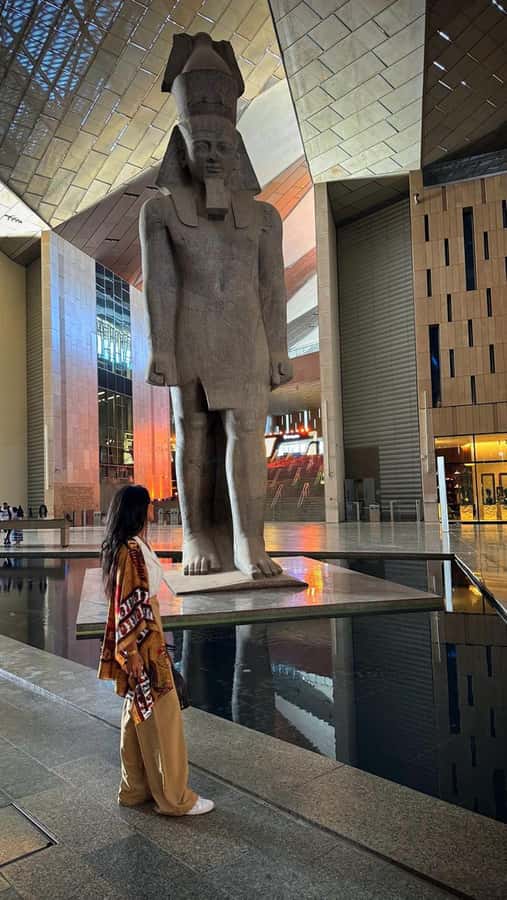
The Ramses II statue is a powerful introduction to ancient Egyptian royal art. It is large, formal, and meant to communicate authority. Your guide can help you read what the pose and scale were designed to say, rather than leaving you with a quick photo and a name.
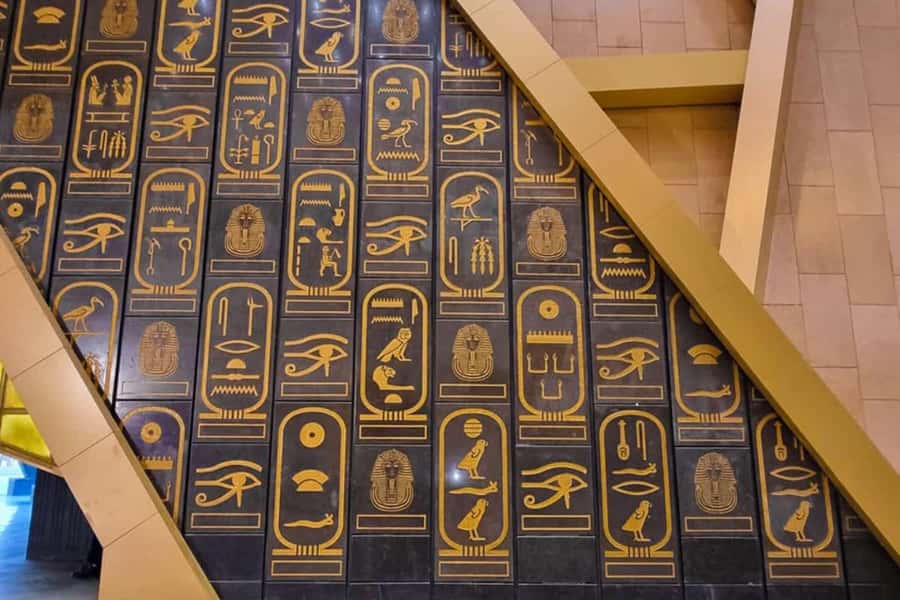
From there, the Grand Staircase leads upward past major artefacts. The route includes 12 exhibition halls covering the period from prehistoric Egypt through the Roman era. That broad span helps you see change over time, instead of treating ancient Egypt as one unchanging civilization.
The museum access is the tour’s biggest variable. The experience includes select sections before the full museum opening, and conditions can change as more spaces become ready. One earlier visitor described the museum as impressive but noted that most exhibitions were not yet open. That makes this visit worthwhile for the building, headline objects, and selected galleries, but you should keep expectations flexible.
I would ask your guide at the start which halls are open that day. If you have a particular interest, such as royal sculpture or prehistoric objects, this is the moment to shape the museum portion around it.
The Giza Plateau and three great pyramids
After the museum, the focus shifts from displays to the real setting of ancient royal monuments. The Giza Plateau includes the pyramids of Cheops, Chephren, and Mykerinus, also known as Khufu, Khafre, and Menkaure.
The tour provides panoramic views and several photo stops. These matter because the pyramids are too large to understand from one close angle. From a wider viewpoint, you can compare their sizes and positions. Your guide can also help you frame photographs that include all three, rather than leaving you with a collection of similar-looking stone blocks.
The Great Pyramid, or Pyramid of Cheops, is the largest and most famous of the three. The pyramid of Chephren is often recognized by the remaining cap of smoother stone near its top, while Mykerinus is smaller but still important to the group. The tour description does not include an interior pyramid visit, so book this for exterior views and explanations rather than an underground exploration.
The open plateau can be demanding. You will move between major sights in sun and exposed conditions, and the ground may not feel as easy as the museum floors. Comfortable shoes, water, and sun protection are practical choices. The air-conditioned vehicle becomes more valuable here, giving you a cool break between stops.
A private or small group arrangement also helps on the plateau. With no more than 10 people, it should be easier to hear the guide and ask questions than in a large coach group. If your party wants a particular photo angle or needs a little extra help moving between sights, tell the guide early.
Meeting the Sphinx at close range
The Sphinx is not simply a final photo stop. Its human head and lion’s body make it one of Egypt’s most recognizable images, but the setting adds important context. You see it in relation to the pyramid complex, rather than as an isolated statue from a postcard.
The tour includes a visit to the Sphinx and time for photographs. Your guide can point out the way the monument was cut from the bedrock and explain its role within the royal complex. The description does not promise entry into restricted chambers, so expect an exterior visit.
This is another place where crowd control and timing matter. A guide who knows how to move through busy areas can save time and help you get a clear view. Doaa Sabry was praised for reading the situation quickly and adjusting the day around crowded places. That kind of practical help matters more here than a long memorized speech.
The Sphinx stop is usually one of the most memorable parts of the day, but it can feel brief if you want extended photography. Tell your guide if pictures are a priority. Ayoup has also been praised for combining guiding with photography, which may appeal to couples or families hoping to return with more than hurried snapshots.
More ways to see the pyramids and the Sphinx:
- Cairo: Pyramids & Great Sphinx Private Tour with Camel Ride
★ 4.9 · 6,335 reviews - VIP All inclusive Best of the best Giza Pyramids,Sakkara,Memphis
★ 5.0 · 3,164 reviews - From Cairo: Pyramids of Giza, Sphinx, Saqqara & Memphis Tour
★ 4.7 · 3,110 reviews - Cairo: Pyramids, Sakkara & Memphis Tour with Lunch
★ 4.6 · 2,493 reviews
What the Valley Temple reveals
The Valley Temple of Khafre gives the pyramid complex a useful second layer. It was linked to the preparation of the king’s body before burial and played a role in purification and mummification.
That makes it valuable because it shows the practical side of royal burial. The pyramids are the grand symbols, but the Valley Temple helps you understand the ceremonies and preparation that supported them. Inside, the stone spaces can feel stark and restrained compared with the scale of the pyramids outside.
Your guide will explain how the temple connected to the wider complex. This is a good place to slow down and ask questions about the burial process, royal ceremony, and the relationship between the temple, causeway, and pyramid.
The stop is included in the advertised route, but exact time at each location depends on traffic, crowds, and the pace of your group. If you want the Valley Temple treated as more than a quick add-on, mention it when the day begins.
The guides are a major part of the value
A guide can make or break a Cairo sightseeing day. The best guides do more than recite dates. They explain what you are looking at, answer questions, help with photos, and keep the schedule moving when Cairo throws traffic or crowds into the plan.
Several guide names have received particularly strong praise. Paula has been described as attentive, energetic, and good at adjusting the day to personal interests. Menna was praised for clear explanations, humor, and careful attention throughout the Giza visit. Mahmoud Bahaa was noted for precise historical explanations, warmth, organization, and thoughtful answers.
Doaa Sabry was praised for handling crowded places and keeping the day efficient. Ayoup was associated with a special anniversary outing that included guiding, photography, and a driver. These details suggest that the guide assignment can shape the day, so you may ask at booking if a particular language or named guide is available, though no specific guide is guaranteed.
The advertised live guiding languages are Arabic, English, French, Spanish, and Italian. Availability can vary, and non-English guiding may carry an added charge on certain dates. If your preferred guide is not available, the provider says an English-speaking guide can be paired with an audio guide in your chosen language.
The audio guide list is unusually long, covering many languages. I would treat that as a useful backup rather than a substitute for live interpretation. The human guide is most valuable at Giza, where you can ask about the exact monument in front of you and get help with timing and viewpoints.
Transport, group size, and the seven-hour pace
The experience uses a modern air-conditioned vehicle when transport is included. That matters in Cairo, where the road between sights can be tiring even when the distance looks short. Your guide is expected to share information during the drive, so the transfers become part of the orientation rather than dead time.
The maximum group size is 10 people. That is not the same as a guaranteed private tour, but it is small enough to feel more personal than a large sightseeing bus. A private group option is also available if you want control over the pace and the people in your vehicle.
The schedule is full. You cover the museum complex, the Grand Hall, selected galleries, gardens, three pyramids, the Sphinx, Valley Temple, and photo stops before returning to Cairo. I would not add another major attraction to this day unless the operator confirms that there is enough time.
The driver also matters. Several strong comments singled out drivers as calm, helpful, and professional, including Mohammed and Ahmed. A relaxed driver is not a minor luxury when you are moving through Cairo traffic and returning after several hours outside.
Who should book this tour
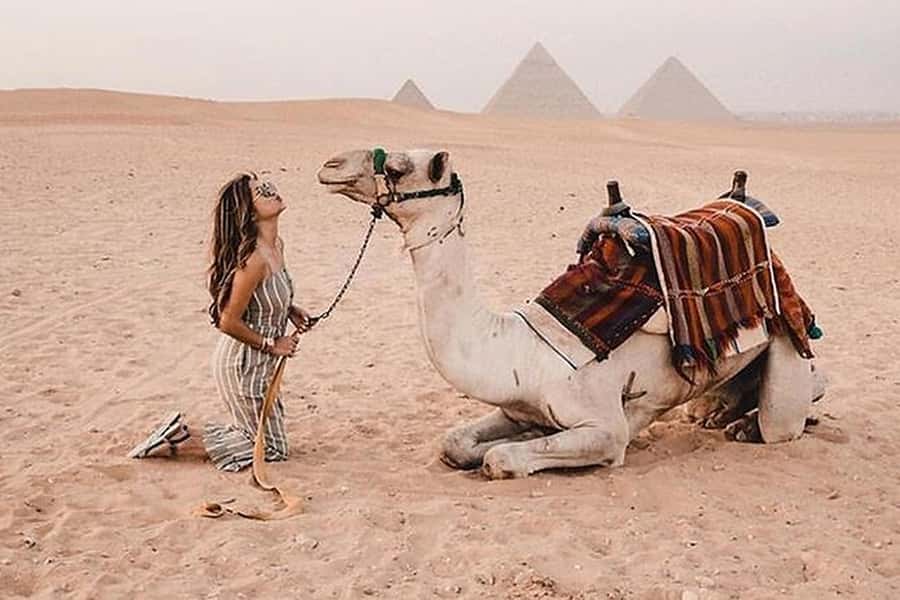
I would recommend this experience if you have one main day for ancient Cairo and want the major sights arranged for you. First-time visitors benefit most because the guide connects the museum objects with the monuments outside.
It also suits couples and families. The smaller group cap, air-conditioned transport, and photo assistance can make a demanding sightseeing day easier. The anniversary outing guided by Ayoup shows how the experience can work well for a special occasion, especially if you value photos and personal attention.
You should think twice if the Grand Egyptian Museum is your top reason for visiting Cairo and you want to see every gallery. The museum’s opening status is changing, and selected access may not satisfy someone expecting the entire collection.
You may also prefer a private option if you have mobility needs, a tight schedule, or strong interests in one period of Egyptian history. The tour is wheelchair accessible, but you should still confirm the day’s route and vehicle arrangements directly when booking.
Free cancellation is available up to 24 hours before the start, and you can reserve now and pay later. Those terms make it easier to book ahead while the museum’s access continues to develop.
Should you book the Grand Egyptian Museum and Giza tour?
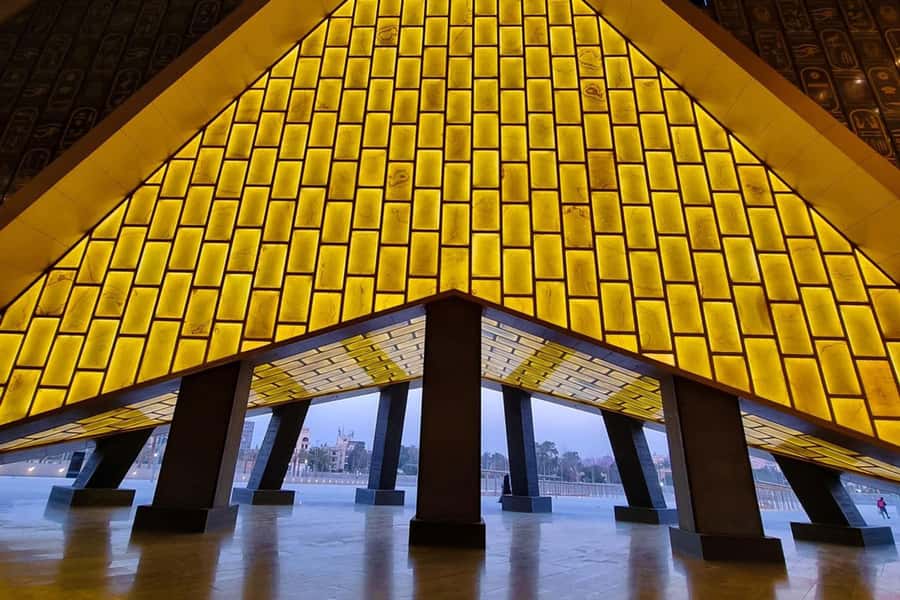
Book it if you want a well-organized first look at Cairo’s two headline attractions, with a guide to explain the monuments and transport to handle the distance. At $80, it offers good value when your option includes the guide, vehicle, and entrance fees.
The strongest reasons to choose it are the compact seven-hour plan, group size of no more than 10, air-conditioned transport, and the chance to see the Hanging Obelisk, Ramses II, the pyramids, Sphinx, and Valley Temple in one day.
Do not book it expecting a fully open Grand Egyptian Museum or a slow, solitary visit. Confirm the museum sections available on your date, check pickup supplements for outlying Cairo districts, and request your preferred language early. If those limits suit you, Ramses Tours offers a practical way to get your bearings at Egypt’s most famous ancient sites.
FAQ
How long does the tour last?
The tour lasts seven hours, including pickup in Cairo, visits to the Grand Egyptian Museum and Giza Plateau, and return to Cairo.
What sights are included?
The route includes the Grand Egyptian Museum Complex, Hanging Obelisk, Ramses II statue, Grand Staircase, selected exhibition halls, the three main Giza pyramids, the Sphinx, and the Valley Temple of Khafre.
Is the entire Grand Egyptian Museum open during the tour?
No specific promise is made that the entire museum will be open. The tour includes selected sections before the full opening, and access may change. The visit includes the Grand Hall, exterior gardens, Hanging Obelisk, Ramses II, Grand Staircase, and 12 exhibition halls as available.
What languages are available?
Live guides are available in Arabic, English, French, Spanish, and Italian, subject to availability. An English-speaking guide with an audio guide in your preferred language may be provided if another live language is unavailable.
Is transportation included in the $80 price?
Transportation by modern air-conditioned vehicle is included when that option is selected. Entrance fees and a tour guide are also dependent on the selected option, so check your booking details.
Can I cancel or pay later?
You can cancel up to 24 hours before the tour for a full refund. Reserve now and pay later is also available, allowing you to hold a place without paying immediately.
More Egyptian Museum Visits
- Private tour to Giza Pyramids,Sphinx,Egyptian Museum with Local Lunch
★ 5.0 · 1,530 reviews - Best Private Giza Pyramids,Sphinx, New Grand Egyptian Museum
★ 4.5 · 1,056 reviews - Cairo: Egyptian Museum, Citadel, and Old Cairo Guided Tour
★ 4.7 · 853 reviews - Cairo: Egyptian Museum of Antiquities online QR Ticket
★ 4.5 · 558 reviews
Just added around Cairo
- Day Tour To Giza Pyramids, Great Sphinx, Saqqara Pyramids & Memphis Capital★ 5.0 · 23 reviews
- GEM Grand Egyptian Museum Private Tour from Cairo Giza hotels★ 5.0 · 23 reviews
- Cairo vip two or one day pyramids ,Museum,memfis ,saqra and7 places★ 5.0 · 23 reviews
- Giza Pyramids, Sphinx, Saqqara, and Dahshur Tour with Camel Ride★ 5.0 · 23 reviews
- Full-Day Tour to Giza Pyramids Saqqara Memphis Sphinx Private★ 5.0 · 23 reviews
- 8 Day Cairo Pyramids and Nile cruise and Alexandria All inclusive Private Tour★ 5.0 · 23 reviews
- Full-Day Tour to Giza Pyramids, memphis and Sakkara Step Pyramid★ 5.0 · 23 reviews
- Half Day Guided Trip To Egyptian Museum★ 4.5 · 23 reviews
Giza Pyramids & Sphinx Tours, compared.
Pyramids & Great Sphinx Private Tour with Camel Ride
Read our review →
Tour to Giza Pyramids and The Egyptian Museum
Read our review →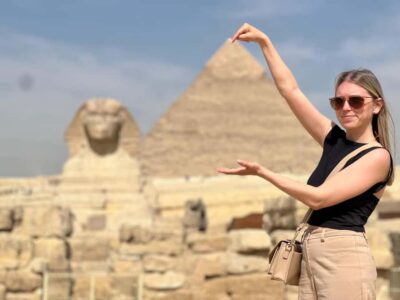
VIP All inclusive Best of the best Giza Pyramids,Sakkara,Memphis
Read our review →
Pyramids of Giza, Sphinx, Saqqara & Memphis Tour
Read our review →
Cairo 8 Hour Private Tour of Pyramids, Egyptian Museum and Bazaar
Read our review →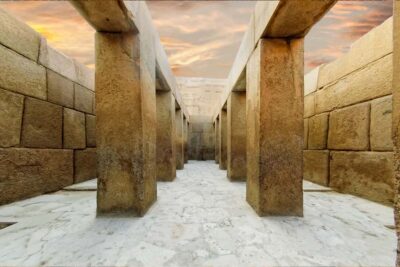
Half-Day Tour to Pyramids of Giza and the Sphinx
Read our review →
Browse the lists this tour appears in