
Reviewed · 1-DAY TOURS
Day Trip to Luxor Highlights from Safaga Port
Luxor rewards an early start. This long shore excursion gives you a practical way to see Egypt’s biggest ancient sights in one day, with a private vehicle, an Egyptologist guide, port pickup, entrance fees, lunch, and a short felucca ride included. I especially like the chance to visit both sides of the Nile, and I like that the guide can adjust the day around your interests.
The main drawback is the three-hour drive each way between Safaga and Luxor. You will spend roughly 12 to 15 hours away from the ship, so this is a serious day out, not a gentle sightseeing stop. The itinerary is also ambitious, and one rating noted that lunch did not offer the advertised Nile view and that Karnak felt rushed.
The experience costs about $294.12 per person and has a 4.7 rating from 37 ratings, with 92 percent recommending it. Guides named in the feedback include Samar Nagi, Ayman, and Mohammed, all praised for clear explanations, good organization, or a friendly manner. One German-speaking booking also received help after the ship arrived two hours late, which says something useful about the operator’s ability to make a tight day work.
In This Review
- Key points to know before booking
- Why this is a worthwhile shore excursion from Safaga
- The three-hour road to ancient Thebes
- Valley of the Kings: tombs beneath the desert hills
- Hatshepsut Temple and the West Bank monuments
- Lunch on or near the Nile
- Karnak Temple, where scale becomes the story
- A 30-minute felucca ride to finish
- Guides, drivers, and the private format
- Price, timing, and practical value
- Who should book this Luxor day trip?
- Should you book it?
- FAQ
- What time does the tour start?
- How long does the experience last?
- How long is the drive to Luxor?
- Which Luxor sites are included?
- Is lunch included?
- Is the felucca ride included?
- Is Tutankhamen’s tomb included?
- Is the tour private?
- What is included in the price?
Key points to know before booking
- The drive takes about three hours each way: Bring water, sun protection, and something to occupy you during the road journey.
- You see Luxor’s major highlights: The Valley of the Kings, Hatshepsut Temple, Colossi of Memnon, and Karnak are all included.
- A private Egyptologist guide leads the day: This gives you room to ask questions and shape the visit around your interests.
- The itinerary crosses both banks of the Nile: The West Bank focuses on royal tombs and mortuary temples, while Karnak anchors the East Bank.
- Lunch and entrance fees are included: This makes the high price easier to assess, especially for a small private party.
- The schedule is tight: Karnak may receive less time than you want, and the lunch setting may not match the promised Nile view every time.
Why this is a worthwhile shore excursion from Safaga
Safaga is a useful port for Red Sea cruising, but Luxor is the cultural prize. The ancient city is far inland, and reaching it independently from a ship port would involve arranging transport, managing a long return journey, and protecting your departure time. This excursion solves the biggest practical problem by arranging the port transfer and return together.
The value is not only in the list of sights. You get a vehicle with air conditioning, bottled water, a guide, lunch, entrance fees, and a full day of transport. If you are sharing the cost with family or a small group, the private format can make the $294.12 price more reasonable. It also avoids the stop-and-start feel of a large coach tour.
Still, you should judge the price against your own priorities. If you only want one or two monuments, this is too much time and money for the result. If Luxor is a major reason you are stopping in Egypt, the chance to see its most important sites in one carefully arranged day has real value.
The day begins at 5:30 a.m. at Safaga Port. Pickup is arranged at the exit door of your cruise ship, followed by the road journey to Luxor in a modern air-conditioned vehicle. You meet your private guide in Luxor, though the supplied information does not state exactly where that handoff occurs.
More things to do in Hurghada:
- From Hurghada: Cairo and Giza Highlights Full-Day Tour
★ 4.5 · 6,014 reviews - Hurghada: Luxury Cruise Trip to Orange Bay with Lunch
★ 4.9 · 5,451 reviews - Hurghada: Orange Bay Island Boat Trip w/ Breakfast and Lunch
★ 4.9 · 5,345 reviews
The three-hour road to ancient Thebes
The road is the least glamorous part of the experience, but it is unavoidable. The total day lasts around 12 to 15 hours, and much of that time is spent getting between the port and Luxor. The early departure protects your sightseeing time and helps you reach the monuments before the hottest part of the day.
I would treat the drive as part of the cost of reaching the prize. Wear light clothing, carry sunglasses, and keep bottled water close. You should also be realistic about energy levels. After a pre-dawn pickup, several major archaeological sites, lunch, and the return trip, you will be tired by the time you reach the ship.
The private vehicle matters here. A family traveling with a toddler reported that driver Hassani was especially accommodating and worked to keep the long journey comfortable. That kind of flexibility is one of the clearest advantages of booking a private arrangement instead of joining a fixed group.
The advertised maximum is 35 people, so confirm the exact setup of your booking if having only your own party is important. The experience is presented as private and customizable, but one Spanish-language booking was told shortly before departure that four additional people would join. That does not mean every booking works this way, but it is worth clarifying in advance.
Valley of the Kings: tombs beneath the desert hills
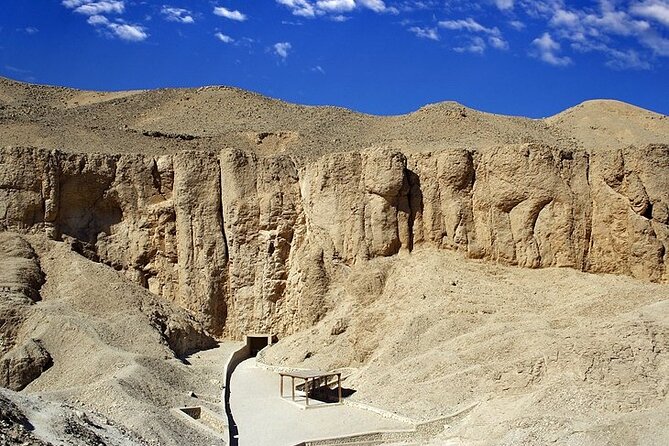
The first major stop is the Valley of the Kings on Luxor’s West Bank. This was the burial ground for rulers of Egypt’s 18th through 20th dynasties, and the site contains more than 63 known royal tombs. The mountain setting is stark and fitting: these rulers wanted their burials protected from the open floodplain and separated from ordinary life.
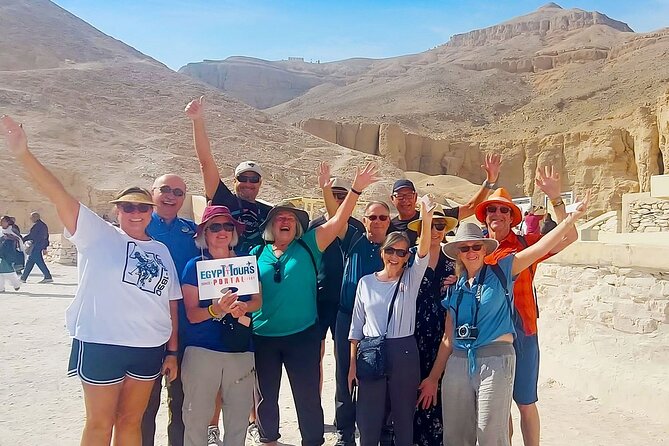
Your admission includes the Valley of the Kings. About two hours are allocated here, enough to enter several tombs and study the painted corridors, chambers, and burial scenes. The decoration survives remarkably well in places, with figures and hieroglyphs still visible inside the rock-cut passages.
Your guide adds the context that turns a series of decorated rooms into a meaningful visit. You can learn why royal tombs were filled with objects for the next life and how the burial ground served generations of pharaohs. The tour description specifically mentions Ramses II and Tutankhamen, though individual tomb access can change.
The tomb of Tutankhamen requires an additional fee. I would not treat it as automatically essential. The boy king’s fame comes largely from the discovery of his largely intact burial treasure, while other tombs in the valley can offer more extensive decoration. Ask your guide which tombs are open and which best fit your interests before paying extra.
Two hours can pass quickly here. The heat, walking, stairs, and enclosed tomb interiors all take effort. If you care most about the Valley of the Kings, tell your guide early so you do not spend too much time at later stops.
Hatshepsut Temple and the West Bank monuments
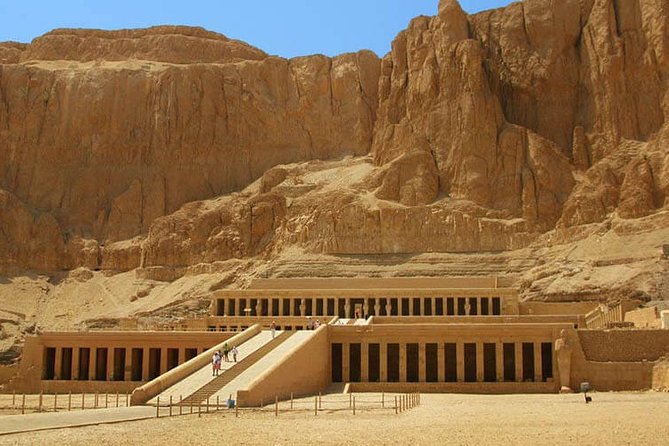
From the valley, the route continues to the Temple of Hatshepsut at Deir el Bahari. The temple is built into a dramatic desert setting and rises in three levels, connected by broad central ramps. Its clean terraces give it a different feel from the crowded wall surfaces and narrow corridors of the royal tombs.
Hatshepsut ruled as pharaoh and commissioned this temple as both a place of worship and a memorial to her reign. The structure’s broad lines make it easy to understand at a glance, while the guide can explain the stories shown in the reliefs and the unusual place Hatshepsut holds in Egyptian royal history.
The planned visit lasts about one hour, with admission included. That is enough for the main terraces and views, though you may wish for more time if you enjoy architecture or photography. The open setting also means strong sun, so a hat and sunscreen are practical rather than optional.
The wider description also includes Medinet Habu, the temple of Ramses III, among the surrounding archaeological wonders. The detailed stop schedule specifically lists the Valley of the Kings, Hatshepsut Temple, Colossi of Memnon, and Karnak, so ask your guide at the start whether Medinet Habu is included in your exact version of the day. This is a good example of why a private guide helps: you can decide if an extra temple is worth trading time elsewhere.
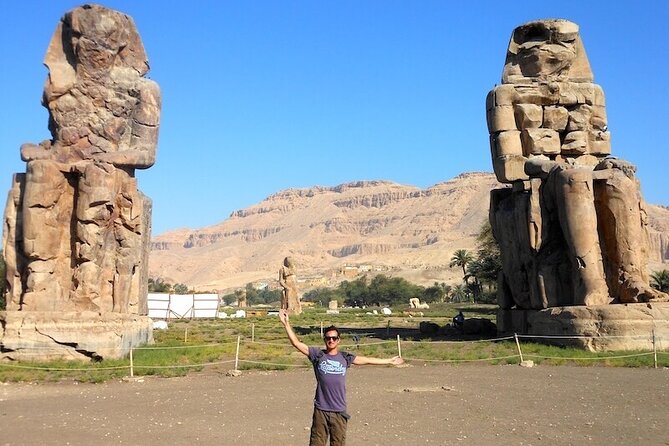
The Colossi of Memnon require less time but give you a quick, memorable stop. These two huge quartzite statues depict Amenhotep III and are the surviving remains of a once much larger mortuary temple. The stone was transported roughly 700 kilometers to Luxor, an impressive feat even before you consider the size of the statues.
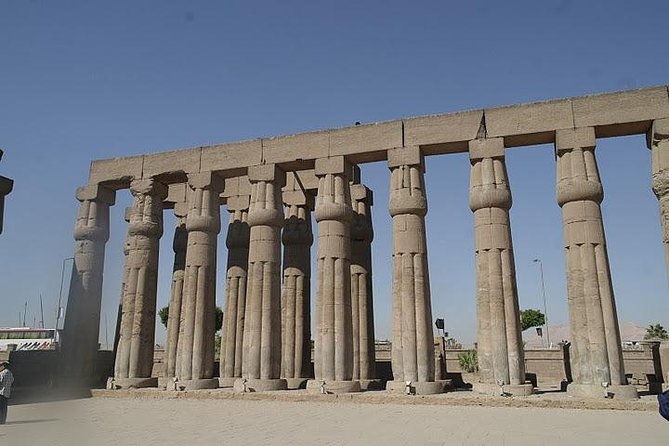
The stop is listed as free and lasts around an hour, including the transition toward lunch. Do not expect a full museum visit here. The statues are best understood as a short pause to appreciate scale, construction, and the damage caused by time.
A few more Hurghada trips worth weighing up
- Hurghada: Full-Day Trip to Cairo by Plane
★ 4.5 · 2,415 reviews - Hurghada: Cairo Pyramids, Sphinx & Egyptian Museum Day Trip
★ 4.7 · 2,271 reviews - Hurghada: Orange Bay Day Trip with Water Sports and Lunch
★ 4.9 · 1,746 reviews - 1-day trip to Cairo with flight from Hurghada / Makadi Bay / Soma Bay / El Gouna
★ 5.0 · 1,193 reviews
Lunch on or near the Nile
Lunch is described as a typical Egyptian or oriental meal, included in the tour price. The main description places it at an island restaurant in the middle of the Nile and promises views over the river. This should be a pleasant break after the West Bank sites, especially because the day involves plenty of walking and sun.
I would keep your expectations flexible about the setting. One highly positive rating specifically noted that lunch did not come with Nile views as described. The food itself may still be useful and filling, but the location and atmosphere can vary.
The included meal helps the price, but food and drinks not specifically included remain your responsibility. Bottled water is included. If you have dietary needs, explain them when booking or to the operator before departure, since the supplied information does not specify a menu or special-meal policy.
Karnak Temple, where scale becomes the story
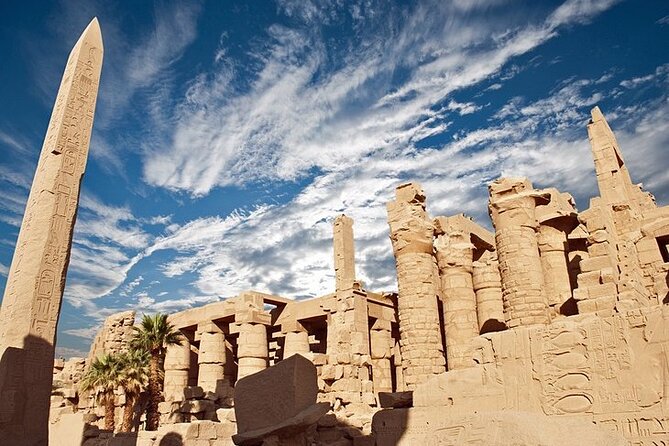
Karnak is the grand finale of the archaeological portion of the day. The complex developed over many centuries, from about 2055 BC to 100 BC, and covers a huge area. It is not one single temple but a group of major sacred precincts built and expanded by successive rulers.
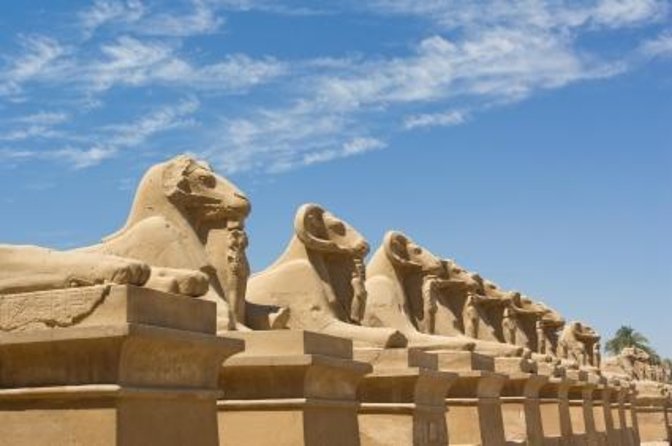
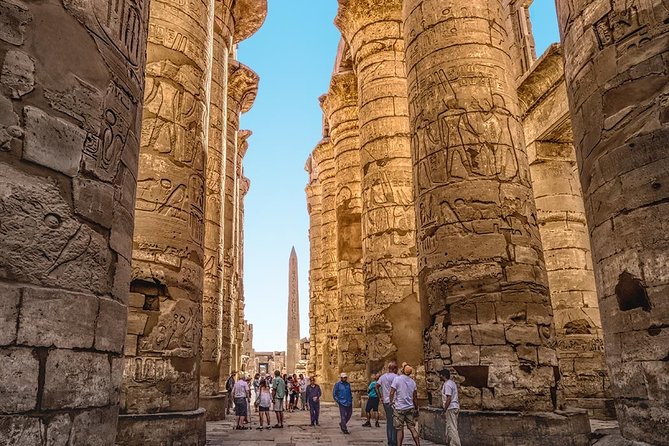
The tour focuses on famous features such as the Avenue of the Sphinxes, the Great Hypostyle Hall, and the Sacred Lake. The Great Hypostyle Hall is the visual high point for many people, with massive columns crowded together under a forest of stone. Even when parts of the complex are worn or incomplete, its scale makes the ancient building project easy to grasp.
Two hours are allocated to Karnak, with admission included. That sounds generous until you reach the site. The complex is vast, and one rating specifically felt there was not enough time. I agree that you should decide what matters most before entering. If you want detailed explanations of every section, the schedule will feel compressed. If you want the main ceremonial route and the biggest architectural features, two hours can work.
Ask for a clear plan. The Avenue of the Sphinxes, Hypostyle Hall, and Sacred Lake are the named priorities, so make sure those are not lost to minor stops or shopping opportunities. A good guide such as Ayman, praised for making the most of a delayed arrival, can help keep the visit focused.
Karnak also gives you the strongest sense of ancient Thebes as a religious center. The Valley of the Kings is intimate and hidden, while Karnak is public, ceremonial, and built to impress. Seeing both on the same day creates a useful contrast.
A 30-minute felucca ride to finish
After Karnak, you board a traditional felucca for about 30 minutes on the Nile. This is not a long sailing expedition. It is a short, slower interlude after a day of tombs, temples, heat, and transport.
The boat ride gives you a change of pace and a chance to look at Luxor from the river. It is also a fitting end because the Nile explains the city’s location and much of ancient Egypt’s prosperity. The ride is included as part of the planned experience, though the supplied details do not specify sailing conditions or whether the boat always uses its sail.
Do not book this tour solely for the felucca. Thirty minutes is enough to enjoy the atmosphere, but not enough for a major river excursion. Think of it as a calm final chapter before the road back to Safaga.
Guides, drivers, and the private format
The strongest part of this experience is the human service. You are assigned a professional Egyptologist guide, and the private format allows questions, adjustments, and a pace suited to your group. The named guides in the feedback include Samar Nagi, Ayman, and Mohammed.
Samar Nagi was praised for strong guiding and an excellent chauffeur, although the schedule at Karnak felt short. Mohammed was described as thoughtful and able to add local experiences beyond the core route. Ayman received praise for German-language guiding, useful explanations, and keeping the planned visits possible after the ship arrived two hours late.
The driver matters just as much as the guide on this route. You are spending about six hours on the road, so a considerate driver can make a real difference. Hassani was singled out for helping a family with a toddler stay comfortable during the long transfer.
The private format is especially useful for families, small groups, and anyone with a specific interest in royal tombs, temple architecture, or ancient religion. It is less useful if you prefer a slow, unstructured day. The itinerary is packed, and even a flexible guide cannot create extra hours.
Price, timing, and practical value
At $294.12 per person, this is not a budget excursion. Its value depends on what is included and how many people share the vehicle and guide. Port pickup and drop-off, air-conditioned transport, a professional guide, bottled water, lunch, taxes, handling charges, and entrance fees are included.
The long drive makes the organized return particularly important. You need to reach Safaga Port in time for your cruise departure, and the tour ends back at the meeting point. A ship-based excursion also gives you a clear reason to favor a company that is used to port schedules.
The early start is fixed at 5:30 a.m. Confirmation is received when you book, and free cancellation is available until 24 hours before the experience begins. Changes or cancellations inside that 24-hour window are not accepted for a refund.
A few practical points will improve your day:
- Tell the operator if you need a particular language, especially since the quality of the guide is central to the experience.
- Ask whether Medinet Habu is included in your confirmed route.
- Clarify if your booking is truly limited to your party, since one booking was combined with four other people.
- Ask about the lunch location if a Nile view is important to you.
- Decide in advance if you want to pay extra for Tutankhamen’s tomb.
- Protect your time at Karnak by naming your top priorities.
Who should book this Luxor day trip?
I would recommend it most strongly to cruise passengers who may never return to Luxor and want the major sights in one day. It suits people who value expert explanation, door-to-door transport, and the ability to tailor the route more than they value a relaxed pace.
Families can benefit from the private setup, especially if children need breaks or a toddler is coming along. Small groups may also find the price easier to justify when divided among several people.
You should think twice if long road journeys leave you miserable, if you dislike early mornings, or if you want to study each monument at length. The tour covers a lot, but that is also its limitation. Luxor deserves several days, and this is a highlights tour by necessity.
Should you book it?
Book this excursion if Luxor is high on your Egypt wish list and your cruise schedule gives you only one day. The Valley of the Kings, Hatshepsut Temple, Colossi of Memnon, Karnak, lunch, and a felucca ride create a strong first look at the city, while the guide and arranged return remove much of the stress of traveling from Safaga.
I would book only after confirming three details: the exact group size, the lunch location, and whether Medinet Habu is part of your route. Go in ready for a long day and a fast visit at Karnak. If you accept those limits, this is a practical and worthwhile way to reach Luxor from the Red Sea coast.
FAQ
What time does the tour start?
The tour starts at 5:30 a.m. Pickup is arranged from the exit door of your cruise ship at Safaga Port.
How long does the experience last?
The full excursion lasts approximately 12 to 15 hours, including transportation between Safaga and Luxor.
How long is the drive to Luxor?
The journey from Safaga to Luxor takes about three hours each way.
Which Luxor sites are included?
The planned visits include the Valley of the Kings, Hatshepsut Temple at Deir el Bahari, the Colossi of Memnon, and Karnak Temple. The broader description also includes Medinet Habu, so you should confirm that stop for your booking.
Is lunch included?
Yes. A typical Egyptian or oriental lunch is included. The description places it at an island restaurant in the Nile, but the setting may vary.
Is the felucca ride included?
Yes. A traditional felucca cruise of about 30 minutes is included.
Is Tutankhamen’s tomb included?
The Valley of the Kings admission is included, but entry to Tutankhamen’s tomb costs extra.
Is the tour private?
The experience is described as a private tour with personalized attention and a customizable itinerary. The stated maximum is 35 people, and one booking was combined with four additional people, so confirm the exact group arrangement before departure.
What is included in the price?
The price includes taxes, fees, handling charges, bottled water, lunch, a professional guide, port pickup and drop-off, and entrance fees for the included sites. Food and drinks not specified as included are extra.
Just added around Hurghada
- Private Transfer from Hurghada To Luxor★ 5.0 · 23 reviews
- 2 hours Camel Riding at Amazing Desert & Sea With Transfer – Hurghada★ 4.5 · 23 reviews
- One-Way Transfer from OR to Hurghada Airport & Hotels – Hurghada★ 4.5 · 23 reviews
- Horse Riding on the Beach And Desert 3 hours From Hurghada★ 4.5 · 23 reviews
- Luxor Trip Private from Hurghada, Elite Trip★ 5.0 · 23 reviews
- Hurghada: Luxor, Karnak Temple & Valley of the Kings★ 5.0 · 23 reviews
- Private daytrip from Hurghada to Luxor★ 5.0 · 23 reviews
- Hurghada Desert Sunset & Stargazing Tour with Dinner by Jeep★ 4.5 · 23 reviews
1-Day Tours, compared.
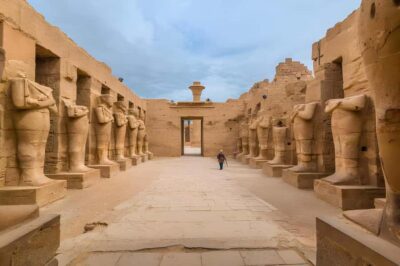
Luxor Day Trip from Hurghada Small Group & Tutankhamun Tomb
Read our review →
Cairo Pyramids, Sphinx & Egyptian Museum Day Trip
Read our review →
Orange Bay Day Trip with Water Sports and Lunch
Read our review →
From Cairo Alexandria Catacombs, Citadel Day Trip with Lunch
Read our review →
1-day trip to Cairo with flight from Hurghada / Makadi Bay / Soma Bay / El Gouna
Read our review →
Browse the lists this tour appears in