
Reviewed · HORSES
First impression of Luxor-Explore secrets of Luxor by horse carriage
Ancient temples, one old-fashioned ride. This four-hour introduction to Luxor combines a horse carriage journey along the Nile with guided visits to Karnak Temple, Luxor Temple, the Avenue of Sphinxes, and Abu Haggag Mosque. I like the small price of $30, which includes transport and an Egyptologist guide, and I like the chance to see Luxor at street level rather than from a sealed tour bus. The main concern is serious: horse welfare has been questioned, and one reported incident involved an exhausted horse collapsing on a hot day.
You meet at Luxor Museum, look for a guide carrying a red flag, and return there at the end. I also like the clear focus on Luxor’s East Bank, since the tour gives you major ancient sites in one compact outing. Still, confirm how much of the journey will actually be by carriage before booking, as one guest arrived expecting the ride to begin at the meeting point and instead walked to the first stop.
In This Review
- Five things to know before you book
- Why this is a useful first look at Luxor
- Starting at Luxor Museum
- Seeing Luxor from a horse carriage
- Karnak Temple and the scale of ancient Thebes
- Luxor Temple after Karnak
- Walking the Avenue of Sphinxes
- Abu Haggag Mosque inside an ancient temple
- The guide can make or break the morning
- Who will enjoy this outing most
- Booking, cancellation, and final value
- Should you book this Luxor tour?
- FAQ
- Where does the tour begin?
- Where does the tour end?
- How long does the experience last?
- Are Karnak Temple and Luxor Temple admission tickets included?
- Is transportation included?
- What is the cancellation policy?
Five things to know before you book
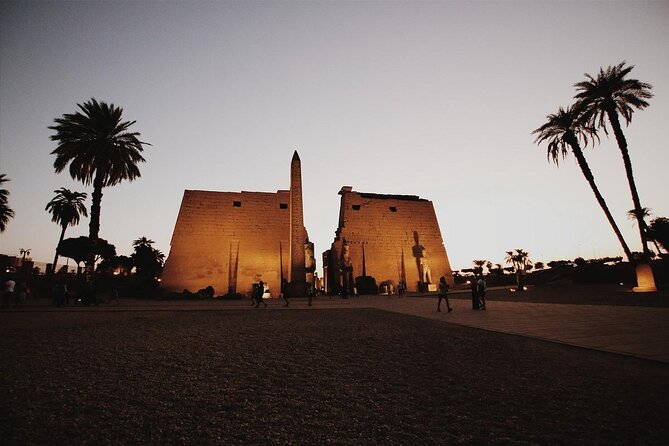
- Karnak takes the most time: You get about an hour for Egypt’s largest temple complex, with admission paid separately.
- The carriage is part of the appeal: You travel between stops by horse carriage, but the exact starting arrangement should be confirmed.
- Two temple tickets cost extra: Karnak and Luxor Temple together are listed at 200 EGP, about $12.
- Ababoub earned special praise: One couple specifically singled out their host, Ababoub, for making the day enjoyable.
- Animal welfare needs careful thought: A troubling report described an underfed horse collapsing in the heat, so ask questions before you ride.
Why this is a useful first look at Luxor
Luxor can feel like several cities at once. Along the Nile, cruise boats and feluccas share the river with working traffic. Behind the riverfront, traffic, shops, hotels, and ancient stone compete for your attention. A horse carriage gives you a slower view of that mix.
I think this outing works best as a first orientation to the East Bank. You are not trying to inspect every inscription or spend half a day at one monument. Instead, you get a broad look at Luxor’s central sights, with an Egyptologist explaining how the temples fit into ancient Thebes.
The tour lasts about four hours. The listed site visits add up to roughly two hours and 50 minutes, leaving time for carriage travel, introductions, walking, and explanations. A maximum group of 50 is allowed, so the experience may feel quite different with a small group than with a full departure.
The $30 price is reasonable for a guided half-day, especially since carriage transport is included. You should budget another 200 EGP, listed as about $12, for entry to Karnak and Luxor temples. The price does not cover food, drinks, or other personal costs.
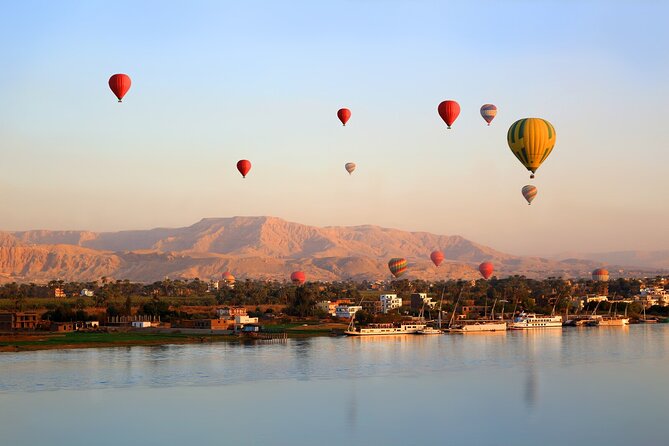
More things to do in Luxor:
- Hurghada: Luxor Valley of the Kings & Tutankhamun Tomb Trip
★ 4.7 · 13,208 reviews - Luxor Day Trip from Hurghada Small Group & Tutankhamun Tomb
★ 4.8 · 5,366 reviews - Hot Air Balloon Ride in Luxor Egypt with Transfers Included
★ 5.0 · 4,319 reviews
Starting at Luxor Museum
The meeting point is in front of Luxor Museum on Kornish Al Nile. You are told to find the tour leader by looking for a red flag, a simple system that matters in a busy city where several guides and drivers may be waiting.
The museum itself is not part of the scheduled visit. You meet outside, spend about 10 minutes getting organized, and then head toward Karnak by horse carriage. If you are unfamiliar with Luxor, I would arrive early enough to identify the museum entrance and river road without rushing.
This meeting point also gives you a useful reference for the end of the outing. The activity finishes back at the same place, rather than leaving you at Luxor Temple or somewhere across town.
One practical issue needs attention here. The experience is promoted around a horse-carriage ride, but a guest reported walking to the first point of interest instead of meeting the carriage at the stated starting point. That may have been a one-off problem or a communication error, but I would ask the operator, Budget Friendly Tours FZE LLC, exactly where the carriage begins and how much walking is expected.
Seeing Luxor from a horse carriage
A carriage ride changes the pace. You are close to the road, close to the sound of the city, and exposed to the heat and traffic in a way you are not from an air-conditioned vehicle. That can feel more connected to daily Luxor, but it is not always comfortable.
The planned route follows the East Bank and includes views along the Nile. This gives you chances to photograph the river, the waterfront, and the changing streets between the museum and the temples. The carriage is less about speed than atmosphere. You get a street-level introduction before walking through the monuments.
I need to be direct about the animal welfare concern. One report described a horse as visibly emaciated, with bones showing, and said the animal fell on a hot day and could not get up without help after the harness was removed. The operator apologized and said the matter would be investigated.
That account is too serious to brush aside. If you are uncomfortable with animal-powered transport, this may not be the right excursion for you. If you still want to consider it, contact the provider before booking and ask about the horses’ condition, shade, water, working hours, and what happens if an animal shows signs of distress. You can also decide to use a taxi or another form of transport and visit the temples independently.
Karnak Temple and the scale of ancient Thebes
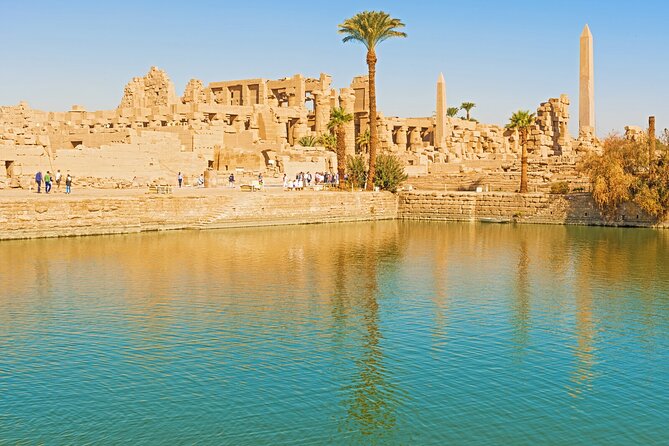
Karnak is the centerpiece of the tour, and one hour gives you a useful introduction, though not enough time for every corner. Construction began about 4,000 years ago and continued until Roman control of Egypt around 2,000 years ago. Each ruling period added something, so the site feels less like one building and more like a long record of changing power.
The main complex honored Amun-Ra, who was regarded as living on earth with his wife Mut and their son Khonsu. Their associated temples help explain why Karnak became the most important religious center in ancient Thebes.
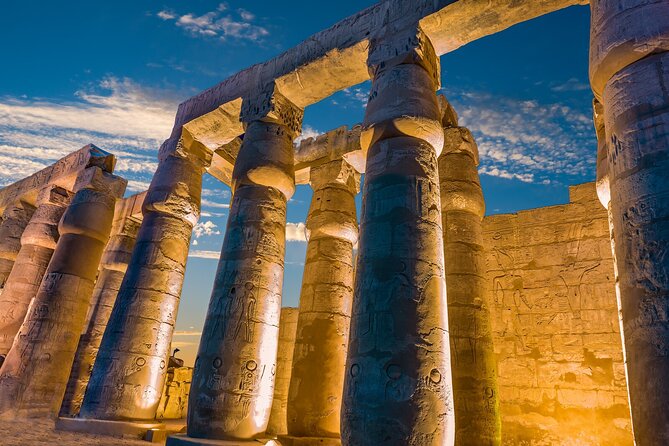
The Hypostyle Hall is the visual knockout. Seti I began its construction, and the hall is known for its huge forest of columns. Even with limited time, your guide should help you understand how the hall functioned and why its scale mattered.
Karnak’s long building history also gives the guide material for discussing archaeology. The tour promises information about recent discoveries, so ask your Egyptologist to connect new finds with what you are seeing. That is one of the better reasons to take a guide here. Without context, the columns and broken walls can blur together.
Admission is not included. The listed cost for Karnak and Luxor Temple together is 200 EGP, approximately $12, but prices can change, so check the current amount when you book or arrive. Bring practical sun protection and comfortable walking shoes. The site visit is on foot, and the tour does not promise shade or seating.
More Horse Riding in Luxor:
- Private Horse Riding Tour in Luxor West Bank
★ 5.0 · 91 reviews - Luxor: Scenic Camel or Horse Ride
★ 3.9 · 24 reviews - Traditional Egyptian Breakfast at the AlHabib Arabian Horse Farm
★ 5.0 · 24 reviews - Hurghada: Red Sea & Desert Horse Riding Tour with Swimming
★ 4.8 · 2,198 reviews
Luxor Temple after Karnak

Luxor Temple has a different feel from Karnak. It was built over hundreds of years by Amenhotep III, Ramses II, Tutankhamun, and other rulers. Its role centered on the annual renewal of the god Amun during the ceremony known as the First Occasion.
The Great Colonnade Hall is the main architectural feature. It is nearly 61 meters long and has 28 columns, each about 21 feet high. Much of the decoration was carried out under Tutankhamun around 1330 BC, giving the site a strong connection to several rulers rather than just one.
You get about an hour here. That is enough to see the major remains and hear the basic story, but you may want more time if you enjoy inscriptions, reliefs, and close architectural study. The tour format favors a clear overview over a slow, detailed examination.
The temple also carries evidence of later reuse. After the pharaonic period, parts of the sidewalls were dismantled and used as building material. Your guide can help you read the site as a place that changed over time, not simply as a preserved ancient monument.
Like Karnak, Luxor Temple requires a separate ticket. Since both entry fees are excluded, keep some Egyptian pounds available or confirm current payment arrangements ahead of time.
Walking the Avenue of Sphinxes
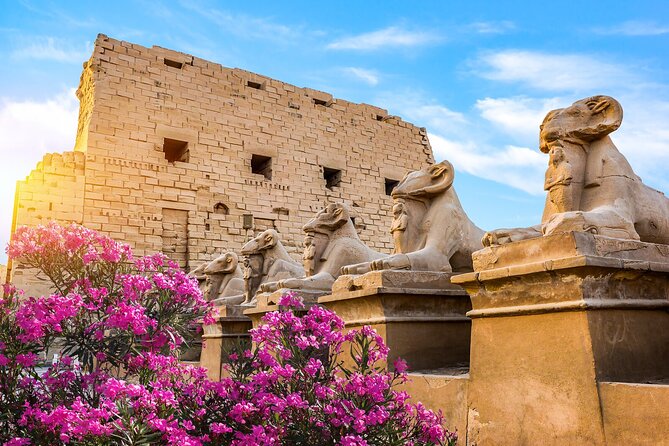
The Avenue of Sphinxes is scheduled for about 30 minutes and is a useful link between Karnak and Luxor Temple. Construction began during the New Kingdom and was completed under Nectanebo I of the 30th Dynasty, who ruled from 380 to 362 BC.
The avenue was buried under sand for centuries. Archaeological work began producing results in 1949, when Egyptian archaeologist Mohammed Zakaria Ghoneim found eight statues near Luxor Temple. More figures were uncovered between 1958 and 1964.
Egypt reopened the 3,000-year-old avenue in a large public ceremony on November 25, 2021. That recent reopening is worth remembering when you walk here. You are seeing a route that was hidden for generations and restored as a major connection between Luxor’s two great temple areas.
The stop is short, so expect a look and an explanation rather than a long stroll along the full avenue. It is also one of the best points for photographs, particularly if your guide gives you time to frame the sphinxes and the surrounding monuments.
Abu Haggag Mosque inside an ancient temple

The final stop is the Abu Haggag Mosque, also called Abu El-Hagag Mosque. It is built into Luxor Temple, an unusual sight that shows how sacred places can continue serving new communities long after their original religious use has ended.
The mosque is associated with Luxor’s long history of worship. The structure is integrated into the ancient temple complex, which dates back to the reign of Amenhotep III in the 14th century BC. The result is not a separate monument across the street. You see a later place of worship occupying part of an ancient Egyptian site.
The visit lasts about 10 minutes, so it is brief. Treat it as an architectural and cultural stop, not a full mosque tour. Dress and behave respectfully, and follow the guide’s instructions about where you may enter or photograph.
For me, this is one of the most memorable parts of the route because it complicates the usual temple visit. Luxor is not only a collection of ruins. It is also a living city where later generations built around, reused, and worshipped within older structures.
The guide can make or break the morning
The included Egyptologist guide is the main reason to choose this tour instead of simply hiring a carriage. Karnak and Luxor Temple are large, layered sites. A good explanation can turn a row of columns into a story about religion, kingship, rebuilding, and later reuse.
One particularly positive account names Ababoub as an excellent host. The couple who mentioned him enjoyed both the sites and his care during the day. If Ababoub is assigned to your group, you may benefit from the same friendly approach, though guide assignments can change.
The guide is also useful for keeping the visit moving. With four stops and carriage transfers, timing matters. You want enough explanation to understand the places without spending so long at one point that the final stops feel rushed.
Because the group can reach 50 people, ask about the expected group size. A large group may make it harder to hear every explanation, especially outdoors near traffic. If you want detailed discussion and plenty of questions, a smaller departure would be preferable.
Who will enjoy this outing most
I would recommend this experience to you if you want a short, guided introduction to Luxor’s East Bank and like the idea of moving through the city at a slow pace. It suits first-time visitors who want the major highlights without arranging several separate rides and guides.
It can also work well for people who enjoy photography. The Nile views, carriage journey, temple columns, sphinxes, and mixed ancient and Islamic architecture offer varied subjects in a single morning or afternoon.
Families and older visitors may appreciate having transport between the main points, but remember that Karnak and Luxor Temple involve walking. The description says most people can participate and that service animals are allowed, but it does not provide detailed mobility information. If you need step-free access or assistance, ask the operator before booking.
I would hesitate if you want a quiet, highly detailed archaeological visit, since the four-hour schedule and possible large group limit the depth of each stop. I would also hesitate if horse welfare is a major concern, given the reported condition of one animal.
Booking, cancellation, and final value
The experience is often booked about 15 days ahead, which suggests you should not wait until the last moment if the schedule matters to you. Confirmation is provided when you book, and mobile tickets are available.
Free cancellation applies when you cancel at least 24 hours before the start time. Cancellations or changes made within 24 hours are not refundable, and the cut-off uses Luxor local time.
At $30 per person, the tour offers fair value if the carriage operates as expected, the guide is strong, and you want the convenience of combining transport with four notable stops. The extra temple admission remains modest, but you should treat it as part of the real cost rather than a surprise at the entrance.
Should you book this Luxor tour?
Book it if you want a convenient East Bank overview, enjoy a horse-carriage format, and value an Egyptologist’s explanation more than long independent visits. The route includes Luxor’s essential temple sights, a recently reopened ancient avenue, and the striking Abu Haggag Mosque.
Before paying, I would confirm three things: where the carriage meets you, how large the group will be, and what animal welfare standards the operator follows. If the answers satisfy you, this can be an atmospheric and good-value first day in Luxor. If they do not, visit Karnak and Luxor Temple by another form of transport and keep the temples, not the carriage, as the focus of your day.
FAQ
Where does the tour begin?
The meeting point is in front of Luxor Museum on Kornish Al Nile in Luxor City. The tour leader is identified by a red flag.
Where does the tour end?
The activity ends back at the Luxor Museum meeting point.
How long does the experience last?
The tour lasts approximately four hours.
Are Karnak Temple and Luxor Temple admission tickets included?
No. Entry tickets are paid separately. The listed combined cost is 200 EGP, approximately $12 in total.
Is transportation included?
Yes. Horse-carriage transportation and an Egyptologist tour guide are included.
What is the cancellation policy?
You receive a full refund if you cancel at least 24 hours before the start time. Cancellations or changes made less than 24 hours before the start time are not accepted for a refund.
Just added around Luxor
- Private Tour foll day to East and West Banks of Luxor★ 5.0 · 23 reviews
- East and West Bank Luxor★ 5.0 · 23 reviews
- Full Day Tour to Luxor (East & West Bank)★ 5.0 · 23 reviews
- Big brother travel★ 5.0 · 23 reviews
- Luxor Day Tour :Valley of Kings & queen & Hatshepsut & Habu city★ 5.0 · 23 reviews
- Luxor: Scenic Camel or Horse Ride★ 3.9 · 24 reviews
- From Cairo: 4-Day Nile Cruise from Aswan to Luxor with Meals★ 4.4 · 24 reviews
- Traditional Egyptian Breakfast at the AlHabib Arabian Horse Farm★ 5.0 · 24 reviews
Horses, compared.

Red Sea & Desert Horse Riding Tour with Swimming
Read our review →
Sea & Desert Horse Tour, Stargazing, Dinner & Show
Read our review →

Sea & Desert Horse Riding tour/w Swimming&Transfer
Read our review →

Sharm El Shiekh: Beach and City Desert Horse Riding Tour
Read our review →
Horse Riding Tour 2 Hours on Sea And Desert & Transfer -Hurghada
Read our review →Browse the lists this tour appears in