
Reviewed · GUIDED
From Luxor: Guided Tour to East or West Banks with Lunch
Ancient Egypt packs a lot into one day. This Luxor tour makes the sprawling sights manageable, pairing the Valley of the Kings and Hatshepsut Temple with Karnak and Luxor Temple in an air-conditioned vehicle. I like the strong mix of famous monuments and practical support, especially the included lunch, bottled water, entrance tickets, and hotel pickup from Luxor’s East Bank.
I also like the Egyptologist guides, who often turn a wall of hieroglyphs into a readable story. Guides such as Ayman, Adel, Mahmoud, Marwa, Bahgat, and Noga have been praised for clear explanations and for allowing time to wander and take photos. The main drawback is simple: the full route is a long, hot day, and some people may prefer to split the East and West Banks over two days.
In This Review
- Key points to know before booking
- Why this tour works well for a first day in Luxor
- Valley of the Kings: three royal tombs underground
- Hatshepsut Temple and the story of a female pharaoh
- Colossi of Memnon: a quick stop with a big scale
- Lunch in Luxor, with a useful pause in the day
- Karnak: the grandest scale of the day
- Luxor Temple after the day’s biggest site
- Transport, guiding, and the human side of the day
- The optional boat ride and the wind question
- The real cost: $64 for a lot of moving parts
- Who should choose this Luxor tour?
- Should you book it?
- FAQ
- What does the full-day Luxor tour include?
- Can I visit only the East Bank or West Bank?
- Is lunch included?
- Where does pickup take place?
- Which languages are available for the guide?
- Can I add a felucca ride?
Key points to know before booking
- The full-day route covers Luxor’s biggest sights: Valley of the Kings, Hatshepsut Temple, Colossi of Memnon, Karnak, and Luxor Temple.
- You can choose one bank or both: The East Bank option focuses on Karnak and Luxor Temple, while the West Bank option includes the royal tombs and Hatshepsut Temple.
- Guiding is the main strength: Egyptologist guides explain symbolism, rulers, tomb decoration, and temple design instead of simply pointing at monuments.
- The Valley of the Kings visit includes three named tombs: Ramesses III, Ramesses VI, and Merneptah.
- Lunch, entry tickets, water, transport, and East Bank hotel transfers are included: Drinks at lunch are extra.
- The pace is efficient but demanding: Expect roughly five to nine hours, with plenty of walking and heat exposure.
Why this tour works well for a first day in Luxor
Luxor is not one compact archaeological site. The Nile divides it into two very different halves, and the monuments are spread across a wide area. The East Bank was the center of temples and daily religious life. The West Bank was linked with burial and the afterlife.
That geography matters. If you arrange each visit yourself, you need to think about transport, entrance tickets, opening times, and the order of stops. Here, a guide and driver handle the basic structure, leaving you to focus on the stonework, stories, and sheer scale.
The full-day version is the best choice if you have only one day in Luxor. It gives you a broad first look at the city’s major monuments. You will not see every tomb, chapel, or side room, but you will understand the main shape of ancient Thebes.
The shorter options make more sense if you have limited energy or extra days. Choose the West Bank for tombs and royal monuments. Choose the East Bank for grand temple architecture and a less physically demanding route.
More things to do in Luxor:
- Hurghada: Luxor Valley of the Kings & Tutankhamun Tomb Trip
★ 4.7 · 13,208 reviews - Luxor Day Trip from Hurghada Small Group & Tutankhamun Tomb
★ 4.8 · 5,366 reviews - Hot Air Balloon Ride in Luxor Egypt with Transfers Included
★ 5.0 · 4,319 reviews
Valley of the Kings: three royal tombs underground
The West Bank usually begins with the Valley of the Kings, the emotional high point of the day for many people. This dry valley held the burial places of Egypt’s New Kingdom rulers, who moved away from pyramid building and placed their tombs in hidden desert ravines.
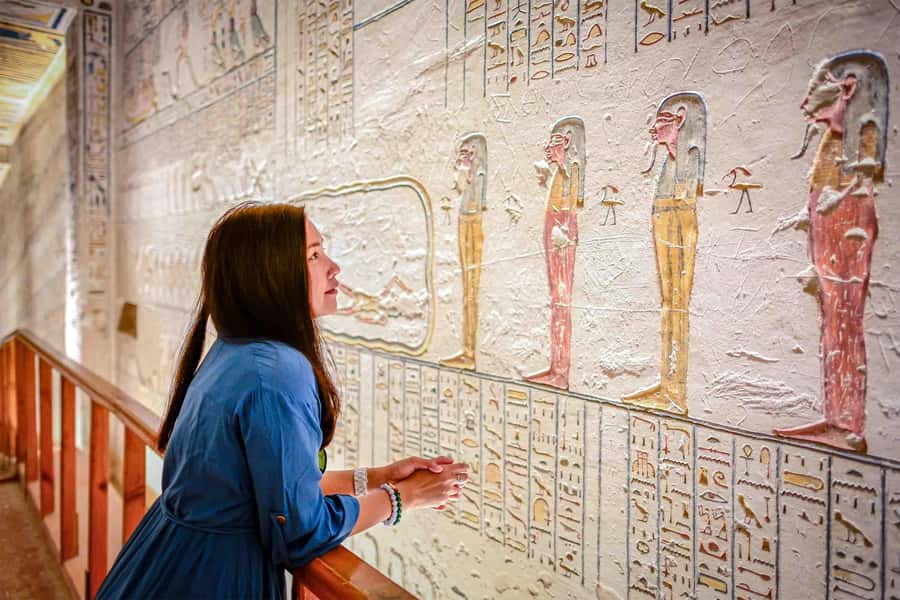
The basic visit includes three tombs: Ramesses III, Ramesses VI, and Merneptah. Each tomb offers a different look at Egyptian funerary art. The walls are covered with painted texts, gods, ritual scenes, and symbolic images intended to guide the pharaoh through the afterlife.
Ramesses VI is especially striking for its long decorated passage and strong colors. Ramesses III provides another look at the careful planning of a royal tomb, while Merneptah connects the site with the later phase of New Kingdom rule. Your guide can help you notice details that are easy to miss when you are moving through dim corridors.
Expect about two hours here, including walking between areas and entering the tombs. The ground can be uneven, and the passages may involve steps. This is not a stop where you simply stand in front of one monument for a photo, so wear steady shoes and bring only what you need.
Large bags and luggage are not allowed on the tour. You should carry your passport or an accepted copy of your ID, as requested in the tour information.
A practical point: the Valley of the Kings can feel tiring early in the day, especially in hot weather. Drink the water provided in the vehicle and do not save all your energy for later. Luxor’s monuments are generous with history but stingy with shade.
Hatshepsut Temple and the story of a female pharaoh
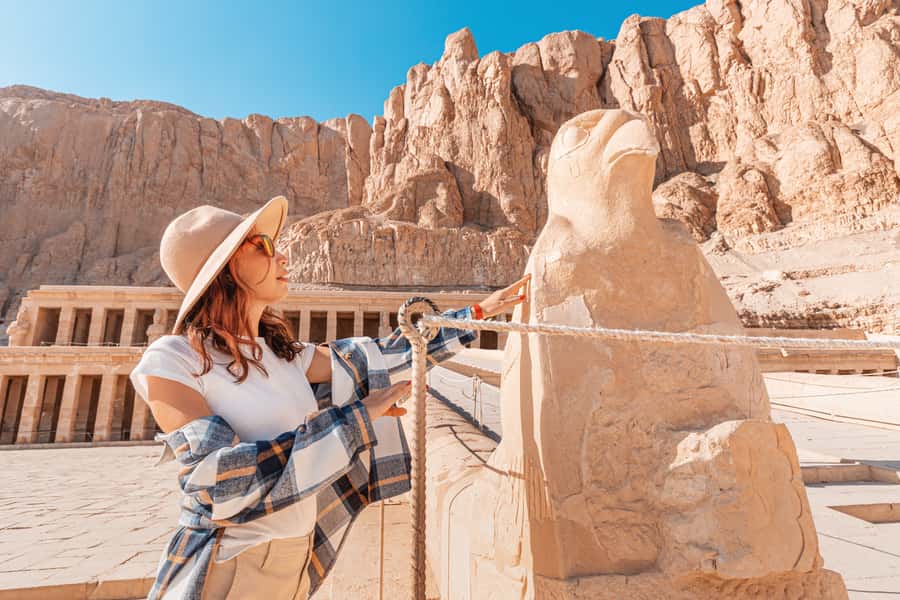
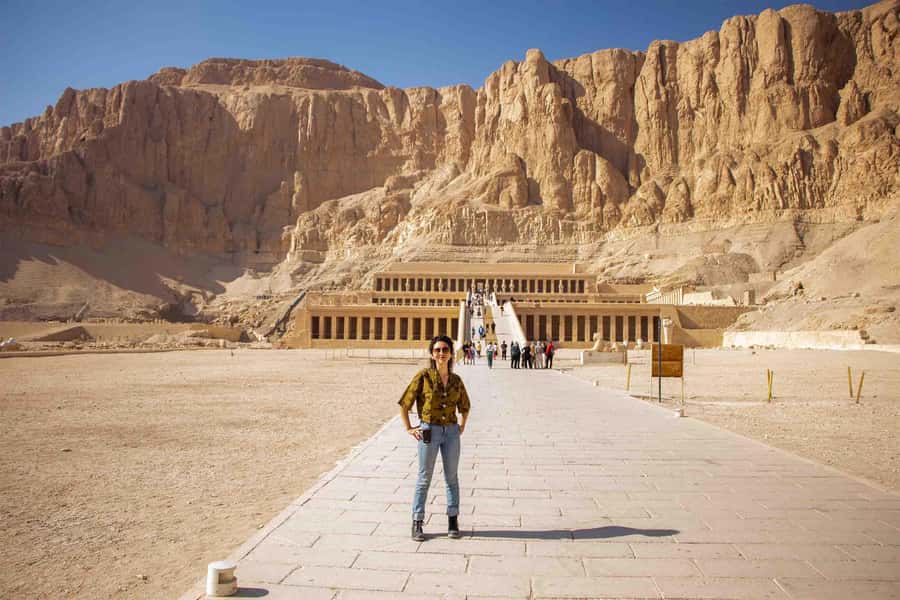
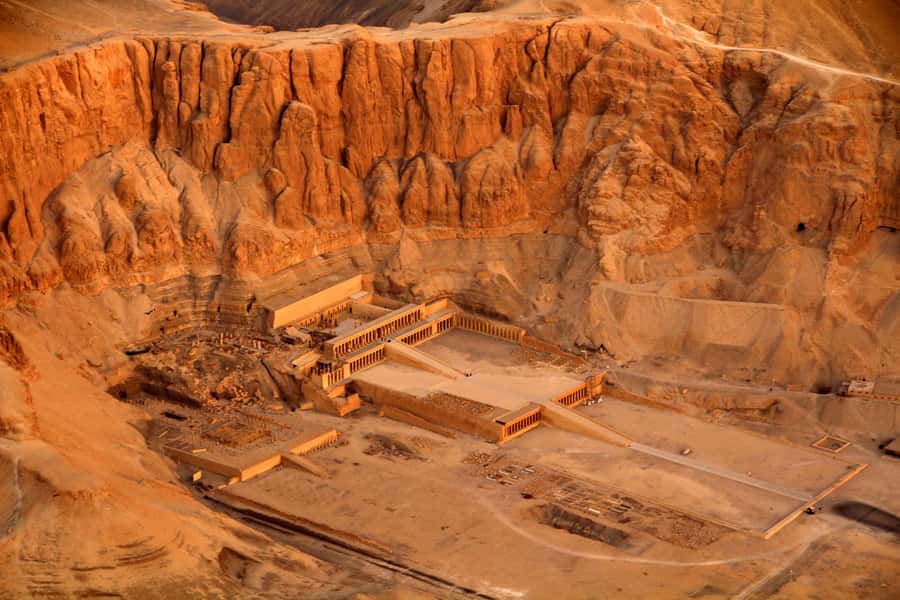
From the valley, the route continues to the Temple of Queen Hatshepsut. The temple is built against the cliffs, with broad terraces and long lines that make it feel very different from the tombs.
Hatshepsut ruled Egypt for about 20 years. Her reign brought wealth and peace, and her temple presents her authority through reliefs, processions, offerings, and images of divine approval. Your guide can explain how the monument presents a woman as king in a political world usually shown through male rulers.
The planned visit lasts about an hour. That is enough time to see the main terraces and hear the central story, though you may want more time for photographs and close inspection. Some tours move quickly here to protect the schedule for the East Bank.
The contrast with the Valley of the Kings makes this stop worthwhile. The valley is hidden and inward-looking. Hatshepsut’s temple is open, monumental, and meant to project power. Seeing both gives you a better sense of how Egyptian rulers wanted to be remembered.
Colossi of Memnon: a quick stop with a big scale
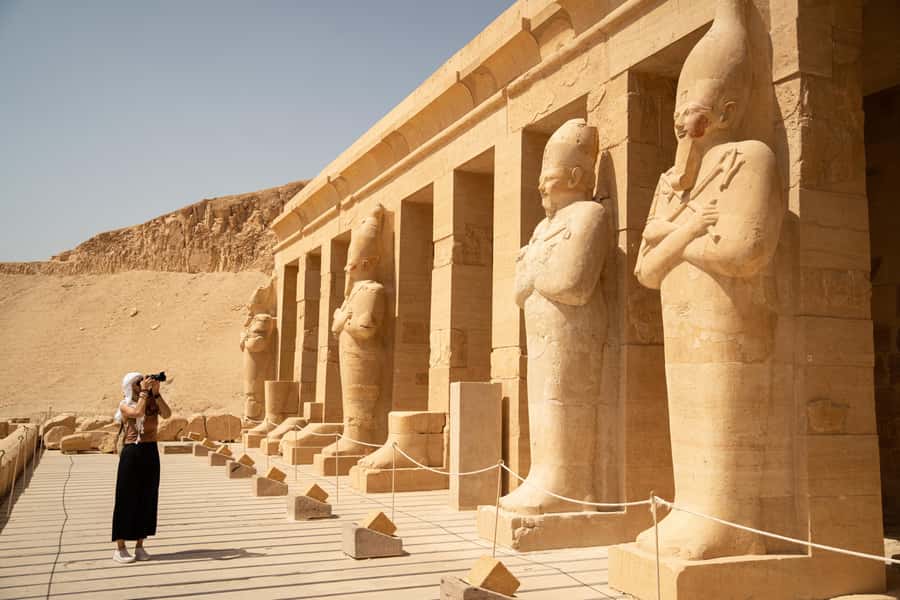
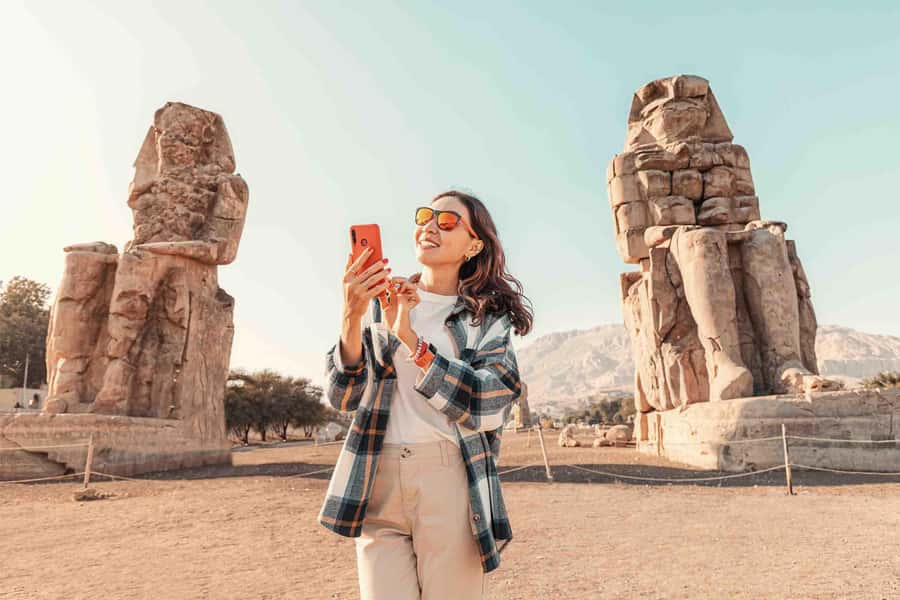
The Colossi of Memnon are two huge seated statues associated with the mortuary temple of Amenhotep III. Only around 30 minutes is scheduled here, so this is mainly a photo and orientation stop.
The statues once guarded the entrance to a much larger temple complex. Time and flooding damaged much of that temple, but the surviving figures still communicate the scale of royal building in ancient Egypt.
Do not expect a long visit. The value is in seeing the statues close up and understanding their original setting. Your guide can explain the connection with Amenhotep III and the role of mortuary temples, which keeps this short stop from becoming just another roadside photograph.
More trips with lunch in Luxor:
- Luxor : Full Day Tour to Luxor West and East Banks & Lunch
★ 5.0 · 870 reviews - Luxor: Karnak Temple and Luxor Temple Tour with Lunch
★ 4.4 · 658 reviews - Luxor: Abu Simbel Temple Private Guided Day Trip with Lunch
★ 4.6 · 546 reviews - Luxor: Valley of the Kings and Queens Guided Tour with Lunch
★ 4.5 · 337 reviews
Lunch in Luxor, with a useful pause in the day
Lunch takes about an hour at a local restaurant. It is included in the price, but drinks are not, so keep some Egyptian pounds or another payment method available if you want something beyond the provided arrangements.
The meal is more than a convenience. After the West Bank, you get a chance to sit down before the East Bank temples. Food quality can vary from one day to the next, but the available feedback describes the meal as tasty, clean, and better than expected.
One particularly practical detail is the cleanliness of the restaurant facilities. That may sound minor, but after several hours in desert heat, a clean toilet and a proper break matter. This is also a good point to refill your water supply and adjust your clothing before more walking.
Karnak: the grandest scale of the day
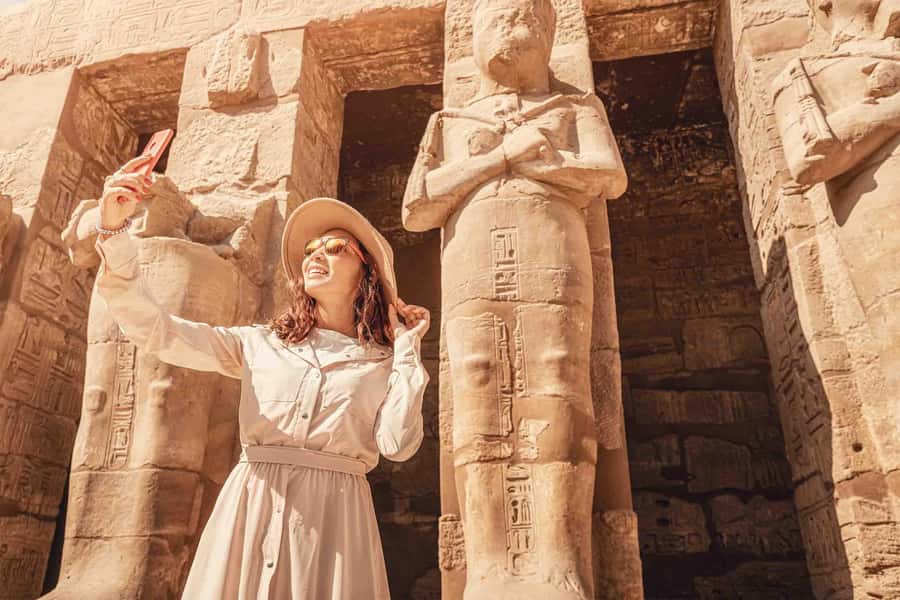
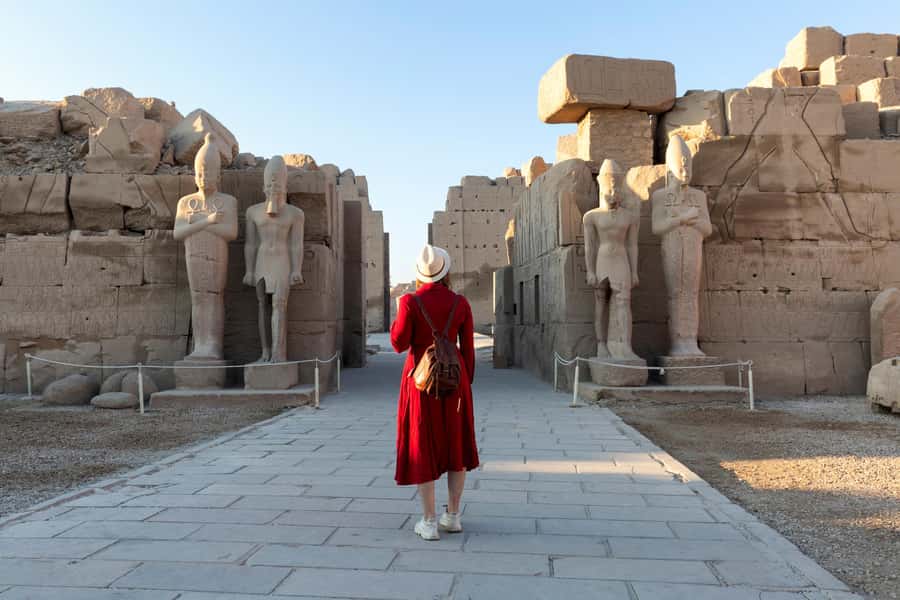
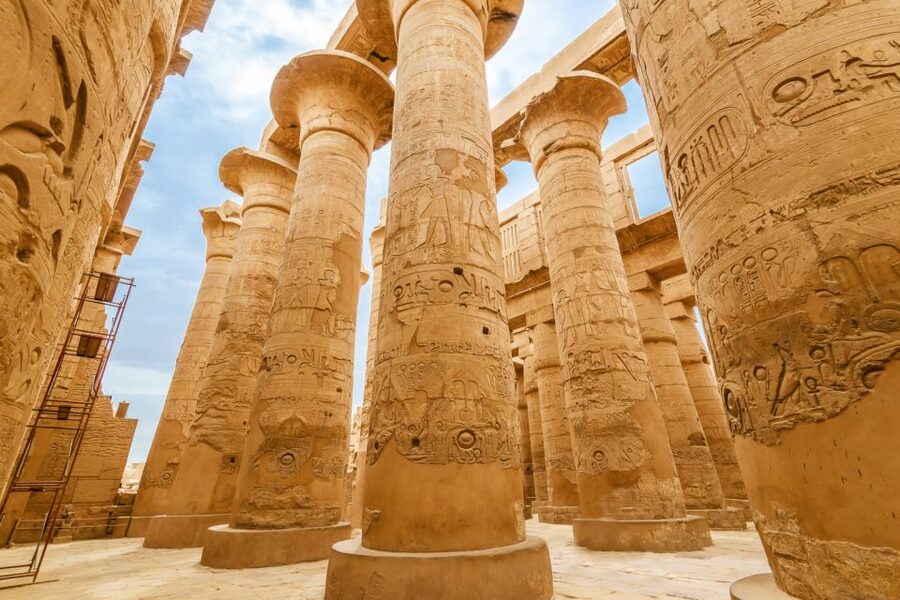
Karnak is not a single temple. It is a vast religious complex built and expanded by generations of Egyptian rulers. Its pylons, columns, chapels, sacred spaces, and processional routes can feel almost too large to take in at once.
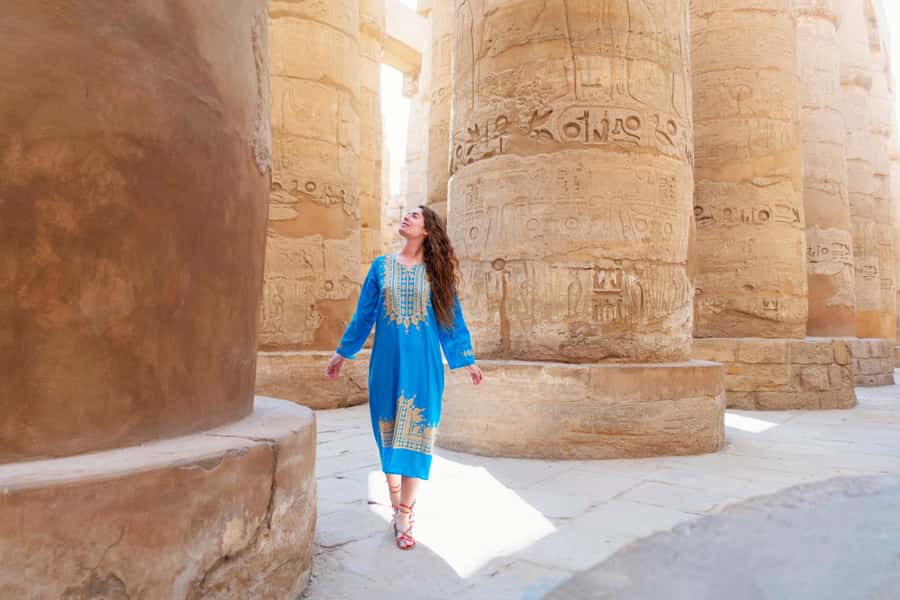
The Great Hypostyle Hall is the star for many visitors. Its dense forest of columns once supported a roof, and the carved surfaces preserve scenes of gods, kings, offerings, and ceremonies. A guide helps you read the complex in sections, rather than treating it as one endless field of stone.
The tour allows about an hour at Karnak. That gives you the main experience, but the site deserves slow attention. If you are fascinated by temple details, ask your guide to point out specific reliefs and explain how the complex changed over time.
This is also where the value of an Egyptologist guide becomes clearest. Without context, Karnak can look like a grand collection of columns. With context, you begin to see the relationship between royal power, temple ritual, and the long process of adding new buildings to an old sacred center.
Luxor Temple after the day’s biggest site
Luxor Temple is smaller and more focused than Karnak, but it has its own force. The temple was linked with the annual Opet Festival, when religious processions connected Luxor with Karnak.
The remaining pylons, statues, columns, and courtyards show how rulers across different periods added their mark. The site also reflects the changing use of sacred spaces over time, which your guide can explain as you move through it.
About an hour is scheduled here. That timing works well after Karnak because the two temples complement one another. Karnak shows the huge religious complex. Luxor Temple feels more like a carefully framed ceremonial route.
Try to leave room for your own looking. Several guides praised during the tour have been appreciated for explaining the basics, then giving people time to walk around, take photos, and ask follow-up questions. That is the right balance at a site like Luxor Temple.
Transport, guiding, and the human side of the day
Pickup and drop-off are included from accommodation on Luxor’s East Bank. The vehicle is air-conditioned, and mineral water is provided during the journey. That matters in Luxor, where a short drive between monuments can feel like a welcome reset from the sun.
Pickup from a West Bank hotel costs an additional $10 per person, and the meeting point for West Bank accommodation is El Mesala Hotel. Airport pickup and drop-off also cost extra. Confirm these details before booking so the start of the day is clear.
The guide quality is the strongest part of this experience. Ayman has been praised for fluent English and clear explanations. Adel is noted for giving useful historical detail while still allowing independent time. Mahmoud is particularly well regarded for answering questions, keeping the mood friendly, and helping visitors feel looked after.
Other praised guides include Marwa, Bahgat, Sayed Haggag, Noga, Sherry, Amr, Sallam, and Ayman. Guide assignments can vary, so you may not receive a specific person. Still, the repeated pattern is encouraging: good language skills, strong subject knowledge, patience, and a willingness to adjust to the group.
The driver also matters. Several accounts describe polite drivers, smooth timing, good vehicles, and careful help with uneven roads. This is especially useful if someone in your group walks slowly. One guide was also praised for helping an older family member manage steps.
The tour may be shared, but group size is not specified. On some dates, a booking intended to be shared has ended up as a private experience because only one person booked. Do not count on that, but it is a pleasant possibility.
The optional boat ride and the wind question
The day may include a one-hour boat cruise, and a felucca ride can be added as an extra. A traditional felucca depends on wind, so calm conditions may lead to a motorboat instead.
That is worth knowing if the sailing experience is important to you. A felucca gives you a quieter, more traditional river setting, but the operator cannot control the wind. Treat the boat portion as a flexible extra, not the main reason to book the tour.
The real cost: $64 for a lot of moving parts
At $64 per person, the full-day version offers solid value if you want the major Luxor sights in one organized outing. The price includes transport from an East Bank hotel, an Egyptologist guide, lunch, water, entrance tickets, and service taxes.
That bundle matters. Buying each ticket and arranging transport separately can take time, and the monuments are spread across both sides of the river. You are paying not only for admission, but also for someone to create a workable order and explain what you are seeing.
The main value depends on your chosen option. A one-bank tour costs less time and energy, but it also gives you fewer sites. The full route offers the best sightseeing return, though it asks you to accept a long day.
One older booking account expressed uncertainty about value because of ticket costs, but the stated inclusions for this experience list entrance tickets as included. Check the exact option and final booking details before payment, especially if you are comparing half-day and full-day choices.
Free cancellation up to 24 hours before departure and reserve-now, pay-later terms add useful flexibility. Last-minute bookings made within 24 hours may be moved to another day if space is limited.
Who should choose this Luxor tour?
I would choose the full-day option if you are in Luxor for a short stay, arriving from Cairo, or trying to see the main monuments without handling every transfer yourself.
It suits first-time visitors who want a clear introduction to ancient Egyptian temples and tombs. It also suits couples and small groups who value a private guide’s ability to answer questions and adjust the pace.
The West Bank option is best for you if royal tombs are your priority. Choose the East Bank if you care most about Karnak and Luxor Temple, or if you want a shorter day with less desert walking.
I would hesitate to recommend the full route to anyone who dislikes heat, walking, early starts, or tightly planned sightseeing. It is also not suitable for wheelchair users, and large bags are not allowed.
Wear comfortable shoes and light clothing that covers you respectfully at religious and archaeological sites. Carry your ID or a copy, keep water close, and tell the guide if you need more time at a tomb or temple. The itinerary is busy, but the guides can often make it feel less rushed when you communicate clearly.
Should you book it?
Book this tour if you want to see both banks of Luxor in one day, with the major admissions, lunch, transport, and guide arranged for you. The combination of strong site coverage and consistently praised guide service makes the $64 price sensible for a short stay.
Choose the West or East Bank alone if you have more time or want a gentler pace. If you book the full day, accept that it will be tiring, then make the most of it by asking questions and protecting a little free time at each monument. For a first look at Luxor, this is an efficient and well-supported choice.
FAQ
What does the full-day Luxor tour include?
The full-day option includes visits to the Valley of the Kings, Hatshepsut Temple, Colossi of Memnon, Karnak Temple, and Luxor Temple. It also includes hotel pickup and drop-off from the East Bank, an Egyptologist guide, lunch, mineral water, entrance tickets, and service taxes.
Can I visit only the East Bank or West Bank?
Yes. You can choose an East Bank tour, a West Bank tour, or a full-day tour covering both sides. The East Bank option includes Karnak and Luxor Temple. The West Bank option includes the Valley of the Kings, Hatshepsut Temple, and Colossi of Memnon.
Is lunch included?
Yes. Lunch at a local restaurant is included. Drinks during lunch are not included.
Where does pickup take place?
Pickup is included from accommodation on Luxor’s East Bank. If you stay on the West Bank, meet at El Mesala Hotel or pay an additional $10 per person for pickup and drop-off. Airport transfers are also available for an extra cost.
Which languages are available for the guide?
Live guides are available in English, German, and French.
Can I add a felucca ride?
A felucca ride is available as an add-on. It depends on wind conditions. If there is not enough wind, a motorboat may be provided instead.
Just added around Luxor
- Private Tour foll day to East and West Banks of Luxor★ 5.0 · 23 reviews
- East and West Bank Luxor★ 5.0 · 23 reviews
- Full Day Tour to Luxor (East & West Bank)★ 5.0 · 23 reviews
- Big brother travel★ 5.0 · 23 reviews
- Luxor Day Tour :Valley of Kings & queen & Hatshepsut & Habu city★ 5.0 · 23 reviews
- Luxor: Scenic Camel or Horse Ride★ 3.9 · 24 reviews
- From Cairo: 4-Day Nile Cruise from Aswan to Luxor with Meals★ 4.4 · 24 reviews
- Traditional Egyptian Breakfast at the AlHabib Arabian Horse Farm★ 5.0 · 24 reviews
Guided, compared.

Private guided tour to Giza Pyramids, and Great Sphinx
Read our review →
Female-Guided Pyramids, Sphinx & Museum City Tour
Read our review →
Morning or Sunset Sights Guided Tour with Shopping
Read our review →
Egyptian Museum, Citadel, and Old Cairo Guided Tour
Read our review →
Private or Shared City Tour with Guide & Shopping
Read our review →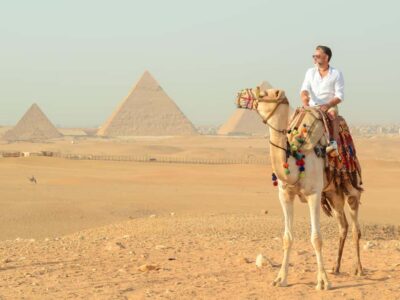
Giza Sunrise Pyramid Guided Tour With Camel Ride & Breakfast
Read our review →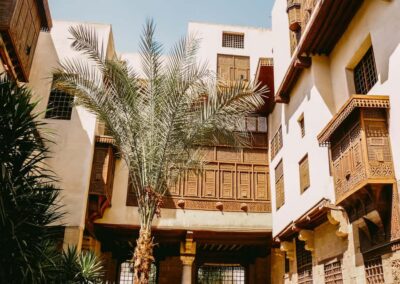
Old Cairo Guided Walk Tour: History, Culture & Street Bites
Read our review →
4-Day Nile Cruise from Aswan to Luxor with Guide
Read our review →Browse the lists this tour appears in