
Reviewed · GIZA PYRAMIDS & SPHINX TOURS
Giza Pyramids, Memphis, Sakkara Tour
The ancient world is closer than you think. This private, seven to eight-hour outing links Cairo’s three essential pharaonic sites, with hotel pickup, an air-conditioned vehicle, an Egyptologist guide, lunch, water, snacks, entrance tickets, and a return transfer. I especially like the private format and the chance to see both the famous Giza Pyramids and the less-visited Step Pyramid of Djoser in one day. I also like that Memphis is included, since it adds context to the monuments rather than leaving you with one spectacular site and little sense of the wider story.
The main caution is the shopping stop. One low-rated experience described the shopping visit as a typical tourist trap and warned about pressure around a camel ride. You should confirm what is included before agreeing to any extra activity, and remember that tipping is not included in the $110 price.
In This Review
- Key points to know before you book
- Why this private Cairo day works well
- Giza Pyramids: your first encounter with the Old Kingdom
- The Great Sphinx and its royal message
- Saqqara and the Step Pyramid of Djoser
- Memphis: a capital beneath the ruins
- Lunch, transport, and the practical value of $110
- The guide can shape the whole day
- Shopping and optional extras: keep control of your budget
- Who should book this Cairo day?
- Should you book the Giza, Memphis, and Saqqara tour?
- FAQ
- How long does the Giza, Memphis, and Saqqara tour last?
- Does the tour provide hotel pickup and return?
- Is this a private tour?
- Are entrance tickets included?
- Is lunch included?
- Is a guide included?
- Can I cancel for a full refund?
Key points to know before you book
- Three major ancient sites in one day: Giza, Saqqara, and Memphis give you a broad view of Egypt’s early royal centers.
- Private touring for your own group: The guide and vehicle are reserved for your party, rather than shared with strangers.
- Hotel pickup and return in Cairo or Giza: This removes much of the taxi negotiation and route planning.
- A guide can make the difference: Mohammed received praise for clear explanations, humor, language ability, and making visitors feel safe. Ahmed al Kafrawy was also praised for his Italian and his skill with hieroglyphics.
- Lunch, water, snacks, and entrance fees are included: That makes the $110 price easier to assess, especially for first-time visitors to Cairo.
- Shopping needs a firm boundary: Treat it as optional browsing, and ask about prices and extra activities before accepting anything.
Why this private Cairo day works well
Cairo’s ancient sites are spread across a wide area, and reaching them independently can take patience. You need to arrange transport, judge taxi prices, find each entrance, and keep track of opening areas and tickets. This tour puts the transport, route, and basic admissions into one package.
The private setup is especially useful if you want to ask questions or adjust the pace. The guide can explain a royal name, stop for a photo, or spend more time on a subject that interests you. Since only your group participates, you are not tied to the needs of a large coach party.
The day is still long. You will spend hours moving between sites and walking across open ground. The itinerary gives about two hours at the pyramids, one hour at the Sphinx, two hours at Saqqara, and two hours at Memphis and Saqqara together. That is enough for a strong first look, but not enough for every tomb, museum, or archaeological corner.
I would choose this outing if you want the main ancient sights without managing Cairo’s transport yourself. If you prefer one site at a very slow pace, a shorter, single-location visit may suit you better.
More ways to see the pyramids and the Sphinx:
- Cairo: Pyramids & Great Sphinx Private Tour with Camel Ride
★ 4.9 · 6,335 reviews - Tour to Giza Pyramids and The Egyptian Museum
★ 5.0 · 6,016 reviews - VIP All inclusive Best of the best Giza Pyramids,Sakkara,Memphis
★ 5.0 · 3,164 reviews
Giza Pyramids: your first encounter with the Old Kingdom
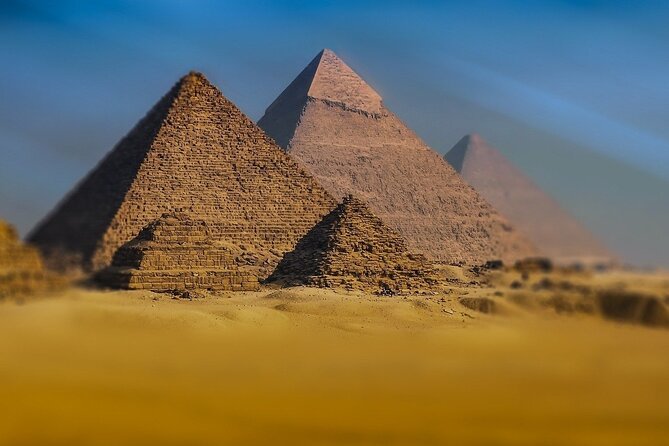
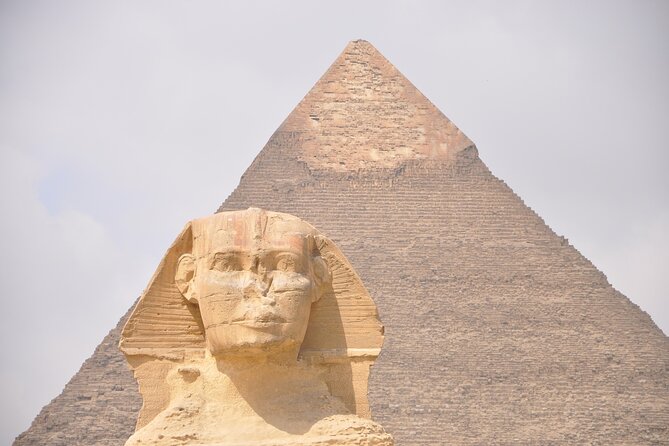
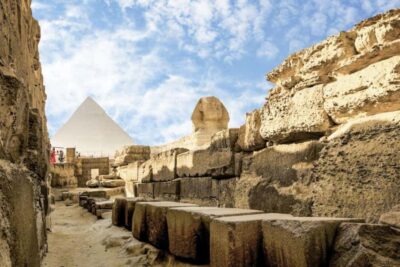
The day begins at the Giza Pyramids, where you see the pyramids of Cheops, Chephren, and Mykerinus. These are the monuments most closely linked with ancient Egypt, and the first sight can feel almost unreal: huge stone structures rising from the desert edge while modern Cairo sits nearby.
You have about two hours here, with admission included. That gives you time to view the three pyramids, hear how they relate to the kings who commissioned them, and take in the scale of the site. Your guide should help separate the three structures and explain the role of Khafre and his family during the Old Kingdom’s golden age.
The Giza stop is the emotional center of the day, but it can also be the most crowded and demanding. You may find yourself walking over uneven ground, standing in strong sun, and stopping often for photographs. Your included water and snacks are useful here, though you should still dress for heat and wear practical shoes.
A guide is valuable at Giza because the monuments can look simple from a distance. The meaning comes from the details: which king was connected to which pyramid, why the complex was built, and how the royal burial area worked. Ask your Egyptologist to point out the differences in the pyramids rather than treating them as three identical triangles.
The price includes entrance to the Giza Pyramids, but do not assume that every possible interior or optional activity is covered. The supplied information confirms the main entrance tickets, not extra experiences. Ask your guide or provider before paying for anything beyond the listed program.
The Great Sphinx and its royal message
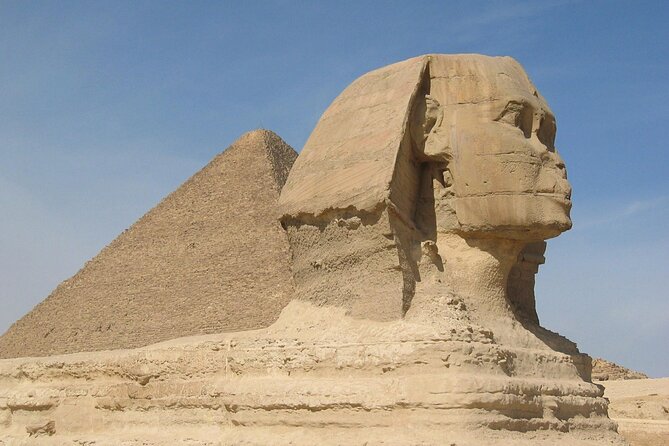
The Great Sphinx usually receives about an hour. It is one of the most recognizable monuments in Egypt, but its meaning can get lost beneath the familiar photographs. The statue combines a human head with a lion’s body and was designed as a royal image connected with protection and power.
The explanation supplied for the Sphinx describes it as a guardian of the kings’ burial site and a combination of mental and physical strength. That is a useful way to look at it. Rather than seeing only a famous face carved in stone, you can consider how the image presented the king as both intelligent and powerful.
The Sphinx area is a good place to listen closely to your guide. This is where a personal Egyptologist can add value by explaining the relationship between the statue, the pyramids, and the royal burial complex. If you are curious about symbolism, ask direct questions. Private touring gives you room to do that.
One hour is a sensible amount of time for the Sphinx itself. It allows for viewing, photographs, and an explanation without using up the time needed at Saqqara and Memphis. The site can feel busy, so patience helps. The best experience comes from looking beyond the standard front-facing photograph and noticing how the monument sits within the larger complex.
Saqqara and the Step Pyramid of Djoser
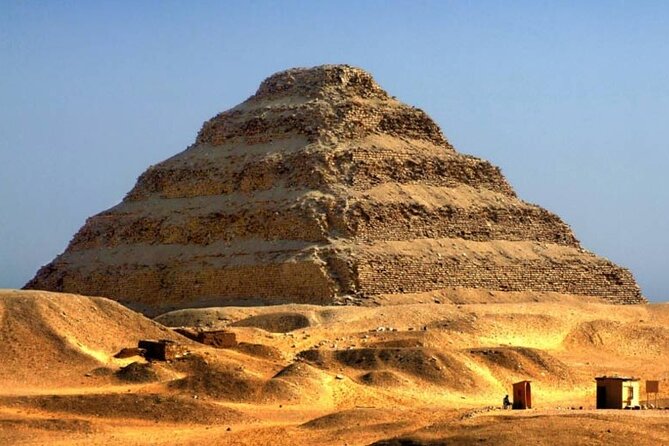
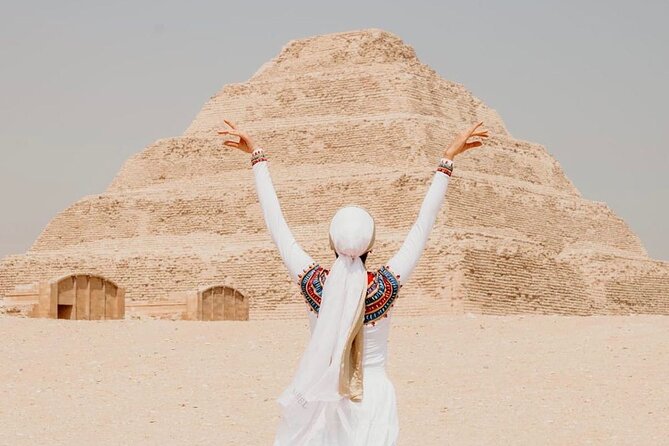
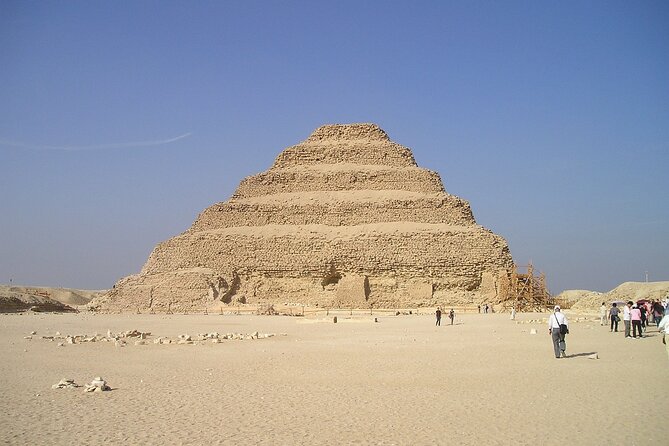
Saqqara changes the rhythm of the day. Giza gives you the most famous pyramids, while Saqqara shows an earlier stage in pyramid design. The main attraction is the Step Pyramid of Djoser, built in the Third Dynasty and described as Egypt’s first pyramid and the world’s first large-scale cut-stone structure.
You have about two hours at Saqqara. That is enough time to focus on Djoser’s monument and receive a proper explanation of why it matters. The pyramid’s stacked form is different from the smooth-sided pyramids at Giza, and that difference helps you see ancient Egyptian building as a process rather than a finished idea that appeared all at once.
This is one of my favorite parts of the route because it gives the day a clear historical sequence. At Giza, you see the great royal pyramids in their mature form. At Saqqara, you encounter an earlier design that marks a major step in the development of pyramid construction.
Saqqara is also described as a major necropolis with archaeological importance beyond the Step Pyramid. The exact areas visited can depend on the day’s arrangements, so ask your guide what is open and what you will see during your two-hour stop. Do not judge the visit only by the pyramid’s shape. The guide’s explanation is what connects the monument to Djoser and the Third Dynasty.
The site may feel less immediately familiar than Giza, which is part of its appeal. You have more room to think about the age of the place and the experiments that led to later pyramid building. At the same time, the wide site and open conditions mean you should be ready for more walking and sun.
More Saqqara, Memphis and Dahshur days:
- From Cairo: Pyramids of Giza, Sphinx, Saqqara & Memphis Tour
★ 4.7 · 3,110 reviews - Cairo: Pyramids, Sakkara & Memphis Tour with Lunch
★ 4.6 · 2,493 reviews - Private Day Tour Giza Pyramids, Sphinx, Memphis, and Saqqara
★ 4.5 · 904 reviews - Private tour: GIza Pyramids, Memphis City & Sakkara Pyramid
★ 5.0 · 637 reviews
Memphis: a capital beneath the ruins
Memphis adds a different kind of ancient-Egypt experience. Founded by King Menes, it served as Egypt’s first capital and a center of rule and culture for more than 3,000 years. Unlike Giza, where the monuments dominate the view, Memphis is experienced through surviving statues and ruins at the open museum in Mit Rahina.
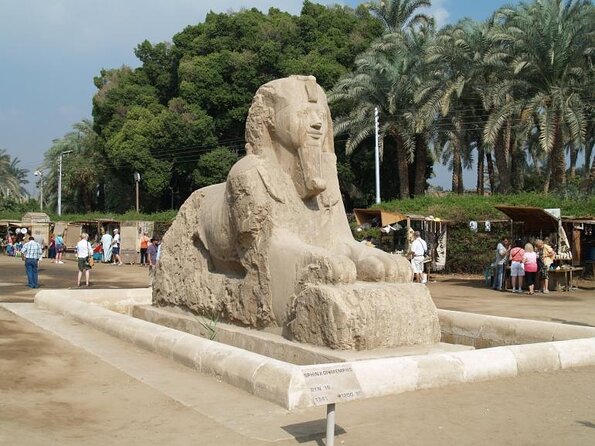
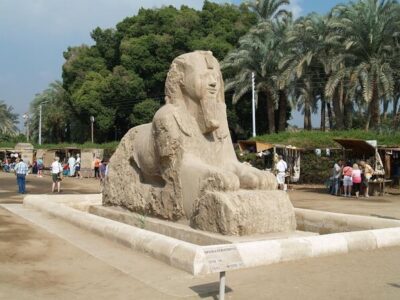
The stop lasts about two hours when combined with the Saqqara portion of the route. Important sights include the statue of Ramses II near the entrance, a huge fallen statue of Ramses II, an alabaster sphinx, and other remnants from the ancient capital.
The fallen Ramses II statue is especially interesting because it makes scale easier to grasp. You can see the body laid out on the ground rather than looking up at a complete standing figure. That physical change in viewpoint helps you study the carving and imagine how imposing the original monument must have been.
Memphis is not the same kind of spectacle as Giza. You will not see an intact capital city or a complete royal complex. Instead, you are looking at a smaller collection of remains that represent a city whose influence lasted for centuries. The guide matters here, since the ruins alone may not explain why Memphis was so important.
If you have already visited several museums, the open-air setting offers a useful change. You can connect the objects to the place where they were found rather than seeing them only behind glass. The stop also rounds out the day by showing that ancient Egypt was not just a collection of tombs. It had capitals, political centers, sculpture, and long-running systems of rule.
Lunch, transport, and the practical value of $110
The price is $110 per person. That is not a budget taxi outing, but it covers a great deal: private air-conditioned transport, hotel pickup and return, a qualified Egyptologist guide, local lunch, bottled water, snacks, entrance fees for Giza, the Sphinx, Saqqara, and Memphis, plus taxes.
I see the strongest value in the combination of transport and guiding. Getting between these sites is the hard part of a do-it-yourself day. You are paying not only to enter the monuments, but also to avoid piecing together several rides and negotiating the route in Cairo.
Lunch is included, which keeps the day simpler. The information describes it as a local lunch, but does not specify the restaurant or menu. If you have dietary needs, ask in advance rather than assuming the meal will match your preferences.
Water and snacks are small additions, but they matter during a long day outdoors. You will be moving through several large archaeological areas, and an easy supply of water means fewer interruptions.
The tour is most valuable for a first visit, for families who want one organized day, and for anyone staying in Cairo or Giza who does not want to arrange transport independently. It may be less appealing if you are traveling on a very tight budget or want to choose every stop yourself.
The guide can shape the whole day
The strongest praise centers on the guides. Mohammed was described as informative, smart, funny, safe, and skilled with languages and photography. That combination is worth noting. A guide who can explain history clearly and help with photographs can make a long day feel much more manageable.
Ahmed al Kafrawy was praised for speaking Italian well, explaining hieroglyphics, arriving on time, and treating the group kindly. If you need a guide in a particular language, request that language when booking and confirm it before the day begins. The available information confirms strong language ability for these named guides, but it does not promise that every booking will receive one of them.
I would ask your guide early in the day how much detail you want. Some people want names, dates, and religious symbolism. Others want the basic story, the best viewing points, and time for photographs. Since the activity is private, you should be able to make your preference clear.
A good guide also helps you understand what you are seeing without turning every stop into a lecture. The best balance is short explanations at the right places, followed by time to look for yourself.
Shopping and optional extras: keep control of your budget
A shopping stop is included, but it is the part of the day I would approach most carefully. One poor experience described it as a pushy, overpriced souvenir stop. That does not erase the value of the ancient sites, but it is a clear warning to set expectations.
You do not need to buy anything simply because the vehicle stops at a shop. Ask whether the stop is required, how long it will last, and whether prices are fixed. If you are not interested, say so politely and clearly.
The same caution applies to a camel ride. A low-rated account specifically warned about being charged or pressured around this activity. The supplied tour details do not list a camel ride as an included feature, so ask for the full price before accepting one. Do not let a friendly atmosphere replace a clear agreement.
Tipping is also not included. Carry enough local currency or ask your guide about practical tipping arrangements, but treat it as a separate expense from the tour price.
Who should book this Cairo day?
I would recommend it to first-time visitors who want the major ancient sights in one well-organized outing. It is also a good match for couples, families, and small groups who value a private vehicle and the ability to ask questions without a large group around them.
The route suits you if you want a broad introduction: Giza for the great pyramids, the Sphinx for royal symbolism, Saqqara for early pyramid design, and Memphis for the story of Egypt’s first capital. You will return with a clearer sense of how the sites fit together.
You should think twice if shopping stops irritate you, if you want to spend an entire day inside one complex, or if you prefer to travel at a slow archaeological pace. The seven to eight-hour duration is efficient, but it is still a full day.
The activity is marked as suitable for most people, is near public transportation, and requires good weather. Pickup is available from Cairo or Giza hotels. Confirmation is provided at booking, and free cancellation is available up to 24 hours before the start time. A cancellation made later is not refundable, and poor weather may lead to a new date or a full refund.
Should you book the Giza, Memphis, and Saqqara tour?
Book it if you want the main sites covered in one day, prefer private transport, and value a guide who can explain what you are seeing. At $110, the included tickets, lunch, water, vehicle, hotel transfers, and Egyptologist make the price reasonable for a private outing.
I would book with two requests: confirm the guide’s language and ask exactly how the shopping stop and any camel activity will work. Keep optional purchases separate from the ancient-site experience, and you can enjoy what this tour does best: linking Egypt’s most famous pyramid complex with the earlier achievement at Saqqara and the royal capital of Memphis.
FAQ
How long does the Giza, Memphis, and Saqqara tour last?
The tour lasts approximately seven to eight hours.
Does the tour provide hotel pickup and return?
Yes. Pickup and return transfers are offered from hotels in Cairo or Giza.
Is this a private tour?
Yes. Only your group participates in the private tour or activity.
Are entrance tickets included?
Yes. Entrance fees for the Giza Pyramids and Sphinx, Saqqara, and Memphis are included.
Is lunch included?
Yes. The tour includes a local lunch, bottled water, and snacks.
Is a guide included?
Yes. A qualified Egyptologist guide is included.
Can I cancel for a full refund?
Yes, if you cancel at least 24 hours before the experience start time. Cancellations made less than 24 hours before the start time are not refundable.
Just added around Cairo
- Day Tour To Giza Pyramids, Great Sphinx, Saqqara Pyramids & Memphis Capital★ 5.0 · 23 reviews
- GEM Grand Egyptian Museum Private Tour from Cairo Giza hotels★ 5.0 · 23 reviews
- Cairo vip two or one day pyramids ,Museum,memfis ,saqra and7 places★ 5.0 · 23 reviews
- Giza Pyramids, Sphinx, Saqqara, and Dahshur Tour with Camel Ride★ 5.0 · 23 reviews
- Full-Day Tour to Giza Pyramids Saqqara Memphis Sphinx Private★ 5.0 · 23 reviews
- 8 Day Cairo Pyramids and Nile cruise and Alexandria All inclusive Private Tour★ 5.0 · 23 reviews
- Full-Day Tour to Giza Pyramids, memphis and Sakkara Step Pyramid★ 5.0 · 23 reviews
- Half Day Guided Trip To Egyptian Museum★ 4.5 · 23 reviews
Giza Pyramids & Sphinx Tours, compared.
Pyramids & Great Sphinx Private Tour with Camel Ride
Read our review →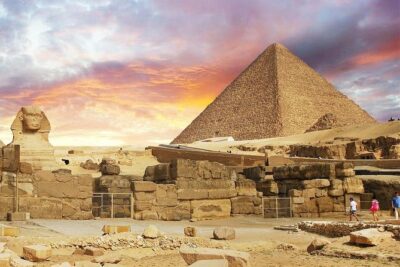
Tour to Giza Pyramids and The Egyptian Museum
Read our review →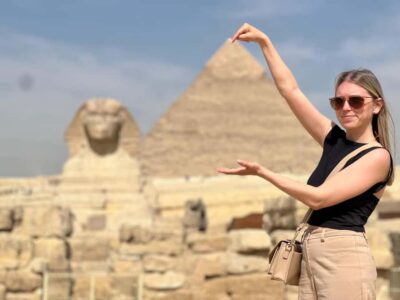
VIP All inclusive Best of the best Giza Pyramids,Sakkara,Memphis
Read our review →
Pyramids of Giza, Sphinx, Saqqara & Memphis Tour
Read our review →
Cairo 8 Hour Private Tour of Pyramids, Egyptian Museum and Bazaar
Read our review →
Half-Day Tour to Pyramids of Giza and the Sphinx
Read our review →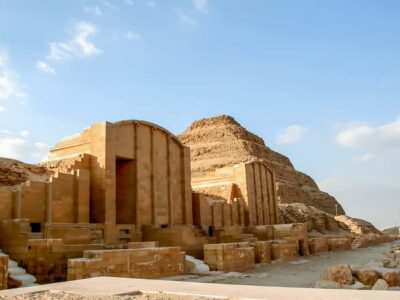
Browse the lists this tour appears in