Reviewed · GIZA PYRAMIDS & SPHINX TOURS
Giza pyramids, Sphinx, and the big museumum
Ancient Egypt packs a lot into one day. This private Cairo tour connects the Step Pyramid, Bent Pyramid, Red Pyramid, Giza pyramids, and Sphinx in about eight hours, with hotel pickup, private transportation, a guide, and bottled water included. It is a strong choice if you want to see how Egyptian royal tombs changed over time rather than simply visit the famous pyramids and leave.
I especially like the clear historical thread, from Djoser’s early step pyramid to Snefru’s experiments and finally the polished geometry of Giza. I also like the private format, which gives your own group the vehicle and guide. The main drawback is that entrance fees, tips, and some promised stops are not included, and the written schedule does not clearly explain where the big museum fits.
- The day follows pyramid development, from Saqqara to Dahshur and Giza.
- Private transportation and hotel pickup make a long Cairo day much easier.
- Guide Morsi has been praised for explanations and photos, adding practical help at the monuments.
- The Red Pyramid includes an inside visit, but expect tight, steep passages.
- The big museum is advertised but not clearly placed in the schedule, so confirm the exact plan before booking.
- The $40 price is attractive, though admission tickets and tipping add to the final cost.
In This Review
- A full day tracing Egypt’s pyramid experiments
- Saqqara and Djoser’s six-step beginning
- Dahshur’s Bent Pyramid and the problem with angles
- The Red Pyramid and the first successful smooth shape
- Giza’s Great Pyramid and the scale of Cheops
- The Sphinx, sun temples, and a little wish-making
- Where the big museum fits, and why you should ask
- What the $40 price really covers
- Comfort, timing, and the role of the guide
- Who should book this Cairo tour?
- Should you book it?
- FAQ
- Where does this tour take place?
- How long does the tour last?
- Is hotel pickup included?
- Is transportation private?
- What is included in the price?
- Are entrance fees included?
- Is tipping included?
- Does the tour include the big museum?
- Can you enter the pyramids?
- Can most people participate?
- Can you cancel for a full refund?
A full day tracing Egypt’s pyramid experiments
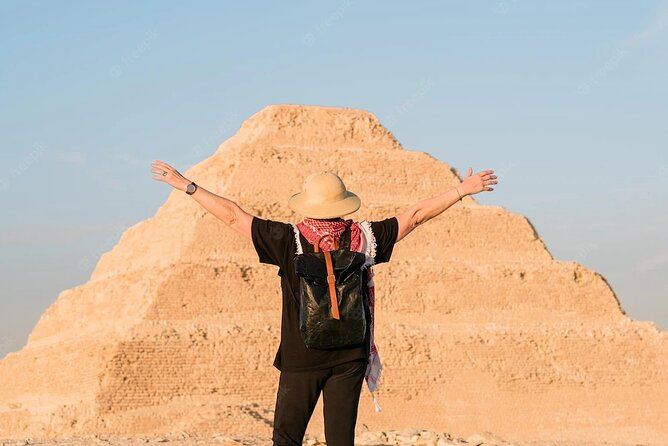
The best idea behind this tour is its order. You begin with the earliest form of the pyramid, see later attempts to solve structural problems, and finish at Giza, where the shape reached its most famous form.
That sequence gives you more than a collection of photo stops. You can watch the royal tomb develop from a stepped structure into a smooth-sided pyramid. The guide explains why the pyramid shape was linked with Ra, the sun god and god of creation, and why the form was viewed as stable, powerful, and helpful in protecting the king’s mummy for eternity.
The schedule lists about seven hours of sightseeing, plus driving between sites. The full experience lasts approximately eight hours and begins at 8:00 a.m. That early start matters. Cairo’s monuments cover a wide area, and the stops at Saqqara, Dahshur, and Giza are not next door to one another.
Because this is a private activity, only your group participates. That is useful when you want to linger at one pyramid, take photographs, or ask the guide to explain a point again. It also means the quality of the day depends heavily on the guide you receive. Morsi is specifically praised for his explanations and for helping with photographs.
Saqqara and Djoser’s six-step beginning
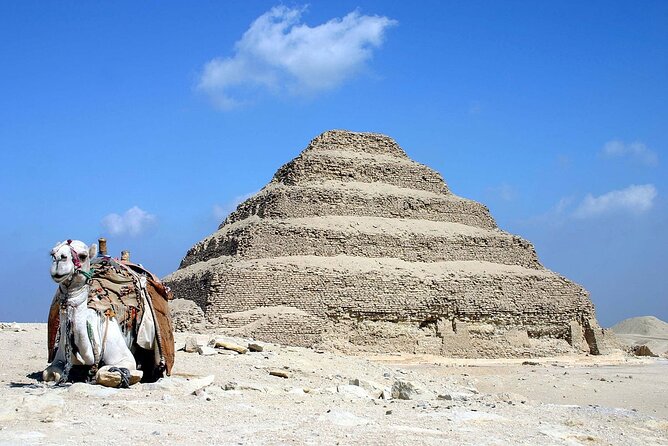
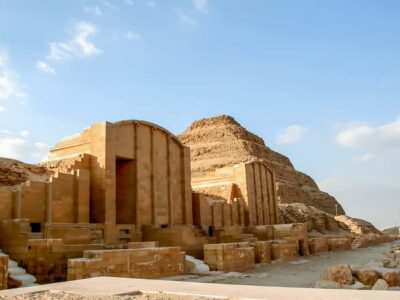
The first major historical stop is the Step Pyramid of Djoser, listed under Pyramid of Djoser Road. The pyramid dates to around 3000 BC in the tour description and is presented as the first pyramid built by Imhotep for King Djoser.
Its six levels make it look quite different from the smooth pyramids at Giza. The guide uses that contrast to explain an early attempt to move beyond traditional royal tombs and reach the ideal pyramid form associated with the sun god Ra.
This is one of the most valuable stops for anyone who wants context. At Giza, it is easy to admire the scale and forget that pyramid building involved trial, correction, and risk. Saqqara gives you the beginning of that story.
Plan on about two hours in this area, though the exact time may depend on driving and the sites your guide enters. The tour description says admission is not included at some stops, so carry extra money for tickets. The schedule also says the Step Pyramid visit itself has no included admission ticket, which is not the same as saying every area is free.
The explanation of energy reaching Ra is part of the tour’s religious interpretation. I would treat it as the guide’s presentation of ancient beliefs, not as an engineering explanation. You will get the most from this stop by asking the guide to separate religious meaning from construction methods.
More ways to see the pyramids and the Sphinx:
- Cairo: Pyramids & Great Sphinx Private Tour with Camel Ride
★ 4.9 · 6,335 reviews - Tour to Giza Pyramids and The Egyptian Museum
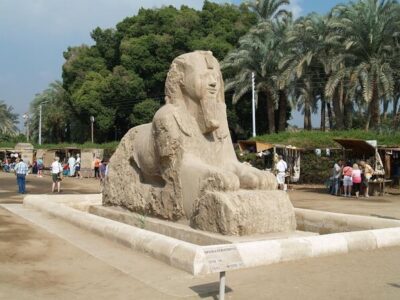
★ 5.0 · 6,016 reviews - VIP All inclusive Best of the best Giza Pyramids,Sakkara,Memphis
★ 5.0 · 3,164 reviews
Dahshur’s Bent Pyramid and the problem with angles
The Bent Pyramid is one of Egypt’s most useful monuments for understanding pyramid construction. Its lower section rises at a steep angle, while the upper section changes to a gentler angle. The tour explains this as an adjustment made during construction, creating the unusual bent profile.
This is the pyramid built for Snefru, father of Cheops. The tour uses it to show the next stage after Djoser’s Step Pyramid. The shape is not as visually perfect as Giza’s, but that is precisely why it matters. You are looking at a royal project where the builders altered the design as the work continued.
An inside visit to the Bent Pyramid is listed. The chamber is described as empty, and the tour presentation connects that emptiness with the mystery surrounding the king’s life. Do not expect furnishings or a preserved burial. The appeal is the structure itself and the chance to see how a pyramid works from within.
The stop lasts about one hour and admission is not included. The ground and interior passages may require care, especially if you dislike confined spaces or steep routes. The provided information does not give details about lighting, stair conditions, or the exact interior route, so ask the guide before entering.
The Red Pyramid and the first successful smooth shape
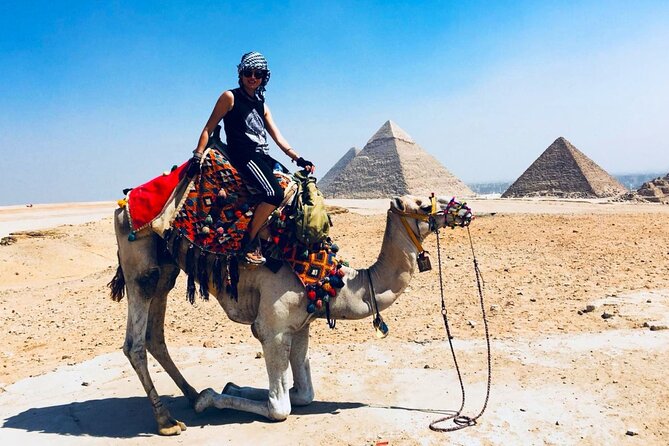
The Red Pyramid continues the story and helps explain why Giza looks the way it does. It was also built for Snefru and is described as the first pyramid with a successful, regular angle.
The tour presents the Red Pyramid as a major step between the Bent Pyramid and the pyramids of Giza. The name comes from the reddish stone, and the interior is described as very cold. An inside visit is included in the planned experience, making this one of the day’s more physical moments.
You may climb or walk through narrow passages before reaching the inner chambers. The supplied information does not specify the exact dimensions, so be ready for an enclosed route rather than a broad public hallway. Wear practical clothing and shoes, and take water from the bottle provided in the vehicle.
The Red Pyramid is a better lesson in development than a quick stop at Giza alone. You see a design that solved problems found at the Bent Pyramid, then compare it with the later monuments. For many people, this is the point when the day’s theme becomes clear.
The stop is listed at one hour, not counting the transfer. Admission is extra. If you want to enter, confirm the current ticket cost and whether the inside visit is part of your exact booking, since entrance fees are expressly excluded.
Giza’s Great Pyramid and the scale of Cheops
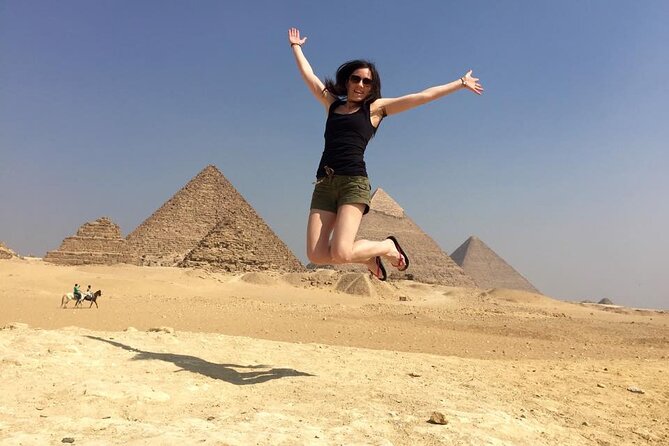
Giza is the grand finale. The tour focuses on the Great Pyramid of Cheops, also called Khufu, and explains how it improved on the form developed under his father, Snefru.
The description gives the pyramid one million stones and a total weight of two million tons. It also raises the practical question of how such enormous blocks were moved, including the role of the Nile and stone transport from distant parts of Egypt. That question is one of the pleasures of the visit. Even with a guide, you will leave with some mysteries rather than a neat answer to every construction problem.
The Giza visit is planned for about two hours, and no admission ticket is included. That distinction matters because seeing the pyramids from the site and entering one of them can involve different fees. The description refers to the tunnels inside Cheops in one account, but interior access is not listed among the included features. Confirm this before the day begins.
At Giza, you will have the chance to study the huge blocks, the alignment, and the surviving form of the pyramid. The guide also explains the religious meaning of the pyramid shape, including its association with Ra and the hope of preserving the king’s body forever.
You should expect crowds and strong sun at the main Giza complex, although the supplied information does not promise a particular viewpoint or a quiet visit. Your private guide can help with photographs and explain what you are seeing, but the site itself remains a major public attraction.
More things to do in Cairo:
- From Cairo: Pyramids of Giza, Sphinx, Saqqara & Memphis Tour
★ 4.7 · 3,110 reviews - Cairo 8 Hour Private Tour of Pyramids, Egyptian Museum and Bazaar
★ 5.0 · 2,931 reviews - Cairo: Pyramids, Sakkara & Memphis Tour with Lunch
★ 4.6 · 2,493 reviews - Private ViP all-inclusive Giza Pyramids,Sphinx,Inside Pyramid
★ 5.0 · 2,448 reviews
The Sphinx, sun temples, and a little wish-making
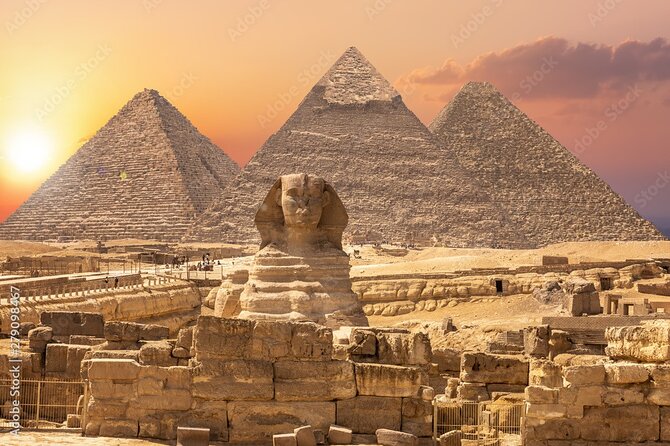
The Great Sphinx receives about one hour. It is described as a single stone monument with the human face of King Khafre and the body of a lion. The combination represents a ruler who was both intelligent and powerful.
The damaged nose and missing beard are explained through the monument’s long burial under sand and the effects of time. The Sphinx is not simply a statue beside the pyramids. It is part of a wider religious setting, and the tour also points out the sun temple associated with Khafre.
The guide connects the temple with worship of Ra at sunset and sunrise, including the idea of death and rebirth. You will also hear about the wishing well, where visitors may throw a small coin while making a wish. Consider it a light moment in a serious archaeological setting, and keep your camera ready for the classic Sphinx photographs.
The tour description mentions large stones, hand-cut pillars, and views of the monument’s scale. It does not include admission in the price. Since the Sphinx area can be a short but busy visit, ask your guide how much time is reserved for photographs and whether the ticket covers the exact viewing area you want.
Where the big museum fits, and why you should ask
The tour is promoted as including the big museum, with coffins, jewelry, gold, statues, masks, old objects, representations of different gods, and stories about ancient Egypt. That could add a welcome indoor section after several outdoor sites.
The problem is the detailed five-stop schedule does not clearly list the museum. It names Giza, the Sphinx, Saqqara, the Bent Pyramid, and the Red Pyramid, but not a separate museum visit. That does not prove the museum is excluded, but it creates a real planning question.
Ask these points before booking:
- Is the big museum definitely visited on the same eight-hour tour?
- Is museum admission included?
- Does the museum replace one pyramid stop or come after Giza?
- How much time is allowed inside?
- Are specific galleries or collections included?
This matters because the pyramid sites alone can fill the day. If the museum is important to you, get the answer in writing before you pay. If it is only a bonus, you can book the tour for its pyramid route and treat the museum as an extra only if time allows.
What the $40 price really covers
At $40 per person, the tour offers good value for a private day with hotel pickup and drop-off, private transportation, a guide, and bottled water. The private format is the key advantage. You are not paying only for entry to famous monuments. You are paying for transport between scattered sites and for someone to connect them into a single story.
The price does not include entrance fees or tips. Since the route includes several archaeological areas, these extra costs may be significant compared with the headline price. You should budget for tickets at Giza, the Sphinx area, Dahshur, the Red Pyramid, and possibly Saqqara, depending on which areas you enter.
One past account also describes a camel ride and entry into tunnels at Cheops and the Red Pyramid. Those activities are not shown among the included features, so do not assume they come with the $40 price. Ask about every optional activity before accepting it.
Group discounts are offered, which may make the price more attractive for families or small parties. Solo visitors should compare the total cost after admissions and tipping, since the private format can be better value for a small group than for one person.
Comfort, timing, and the role of the guide
Hotel pickup and drop-off simplify the day, particularly in Cairo, where finding the correct meeting point can be tiring. The listed start time is 8:00 a.m., and confirmation is provided at booking.
The day involves long transfers, open archaeological areas, and at least one tight pyramid interior. Bottled water is included, but bring any additional drinks or snacks you need. The information does not promise meals, so do not count on lunch being part of the tour.
The guide makes a major difference. Morsi is specifically praised for clear explanations and photography help. Another strong account describes the operator as responsive and the driver and guide as good. At the same time, one unhappy customer reported repeated messages after not responding quickly during booking, along with dissatisfaction about the company. That is a reminder to set communication preferences clearly and confirm the day’s details without feeling pressured.
The tour is private, and most people can participate. Service animals are allowed. No other accessibility details are supplied, so ask about vehicle access, pyramid interiors, stairs, and walking distances if those points matter to you.
Who should book this Cairo tour?
I would choose this tour if you have one full day and want more than the standard Giza visit. It suits you especially well if you like seeing architectural change in sequence, from Djoser to Snefru to Cheops.
It is also a good fit for families and small groups that value hotel pickup, private transport, and the ability to ask questions. The guide can adjust explanations and photo stops more easily than a large group tour.
I would be cautious if your main goal is a long museum visit. The big museum is advertised, but the detailed route does not place it clearly. I would also hesitate if you dislike confined spaces, since the Red Pyramid and any other interior visit may involve narrow passages.
The day is busy. You will visit three pyramid areas, Giza, the Sphinx, and possibly the museum, all while crossing a large part of the Cairo area. That is excellent for a first visit with limited time, but it leaves little room for a slow, quiet look at each monument.
Should you book it?
Book this tour if you want a private, full-day pyramid survey and value the story linking Saqqara, Dahshur, and Giza. The $40 starting price is appealing for transport and guiding, especially for a small group, and the strongest praise centers on the guide’s explanations, photo help, and the convenience of the private setup.
Before booking, confirm the museum, admission costs, interior pyramid access, and any camel ride or tunnel visit. If those details are clear and the extra fees fit your budget, this is a practical way to see the major pyramid stages in one demanding but rewarding day.
FAQ
Where does this tour take place?
The tour takes place in Cairo, Egypt, with visits to Giza, the Great Sphinx, Saqqara, Dahshur’s Bent Pyramid, and the Red Pyramid.
How long does the tour last?
The experience lasts approximately eight hours. The stated start time is 8:00 a.m.
Is hotel pickup included?
Yes. Hotel pickup and drop-off are included.
Is transportation private?
Yes. Private transportation is included, and only your group participates in the activity.
What is included in the price?
The price includes private transportation, a tour guide, hotel pickup and drop-off, and bottled water.
Are entrance fees included?
No. Entrance fees are not included in the tour price.
Is tipping included?
No. Tipping is not included.
Does the tour include the big museum?
The experience description says the big museum is included, but the detailed stop-by-stop schedule does not clearly place it. Confirm the museum visit and its admission fee before booking.
Can you enter the pyramids?
An inside visit to the Bent Pyramid and Red Pyramid is described. Entry into Cheops is mentioned in one account, but interior admission is not listed as an included feature, so confirm the exact access offered with your booking.
Can most people participate?
Yes. The information says most people can participate, and service animals are allowed. Specific details about accessibility inside the pyramids are not provided.
Can you cancel for a full refund?
Yes, if you cancel at least 24 hours before the experience start time. Cancellations made less than 24 hours in advance are not refunded, and changes within that period are not accepted.
Just added around Cairo
- Day Tour To Giza Pyramids, Great Sphinx, Saqqara Pyramids & Memphis Capital★ 5.0 · 23 reviews
- GEM Grand Egyptian Museum Private Tour from Cairo Giza hotels★ 5.0 · 23 reviews
- Cairo vip two or one day pyramids ,Museum,memfis ,saqra and7 places★ 5.0 · 23 reviews
- Giza Pyramids, Sphinx, Saqqara, and Dahshur Tour with Camel Ride★ 5.0 · 23 reviews
- Full-Day Tour to Giza Pyramids Saqqara Memphis Sphinx Private★ 5.0 · 23 reviews
- 8 Day Cairo Pyramids and Nile cruise and Alexandria All inclusive Private Tour★ 5.0 · 23 reviews
- Full-Day Tour to Giza Pyramids, memphis and Sakkara Step Pyramid★ 5.0 · 23 reviews
- Half Day Guided Trip To Egyptian Museum★ 4.5 · 23 reviews
Giza Pyramids & Sphinx Tours, compared.
Pyramids & Great Sphinx Private Tour with Camel Ride
Read our review →
Tour to Giza Pyramids and The Egyptian Museum
Read our review →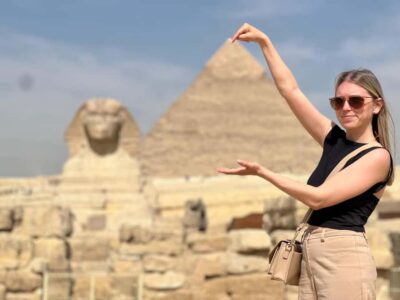
VIP All inclusive Best of the best Giza Pyramids,Sakkara,Memphis
Read our review →
Pyramids of Giza, Sphinx, Saqqara & Memphis Tour
Read our review →
Cairo 8 Hour Private Tour of Pyramids, Egyptian Museum and Bazaar
Read our review →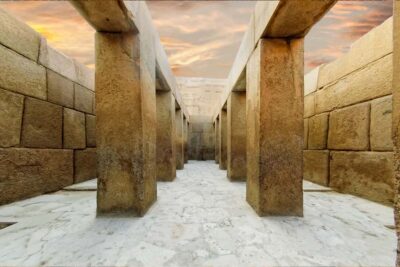
Half-Day Tour to Pyramids of Giza and the Sphinx
Read our review →