Reviewed · VIP
Luxor & Kings’ Valley Private VIP Tour with Pick up
Ancient Egypt is worth one very early morning. This private Hurghada to Luxor tour gives you your own air-conditioned vehicle and a licensed Egyptologist, so you can ask questions, pause for photographs, and move at a calmer pace than a large coach group. I especially like the included entrance fees and lunch, plus the Nile crossing that connects Luxor’s east and west bank sights.
I also like the care built into the day. Guides such as Harbi, Harby, Ramada, and Nasch received especially warm praise for clear explanations and personal attention, while drivers including Mahmoud, Ibrahim, Hassan, Tony, and Maikel were praised for safe, punctual service. The tradeoff is plain: this is a very long day, with roughly four to five hours each way on the road.
In This Review
- Key points to know before booking
- The four-hour road from Hurghada to Luxor
- Karnak Temple: two hours among monumental columns
- Crossing the Nile to Luxor’s west bank
- Valley of the Kings: tombs, color, and the afterlife
- Hatshepsut’s temple at Deir el-Bahari
- Colossi of Memnon: a brief but worthwhile stop
- Lunch, shopping stops, and what is actually included
- Why the private format matters at $245
- Who should book this Luxor day trip?
- Final verdict: worth the long road?
- FAQ
- Where does the tour start?
- How long does the tour last?
- How long is the drive from Hurghada to Luxor?
- Is the tour private?
- Is transportation included?
- Is lunch included?
- Are drinks included?
- Which sites are included?
- Are entrance fees included?
- Can most people participate?
- Is a guide included?
- Can the tour be canceled for a full refund?
Key points to know before booking
- Leave around 5:30 a.m. for a full day that usually lasts 13 to 15 hours.
- Karnak Temple gets about two hours, enough time to grasp the scale of Egypt’s largest temple complex.
- The Valley of the Kings is the emotional centerpiece, with entrance fees included for the planned sites.
- A private Egyptologist guide makes a real difference, especially at Karnak and Hatshepsut’s temple.
- Lunch, taxes, tickets, transport, and the Nile crossing are covered, but restaurant drinks are extra.
- The $245 price buys comfort and flexibility, though a long drive makes this best for determined sightseers.
A Red Sea holiday can easily become a blur of beaches, pools, and buffet meals. Luxor changes the picture. In one demanding but rewarding day, you cross into the world of pharaohs, royal tombs, temple courts, sacred avenues, and the Nile Valley that made ancient Egypt possible.
This tour is designed for a private group rather than a standard coach party. That matters in Egypt. You can hear your guide more clearly, ask why a relief looks different from another, and adjust the pace when the heat or early start catches up with you.
The cost is $245 per person. That is not a bargain-basement day trip, but the price includes private transportation, a licensed Egyptologist, lunch, taxes, and entrance tickets to the scheduled sights. Group discounts may improve the value for families or larger private parties. You are paying less for a cheap ride and more for time, comfort, and someone who can explain what you are seeing.
The four-hour road from Hurghada to Luxor
The day begins early, with a listed start time of 5:30 a.m. You should treat that as a serious commitment, not a casual suggestion. The drive to Luxor takes about four hours in the stated plan, although some accounts describe closer to four and a half or five hours each way.
That gives you a long day on the clock, but the private vehicle helps. You are not tied to a large bus schedule, and the vehicle is air-conditioned. Several accounts also describe regular comfort breaks, cold drinks, and a spacious, comfortable vehicle. Those details become important after the first few hours on the road.
The driving is another major part of the experience. Mahmoud was praised for careful driving, while Hassan, Ibrahim, Tony, and Maikel were also described as polite and dependable. You cannot control the traffic or the road conditions, but having a courteous driver who keeps the day moving is a real advantage.
The return journey can bring you back around early evening. One particularly long day ran from about 4:30 a.m. until 6:45 p.m. Exact times depend on your pickup point, stops, traffic, and the pace of your group. Confirm the hotel pickup time in advance, especially if you are staying outside central Hurghada.
More things to do in Hurghada:
- From Hurghada: Cairo and Giza Highlights Full-Day Tour
★ 4.5 · 6,014 reviews - Hurghada: Luxury Cruise Trip to Orange Bay with Lunch
★ 4.9 · 5,451 reviews - Hurghada: Orange Bay Island Boat Trip w/ Breakfast and Lunch
★ 4.9 · 5,345 reviews
Karnak Temple: two hours among monumental columns
Your first major stop is Karnak Temple on Luxor’s east bank. This is not one tidy building. It is a huge complex of temples, chapels, pylons, courts, and fallen stone, built and expanded over many centuries.
Karnak served as the main state sanctuary of the New Kingdom. Its religious center honored the Theban triad: Amun-Ra, his wife Mut, and their son Khons. Even if those names feel unfamiliar, a good guide can turn the place from a maze of stones into a readable religious center.
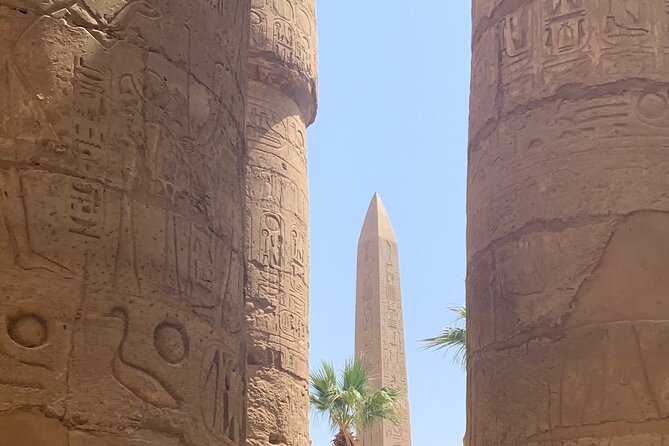
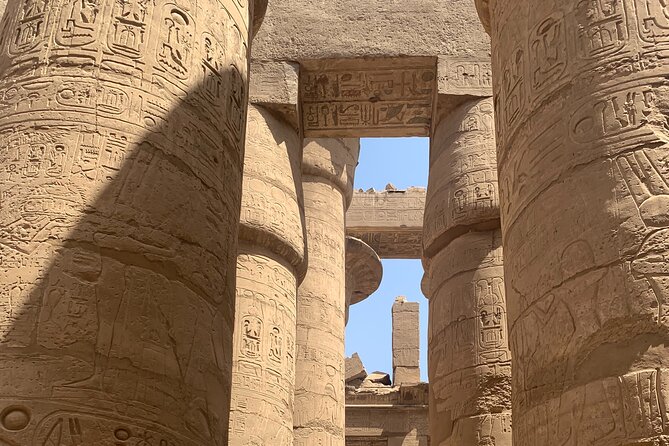
The scale is the first shock. Massive pylons frame the approach, and the columns in the Great Hypostyle Hall are so large that the human figures carved on them look tiny. Look closely at the reliefs and inscriptions rather than simply walking through and taking wide photographs. Your guide can explain how Egyptian rulers used these walls to show offerings, military victories, and their relationship with the gods.
Two hours is a useful amount of time here. You can see the major areas without treating Karnak as a rushed photo stop, though the complex is large enough that you could easily spend longer. The open spaces and stone surfaces also make the sun a factor. Carry water, use the included vehicle breaks wisely, and wear shoes that are comfortable for walking.
Crossing the Nile to Luxor’s west bank
The tour includes a ride across the Nile to reach the west bank sites. This short transfer is more than a transport detail. It gives you a fresh view of Luxor and helps you understand the ancient division between the east bank, linked with temples and daily life, and the west bank, associated with royal burial grounds and mortuary monuments.
One account describes having a boat to the group alone, making the crossing a pleasant pause between the sites. The supplied details do not promise a private boat every time, so regard that as a possibility rather than a guaranteed feature.
The Nile crossing also breaks up the road-based rhythm of the day. After Karnak, you get a change of setting before entering the desert edge and necropolis of western Luxor.
Valley of the Kings: tombs, color, and the afterlife
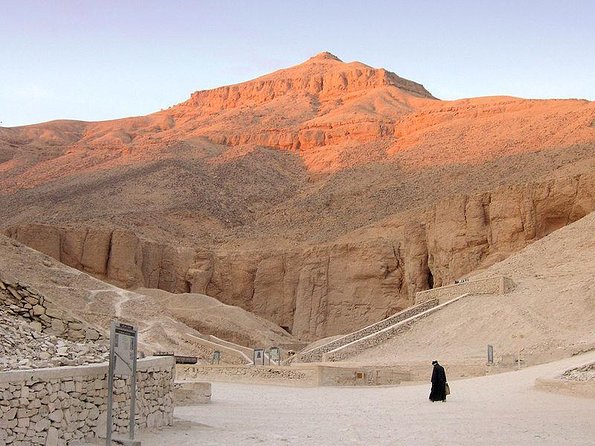
The Valley of the Kings is the main reason many people accept the long ride from Hurghada. It was the burial ground for many pharaohs of the 18th, 19th, and 20th dynasties, when Egypt was a major power along the eastern Mediterranean.
The tombs were designed for an afterlife in which the dead continued to exist and the pharaoh joined the gods. Mummification protected the body so the eternal soul could return to it. The walls are not just decoration. They contain scenes, symbols, and texts tied to that journey beyond death.
This is where an Egyptologist earns the price of the tour. Without context, one painted chamber can resemble another. With a guide such as Harbi or Harby, you can ask about the figures, colors, burial customs, and purpose of the scenes. Ramada’s Spanish-language explanations were praised for being detailed, and Nasch was praised for bringing the sites to life in German. English-language guiding was also described as clear.
Allow about two hours. That is enough for a meaningful visit, but do not expect to inspect every tomb in the valley. The included fees cover the sites described in the experience, but the details do not specify every optional tomb or special ticket. If a particular tomb matters most to you, ask your guide what your ticket covers before entering.
The valley can be hot and exposed. The early departure helps you reach the sights before the day becomes even tougher, but you still need sun protection and water. The walk and heat may be tiring for young children, though one family reported that even a two-and-a-half-year-old managed well because the private group did not feel rushed.
A few more Hurghada trips worth weighing up
- Private Transfer from Hurghada Airport to anywhere in Hurghada
★ 5.0 · 970 reviews - Hurghada: Private or Shared City Tour with Guide & Shopping
★ 4.5 · 753 reviews - Hurghada: Private Speedboat Adventure with Snacks & Pick-up
★ 4.8 · 582 reviews - PRIVATE! | Full Day Charter Boat Trip| Up to 14 | Snorkeling and Islands tour
★ 5.0 · 478 reviews
Hatshepsut’s temple at Deir el-Bahari
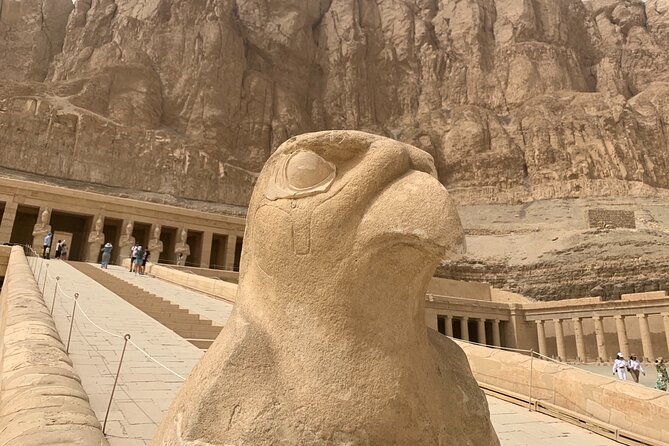
The Temple of Hatshepsut is one of Luxor’s most striking monuments. Its broad terraces rise against the cliffs of Deir el-Bahari, creating a sharp contrast with the enclosed halls and towering pylons at Karnak.
Hatshepsut ruled as pharaoh in the 15th century BC and built this temple as Djeser-djeseru, meaning the Holy of Holies. Senenmut, her chief steward of Amun, designed it. Its position directly across the Nile from Karnak was not random. The temple connected royal power, the god Amun, and the sacred geography of Thebes.
The architecture rewards a slow look. Notice the long terraces and the way the monument uses the cliffs behind it. Your guide can help you understand why Hatshepsut’s reign was unusual and how her image was presented on the walls.
Two hours is generous compared with the quick stop often given to this monument. It gives you time for the main terraces and photographs, but the sun can be intense. Bring a hat and do not save all your water for the afternoon.
The temple is also a good example of why a private guide helps. A guide can point out details you might otherwise walk past and explain the political meaning behind royal images. Harbi was repeatedly praised for being attentive, passionate, and good at making the pharaohs understandable without turning the visit into a dry lecture.
Colossi of Memnon: a brief but worthwhile stop
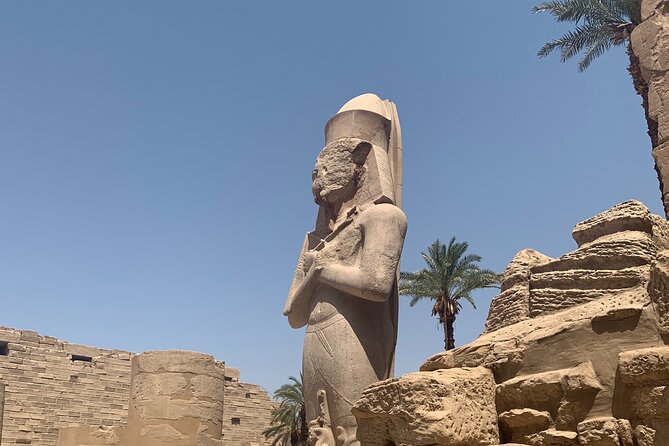
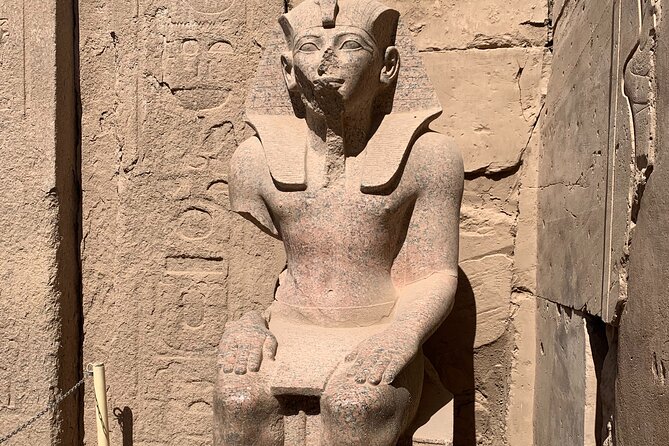
The Colossi of Memnon take only about 20 minutes, but they make a strong visual impression. These two seated statues depict Amenhotep III, not Memnon, and date to the 14th century BC.
The statues sit with their hands on their knees, facing east toward the Nile and the rising sun. They once formed part of a larger mortuary complex on the Theban necropolis. Today, their scale and battered surfaces give you a quick sense of how much stone and labor went into royal monuments.
There is no admission charge for this stop. It works well as a short pause before lunch or the next part of the west bank visit. Do not expect a long guided exploration here. The value is in seeing the statues close up and understanding their original setting.
Lunch, shopping stops, and what is actually included
Lunch is included, and the experience describes it as a local restaurant meal. Several accounts praised the food, with one person calling it excellent and another describing tasty local dishes with the option to have more. One account found the lunch quality disappointing, so I would keep expectations sensible rather than treating the meal as a highlight equal to Karnak or the valley.
Drinks at the restaurant are not included. The vehicle may provide cold water, Coca-Cola, or other refreshments, but the listed terms specifically exclude restaurant drinks. Carrying some Egyptian pounds or another accepted payment method for beverages is practical.
Some groups were taken to a papyrus shop and an alabaster workshop. These stops can be interesting if you want to see how the products are presented and perhaps buy a souvenir. The prices may begin high, and bargaining is expected. You are not required to buy, but the sales attention can make these stops feel less relaxed than the archaeological sites.
If shopping is not your priority, tell your guide early. The private format gives you a better chance of shaping the day, though the exact route can vary. Free toilets at one shop were described as cleaner than the facilities at some monuments, which is a useful practical detail during such a long outing.
Why the private format matters at $245
The strongest reason to choose this experience is control. You travel with your own group, your own vehicle, and a private guide rather than being one voice in a crowded coach. That makes it easier to hear explanations and ask questions at the places where the details matter most.
The guide quality is central. Harbi and Harby received especially strong praise for their care, English, historical explanations, and ability to handle sellers around the monuments. A German-speaking guide named Nasch and a Spanish-speaking guide named Ramada were also praised for clear, lively explanations. If language matters, request your preferred guide language when booking, but do not assume a particular guide is guaranteed.
The driver matters just as much on a day with many hours of road time. Safe, punctual driving, comfort breaks, and cold drinks can turn a punishing transfer into a manageable one.
At $245 per person, the tour makes the most sense if you value convenience and have only one day available. A self-arranged visit might cost less, but you would need to organize transport, tickets, a guide, lunch, and the Nile crossing yourself. The private package removes much of that work.
The weaker point is endurance. You will spend a large part of the day in the vehicle, then walk through enormous open-air monuments. If you dislike pre-dawn starts or long road transfers, Luxor deserves an overnight stay instead.
Who should book this Luxor day trip?
I would recommend it to someone staying in Hurghada who wants to see the major Luxor sights without changing hotels. It suits couples, families, and small groups that want a guide focused on them rather than on a busload of people.
It is also a good fit for first-time visitors to Egypt. Karnak, the royal tombs, Hatshepsut’s temple, and the Colossi provide a strong introduction to ancient Thebes, while the guide supplies the links between them.
Families may appreciate the flexible pace, comfort stops, and private vehicle. Still, children need to handle an early start, long drives, heat, and several hours of walking.
You should think twice if you want a leisurely archaeological experience. The schedule is packed, and the return drive is unavoidable. An overnight Luxor visit would give you more time, but this tour is the practical choice when your Red Sea holiday schedule is fixed.
Final verdict: worth the long road?
Yes, for the right kind of day. The tour offers the major sights, an Egyptologist, private transport, lunch, entrance fees, and a Nile crossing in one package. The strongest praise goes to the guides and drivers, especially Harbi and Harby for clear, caring explanations and the drivers for safe, reliable service.
Book it if Luxor is high on your list and you can handle an early start plus up to ten hours of road time. Skip it, or choose a longer Luxor stay, if you want slow mornings and unhurried time inside the tombs.
Free cancellation is available up to 24 hours before the start time. After that point, the amount paid is not refunded, and late changes are not accepted.
FAQ
Where does the tour start?
The tour starts with pickup in Hurghada. The listed start time is 5:30 a.m.
How long does the tour last?
The stated duration is approximately 13 to 15 hours. Some accounts describe a day lasting from about 4:30 a.m. until 6:45 p.m., depending on pickup and return times.
How long is the drive from Hurghada to Luxor?
The planned drive takes about four hours each way. Some accounts describe the journey as four and a half to five hours each way.
Is the tour private?
Yes. Only your group participates in the private activity.
Is transportation included?
Yes. An air-conditioned vehicle is included.
Is lunch included?
Yes. Lunch is included at a local restaurant.
Are drinks included?
Restaurant drinks are not included. Some accounts describe cold drinks being provided during the road journey.
Which sites are included?
The planned visits are Karnak Temple, the Valley of the Kings, the Temple of Hatshepsut at Deir el-Bahari, and the Colossi of Memnon.
Are entrance fees included?
Yes. Entrance fees and taxes for the listed sites are included. The Colossi of Memnon stop itself has no admission charge.
Can most people participate?
The tour information says most people can participate. It is still a long day with early pickup, extended driving, heat, and walking.
Is a guide included?
Yes. A professional licensed Egyptologist is included. Guides have provided English, German, Spanish, and Italian service, but you should confirm your preferred language when booking.
Can the tour be canceled for a full refund?
Yes, if you cancel at least 24 hours before the experience starts. Cancellations or changes made less than 24 hours before the start time are not accepted for a refund.
Just added around Hurghada
- Private Transfer from Hurghada To Luxor★ 5.0 · 23 reviews
- 2 hours Camel Riding at Amazing Desert & Sea With Transfer – Hurghada★ 4.5 · 23 reviews
- One-Way Transfer from OR to Hurghada Airport & Hotels – Hurghada★ 4.5 · 23 reviews
- Horse Riding on the Beach And Desert 3 hours From Hurghada★ 4.5 · 23 reviews
- Luxor Trip Private from Hurghada, Elite Trip★ 5.0 · 23 reviews
- Hurghada: Luxor, Karnak Temple & Valley of the Kings★ 5.0 · 23 reviews
- Private daytrip from Hurghada to Luxor★ 5.0 · 23 reviews
- Hurghada Desert Sunset & Stargazing Tour with Dinner by Jeep★ 4.5 · 23 reviews
VIP, compared.

VIP All inclusive Best of the best Giza Pyramids,Sakkara,Memphis
Read our review →
Luxury VIP Hammam & Spa with Transfer & Drink
Read our review →
Private ViP all-inclusive Giza Pyramids,Sphinx,Inside Pyramid
Read our review →

Swimming with Dolphin VIP Snorkeling Sea Trip With Lunch and Transfer – Hurghada
Read our review →
Luxury Sunrise Balloon Ride in Luxor with Hotel Pickup
Read our review →