
Reviewed · ISLAMIC CAIRO & KHAN EL-KHALILI TOURS
National Museum of Egyptian Civilization, Islamic Cairo Mosques
Cairo’s grandest chapters fit into one long day. This $5 tour links the National Museum of Egyptian Civilization, the Saladin Citadel, Muhammad Ali Mosque, Sultan Hassan Mosque, and Al-Rifa’i Mosque, giving you a useful look at Egypt from the pharaohs through the Mamluk and Ottoman periods. I especially like the Royal Mummies Hall and the chance to compare two neighboring mosques built centuries apart. I also like that pickup is offered and the group is limited to 20 people. The main drawback is the pace: nine hours and several major sights can leave you tired, especially in hot weather.
The strongest part of the experience may be the guide. Sayed, Tamer, Mina, Karim, Hannah, Mohammed, Zainab, and others are praised for clear explanations, friendly service, photography help, punctuality, and patience with questions. Still, confirm the exact pickup point, language, included meal arrangements, and entrance costs before you go, since the published details describe admission as free but do not explain every cost in equal detail.
In This Review
- Key points to know before booking
- Why this Cairo combination works
- The Royal Mummies Hall at NMEC
- Cairo Citadel and Muhammad Ali Mosque
- Sultan Hassan Mosque and Madrasa
- Al-Rifa’i Mosque and royal tombs
- Egyptian lunch at Up-fuse
- Guides, drivers, and group size
- Timing, value, and practical concerns
- Who should book this Cairo tour?
- Should you book it?
- FAQ
- Where does this tour take place?
- How long does the experience last?
- How much does the tour cost?
- Is pickup available?
- Is a mobile ticket available?
- What is the maximum group size?
- Are admission tickets included?
- Are service animals allowed?
- What is the cancellation policy?
Key points to know before booking
- Royal mummies are the museum’s highlight: The NMEC displays preserved kings and queens in a dedicated hall.
- Two famous mosques sit close together: Sultan Hassan and Al-Rifa’i offer a striking architectural comparison.
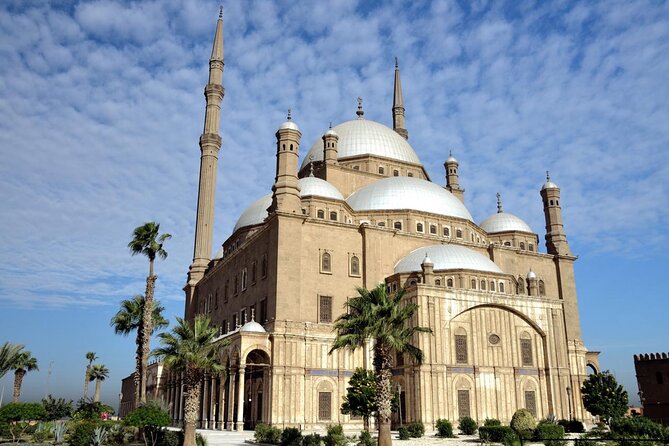
- The Citadel brings Cairo’s skyline into view: You visit the medieval fortress and Muhammad Ali Mosque.
- The day runs about nine hours: Expect a full sightseeing schedule, not a relaxed half-day outing.
- The group can reach 20 people: That is manageable, but less intimate than a private visit.
- The guide can shape the day: Past service has been praised for history lessons, safety, photos, language support, and flexibility.
Why this Cairo combination works
Cairo can feel like several cities stacked on top of one another. Ancient Egypt, medieval Islamic Cairo, royal Egypt, and modern city life all occupy the same broad urban area. This experience gives you a guided route through those layers without asking you to arrange each transfer yourself.
I like the historical progression. At NMEC, you begin with objects from different periods of Egyptian life. At the Citadel, you move into medieval Cairo and the era of Saladin. The two mosques then focus your attention on Islamic architecture, royal burials, calligraphy, courtyards, and prayer spaces.
The schedule is also useful if you have only one full day in Cairo for these particular sights. You get a museum, fortress, mosque, and lunch rather than spending the entire day in one district. The tradeoff is that this is a survey, not a slow architectural study. You will see a lot, but you will need to stay aware of the clock.
The price deserves a close look. At $5 per person, the advertised cost is unusually low for a nine-hour guided outing with pickup offered. The stated admission for the stops is free, but you should still verify what the price covers before booking, including transport, lunch, guide service, and any local site charges. At that price, even a few extra costs could affect the final value.
More Museums in Cairo
- Tour to Giza Pyramids and The Egyptian Museum
★ 5.0 · 6,016 reviews - Cairo 8 Hour Private Tour of Pyramids, Egyptian Museum and Bazaar
★ 5.0 · 2,931 reviews - Cairo: Grand Egyptian Museum, Pyramids, Sphinx Tour & Lunch
★ 4.7 · 2,282 reviews
The Royal Mummies Hall at NMEC
The National Museum of Egyptian Civilization is the natural first stop for understanding the scale of Egypt’s past. Its collection includes more than 50,000 artifacts from ancient, medieval, and modern periods. That broad time span matters because it prevents Egypt from being reduced to pyramids and pharaohs alone.
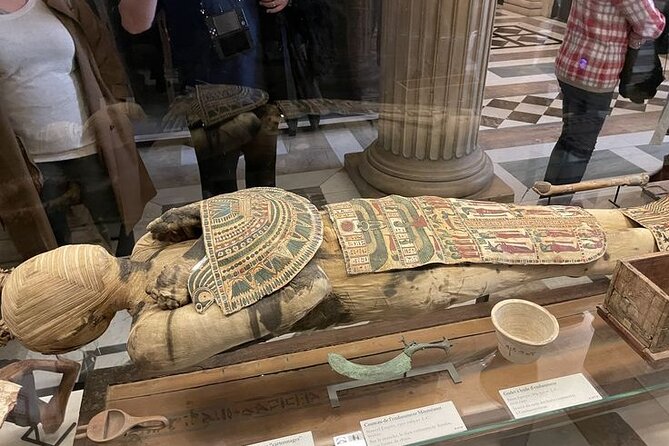
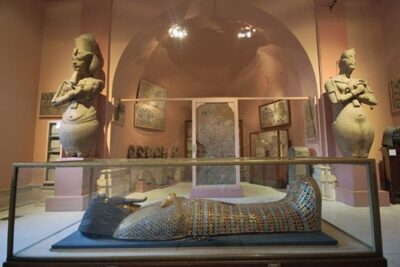
The museum’s main draw is the Royal Mummies Hall. Here you see the preserved remains of ancient Egyptian kings and queens, an unusually direct encounter with the people behind the monuments and inscriptions. The display can feel solemn rather than theatrical, so give yourself time to take in the setting and read the information.
You are scheduled to spend about two hours here. That is enough for a focused visit, but probably not enough to study every object in detail. I would use the guide’s explanation to establish the main story, then spend your personal time in the exhibits that interest you most.
The museum is especially suitable for first-time visitors who want a clear introduction to Egypt’s long timeline. It also works well for families because the exhibits are described as interactive, and the material covers more than one historical period. The main limitation is simple: two hours goes quickly in a museum of this size.
Ask your guide to explain how the museum connects the ancient, medieval, and modern sections. That context can make the visit more meaningful than simply moving from case to case.
Cairo Citadel and Muhammad Ali Mosque
The Citadel of Saladin is described as Cairo’s largest and oldest Egyptian city, though its role in this tour is best understood as a massive medieval fortress and one of the capital’s best-known non-ancient monuments. Its position gives the visit a strong sense of place, with views across the Cairo skyline.
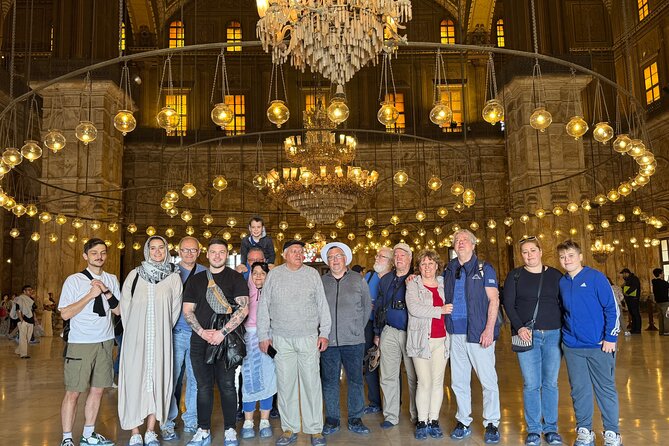
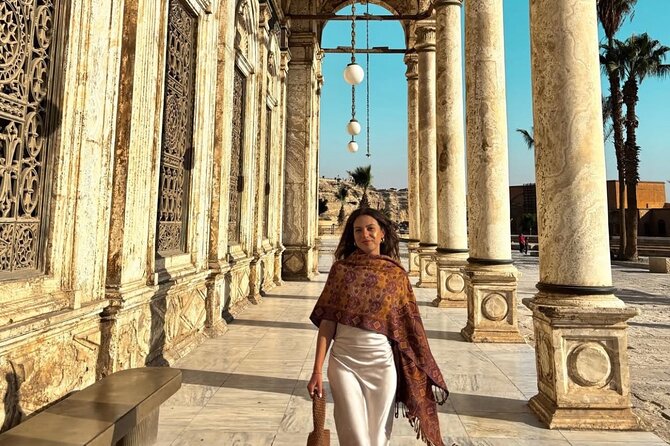
Inside, you visit the Muhammad Ali Mosque, also called the Alabaster Mosque because of its smooth white stone. Its appearance differs sharply from the older Mamluk buildings at Sultan Hassan. That contrast is one of the day’s best lessons: Islamic Cairo is not a single architectural style frozen in time.
You have about one hour at the Citadel. That hour needs to cover the fortress setting, the mosque, the interior decoration, and the views. I would not expect a full exploration of every corner of the complex. The short visit is enough for the main landmarks, but not for lingering over every detail.
The published description also refers to Khan Al-Khalili Market and the Egyptian Museum, including Tutankhamun’s tomb, in its account of the Cairo route. The scheduled stop list supplied for this experience names the Citadel and Muhammad Ali Mosque but does not separately list Khan Al-Khalili or the Egyptian Museum as stops. Confirm the final route with the provider so you know exactly what will be included on your date.
Sultan Hassan Mosque and Madrasa
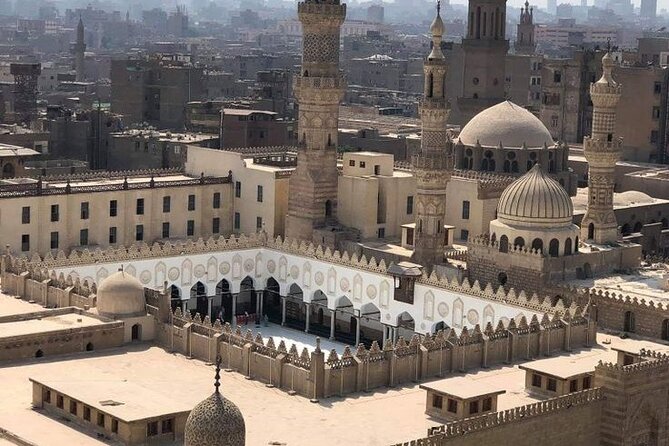
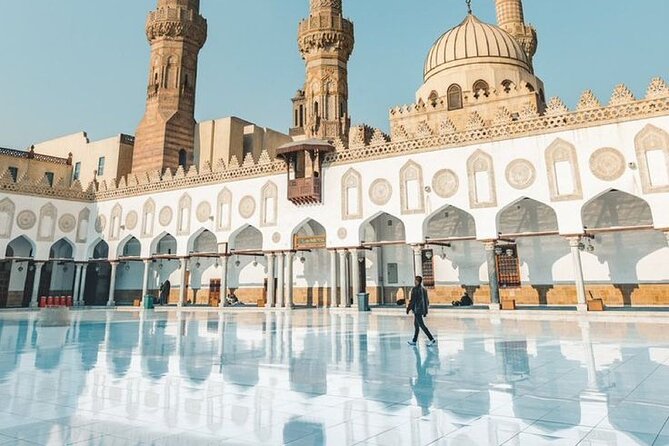
The Mosque and Madrasa of Sultan Hassan is the architectural heavyweight of the day. Built in the 14th century, it combines a huge prayer space with the function of a madrasa, or religious school. Its tall minarets, grand courtyard, geometric decoration, and Arabic calligraphy give you plenty to look at even if you know little about Islamic architecture.
I find this stop valuable because it rewards scale as much as detail. The courtyard and prayer hall communicate the ambition of Mamluk Cairo. Instead of seeing one decorated façade, you get a sense of how the building was designed as a complete religious and educational complex.
You are allotted about one hour. Wear shoes that are easy to remove and replace, as mosque visits may involve entering prayer areas where footwear rules apply. The supplied information does not spell out a dress code, so modest clothing is a sensible choice for both men and women.
The setting also makes this an efficient pairing with Al-Rifa’i Mosque. The two buildings are near each other, yet they belong to different periods. Sultan Hassan represents 14th-century Mamluk power. Al-Rifa’i came much later and uses a blend of Ottoman, Mamluk, and Persian influences.
Your guide’s interpretation matters here. Details such as the building’s purpose, the prayer hall, and the patterns can otherwise blur together after a morning at the museum. Guides including Hannah, Karim, and Mohammed have been praised for making complex history easy to follow, answering questions, and keeping the day enjoyable.
More Islamic Cairo and Khan el-Khalili walks:
- Cairo Citadel, Old Cairo and Khan El Khalili: Private Tour
★ 4.6 · 741 reviews - Cairo: Local Markets & Khan el Khalili Private Shopping Tour
★ 4.6 · 614 reviews - 4-hours private Tour Islamic Mosque,Coptic Cairo &Khan el-Khalili
★ 5.0 · 489 reviews - Cairo VIP Guided Tour to Khan El-Khalili Market with Lunch
★ 5.0 · 431 reviews
Al-Rifa’i Mosque and royal tombs
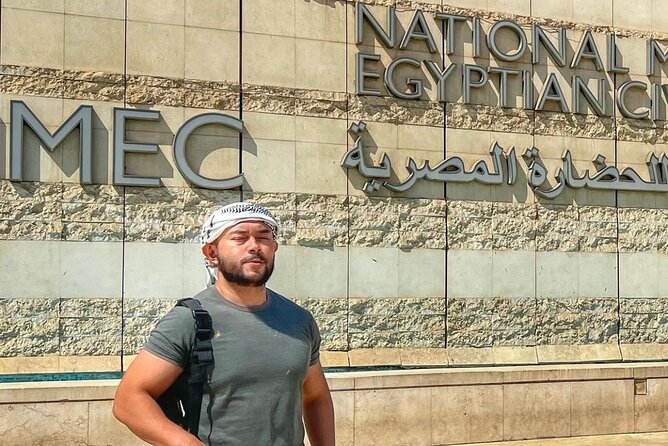
Al-Rifa’i Mosque offers a useful counterpoint to Sultan Hassan. It was built in the 19th century and combines Ottoman, Mamluk, and Persian design elements. You see high ceilings, marble pillars, and intricate decoration, but the building’s importance is not only visual.
The mosque contains the resting places of Egyptian royals and Iran’s last shah. That gives the stop a political and modern dimension that complements the ancient royal remains at NMEC. In one day, you move from pharaohs in a museum hall to later rulers in a functioning religious setting.
The scheduled visit lasts about one hour. That is a reasonable amount of time for the interior, tombs, and the comparison with Sultan Hassan. If you enjoy architecture, you may wish the schedule allowed longer, but the two-mosque pairing is efficient.
I would pay attention to the way the two buildings relate to one another. Their proximity makes the contrast especially clear. One feels rooted in Mamluk grandeur, while the other reflects a later period when architectural ideas from several regions were combined.
As with Sultan Hassan, dress respectfully and follow instructions inside the mosque. The information provided does not list detailed clothing rules, so your guide is the best person to ask on the day.
Egyptian lunch at Up-fuse
After the major sights, the schedule includes a 30-minute stop at Up-fuse in downtown Cairo for an Egyptian lunch. The meal is described as freshly prepared and made up of a variety of flavorful dishes in a relaxed setting.
Thirty minutes is a short lunch break. It is enough for a straightforward meal, but it does not leave much room for a long restaurant experience. If you need extra time to eat, use the stop efficiently and let your guide know about any dietary concerns as early as possible.
The description does not specify the exact dishes or confirm every meal inclusion in a single, clear place. Some visitors praised having food included, while the general tour details label the admission for stops as free. I would confirm whether lunch is included in your booking and ask what kind of meal is provided.
This is a practical pause rather than a headline attraction. Its value is that it breaks up a demanding sightseeing day and gives you a chance to recharge before the final part of the route.
Guides, drivers, and group size
The guide is the variable that can make this tour merely useful or genuinely memorable. Sayed is praised for detailed historical explanations. Tamer is described as cooperative and attentive. Mina is credited with being professional, friendly, and passionate about Egyptian history. Karim receives repeated praise for guiding, photography, and helping people feel safe.
Hannah is also singled out for clear explanations, punctuality, and working well with children aged nine and fourteen. Zainab is described as welcoming and accommodating, while Mohammed Galen is praised for answering questions and keeping the tone light. The guide team may also support several languages, which can make complicated historical material easier to grasp.
The driving service receives good practical comments too. Drivers are described as timely, attentive, and associated with clean vehicles that wait while you visit the sights. That matters in Cairo, where having transport coordinated between stops can save energy and reduce uncertainty.
The maximum group size is 20 people. That is small enough for organized movement, but it is not the same as a private tour. If you want extended conversation at every mosque or a highly flexible schedule, ask if a private option is available. One past booking specifically praised a private tour as affordable, but the standard group details here allow up to 20 participants.
The experience is described as suitable for most people, with pickup offered and access to public transportation nearby. Service animals are allowed. The nine-hour length, however, means you should be prepared for a full day on your feet and in transit.
Timing, value, and practical concerns
The full duration is approximately nine hours, with the listed stops adding up to five and a half hours of scheduled visits and lunch. The remaining time is likely used for transport, pickup, and movement between sites. Cairo traffic can affect the rhythm of any city tour, so keep the day open rather than scheduling a tight evening commitment.
The tour requires good weather. If poor weather causes cancellation, you are offered another date or a full refund. You can cancel for a full refund up to 24 hours before the local start time. Cancellations or changes made within 24 hours are not refunded or accepted.
At $5, the experience looks like strong value if the advertised services match your confirmation. The combination of a guide, driver, major historic sites, and lunch can cost much more when arranged separately. Still, the unusually low price makes it especially important to confirm inclusions rather than assume every expense is covered.
I would also confirm the meeting or pickup details. Pickup is offered, but the supplied information also refers to a meeting point in Cairo. Ask where you will be collected, how long the pickup window lasts, and whether the tour runs as a shared group or private outing.
Who should book this Cairo tour?
I would recommend it to first-time visitors who want a broad introduction to Islamic Cairo and the NMEC in one day. It suits people who value organized transport, guide commentary, and a clear list of major sights more than an unstructured afternoon of wandering.
Families may appreciate the variety. The museum offers interactive exhibits, the Citadel provides open views, and the mosques supply strong visual contrasts. Hannah’s work with children suggests that a good guide can adjust the explanations for younger participants.
History and architecture fans will also find plenty to enjoy, especially in the pairing of Sultan Hassan and Al-Rifa’i. The tour gives you a useful way to compare Mamluk and later Islamic design without arranging separate visits.
I would be cautious if you dislike long days, need a slow pace, or want certainty about every included cost before paying. The itinerary is ambitious, the museum alone deserves more than a quick glance, and the published route contains references to Khan Al-Khalili and the Egyptian Museum that are not clearly listed as scheduled stops.
Should you book it?
Book this tour if you want maximum historical coverage for very little money and appreciate having a guide and driver organize the day. The most convincing strengths are the Royal Mummies Hall, the two-mosque comparison, the Citadel views, and the repeated praise for friendly, careful guides such as Karim, Hannah, Mina, Sayed, Tamer, and Mohammed.
Before paying, confirm the exact route, pickup point, language, lunch, and any entrance charges. If those details suit you, this is a practical way to see several of Cairo’s most important cultural sites in one full day. If you prefer quiet museum time or detailed mosque study, choose a private or slower tour instead.
FAQ
Where does this tour take place?
The experience takes place in Cairo, Egypt. The scheduled sites include the National Museum of Egyptian Civilization, Cairo Citadel, Muhammad Ali Mosque, Sultan Hassan Mosque and Madrasa, and Al-Rifa’i Mosque.
How long does the experience last?
The tour lasts approximately nine hours.
How much does the tour cost?
The listed price is $5 per person.
Is pickup available?
Yes. Pickup is offered, and the tour information also refers to collection from a meeting point in Cairo. Confirm the exact pickup location when booking.
Is a mobile ticket available?
Yes. The experience includes a mobile ticket.
What is the maximum group size?
The tour can accommodate a maximum of 20 people.
Are admission tickets included?
The scheduled stops are marked as having free admission in the supplied details. Confirm the exact inclusions with the provider, especially for any charges not clearly covered by the booking.
Are service animals allowed?
Yes. Service animals are allowed.
What is the cancellation policy?
You can cancel at least 24 hours before the local start time for a full refund. Cancellations or changes made within 24 hours are not accepted and are not refunded. If poor weather causes the tour to be canceled, you will be offered another date or a full refund.
Just added around Cairo
- Day Tour To Giza Pyramids, Great Sphinx, Saqqara Pyramids & Memphis Capital★ 5.0 · 23 reviews
- GEM Grand Egyptian Museum Private Tour from Cairo Giza hotels★ 5.0 · 23 reviews
- Cairo vip two or one day pyramids ,Museum,memfis ,saqra and7 places★ 5.0 · 23 reviews
- Giza Pyramids, Sphinx, Saqqara, and Dahshur Tour with Camel Ride★ 5.0 · 23 reviews
- Full-Day Tour to Giza Pyramids Saqqara Memphis Sphinx Private★ 5.0 · 23 reviews
- 8 Day Cairo Pyramids and Nile cruise and Alexandria All inclusive Private Tour★ 5.0 · 23 reviews
- Half Day Guided Trip To Egyptian Museum★ 4.5 · 23 reviews
- Full-Day Tour to Giza Pyramids, memphis and Sakkara Step Pyramid★ 5.0 · 23 reviews
Islamic Cairo & Khan el-Khalili Tours, compared.

Cairo Citadel, Old Cairo and Khan El Khalili: Private Tour
Read our review →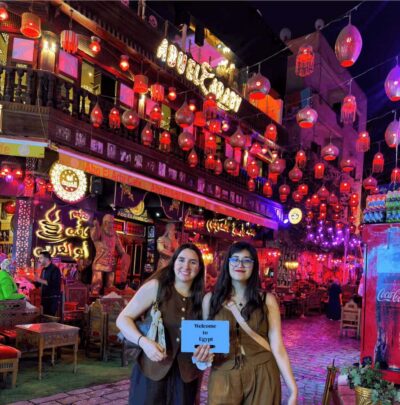
Local Markets & Khan el Khalili Private Shopping Tour
Read our review →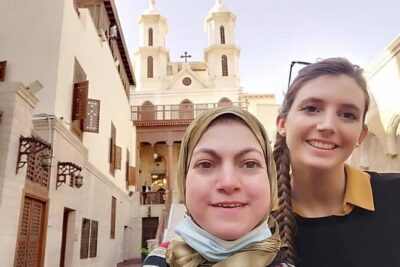
4-hours private Tour Islamic Mosque,Coptic Cairo &Khan el-Khalili
Read our review →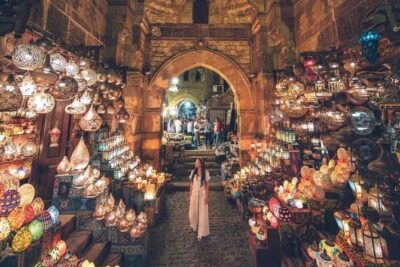
Cairo VIP Guided Tour to Khan El-Khalili Market with Lunch
Read our review →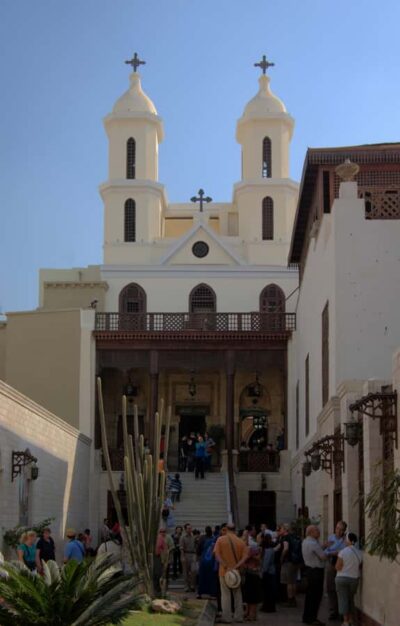
Old Cairo and Khan El Khalili Bazaar: Private Half-Day Tour
Read our review →
Cairo Sightseeing Tour (Giza Pyramids + Museum + Khan el Khalili Bazaar)
Read our review →
Private Tour: Giza Pyramids, Sphinx, Egyptian Museum, Khan el-Khalili Bazaar
Read our review →Browse the lists this tour appears in