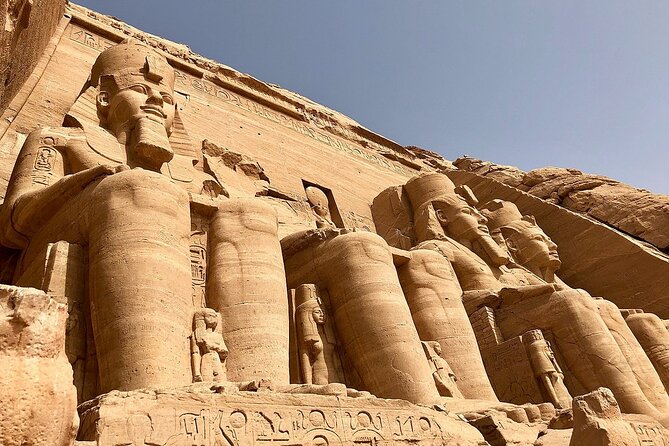
Reviewed · CAIRO TOURS
Overnight Trip To Luxor From Cairo
Luxor rewards an early start. This two-day trip packs an impressive amount into a short visit, with flights from Cairo, a private air-conditioned vehicle, hotel stay, meals, and an Egyptologist guide included. I like the private format, which keeps the pace and commentary focused on your group, and I like the range of sites, from royal tombs to the huge columns of Karnak.
The main drawback is the schedule. Pickup is at 3:30 a.m., and the first day runs from the airport through the West Bank and East Bank before dinner. The early flight also leaves little room for mistakes, so double-check your airport terminal and keep your passport details handy.
In This Review
- Five things to know before booking
- Why this Cairo to Luxor trip makes sense
- Day one begins before sunrise
- Valley of the Kings: tombs, color, and heat
- Hatshepsut and the Colossi of Memnon
- Luxor Temple after the royal tombs
- Karnak: the biggest visual payoff
- Day two at Medinet Habu
- Deir el-Medina and the people behind the tombs
- Valley of the Queens: a quieter final stop
- Guide quality can make or break the visit
- Transport, meals, and the real cost
- Who should book this Luxor itinerary?
- Should you book it?
- FAQ
- What is included in the $390 price?
- How early does the tour start in Cairo?
- Is this a private tour?
- Which sites are visited on the first day?
- Which sites are visited on the second day?
- Are drinks included with lunch?
- What passport information is needed for booking?
Five things to know before booking
- A 3:30 a.m. Cairo pickup starts the trip: You are transferred to the domestic airport for your flight to Luxor.
- The package covers the costly basics: Flights, private transfers, a hotel night, guide, entrance fees, lunch, and dinner are included.
- The West Bank receives strong attention: You visit the Valley of the Kings, Hatshepsut’s temple, the Colossi of Memnon, Medinet Habu, Deir el-Medina, and the Valley of the Queens.
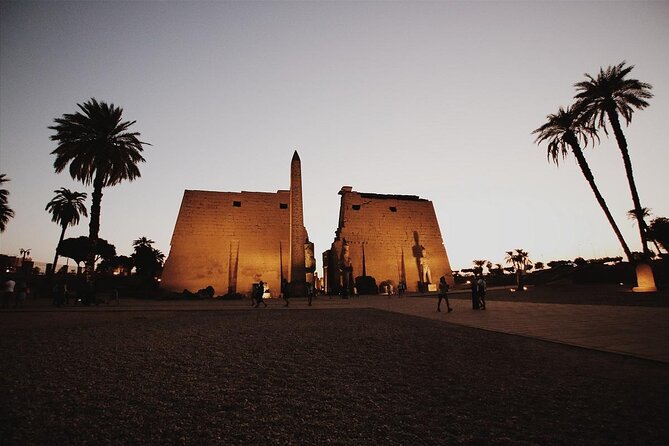
- Karnak and Luxor Temple fill out the East Bank visit: Together, they show the ceremonial side of ancient Thebes.
- Guide quality matters here: A good Egyptologist can make tomb paintings, royal symbols, and temple plans much easier to understand. One especially praised guide was Ayman.
Why this Cairo to Luxor trip makes sense
At $390 per person, this is not a bargain-basement day trip. It is a convenience package for seeing Luxor without arranging domestic flights, local transport, a hotel, entrance tickets, and a guide on your own.
That price has real value if you are short on time. Cairo and Luxor are far apart, and trying to organize the same route independently would require several separate bookings. Here, a representative meets you at the airport in Luxor, and a private vehicle carries you between the ancient sites.
The private arrangement is especially useful in Luxor. You are not being moved around as part of a large coach group, and the guide can direct the explanation toward your interests. If tombs and royal succession are your thing, you can ask about them. If the children in your group have reached their limit after a morning of monuments, the guide can help keep the visit moving.
The package includes entrance fees, which removes the need to handle tickets at each stop. Lunch is provided at a local restaurant, based on a full meal for each person, but drinks are extra. Dinner is included at the hotel on the first night.
The tour is recommended by 96 percent of customers and carries a 4.9 rating from 52 reviews. That is a strong record, though one practical warning deserves attention: a customer reported being dropped at the wrong terminal in Cairo. Since the day begins before sunrise, confirm the terminal and allow no confusion at the airport.
More things to do in Cairo:
- Cairo: Pyramids & Great Sphinx Private Tour with Camel Ride
★ 4.9 · 6,335 reviews - Tour to Giza Pyramids and The Egyptian Museum
★ 5.0 · 6,016 reviews - VIP All inclusive Best of the best Giza Pyramids,Sakkara,Memphis
★ 5.0 · 3,164 reviews
Day one begins before sunrise
Your Cairo hotel pickup is scheduled for 3:30 a.m. A representative transfers you to the domestic airport for the flight to Luxor. The exact flight details are not provided, so you should check those carefully after booking and keep your passport information ready.
A copy of your passport photo is required during the booking process. This is a normal need for arranging the flight, but it is one more reason not to leave your booking details until the last minute.
After arriving in Luxor, a representative meets you and the sightseeing begins on the West Bank of the Nile. The plan then moves across to the East Bank for Luxor Temple and Karnak before ending at the hotel.
That is a full day. You will see a great deal, but you should not expect long, quiet pauses at every monument. Wear practical shoes, carry water, and keep your expectations realistic. Luxor rewards attention, yet ancient sites are easier to enjoy when you accept that the schedule has a firm rhythm.
Valley of the Kings: tombs, color, and heat
The Valley of the Kings is the major first stop. This dry valley served as a burial ground for rulers of several dynasties, and the experience is very different from looking at a freestanding temple.
You walk into the hills and enter selected tombs, where painted walls and carved scenes cover the passageways and chambers. The tour includes admission fees, but the exact number of tombs included is not specified. Some special tombs can require separate tickets, so ask your guide what your entry covers before you start.
The guide is important here. Without context, a decorated wall can look like a jumble of figures, gods, and symbols. With an Egyptologist explaining the scenes, you can begin to understand how the tombs were designed for the afterlife and why certain images appear again and again.
This is also a place where the practical side matters. The valley is exposed, and the day begins with several major sites still ahead. Take the time to appreciate the best-preserved details, but do not feel you must linger at every doorway.
Hatshepsut and the Colossi of Memnon
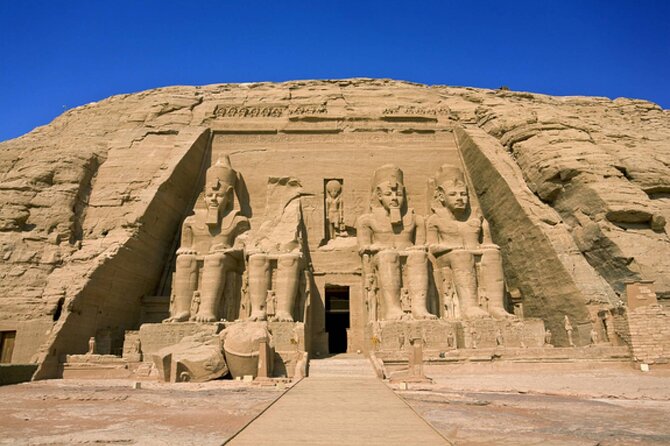
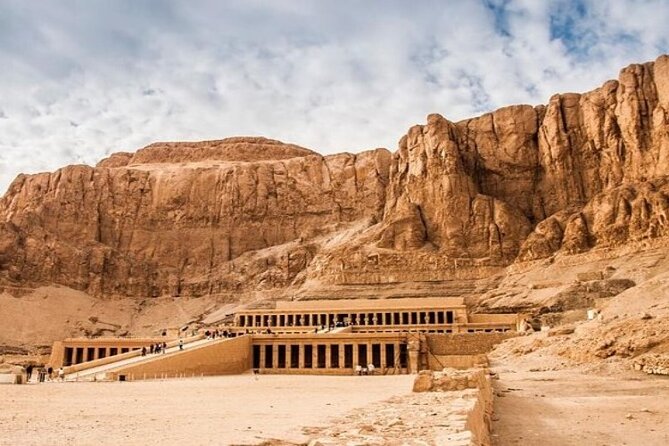
The Temple of Queen Hatshepsut gives the morning a change of shape. Instead of descending into a tomb, you approach a broad, terraced monument at the foot of the Theban hills.
Hatshepsut was one of Egypt’s most notable female rulers, and the temple’s design makes good use of the rising rock behind it. Your guide can explain the political story behind her rule and the reliefs that once helped present her authority.
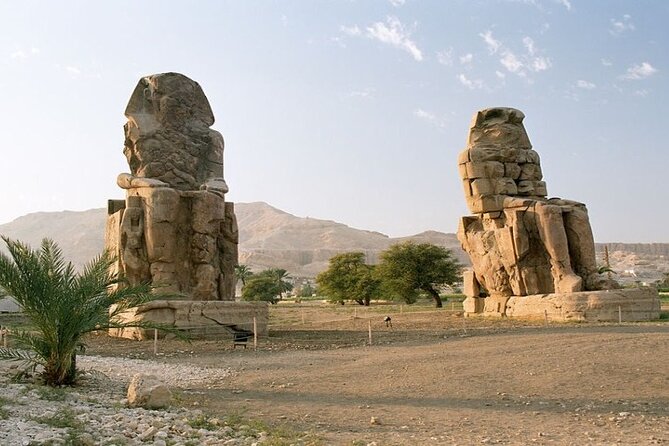
The schedule also includes the Colossi of Memnon. These two enormous seated statues represent Amenophis III and face toward the Nile. The stop is brief in practical terms, though the itinerary allows about an hour.
The Colossi are easy to appreciate because their scale is immediate. You do not need a long explanation to understand why they were built to impress. Bring your camera, but also listen for the guide’s explanation of their original setting and purpose.
Lunch comes between visits at a local restaurant. A full meal is included, but beverages are not, so carry some Egyptian pounds or another accepted payment method for drinks. The supplied details do not name the restaurant or specify menu choices, so treat this as a functional meal break rather than a food-focused part of the tour.
A completely different sort of day out in Cairo:
- From Cairo: Pyramids of Giza, Sphinx, Saqqara & Memphis Tour
★ 4.7 · 3,110 reviews - Cairo 8 Hour Private Tour of Pyramids, Egyptian Museum and Bazaar
★ 5.0 · 2,931 reviews - Cairo: Pyramids, Sakkara & Memphis Tour with Lunch
★ 4.6 · 2,493 reviews - Private ViP all-inclusive Giza Pyramids,Sphinx,Inside Pyramid
★ 5.0 · 2,448 reviews
Luxor Temple after the royal tombs
After the West Bank, you cross to Luxor’s East Bank for Luxor Temple. The change is welcome. The temple sits in the modern city rather than in the open desert, and its courtyards, statues, and granite figures give you a different view of ancient Thebes.
The visit focuses on the courtyard and the granite statues of Ramses the Great. Luxor Temple was closely tied to royal ceremony, so it works well after seeing the private burial places of kings.
The itinerary says you may visit Luxor Temple at night if you prefer, between 6:00 and 9:00 p.m. This is listed as a possibility rather than a guaranteed separate activity, so confirm the arrangement with the operator or guide. An evening visit can be appealing because the monument takes on a different character after dark, but the first day is already long.
Transport between Luxor Temple and Karnak may be by carriage or bus. The wording does not make clear which option every group will use, so do not book this trip for a guaranteed horse-carriage ride. The important point is that both major East Bank temple sites are included.
Karnak: the biggest visual payoff
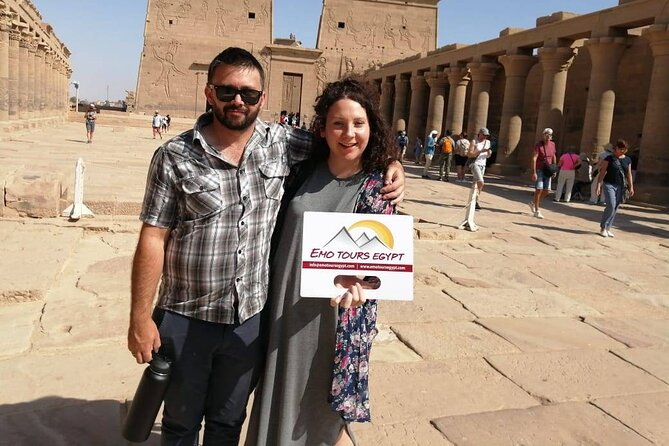
Karnak is not one temple in the narrow sense. It is a large religious complex built and modified by different rulers over many centuries. The scale can be hard to grasp until you enter the Great Hypostyle Hall.
That hall contains 134 massive columns. The rows create a forest of stone, and the carved surfaces carry royal names, religious images, and ceremonial scenes. This is where a guide’s explanation earns its keep. A good guide helps you read the plan of the complex rather than simply pointing out large objects.
The route includes the Avenue of Sphinxes, the Unfinished Propylon, the obelisks of Hatshepsut and Thutmose III, the temple of Amun, the sacred lake, and the granite scarab associated with Amenophis III. Lotus and papyrus designs appear throughout the temple decoration.
Karnak can feel like too much information at once. I suggest choosing a few features to remember: the Hypostyle Hall, the obelisks, and the sacred lake are a useful trio. Let your guide connect them, instead of trying to memorize every ruler and date.
After Karnak, you transfer to the Luxor hotel, check in, and have dinner there. The hotel name and room standard are not specified, so anyone seeking a particular level of accommodation should ask before paying. You are staying only one night, and the main benefit is location and convenience rather than a resort break.
Day two at Medinet Habu
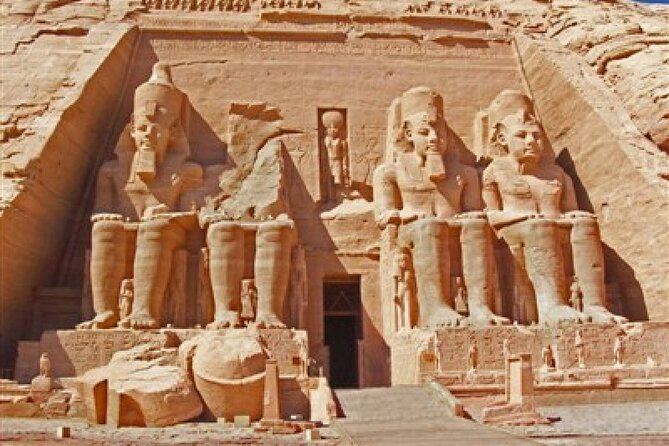
Pickup on the second morning is at 7:00 a.m. A licensed guide takes you by private air-conditioned vehicle to the West Bank again.
The first major stop is Medinet Habu, an archaeological area near the Theban Hills. It is best known for the mortuary temple of Ramesses III, a long monument about 150 meters in length.
Medinet Habu is a useful addition because it is not simply another version of Karnak. Its design follows the traditional mortuary temple pattern and is closely related to the temple of Ramesses II, known as the Ramesseum. The walls and gateways help show how royal memorial temples worked.
The site also contains the Temple of Amun, begun by Hatshepsut and Thutmose III during the 18th Dynasty. Later rulers altered it over many periods, including the 20th, 25th, 26th, 29th, and 30th Dynasties, as well as the Greco-Roman period.
That layering is one of the most useful things to notice. You are not looking at a single frozen moment. The same sacred place was changed and reused over centuries, and the guide can point out those additions.
Deir el-Medina and the people behind the tombs
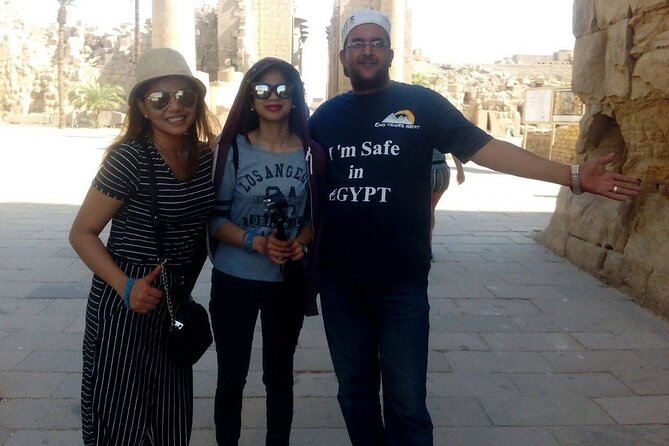
Deir el-Medina is known as the Valley of the Artisans. It was the ancient village of the skilled workers who made and decorated the royal tombs in the Valley of the Kings during the 18th to 20th Dynasties.
The visit is shorter, about 30 minutes, but it adds an important human scale to the trip. After seeing grand royal monuments, you get a look at the community connected to their construction and decoration.
The painted scenes are noted for looking remarkably fresh. That detail is worth watching for in person, especially after the larger and more formal temple spaces. The tour does not specify which tombs or structures are entered, so ask your guide what is open on the day.
This stop is especially good for anyone who wants more than royal names and giant statues. It helps connect the finished monuments with the artisans who planned, carved, and painted them.
Valley of the Queens: a quieter final stop
The final major visit is the Valley of the Queens. In ancient times it was called Ta-Set-Neferu, meaning the place of the children of the Pharaoh. Queens were buried there, along with princes, princesses, and members of the nobility.
The valley lies near the Valley of the Kings on the West Bank, but it serves a different purpose in the story of ancient Egypt. Tombs were maintained by mortuary priests, who performed rituals and brought offerings for the dead.
The route allows about an hour here. As with the Valley of the Kings, the exact tomb admissions are not detailed, so ask what is covered by your included entry fees. The setting is described as a barren area in the western hills, chosen for its isolation and closeness to the ancient capital at Thebes.
Ending here gives the second day a logical shape. You begin with a large royal temple, move to the workers who decorated royal tombs, and finish with a burial valley connected to royal families and nobility.
Guide quality can make or break the visit
The tour includes a qualified Egyptologist guide, and this is one of its most important features. Luxor’s monuments are large, but size alone does not explain why they matter.
A strong guide can help you understand the difference between a mortuary temple, a burial tomb, and a major state sanctuary. The guide can also explain why Hatshepsut appears at several sites, how Ramesses III’s temple differs from Karnak, and what the wall scenes at Deir el-Medina tell you about the people who made the tombs.
One especially praised guide was Ayman. The positive account connected him with making the Luxor visit a much better overall experience. Guide assignments can change, so Ayman should not be treated as guaranteed, but you can request him when booking if the operator allows it.
The private setup gives you a better chance to ask questions. This matters more in Luxor than it might at a simple sightseeing stop because the monuments can blur together after several hours.
Transport, meals, and the real cost
The package includes all transfers in a private, modern air-conditioned vehicle, hotel and airport pickup and drop-off, a tour guide, entrance fees, and lunch. Flights and one hotel night are also part of the advertised inclusive package.
The phrase private tour means only your own group participates. That does not mean the schedule is flexible at every point, since flights and opening times still control much of the day. It does mean you avoid being added to a large mixed group once you reach Luxor.
At $390 per person, the value is strongest for a short Cairo stay. You pay for time saved and coordination, not just for monument visits. If you already have access to cheap flights, a hotel in Luxor, and a trusted guide, you might assemble a lower-cost trip. If you do not, the package removes several points where a rushed trip can go wrong.
Personal purchases and tipping are not included. Lunch is provided, but drinks cost extra. Group discounts are available, so the per-person price may work better for a small party than for a solo booking.
Who should book this Luxor itinerary?
I would choose this trip if you have only two days, want the major Luxor sites, and prefer one company to handle the moving parts. It suits first-time visitors who want an Egyptologist guide and do not want to arrange domestic flights, taxis, tickets, and a hotel separately.
It also suits families or small groups that value a private vehicle and a guide who can adjust explanations and pacing. People with a strong interest in temples and tomb decoration will get the most from the route.
I would hesitate if you dislike pre-dawn starts, find full sightseeing days tiring, or want a slow Luxor stay with time for markets and independent wandering. This is a focused ancient-sites trip. It does not leave much spare time.
The cancellation terms are strict close to departure. Cancel at least six full days before the start for a full refund. Cancellations two to six days ahead receive 50 percent back, while cancellations less than two full days before departure are not refunded. All cutoffs use local time.
Should you book it?
Book this overnight Cairo to Luxor trip if time and simplicity matter more than a relaxed pace. For $390, you receive the major transport pieces, a hotel, meals, tickets, private touring, and a guide, which is a fair package for a tightly planned visit.
Before booking, confirm the flight schedule, Cairo airport terminal, hotel details, and which tombs are included. If you can handle the 3:30 a.m. start, the route gives you a powerful introduction to Luxor, with royal tombs, giant temples, worker villages, and burial valleys all in two days.
FAQ
What is included in the $390 price?
The package includes flights, one hotel night in Luxor, an Egyptologist tour guide, private touring, private air-conditioned transfers, hotel and airport pickup and drop-off, entrance fees, lunch at a local restaurant, and dinner at the hotel.
How early does the tour start in Cairo?
Pickup from your Cairo hotel is scheduled for 3:30 a.m. You are then transferred to the domestic airport for the flight to Luxor.
Is this a private tour?
Yes. Only your own group participates in the private tour and activity.
Which sites are visited on the first day?
The first day includes the Valley of the Kings, Deir el-Bahari Temple, the Colossi of Memnon, the Temple of Queen Hatshepsut, Luxor Temple, and Karnak Temple. Lunch and a hotel dinner are also included.
Which sites are visited on the second day?
The second day includes Medinet Habu and the Temple of Ramesses III, the Temple of Amun within the Medinet Habu area, Deir el-Medina, and the Valley of the Queens.
Are drinks included with lunch?
No. Lunch is included as a full meal, but beverages are not included.
What passport information is needed for booking?
A copy of your passport photo is required during the booking process. Confirmation is provided within 48 hours, subject to availability.
Just added around Cairo
- Day Tour To Giza Pyramids, Great Sphinx, Saqqara Pyramids & Memphis Capital★ 5.0 · 23 reviews
- GEM Grand Egyptian Museum Private Tour from Cairo Giza hotels★ 5.0 · 23 reviews
- Cairo vip two or one day pyramids ,Museum,memfis ,saqra and7 places★ 5.0 · 23 reviews
- Giza Pyramids, Sphinx, Saqqara, and Dahshur Tour with Camel Ride★ 5.0 · 23 reviews
- 8 Day Cairo Pyramids and Nile cruise and Alexandria All inclusive Private Tour★ 5.0 · 23 reviews
- Full-Day Tour to Giza Pyramids Saqqara Memphis Sphinx Private★ 5.0 · 23 reviews
- Half Day Guided Trip To Egyptian Museum★ 4.5 · 23 reviews
- Full-Day Tour to Giza Pyramids, memphis and Sakkara Step Pyramid★ 5.0 · 23 reviews
Cairo Tours, compared.
Pyramids & Great Sphinx Private Tour with Camel Ride
Read our review →
Tour to Giza Pyramids and The Egyptian Museum
Read our review →
VIP All inclusive Best of the best Giza Pyramids,Sakkara,Memphis
Read our review →
Pyramids of Giza, Sphinx, Saqqara & Memphis Tour
Read our review →
Cairo 8 Hour Private Tour of Pyramids, Egyptian Museum and Bazaar
Read our review →
Private ViP all-inclusive Giza Pyramids,Sphinx,Inside Pyramid
Read our review →