
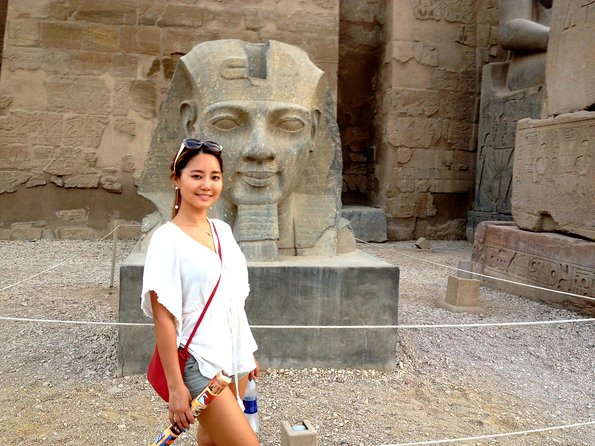
Reviewed · 2-DAY EXPERIENCES
Private 2 Days The Best of Luxor
Luxor rewards a well-planned two-day route. This private tour brings you to the Valley of the Kings and Karnak Temple, while an Egyptologist gives the monuments meaning beyond their famous names. I like the private vehicle and hotel pickup, which keep a busy schedule easier to manage. The main drawback is that entrance fees are not included, so the final cost will be higher than the advertised $150 per person.
I also like the balance between giant temples and smaller museum displays, especially at the Luxor Museum, where objects from Tutankhamun’s tomb and several mummies help connect the grand monuments to real people. Guides Khalid and Ragab Elmotgalye have earned especially strong praise for clear, detailed explanations and for helping visitors feel safe. Two full sightseeing days can feel packed, and the midday heat may test your stamina.
In This Review
- Key points to know before booking
- Why this private Luxor tour works well
- Day one: the Valley of the Kings and the West Bank
- Ramesses III and the Tomb of the Harpers
- Ramesses IX and its decorated ceiling
- Merenptah’s large royal tomb
- Tutankhamun’s mummy and the optional extra fee
- Hatshepsut, the Colossi, and Ramses III
- Day two: Karnak and the East Bank temples
- Luxor Temple and the royal statues
- The Avenue of Sphinxes
- The Luxor Museum: a quieter final hour
- Guide quality and the private format
- Price, extra costs, and the hot-air balloon option
- Who should book the two-day route?
- Should you book it?
- FAQ
- How long does the Luxor tour last?
- What time does the tour start?
- Where can pickup take place?
- Is the tour private?
- Is transportation included?
- Is an Egyptologist guide included?
- Are entrance fees included?
- How much does entry to Tutankhamun’s tomb cost?
- Is a hot-air balloon ride included?
- Can I cancel for a refund?
Key points to know before booking
- Private touring keeps the pace personal: You travel only with your own group, guide, and air-conditioned vehicle.
- The West Bank gets the fullest treatment: The plan includes several royal tombs, Tutankhamun’s burial place, Hatshepsut’s temple, the Colossi of Memnon, and the mortuary temple of Ramses III.
- Karnak is the day-two centerpiece: Allow about two hours for its vast halls, obelisks, sacred lake, and temple courts.
- Entrance fees are extra: Site tickets are not included, and Tutankhamun’s tomb has a listed optional fee of 360 Egyptian pounds.
- The museum adds welcome detail: The Luxor Museum includes objects from Tutankhamun’s tomb, mummies, and a famous Sobek and Amenhotep III statue.
- A hot-air balloon ride is not included: It may be possible to arrange one, but it is not part of the quoted tour price.
Why this private Luxor tour works well
Luxor is not a one-monument destination. Its ancient sites stretch across both banks of the Nile, and the scale can be hard to grasp without a guide and a vehicle. This tour handles that problem in a practical way: the first day focuses on the West Bank, and the second day turns to the East Bank.
Your day begins with pickup at about 8:00 am from a central Luxor hotel or the harbor. You then ride in an air-conditioned vehicle with a private Egyptologist guide. Since only your group participates, you can ask questions as you go and spend more time at places that hold your attention.
The listed price is $150 per person. That is a fair starting price for private transport, hotel pickup and drop-off, and a guide across two days. Still, you need to budget for entrance tickets because the major admission fees are separate. If you want to enter Tutankhamun’s tomb, add the listed 360 Egyptian pound fee.
The tour is particularly useful if you have only two days in Luxor and want a strong first look at the major sites. It is less suited to someone who prefers slow museum days, long café stops, or time to explore each temple alone. The schedule covers a lot.
More things to do in Luxor:
- Hurghada: Luxor Valley of the Kings & Tutankhamun Tomb Trip
★ 4.7 · 13,208 reviews - Luxor Day Trip from Hurghada Small Group & Tutankhamun Tomb
★ 4.8 · 5,366 reviews - Hot Air Balloon Ride in Luxor Egypt with Transfers Included
★ 5.0 · 4,319 reviews
Day one: the Valley of the Kings and the West Bank
The first day lasts about eight hours and begins in the Valley of the Kings. This dry valley served as a burial ground for New Kingdom pharaohs, and the tombs are the real attraction. Instead of grand buildings rising above the ground, you walk down into decorated corridors cut into the rock.
The planned visits include several royal tombs, with stops listed for Ramesses III, Ramesses IX, and Merenptah, as well as an opportunity to visit Tutankhamun’s tomb. The exact ticket arrangement matters here, since admission to the general Valley of the Kings sites is separate from the tour price.
Expect a fair amount of walking, steps, uneven ground, and time in exposed conditions. Wear practical shoes, carry water, and bring sun protection. The tomb interiors can feel more comfortable than the open valley, but the route between sites is still hot and dusty at times.
Ramesses III and the Tomb of the Harpers
The tomb of Ramesses III, known as KV 11, is one of the most visually interesting stops. Its walls show ritual texts such as the Litany of Ra and the Book of Gates, along with scenes of the king before the gods.
Look closely at the side chambers near the entrance. They contain unusual secular images, including foreign tribute, pottery from the Aegean, boats, weapons, and blind harpists. Those musicians give the tomb its informal name, the Tomb of the Harpers.
This is a good place to listen closely to your Egyptologist. The painted scenes are not simply decoration. They helped prepare the dead king for the next world, while the unusual side images offer a glimpse of life beyond formal religious ceremony.
Ramesses IX and its decorated ceiling
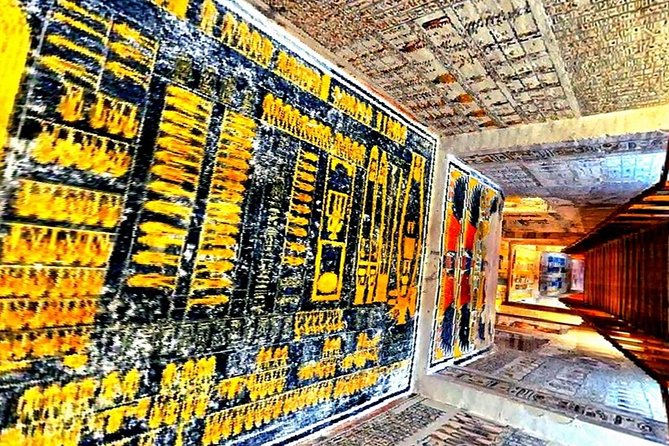
The tomb of Ramesses IX gives you another view of royal burial art. The king ruled during the Twentieth Dynasty and was the fifth son of Ramesses III. His tomb is noted for its color and fine detail, especially the ceiling above the sarcophagus.
The goddess Nut stretches across that ceiling, creating a powerful image above the burial chamber. Some paintings have deteriorated, but much of the decoration remains strong enough to show how carefully the tomb was planned.
The stop is scheduled for about 25 minutes. That is enough for an introduction and a close look, but you may wish for more time if you enjoy Egyptian symbols and painted texts. A private guide helps here because you can ask for a short explanation rather than trying to decode every scene alone.
A few more Luxor trips worth weighing up
- Hurghada: 2-Day Luxor Tour with Hotel, Balloon, & Boat Ride
★ 4.5 · 1,113 reviews - 2-Day Top Attractions and Adventures Package in Luxor with Accommodation
★ 5.0 · 178 reviews - Hurghada: 2-Day Luxor Tour with Hotel, Balloon, & Nile Boat
★ 4.8 · 82 reviews - Private 2 Day Luxor Tour
★ 5.0 · 71 reviews
Merenptah’s large royal tomb
Merenptah was the son of Ramesses II and Queen Isis-Nofret. His tomb, numbered KV 8, differs from some earlier royal tombs through its tall corridors and rooms, with fewer side chambers.
The changing proportions are worth noticing. Your guide can point out how royal tomb design developed over time, rather than treating every burial place as the same. The tomb was discovered by Howard Carter in 1903, a detail that adds another layer to the story of modern Egyptian archaeology.
The scheduled visit lasts about 25 minutes. As with the other tombs, your experience depends partly on which chambers are open and which admission tickets you choose. The tour provides the route and explanation, but ticket costs remain yours.
Tutankhamun’s mummy and the optional extra fee
Tutankhamun is the best-known pharaoh in modern popular culture, but his reign was short. He came to the throne at about age 10 and died at 19. His tomb is smaller than many people expect, yet its importance is enormous because his royal mummy remains there.
The listed entrance fee is 360 Egyptian pounds, and entry is optional. If seeing the mummy in person is high on your list, this is one extra cost worth considering. If you are more interested in tomb architecture and wall paintings, the other royal tombs may give you more to study.
Ask your guide how to organize your ticket choices before entering the Valley of the Kings. That will help you avoid spending extra money on a tomb that does not match your interests.
Hatshepsut, the Colossi, and Ramses III
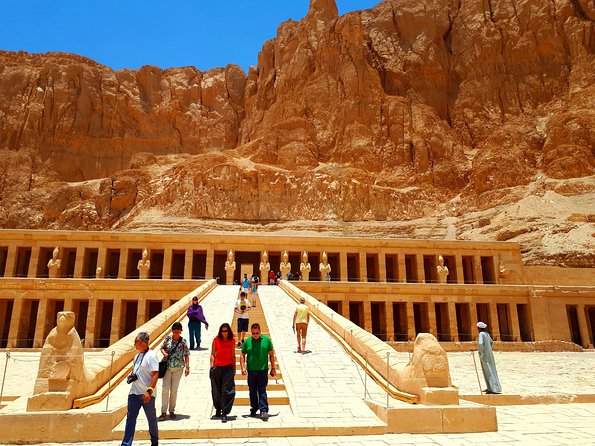
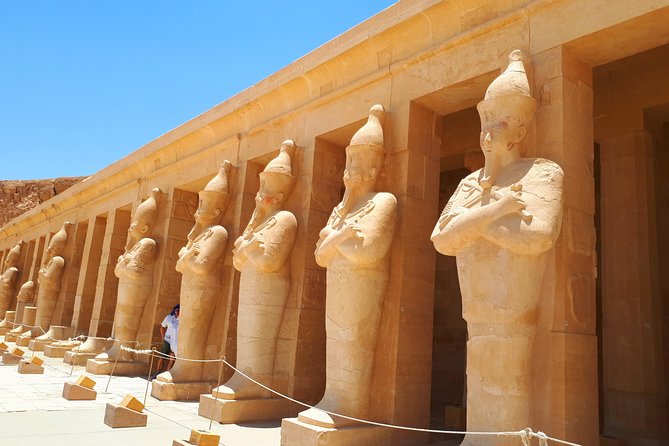
After the royal tombs, the route continues to the Temple of Hatshepsut at Deir el Bahari. Hatshepsut was a woman who ruled Egypt as pharaoh, an unusual position in the ancient world. She was also an ancestor of Tutankhamun.
The temple is arranged in broad terraces against the cliffs. The setting makes it feel different from the enclosed tombs of the morning. You get open views, monumental stonework, and a clear sense of how the temple was designed to frame the ruler and the surrounding cliffs.
Plan on about an hour here. Listen for the political story as well as the architectural one. Hatshepsut’s reign and royal image raise useful questions about power, representation, and how ancient rulers wanted to be remembered.
The next short stop is the Colossi of Memnon, two huge statues from the time of Amenhotep III. They are free to visit and take about 20 minutes. This is a quick photo and orientation stop rather than a long site visit, but the size of the statues gives you an immediate sense of the scale used by Egypt’s rulers.
The final West Bank visit is the mortuary temple of Ramses III. Allow about 30 minutes. It rounds out the day by showing another type of royal monument, built for worship and remembrance after the pharaoh’s death.
Day one covers a lot of ground. That is its strength, but also its cost. You will see the essential West Bank sights, yet you should not expect long unstructured periods at each location.
Day two: Karnak and the East Bank temples
The second day begins at Karnak Temple, the largest and most demanding site on the route. Allow about two hours, though you may feel that even this is a brisk visit.
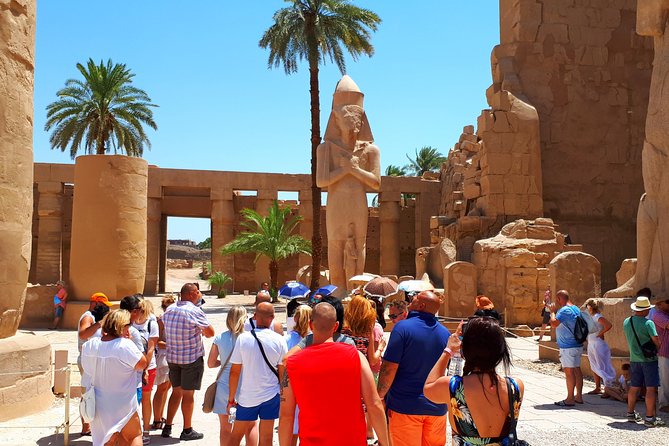
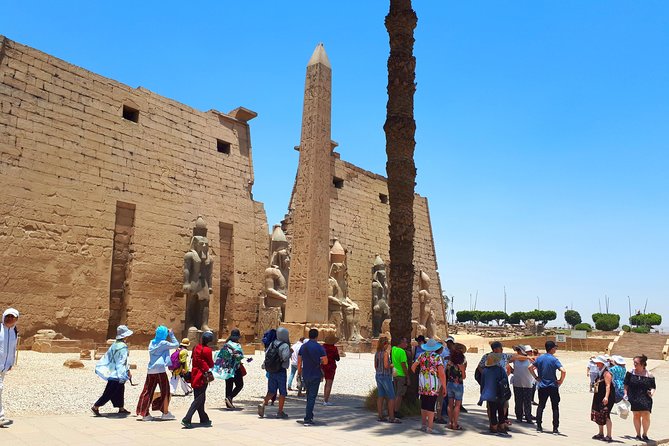
Karnak grew over many reigns, so it is better understood as a huge temple complex than as one single building. The route includes the Avenue of Sphinxes, the Hypostyle Hall, obelisks connected with Hatshepsut and Thutmose I, the Temple of Amun, the sacred lake, and the granite scarab associated with Amenhotep III.
The Hypostyle Hall is the star for many people. Its 134 massive columns once supported a roof, and the carved surfaces cover you with royal names, religious scenes, and formal inscriptions. Without a guide, the scale can become a blur of stone. With a good Egyptologist, you can begin to see how the spaces worked and why different rulers added their own marks.
Karnak is also where the value of a private guide becomes clearest. You can ask Khalid or Ragab Elmotgalye to explain the main gods, the purpose of the halls, and the difference between the various royal additions. Both guides have received especially strong praise for detailed explanations delivered with pride and enthusiasm.
The site is large and mostly exposed. Bring water, a hat, and comfortable shoes. Since the admission fee is not included, confirm the current ticket price when you book or before the visit.
Luxor Temple and the royal statues
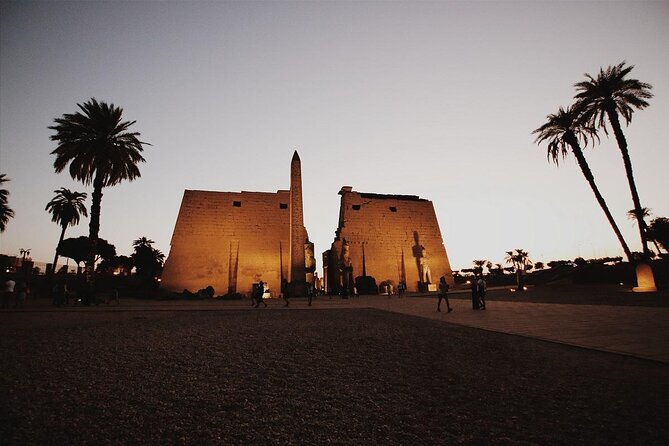
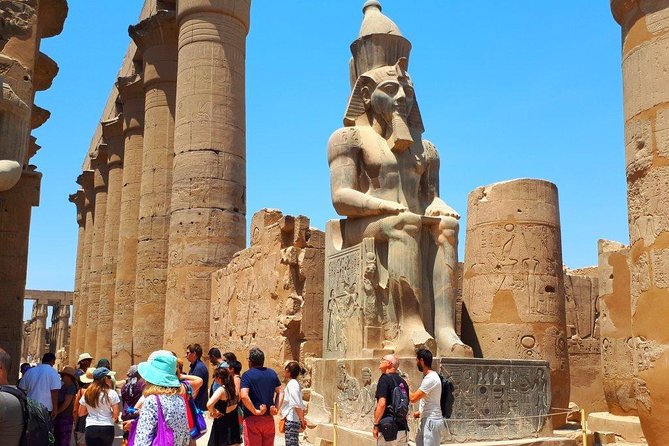
Luxor Temple provides a more compact contrast to Karnak. It was dedicated to the Theban Triad of Amun-Ra, Mut, and Khonsu, and the complex includes granite statues of Ramses the Great.
Allow about an hour. The temple’s scale is still impressive, but the visit feels easier to absorb after Karnak. Your guide can help you connect the two sites, especially through the ceremonial relationship between Luxor Temple and Karnak.
The route also includes the obelisks of Thutmose I and Queen Hatshepsut. The schedule lists about 15 minutes for each. These short stops are useful for identifying the rulers and understanding the symbolism of the obelisk, but they are not separate full-length excursions.
The Avenue of Sphinxes
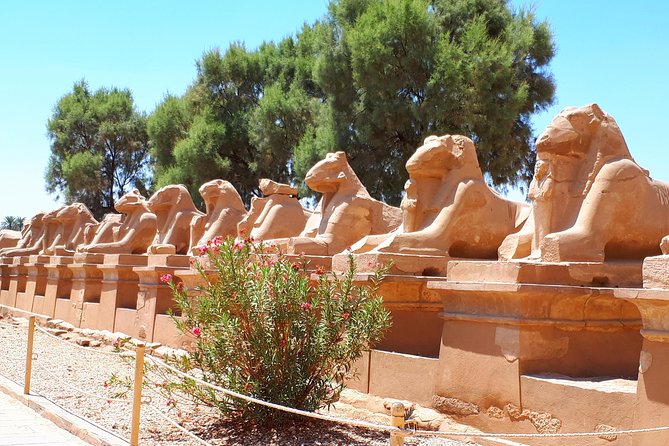
The Avenue of Sphinxes once connected Karnak and Luxor Temple over roughly three kilometers. Only part of the avenue is visible today, but the remaining section is still impressive.
The stop lasts about 10 minutes, so think of it as a brief look and photo opportunity. It helps you understand that the two temple complexes were part of one ceremonial route, not isolated attractions scattered around the city.
The Luxor Museum: a quieter final hour
The Luxor Museum is a welcome change after two large temple complexes. Instead of asking you to take in one more enormous structure, it places carefully chosen objects in a museum setting.
The collection includes ancient items found in Luxor, objects connected with Tutankhamun’s tomb, and several mummies. A striking display pairs Sobek, the crocodile god, with King Amenhotep III. You can also see the colors, tools, and craft methods that helped decorate tombs and temples.
The museum visit is described as about one hour with your Egyptologist guide, followed by free time to look around. That combination works well. The guide gives you a framework, then you can pause over the pieces that interest you most.
This stop adds value because it puts small objects beside the giant monuments you have already seen. After a day of columns and statues, a tool, mummy, or personal object can make ancient life feel more immediate.
The stated plan includes entrance to the museum, although the general tour information says entrance fees to mentioned sites are not included. Because those details conflict, ask for a clear breakdown of museum admission before you go.
Guide quality and the private format
The strongest part of this experience is the private setup. You are not tied to a large group’s questions, walking speed, or photo breaks. Pickup and drop-off are included, and the air-conditioned vehicle matters after several hours outside.
Khalid is praised for making the major sites feel memorable, with particular appreciation for his explanations at the Valley of the Kings, Hatshepsut’s temple, Karnak, and Luxor Temple. Ragab Elmotgalye is also praised for detailed explanations of the history and function of each place.
You should still tell your guide what you want from the day. Some people want names, dates, and religious symbols. Others want a simpler story and more time for photographs. A private guide can adjust better than a fixed group, but the overall schedule remains full.
The tour has a five-star rating from 69 published ratings, with 100 percent recommending it. That points to consistent satisfaction, especially with the guides and the selection of major sites. It does not remove the practical issues: tickets cost extra, and two long sightseeing days require energy.
Price, extra costs, and the hot-air balloon option
At $150 per person, the tour offers a useful package for anyone who values a private vehicle and a personal Egyptologist. Hotel pickup and drop-off add convenience, especially if you are staying in central Luxor or arriving at the harbor.
The advertised price is not the complete spending figure. General admission to the Valley of the Kings, Hatshepsut’s temple, Karnak, Luxor Temple, the Avenue of Sphinxes, and the other listed paid sites is not included. Tutankhamun’s tomb has a specific optional fee of 360 Egyptian pounds.
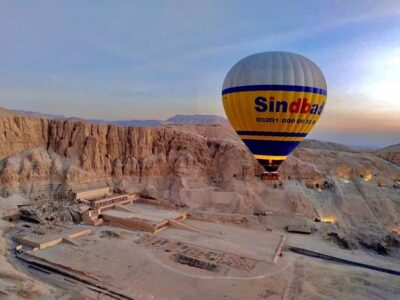
A hot-air balloon ride over Luxor is mentioned as a possibility, but it is not included. Treat it as a separate activity and confirm the arrangement and price directly with the provider before counting on it.
Free cancellation is available if you cancel at least 24 hours before the local start time. Changes or cancellations inside that window are not accepted for a refund.
Who should book the two-day route?
I would choose this tour if you have two days in Luxor and want the major ancient sites explained in a logical order. It suits first-time visitors, couples, families, and small groups who prefer a private guide rather than a fixed coach excursion.
It is also a good fit if transportation planning feels like a chore. The West Bank and East Bank are handled in separate days, and the vehicle keeps you from arranging each transfer yourself.
I would hesitate if your priority is slow travel. The schedule includes many stops, with several visits lasting only 15 to 30 minutes. You will see a great deal, but you may not linger at every tomb or temple.
Should you book it?
Book this private Luxor tour if you want a strong overview, clear explanations, and the convenience of a dedicated vehicle. The best reasons are the West Bank route, the major East Bank temples, and the chance to learn from guides such as Khalid or Ragab Elmotgalye.
Before paying, ask for the exact entrance-fee total and clarify whether Luxor Museum admission is included. Add the Tutankhamun ticket only if seeing his mummy matters to you, and treat the hot-air balloon ride as a separate extra. If you can handle long days and additional ticket costs, this is a practical way to make your first two days in Luxor count.
FAQ
How long does the Luxor tour last?
The experience lasts two days. The first day is planned as a full guided trip of about eight hours, while the second day includes the East Bank temples and Luxor Museum.
What time does the tour start?
Pickup begins at 8:00 am.
Where can pickup take place?
Pickup is offered from a hotel in central Luxor or from the harbor.
Is the tour private?
Yes. Only your group participates in the activity.
Is transportation included?
Yes. Hotel pickup and drop-off are included, along with transport in an air-conditioned vehicle.
Is an Egyptologist guide included?
Yes. A qualified Egyptologist guide is included.
Are entrance fees included?
The tour information states that entrance fees to the mentioned sites are not included. Ask for a precise ticket breakdown before visiting because the Luxor Museum details are not fully consistent.
How much does entry to Tutankhamun’s tomb cost?
The listed optional entrance fee is 360 Egyptian pounds.
Is a hot-air balloon ride included?
No. A hot-air balloon ride is mentioned as a possibility, but it is not included in the tour price.
Can I cancel for a refund?
You can cancel at least 24 hours before the experience start time for a full refund. Cancellations or changes made less than 24 hours before the start time are not accepted for a refund.
Just added around Luxor
- Private Tour foll day to East and West Banks of Luxor★ 5.0 · 23 reviews
- East and West Bank Luxor★ 5.0 · 23 reviews
- Full Day Tour to Luxor (East & West Bank)★ 5.0 · 23 reviews
- Big brother travel★ 5.0 · 23 reviews
- Luxor Day Tour :Valley of Kings & queen & Hatshepsut & Habu city★ 5.0 · 23 reviews
- Luxor: Scenic Camel or Horse Ride★ 3.9 · 24 reviews
- From Cairo: 4-Day Nile Cruise from Aswan to Luxor with Meals★ 4.4 · 24 reviews
- Traditional Egyptian Breakfast at the AlHabib Arabian Horse Farm★ 5.0 · 24 reviews
2-Day Experiences, compared.
2-Day Luxor Tour with Hotel, Balloon, & Boat Ride
Read our review →
White & Black Desert tour 2 Days 1 night camping from Cairo.
Read our review →

White & Black desert camping tour 2 Days 1 night From Cairo
Read our review →
2 days cairo and giza attractions plus Gem, private tour
Read our review →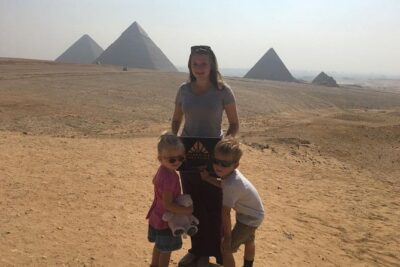
All Inclusive 2-Day Private Tour to All Pyramids and Cairo and 2 evenings
Read our review →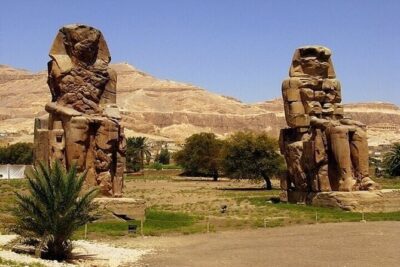
2-Day Top Attractions and Adventures Package in Luxor with Accommodation
Read our review →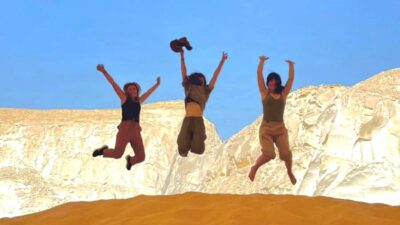
2-Day Bahariya & White Desert Private Camp Adventure
Read our review →Browse the lists this tour appears in