
Reviewed · 2-DAY EXPERIENCES
Private Luxor Highlights in Two Days
Ancient Egypt rewards a slow look. This private two-day Luxor tour gives you time for both banks of the Nile, with the Valley of the Kings, Hatshepsut’s temple, Karnak, and Luxor Temple in one organized plan. I especially like the private air-conditioned vehicle and the chance to have an Egyptologist guide shape the tomb visits around your interests.
I also like the personal service reported by guests, including prompt airport pickups and guides such as Ragab Ramadan, Ameen, Hassan, and Khalid. The main catch is important: entrance tickets are not included, despite the tour price appearing low at $130 per person.
In This Review
- Key points to know before booking
- Why two days works better in Luxor
- The West Bank begins with the Valley of the Kings
- Hatshepsut’s temple tells a different royal story
- Colossi of Memnon offers a quick photo stop
- Karnak is the East Bank heavyweight
- Luxor Temple and the Avenue of Sphinxes
- What the guides add to the experience
- Transport, timing, and physical effort
- Is $130 per person good value?
- Who should choose this Luxor tour?
- Should you book Private Luxor Highlights in Two Days?
- FAQ
- How long is the tour?
- What time does the tour start?
- Where can pickup take place?
- Is this a private tour?
- Is an Egyptologist guide included?
- Are entrance fees included in the price?
- Is transport included?
- Does the tour include Tutankhamun’s tomb?
- Is a hot-air balloon ride included?
- Can I cancel for a full refund?
Key points to know before booking
- Four royal tomb visits on the West Bank: The planned stops include the tombs of Ramesses III, Ramesses IX, Merneptah, and Tutankhamun.
- A private format: Your group travels alone with a guide and driver, rather than following a large coach.
- Both sides of Luxor: Day plans cover the royal necropolis and temples on the West Bank, then Karnak, Luxor Temple, and the Avenue of Sphinxes on the East Bank.
- Guide-led context: The Egyptologist guide explains the monuments and helps you decide which tombs deserve your time.
- Optional hot-air balloon ride: An upgrade may add an early flight over the Valley of the Kings, though the extra cost and exact schedule should be confirmed.
- Tickets cost extra: Museum and monument admissions are not included, so budget for these separately before you compare the price with other tours.
Why two days works better in Luxor
Luxor is not a one-monument stop. The city spreads across the Nile, with royal tombs and mortuary temples on the West Bank and major religious centers on the East Bank. Trying to see both sides in a single rushed outing can leave you staring at famous stones without understanding how they fit together.
This two-day plan gives the main sites room to breathe. Day 1 focuses mostly on the West Bank, where the Valley of the Kings takes the most attention. Day 2 turns to the great temple complexes, with Karnak receiving up to two hours and Luxor Temple another hour.
The private arrangement matters here. You can ask questions, slow down at a wall scene, or move on when your energy drops. The tour is listed at about two days, with an 8:00 am start, and the first day is described at different points as roughly six to eight hours. That suggests the exact length may change with your chosen tombs, traffic, and optional stops.
More things to do in Luxor:
- Hurghada: Luxor Valley of the Kings & Tutankhamun Tomb Trip
★ 4.7 · 13,208 reviews - Luxor Day Trip from Hurghada Small Group & Tutankhamun Tomb
★ 4.8 · 5,366 reviews - Hot Air Balloon Ride in Luxor Egypt with Transfers Included
★ 5.0 · 4,319 reviews
The West Bank begins with the Valley of the Kings
Your morning pickup comes from a Luxor hotel, port, or airport in an air-conditioned vehicle. The first major stop is the Valley of the Kings, the royal cemetery cut into the hills of ancient Thebes.
The standard plan allows about two hours here and includes visits to four royal tombs. The guide recommends which tombs to enter, which is useful because the open tombs can change and each one has a different appeal. You should not assume every tomb named in the description will be open on your particular morning.
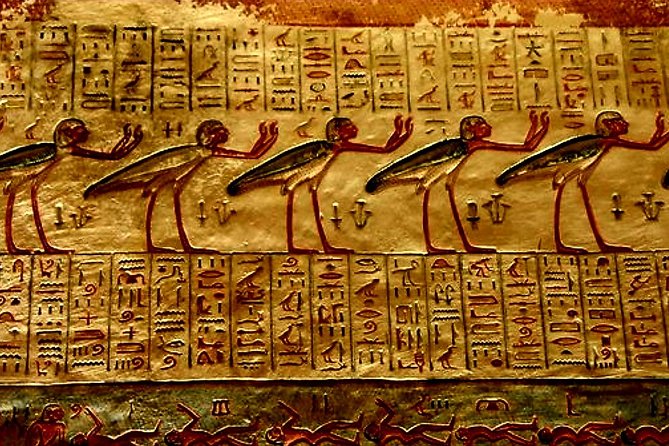
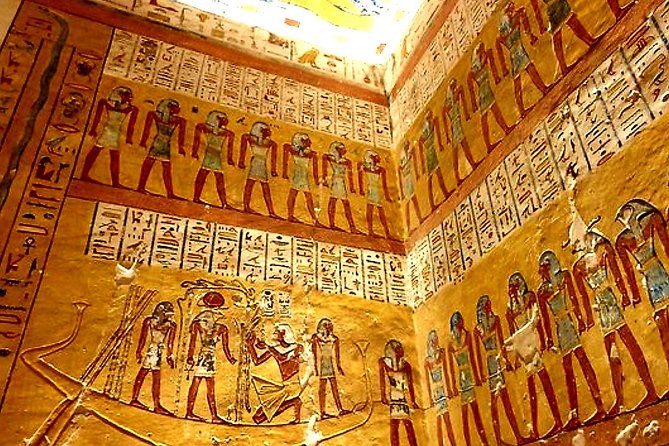
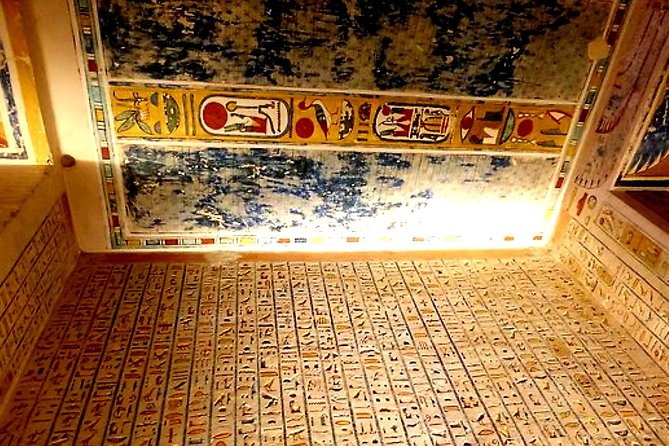
The listed choices are strong. The tomb of Ramesses III, known as KV 11, has painted scenes from ritual books such as the Litany of Ra and the Book of Gates. Its side chambers contain unusual secular images, including foreign goods, boats, an armoury, and the famous blind harpists.
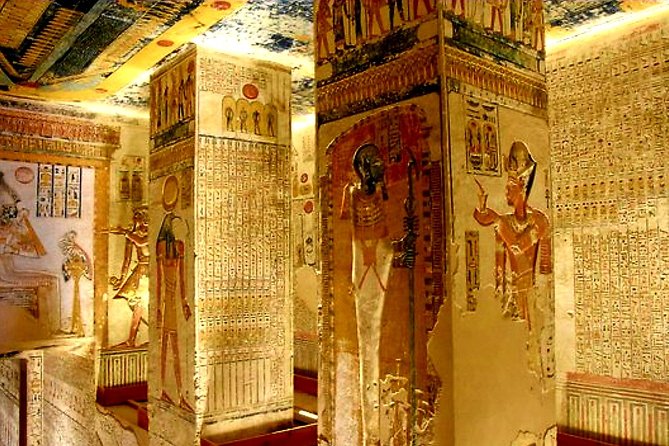
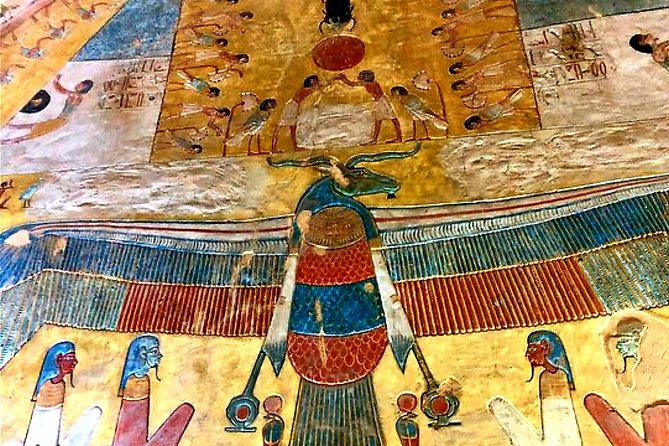
Ramesses IX’s tomb is prized for its color and ceiling scene, where the goddess Nut stretches across the space above the burial area. The tomb of Merneptah, son of Ramesses II, is noted for its tall corridors and large chambers, though parts of its decoration have deteriorated.
Tutankhamun’s tomb is a different kind of visit. It is small compared with some royal tombs, but it offers the chance to see the young king’s mummy in its burial place. The fame of Tut can bring high expectations, so I would treat this as a personal, historical encounter rather than expecting the treasures found in his tomb. Those treasures are displayed elsewhere, not in the Valley.
Admission is not included. This is the point where the advertised $130 price needs careful reading. Add the separate entrance charges for the Valley and any special tombs you choose, including Tutankhamun’s tomb if it carries a separate fee.
Hatshepsut’s temple tells a different royal story
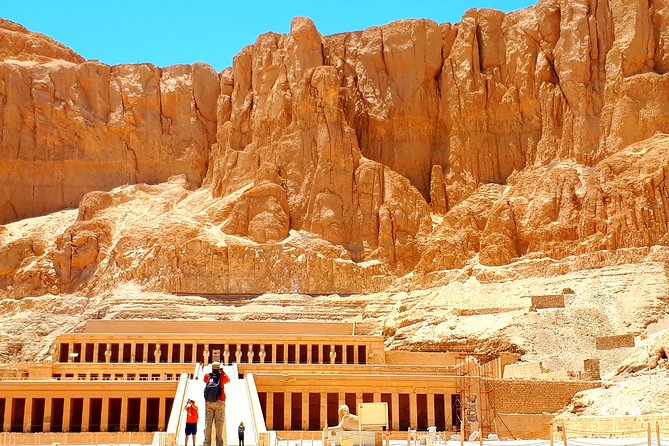
After the tombs, the vehicle takes you to Deir el Bahari, the Temple of Hatshepsut. The tour allows about an hour, enough to see the broad terraces and absorb the setting against the cliffs.
Hatshepsut ruled as pharaoh, an unusual achievement for a woman in ancient Egypt. Her temple also helps balance the Valley of the Kings. The tombs show the private, funerary side of kingship, while this monument presents royal power in a public setting.
The guide’s explanation is especially useful here because the site can look simple from a distance. Its terraces, ramps, reliefs, and cliff setting make more sense once you understand its role and Hatshepsut’s place in Egypt’s royal line. The description also links her with Tutankhamun’s dynasty, giving the day a clear thread from one generation to another.
The stop lasts about an hour, and entrance is extra. Wear practical shoes and expect sun exposure around the open terraces. The information provided does not promise shade, meals, or refreshments, so plan accordingly through your hotel or guide.
Colossi of Memnon offers a quick photo stop
The Colossi of Memnon are two huge statues from the reign of Amenhotep III. The stop is brief, around 15 minutes, and admission is free.
This is not a long archaeological visit. It is a useful pause after the tombs and Hatshepsut’s temple, giving you a chance to see the scale of royal sculpture without another ticket or extended walk. You may also pass the Tombs of the Nobles, Howard Carter House, the Ramesseum, the Valley of the Nobles, and the Mummification Museum, but these are listed as drive-by sights rather than full visits.
That distinction matters. The tour covers a lot, but not every named place is an included stop. If the Ramesseum or Mummification Museum is high on your list, ask before booking if the route can be adjusted.
A few more Luxor trips worth weighing up
- Hurghada: 2-Day Luxor Tour with Hotel, Balloon, & Boat Ride
★ 4.5 · 1,113 reviews - 2-Day Top Attractions and Adventures Package in Luxor with Accommodation
★ 5.0 · 178 reviews - Hurghada: 2-Day Luxor Tour with Hotel, Balloon, & Nile Boat
★ 4.8 · 82 reviews - Private 2 Day Luxor Tour
★ 5.0 · 71 reviews
Karnak is the East Bank heavyweight
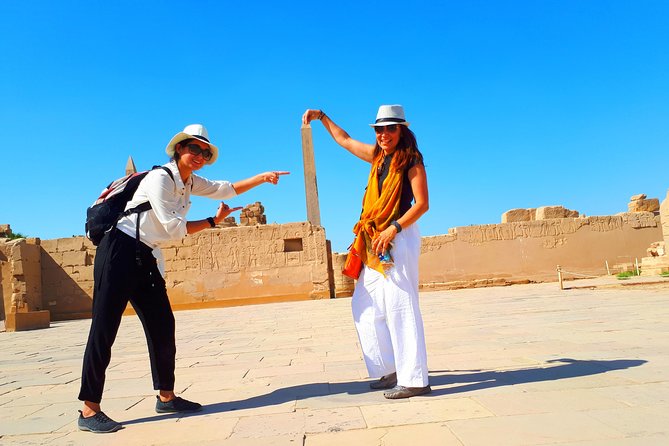
Karnak receives the kind of time it deserves, with up to two hours planned for the main complex. This is the grandest temple visit of the tour and one of the places where a guide can save you from wandering through a forest of columns without a plan.
The complex grew under many rulers. You will see the Avenue of Sphinxes, the enormous Hypostyle Hall with its 134 columns, obelisks associated with Hatshepsut and Thutmosis I, the Temple of Amun, the Sacred Lake, and a large granite scarab linked with Amenhotep III.
The Hypostyle Hall is the visual center, but do not rush straight there. The approach, gateways, courtyards, columns, carved walls, and obelisks help you understand that Karnak was not one compact temple. It was a large religious center built and altered over many reigns.
The itinerary also lists the Temple of Ramesses III within the Karnak complex, with a short visit of about five to 25 minutes depending on the schedule. Karnak’s admission is extra, and you should expect plenty of walking in open areas. A private guide can point out lotus and papyrus designs, royal inscriptions, and the relationship between the different parts of the complex.
One practical note: the supplied schedule places Temple of Amun and Temple of Ramesses III on Day 1, then lists Karnak again on Day 2. In real use, these entries may represent overlapping parts of the same Karnak visit or a flexible route. Confirm the final day-by-day plan with Luxor Travels so you know exactly what is scheduled.
Luxor Temple and the Avenue of Sphinxes
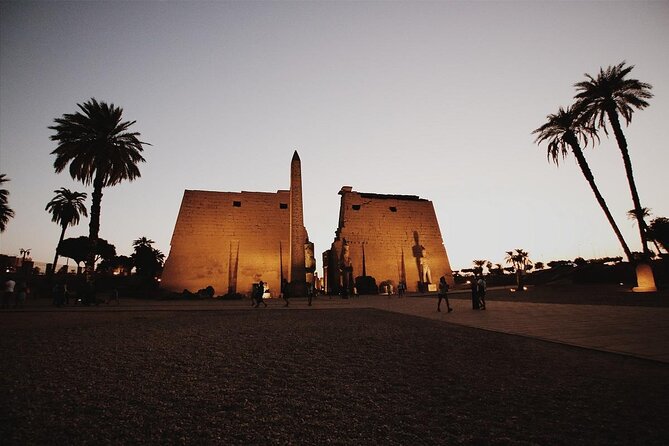
Luxor Temple is smaller and more concentrated than Karnak, but it has a different mood. It is dedicated to the Theban Triad of Amun-Ra, Mut, and Khonsu, and it includes granite statues of Ramesses the Great.
The tour allows about an hour. That is enough for a guided walk through the principal spaces, though you may want more time if you enjoy inscriptions and reliefs. The guide can help you read the site as a ceremonial center rather than just another collection of columns.
The Avenue of Sphinxes once connected Luxor Temple with Karnak across roughly three kilometers. Today, only part of the avenue is open for viewing, but the remaining stretch still shows how the two temple centers were linked. The listed stop lasts around 15 minutes, making it more of a focused look and photo opportunity than a long walk from one temple to the other.
If you prefer atmospheric sightseeing, ask whether Luxor Temple can be visited later in the day. The available information does not guarantee an evening visit, so do not assume it is part of the booking.
What the guides add to the experience
The strongest praise centers on the guides. Ragab Ramadan is described as clear, friendly, and well prepared, while Ameen is praised for patient explanations and strong English. Hassan is noted for good conversation and historical guidance, Khalid for showing both banks effectively, and Ahmed for careful driving.
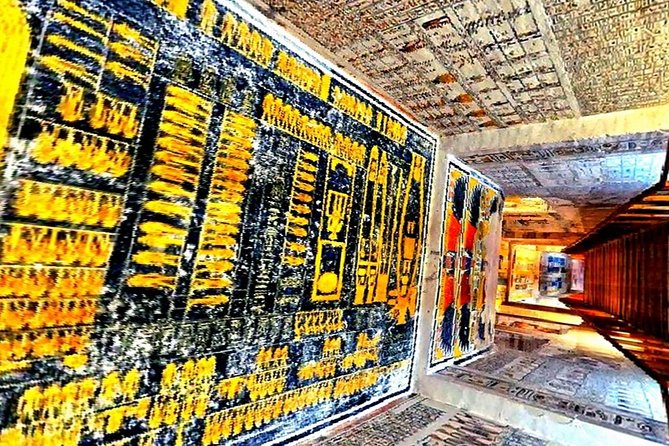
Those details matter because Luxor can be tiring and confusing without a good interpreter. The tombs are not simply rooms with pictures. Their scenes connect to beliefs about death, kingship, gods, and the journey into the next world. At Karnak, the scale can overwhelm you unless someone explains why the complex was built in layers.
The private format also lets you ask basic questions without feeling rushed. If you want a simple explanation rather than a stream of dates and royal names, say so at the beginning. You can also tell the guide whether tomb decoration, architecture, royal personalities, or photography matters most to you.
One serious caution comes from a negative account involving an alleged offer to bypass student-ticket rules through personal connections. I would not accept any offer to avoid proper admission procedures. Carry valid identification if you use a student discount, pay official charges, and ask for clear information about every ticket.
Transport, timing, and physical effort
Hotel pickup and drop-off are included, as is transport in a private, air-conditioned vehicle. Pickup is offered from a Luxor hotel, port, or airport, with the listed start time at 8:00 am.
This arrangement is valuable in Luxor’s heat. You are not left to arrange separate rides between the West and East Banks, and your driver waits while you visit the monuments. The vehicle is particularly helpful on a day that includes several tombs, Hatshepsut’s temple, and the Colossi of Memnon.
The tour is suitable for most people according to the supplied information, but it still involves walking, steps, uneven ground, and outdoor exposure at major sites. The listing does not provide a detailed accessibility assessment, so anyone with mobility concerns should ask about the specific tombs and temple routes before reserving.
The two days are active. A full morning in the Valley of the Kings followed by Hatshepsut’s temple can be tiring, while Karnak’s size makes the second day more demanding than its simple one-hour Luxor Temple stop might suggest. Good shoes, sun protection, water, and a willingness to pause will improve the experience.
Is $130 per person good value?
At $130 per person, the tour can be good value for a private two-day service with a guide, driver, hotel transfers, and a route covering the main Luxor sights. A private vehicle and personal guide usually cost more than a large group outing, so the price is attractive if your group wants flexibility.
The price is not all-inclusive. Entrance fees are specifically excluded, and the listed details also do not include meals, drinks, or the optional hot-air balloon ride. You need to add those costs before deciding how much the tour will actually cost.
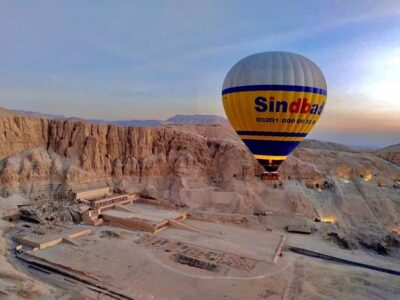
The hot-air balloon option could be the highlight for some people. It offers a view over the Valley of the Kings, but no upgrade price or exact flight details are provided. Ask about the departure time, weather changes, return to the hotel, and how it affects the rest of Day 1.
The tour is booked, on average, 52 days ahead. That is a useful sign that planning early may be wise, especially if your schedule depends on a particular guide, airport pickup, or balloon upgrade. Free cancellation is available until 24 hours before the start time. Changes or cancellations inside that window are not accepted for a refund.
Who should choose this Luxor tour?
I would choose this experience if you want the major ancient sites handled in one private plan and you value explanations more than independent wandering. It suits first-time visitors, couples, families, and small groups who want direct transport between the two banks.
It is also a good match if Tutankhamun’s tomb, Hatshepsut’s temple, and Karnak are all priorities. The guide’s help choosing royal tombs is useful, since the Valley of the Kings can involve decisions about which paid entrances are worth your money.
I would hesitate if you want every ticket included, long visits at lesser-known sites, or a slow archaeological schedule with plenty of free time. The route is broad and active. It covers the essentials, but drive-by sights such as the Ramesseum and Mummification Museum are not substitutes for full visits.
Should you book Private Luxor Highlights in Two Days?
Book it if you want a private guide, dependable transfers, and a clear introduction to Luxor’s West and East Banks. The strongest reasons are the well-regarded guide team, the four planned royal tombs, and the chance to see Karnak and Luxor Temple without arranging transport yourself.
Before paying, confirm the exact tombs available, the final split between the two days, all entrance charges, and the price and schedule of the hot-air balloon upgrade. If those extra costs fit your budget, this is a practical way to see Luxor’s essential monuments while keeping the pace personal.
FAQ
How long is the tour?
The experience lasts approximately two days. The first day is described as a full guided outing of about six to eight hours, while the exact timing can depend on the selected stops.
What time does the tour start?
The listed start time is 8:00 am.
Where can pickup take place?
Pickup is offered from a hotel, port, or Luxor airport. The information specifies central Luxor for hotel or harbor pickup.
Is this a private tour?
Yes. Only your group participates, with private transport and a private guide.
Is an Egyptologist guide included?
Yes. A qualified Egyptologist guide is included.
Are entrance fees included in the price?
No. Tickets and entrance fees are listed as excluded, so you must budget for admission separately.
Is transport included?
Yes. Hotel pickup and drop-off are included, along with transport in a private air-conditioned vehicle.
Does the tour include Tutankhamun’s tomb?
The itinerary includes a visit to King Tutankhamun’s tomb in the Valley of the Kings. Admission is not included.
Is a hot-air balloon ride included?
No. The balloon ride is described as an optional upgrade. The additional price and exact details are not provided.
Can I cancel for a full refund?
Yes, if you cancel at least 24 hours before the experience start time. Cancellations or changes made less than 24 hours in advance are not eligible for a refund.
Just added around Luxor
- Private Tour foll day to East and West Banks of Luxor★ 5.0 · 23 reviews
- East and West Bank Luxor★ 5.0 · 23 reviews
- Full Day Tour to Luxor (East & West Bank)★ 5.0 · 23 reviews
- Big brother travel★ 5.0 · 23 reviews
- Luxor Day Tour :Valley of Kings & queen & Hatshepsut & Habu city★ 5.0 · 23 reviews
- Luxor: Scenic Camel or Horse Ride★ 3.9 · 24 reviews
- From Cairo: 4-Day Nile Cruise from Aswan to Luxor with Meals★ 4.4 · 24 reviews
- Traditional Egyptian Breakfast at the AlHabib Arabian Horse Farm★ 5.0 · 24 reviews
2-Day Experiences, compared.
2-Day Luxor Tour with Hotel, Balloon, & Boat Ride
Read our review →
White & Black Desert tour 2 Days 1 night camping from Cairo.
Read our review →

White & Black desert camping tour 2 Days 1 night From Cairo
Read our review →
2 days cairo and giza attractions plus Gem, private tour
Read our review →
All Inclusive 2-Day Private Tour to All Pyramids and Cairo and 2 evenings
Read our review →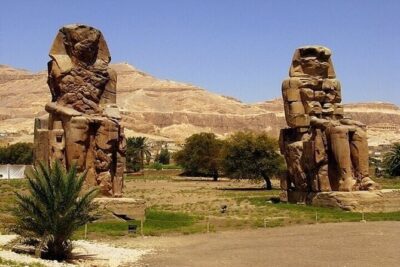
2-Day Top Attractions and Adventures Package in Luxor with Accommodation
Read our review →
2-Day Bahariya & White Desert Private Camp Adventure
Read our review →Browse the lists this tour appears in