
Reviewed · GIZA PYRAMIDS & SPHINX TOURS
Private Tour Giza Pyramids Wonders All inclusive
The pyramids reward a good plan. This private Giza tour combines an Egyptologist guide, an air-conditioned vehicle, early morning access, and lunch with a pyramid view. I especially like the private format, which gives you room to ask questions, and the route that covers Khufu, Khafre, Menkaure, the panoramic viewpoint, and the Sphinx in about four to five hours.
The biggest plus is the guide-led storytelling, particularly if you are paired with Emil, whose explanations of construction and pharaohs earned strong praise. I also like having a driver such as Emir, who was singled out for making the ride more pleasant with a good music selection. The main thing to watch is the word all-inclusive: camel rides, ATV trips, and entry into certain pyramid interiors may depend on availability or the option you select.
In This Review
- Key Points Before You Book
- Why a Private Giza Tour Can Be Worth the Price
- Starting at the Great Pyramid of Khufu
- Seeing Khafre and Its Remaining Stone Cap
- Menkaure, the Smallest of the Three
- The Panoramic Viewpoint and the Best Photos
- Meeting the Great Sphinx Face to Face
- Lunch With the Pyramids in View
- Camel Ride or ATV: Choose Carefully
- Guide Quality, Driver Comfort, and Group Size
- Who Will Get the Most From This Tour?
- Booking, Timing, and Cancellation
- Should You Book the Private Giza Pyramids Tour?
- FAQ
- How long does the private Giza tour last?
- Which Giza monuments are included?
- Is this a private tour?
- Can I enter all three pyramids?
- Are camel rides and ATV trips included?
- What is the cancellation policy?
Key Points Before You Book
- Private vehicle and guide: Only your group participates, with an Egyptologist guide and air-conditioned transport.
- Five major Giza stops: You visit the pyramids of Khufu, Khafre, and Menkaure, then the panoramic viewpoint and Great Sphinx.
- Early morning timing: The tour is designed to begin early, when the light is softer and the site can feel calmer.
- Khafre’s interior is not available: The pyramid has been closed for a long time, so the visit focuses on the outside and its architectural details.
- Lunch with a pyramid view: The meal adds a welcome pause after time in the sun.
- Optional camel or ATV experience: You can customize the outing, but confirm exactly what is included in your selected booking.
Why a Private Giza Tour Can Be Worth the Price
At $109 per person, this is not the cheapest way to see the pyramids. It is also not simply a car ride around three monuments. The price covers a private experience, an Egyptologist guide, transport, the main sightseeing route, and a meal with a view, making the value stronger for couples, families, and small groups who want personal attention.
A shared bus can get you to Giza, but the pace and questions are usually not yours to control. Here, you can ask why the pyramids were built where they were, how the stones were moved, and what is known about the pharaohs connected with each monument. If your group has different interests, that flexibility matters.
The four to five-hour duration includes travel time. You should therefore think of this as a focused introduction to the Giza plateau, not an entire day devoted to every nearby site. For a first visit, that shorter format can be a strength. You see the famous sights without spending all day under the desert sun.
The phrase VIP style mainly means privacy, comfort, and tailored attention. Do not read it as a promise of a private entrance into every monument. The early start is intended to help with queues and heat, while the private vehicle lets you move between viewpoints without being tied to a large group.
More ways to see the pyramids and the Sphinx:
- From Cairo: Half-Day Tour to Pyramids of Giza and the Sphinx
★ 4.6 · 2,891 reviews - Private guided tour to Giza Pyramids, and Great Sphinx
★ 5.0 · 1,755 reviews - Giza Pyramids and Sphinx: Half-Day Private or Group Tour
★ 4.4 · 1,424 reviews
Starting at the Great Pyramid of Khufu
The Great Pyramid of Cheops, also called Khufu, receives the longest visit, about 90 minutes. That makes sense. It is the largest and most famous of the Giza pyramids, and it gives your guide the best setting for explaining ancient engineering, royal power, and the purpose of pyramid building.
You can expect to begin with the exterior, where scale is the first lesson. Photographs make the pyramid look familiar, but the size becomes clearer when you are close to its base. Your Egyptologist can explain how the structure was planned, how its stone blocks were arranged, and why its construction remains such an impressive achievement.
The tour description also presents the chance to explore inner chambers and passageways. Conditions and access can change, so you should confirm what interior entry is available on your date. An interior visit can be physically demanding, and even when access is allowed, the real value comes from understanding what you are seeing rather than expecting a furnished royal chamber.
This is where an expert guide makes a real difference. Emil, one of the named guides associated with the experience, was praised for explaining construction and pharaonic history while handling side questions. That is useful at Khufu, where a simple question about one stone or corridor can lead to a much better understanding of the whole site.
The early morning setting is another advantage. Golden light gives the stone a warmer color, and cooler temperatures make the first major stop easier. You will still be in an exposed area, so bring water, sun protection, and shoes suited to uneven ground.
Seeing Khafre and Its Remaining Stone Cap
The Pyramid of Khafre receives about 30 minutes. It is smaller than Khufu by some measurements, though its position on higher ground can make it appear taller. Its most striking feature is the surviving casing at the top, a reminder that the pyramids were once covered with smooth outer stone rather than the rough blocks visible today.
The guide can point out the different materials connected with the monument. The upper casing used limestone from the quarries of the Masara Hills, while the lower section included pink granite. That contrast gives you something specific to look for instead of simply taking another wide photograph of a pyramid.
You should not expect to enter Khafre. The pyramid has been closed for a long time, and the visit is an exterior stop. This is an important limitation if walking inside a pyramid is your main goal. Even so, the outside view is valuable because Khafre retains part of its original cap, an unusual detail among the three main pyramids.
Thirty minutes is enough for an explanation, photographs, and a close look at the stonework. It also keeps the whole tour moving. If you want a long, quiet study of masonry or a large number of photos, the private format may let you ask for a little more time, but the published schedule is fairly brisk.
Menkaure, the Smallest of the Three
Menkaure gets around 20 minutes. It is the smallest of the three major Giza pyramids, but smaller does not mean unimportant. Its proportions, surviving stonework, and connection with the pharaoh Menkaure give your guide another way to explain how royal building projects differed.
This stop is more of a concise introduction than a long exploration. You will have time to see the pyramid, hear its main story, and take photographs. The tour notes that interior access may be available depending on conditions, so do not treat a descent as guaranteed.
That uncertainty is worth keeping in mind when planning your expectations. The tour is strongest when you view Menkaure as part of the full Giza sequence. Khufu shows the enormous scale of the project, Khafre reveals the remaining casing and stone choices, and Menkaure adds a smaller but still important royal monument.
Your guide can also help you avoid a common mistake: judging significance by size alone. A good explanation makes this stop feel like part of a larger story about pharaohs, construction, and changing design choices.
More things to do in Giza:
- Pyramids of Giza: 1-Hour Quad Bike Desert Safari
★ 4.5 · 930 reviews - VIP Giza Pyramids,Sphinx,ATV bike,CamelRide,Shopping&DinnerCruise
★ 5.0 · 704 reviews - From Hurghada: Pyramids and Egyptian Museum Tour & Boat Ride
★ 4.4 · 381 reviews - Egyptian Museum in Cairo: Private Guided Tour
★ 5.0 · 316 reviews
The Panoramic Viewpoint and the Best Photos

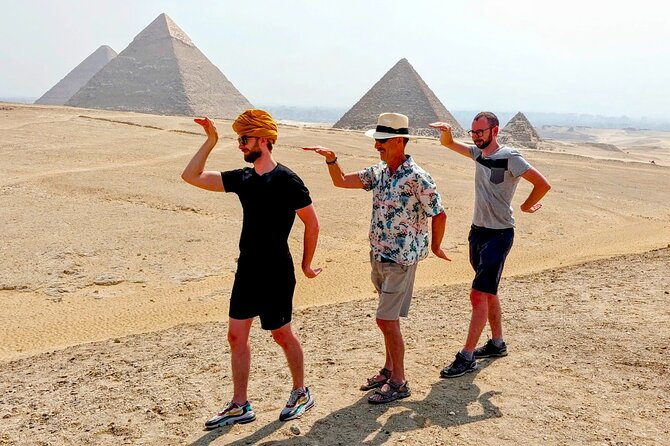
The panoramic viewpoint lasts about 40 minutes and is likely to be one of the most enjoyable parts of the outing. From here, you can see Khufu, Khafre, and Menkaure together, rising beyond the desert. It is the clearest place to understand the relationship between the three monuments.
This stop has practical value as well as visual appeal. Close to a pyramid, your photograph often captures only one section of stone. From the wider viewpoint, you can frame the full group and see how their positions create the classic Giza image.
Give yourself time to listen before rushing into photographs. Your guide can explain who built each pyramid, how the monuments relate to one another, and why the plateau was used for royal burials. Then use the remaining time for pictures.
The light matters here. An early visit can bring softer tones and fewer harsh shadows, though the exact conditions will depend on the morning. The view is exposed, so a hat and water are sensible even if the vehicle is close by.
Meeting the Great Sphinx Face to Face
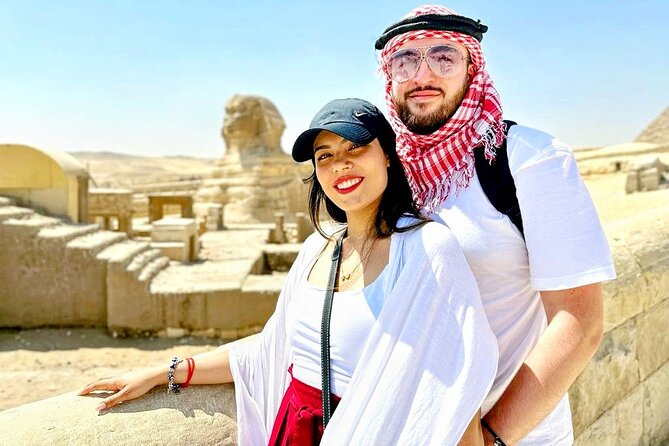
The Great Sphinx receives about 45 minutes, enough time for a proper visit rather than a quick roadside stop. With a lion’s body and the head of a pharaoh identified in the tour description as Khafre, the Sphinx offers a different kind of monument from the pyramids.
The appeal is partly visual and partly puzzling. You can look closely at the face, paws, and worn stone while your guide discusses its origins, changing roles over time, and the theories surrounding its expression. The Sphinx has attracted questions for centuries, and a good guide should separate established facts from speculation.
This is also a good place to ask follow-up questions. The private format is most useful here because the Sphinx prompts curiosity: Why does the monument have a lion’s body? How did the surrounding area change? What did later generations think it meant? You are not limited to a fixed speech.
The 45-minute stop should leave room for photographs and a measured look around the area. It is easy to hurry toward the famous front view, but listen for the explanation of how the Sphinx fits into the wider royal complex. That context gives the monument more meaning than its familiar face alone.
Lunch With the Pyramids in View
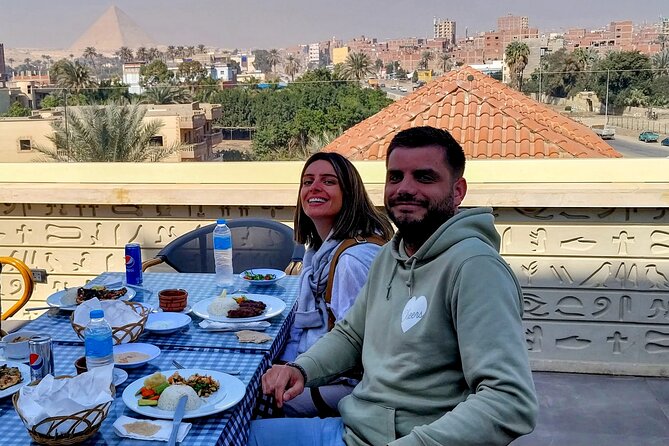
A meal at a restaurant overlooking the pyramids is included in the experience as presented. It comes at a useful point in the schedule, after several stops in the sun and on uneven ground. Sitting down with the monuments in view turns lunch into part of the sightseeing rather than a break that pulls you away from Giza.
The view is the main attraction, but the practical benefit matters too. A private half-day tour can feel rushed if there is no pause. Lunch gives you a chance to review what you have seen, ask your guide about details you missed, and reset before heading back.
Food preferences, exact dishes, and restaurant details are not specified, so you should not book this expecting a particular menu. If lunch is important to your plans, confirm what the meal includes when you reserve. The same advice applies to the camel ride and ATV option.
Camel Ride or ATV: Choose Carefully

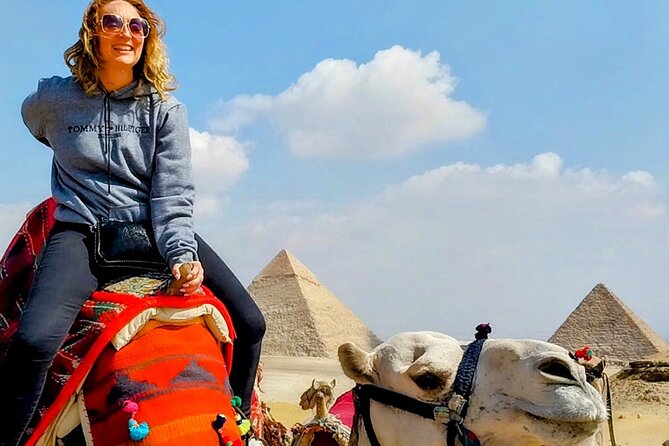
The experience allows you to customize the visit with a camel ride or an ATV outing. These options can add a more playful side to the morning and offer different views of the plateau, but they are not the core reason to book this tour.
If you want time for history and questions, keep the pyramid visits as the priority. A short add-on may be a pleasant change of pace, while a longer ride could reduce time for the monuments. Ask how long the activity lasts and whether it carries an extra charge before you agree.
The supplied details do not specify the cost, exact route, or operating conditions for either option. That does not make them poor choices, but it does mean you should treat them as add-ons to confirm rather than assume they are fully covered by the $109 price.
Guide Quality, Driver Comfort, and Group Size
The private setup is the clearest practical advantage. Only your group participates, so you can ask questions without waiting for a large busload of people to catch up. You also have a better chance of adjusting the pace within the planned schedule.
The Egyptologist guide is central to the experience. Without good interpretation, Giza can become a sequence of huge stones and familiar photographs. With a strong guide, you get explanations of construction, pharaohs, stone types, and the purpose of the monuments.
Emil received especially warm praise for handling detailed questions about construction and royal history. If he is assigned to your group, you may appreciate his ability to follow side questions rather than forcing every conversation back to a script. Guide assignment can vary, so the important point is the certified Egyptologist format.
Transport is by a comfortable, air-conditioned vehicle. That matters in Giza, where a short ride between stops can be a welcome refuge from heat and dust. Emir, a named driver connected with the experience, was also remembered for his good taste in music. Small touches like that can make the driving portions more pleasant.
Who Will Get the Most From This Tour?
I would recommend this tour most strongly to first-time visitors who want the major Giza sights explained in a single morning. It also suits couples, families, and small groups who value privacy more than the lowest possible price.
You will get the most from it if you enjoy asking questions. The private guide is not just a way to move between monuments. It is your chance to shape the conversation around architecture, pharaohs, engineering, and the unanswered questions that make Giza so compelling.
The tour may be less suitable if you want a slow full-day archaeological visit or guaranteed access inside every pyramid. Khafre is closed, Menkaure access is subject to availability, and the total schedule is compact. Someone focused mainly on a long camel or ATV outing may also want to compare this with a tour built around that activity.
Most people can participate, according to the stated conditions, but interior pyramid access may involve confined passages and physical effort. Ask about current access and conditions if that part of the visit matters to you.
Booking, Timing, and Cancellation
Pickup is offered, and the tour uses a mobile ticket. Confirmation is provided at booking, and group discounts may be available, which can improve the per-person value for larger parties.
The early morning schedule is worth choosing for the light and cooler conditions. Since travel time is included in the four to five-hour total, check your day’s plans before adding another major activity immediately afterward.
Free cancellation is available if you cancel at least 24 hours before the local start time. Changes or cancellations within 24 hours are not accepted and are not refunded, so mark the cutoff clearly.
Should You Book the Private Giza Pyramids Tour?
Book it if you want a focused, private introduction to Giza with transport, an Egyptologist, a pyramid-view meal, and time at all five main stops. The private format and strong guide feedback give it real value, especially for a first visit.
Think twice if your top priority is guaranteed interior access, a long archaeological study, or a fully specified camel or ATV package. Confirm those details before paying.
For most small groups, $109 per person is a fair price for comfort, privacy, and a well-shaped morning. The best reason to choose it is not the VIP label. It is having a guide who can turn a famous photograph into a place you understand.
FAQ
How long does the private Giza tour last?
The total duration is approximately four to five hours, including travel time.
Which Giza monuments are included?
The route includes the Great Pyramid of Khufu, the Pyramid of Khafre, Menkaure Pyramid, a panoramic pyramid viewpoint, and the Great Sphinx.
Is this a private tour?
Yes. Only your group participates in the activity.
Can I enter all three pyramids?
No. Khafre has been closed for a long time. Menkaure interior access is subject to availability, and you should confirm current access to any pyramid interior before booking.
Are camel rides and ATV trips included?
The experience offers camel and ATV options for customization, but the supplied details do not specify the cost or exact inclusion for each option. Confirm this when booking.
What is the cancellation policy?
You can receive a full refund by cancelling at least 24 hours before the local start time. Cancellations or changes made within 24 hours are not accepted and are not refunded.
Just added around Giza
- From Giza: Day tour to Giza Pyramids Tour with Pickup★ 4.7 · 23 reviews
- 8-Hour Private Tour to Giza Pyramids, Memphis and Sakkara★ 5.0 · 23 reviews
- Day Tour at The Egyptian Museum and Coptic Cairo★ 5.0 · 23 reviews
- Private 7-Night Cairo, Luxor, and Nile Cruise, with Flights★ 5.0 · 24 reviews
- Explore Fayoum Oasis and modawara mountain ( sand-board )★ 5.0 · 24 reviews
- Cairo: Giza Pyramids, Egyptian Museum & Nile Dinner Cruise.★ 4.4 · 24 reviews
- Day Tour to Alexandria from Cairo★ 5.0 · 25 reviews
- Private Day to Giza Pyramids, Egyptian Museum and camel sunset★ 5.0 · 26 reviews
Giza Pyramids & Sphinx Tours, compared.
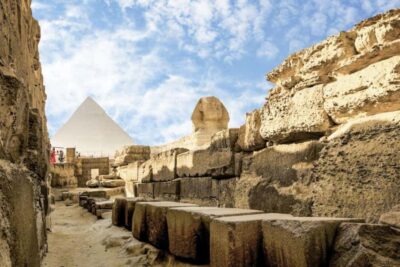
Pyramids & Great Sphinx Private Tour with Camel Ride
Read our review →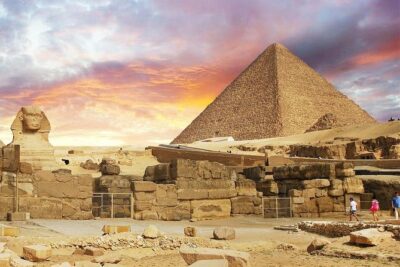
Tour to Giza Pyramids and The Egyptian Museum
Read our review →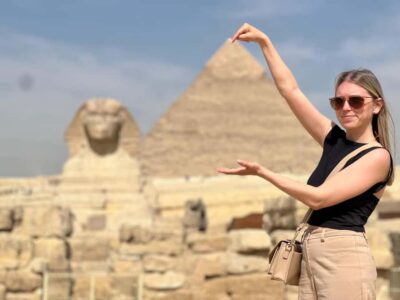
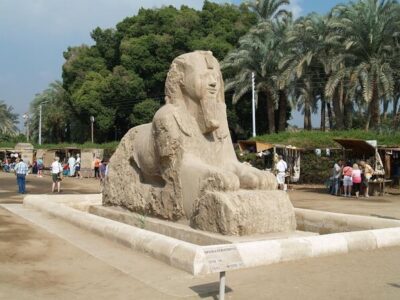
VIP All inclusive Best of the best Giza Pyramids,Sakkara,Memphis
Read our review →
Pyramids of Giza, Sphinx, Saqqara & Memphis Tour
Read our review →
Cairo 8 Hour Private Tour of Pyramids, Egyptian Museum and Bazaar
Read our review →
Half-Day Tour to Pyramids of Giza and the Sphinx
Read our review →
Browse the lists this tour appears in