
Reviewed · 2-DAY EXPERIENCES
Private Two Days Tour of Luxor West and East banks
Ancient Egypt is best taken slowly. This private two-day tour gives you time to explore Luxor’s major monuments with an Egyptologist guide, rather than racing from tomb to temple in one long day. You visit the Valley of the Kings, Hatshepsut’s temple, Karnak, Luxor Temple, and the Colossi of Memnon in an air-conditioned vehicle with hotel pickup and drop-off.
I especially like the private format, since your guide can adjust the pace for your group. I also like the decision to split the West and East Banks across two days. The main drawback is that entrance fees are not included, and the West Bank day is noticeably longer, so you should plan for a full and active morning.
- The West Bank gets its proper attention: You have time for the Valley of the Kings, Hatshepsut’s temple, and the Colossi of Memnon without squeezing every stop into a few rushed hours.
- Private guiding makes a difference: Your party travels alone, with room to ask questions and adjust the schedule.
- Tutankhamun’s tomb costs extra: The standard Valley of the Kings admission does not cover the famous king’s tomb.
- Karnak deserves two hours: The Great Hypostyle Hall, with its 134 columns, is the visual high point of the East Bank.
- Families are well served: Guides such as Mansour and Khalid have been praised for explaining the sites clearly and adapting the timing for children.
- The price is attractive, with one catch: The listed cost is $75, but you still pay all site entrance fees, food, drinks, and gratuities separately.
In This Review
- Why Two Days Works So Well in Luxor
- Day One: Entering the Valley of the Kings
- Hatshepsut’s Temple and a Female Pharaoh’s Bold Claim
- The Colossi of Memnon in a Quick Stop
- Day Two: Karnak’s Avenue and Colonnade
- Luxor Temple and the French Obelisk
- The Guide Can Make or Break the Experience
- What the $75 Price Really Covers
- Practical Details Before You Reserve
- Who Should Book This Luxor Tour?
- Should You Book It?
- FAQ
- How long does the Luxor tour last?
- Is hotel pickup and drop-off included?
- Is the tour private?
- Is an Egyptologist guide included?
- Are entrance fees included in the price?
- Does the Valley of the Kings ticket include Tutankhamun’s tomb?
- Are food and drinks included?
- Can I cancel for a full refund?
Why Two Days Works So Well in Luxor
Luxor can overwhelm you. The monuments are large, the distances between them matter, and even a single famous site can take more time than expected. A two-day plan gives you breathing room to listen, look around, and remember what you saw.
The split also makes practical sense. The West Bank is the longer day, with three major stops and more time spent moving between monumental sites. The East Bank centers on Karnak and Luxor Temple, but Karnak alone is vast enough to fill a substantial part of the morning.
The private arrangement is useful here. You are not waiting for a large group to finish photographs or keep up with the guide. If your children need a break, or you want more time with a particular set of carvings, the guide can work around your group’s needs. The tour is listed as suitable for most people, and the vehicle is air-conditioned, a welcome detail in Luxor’s heat.
Day One: Entering the Valley of the Kings
The first stop is the Valley of the Kings, the burial ground of the kings of ancient Thebes. You begin with a short stop at the visitor center, then continue into the area where the tombs were cut into the hills.
Your guide can explain the tombs before you enter, but guides are not permitted inside them. This is worth knowing in advance. You will receive context from the Egyptologist, then explore the decorated rooms on your own. Inside, look for painted scenes, hieroglyphic texts, and the careful use of color. The tombs are not all alike, and part of the fun is seeing how royal burial spaces changed over time.
The visit lasts about 90 minutes, though the admission fee is separate. The standard ticket does not include the tomb of King Tutankhamun. If seeing Tutankhamun’s burial chamber is important to you, budget for an additional payment made directly at the site.
That extra cost is easy to overlook, so decide before the tour begins. The Valley of the Kings already offers plenty to see, but Tutankhamun’s name carries special weight, and some people will consider the supplement worthwhile. Others may prefer to use their time and money on the tombs covered by the regular admission.
Your guide’s role matters most here before you walk inside. Since no guide accompanies you through the tombs, pay close attention to the introduction. You will get more from the paintings if you understand what the scenes are showing and why the tombs were built below ground.
More things to do in Luxor:
- Hurghada: Luxor Valley of the Kings & Tutankhamun Tomb Trip
★ 4.7 · 13,208 reviews - Luxor Day Trip from Hurghada Small Group & Tutankhamun Tomb
★ 4.8 · 5,366 reviews - Hot Air Balloon Ride in Luxor Egypt with Transfers Included
★ 5.0 · 4,319 reviews
Hatshepsut’s Temple and a Female Pharaoh’s Bold Claim
The Temple of Hatshepsut is one of Luxor’s most distinctive monuments. Its broad terraces and strong horizontal lines look very different from the enclosed temple spaces at Karnak and Luxor Temple.
The guide explains the story of Queen Hatshepsut, a ruler who presented herself as male in order to secure her position on the throne. That detail gives the monument a human angle. You are not simply looking at stone terraces. You are looking at a carefully designed statement of royal authority.
Allow about an hour here. You have time to walk through the large courtyards, study the hieroglyphic decoration, and take in the temple’s setting against the cliffs. The admission fee is not included, so keep site costs separate from the tour price.
I like this stop because it breaks up the tomb visit. The Valley of the Kings is enclosed, painted, and intimate. Hatshepsut’s temple is open, spacious, and architectural. Together, they show two very different ways ancient Egypt presented power and memory.
The free time is also useful. A private tour should not feel like a forced march, and this is a place where you may want to pause rather than simply follow a guide from one talking point to the next. If your group includes children, the open courtyards may also make the visit easier than a long sequence of enclosed rooms.
The Colossi of Memnon in a Quick Stop
The final West Bank stop is the Colossi of Memnon, two giant statues connected with the funerary temple of Amenhotep III. The statues are all that remain of the ancient complex, which makes the stop both impressive and slightly stark.
You spend about 20 minutes here, and there is no admission charge. That short visit is enough to see the statues, take photographs, and hear how they relate to the vanished temple.
This is not a full site visit in the same way as the Valley of the Kings or Hatshepsut’s temple. It works better as a pause on the route than as a major standalone attraction. Still, the scale of the statues gives you a useful sense of ancient royal ambition. After the more detailed West Bank stops, this brief encounter keeps the day moving.
The timing of Day One deserves attention. It is the longer day, so do not schedule an important evening commitment immediately afterward if you can avoid it. One useful feature of the private format is that the operator may adjust the schedule around your preferences. The exact timing can therefore be discussed with the company, but the West Bank remains the more demanding half of the tour.
Day Two: Karnak’s Avenue and Colonnade
The East Bank begins at the Temple of Karnak, the largest and most expansive monument on the tour. You enter along the Avenue of Sphinx, while the guide explains how the complex was built and expanded by successive pharaohs.
Karnak is not one simple temple. It is a large collection of sanctuaries, courts, columns, and monuments built over more than 3,000 years. As you move farther into the complex, you encounter layers from different periods. That long development is one reason a guide is useful. Without explanation, the stones can blur into one huge archaeological site.
The Great Court leads toward the Great Hypostyle Hall, the section most likely to stop you in your tracks. Its 134 columns rise like a stone forest, and the scale is difficult to grasp from photographs. Give yourself time to look upward, but also inspect the carved surfaces around you. Hieroglyphs and royal images cover the structure with records of power, worship, and ceremony.
Farther inside, you find the sacred lake. The guide explains its role in purification and religious practice, helping you connect the physical layout with the rituals once carried out there.
The visit lasts about two hours, with extra free time after the guided portion. That arrangement is a strong point. Karnak is too large for a quick explanation followed by an immediate departure. You can revisit the areas that caught your attention, take photographs, or simply sit with the scale of the place.
Entrance is not included, so add the site fee to your budget. Even with that extra cost, Karnak is likely to be one of the best uses of your time in Luxor. The guide’s explanations help turn a collection of columns into a place with sequence and purpose.
A few more Luxor trips worth weighing up
- Hurghada: 2-Day Luxor Tour with Hotel, Balloon, & Boat Ride
★ 4.5 · 1,113 reviews - 2-Day Top Attractions and Adventures Package in Luxor with Accommodation
★ 5.0 · 178 reviews - Hurghada: 2-Day Luxor Tour with Hotel, Balloon, & Nile Boat
★ 4.8 · 82 reviews - Private 2 Day Luxor Tour
★ 5.0 · 71 reviews
Luxor Temple and the French Obelisk
Luxor Temple provides a more concentrated finish to the tour. It was once connected to Karnak by a two-kilometer Avenue of Sphinx, and part of that avenue marks the entrance today.
The temple is dominated by statues of Ramses II, whose royal image appears throughout the site. Floods, invasions, and centuries of exposure have damaged the complex, but much of its decorative program remains clear enough to reward close attention.
Your Egyptologist can help you read the hieroglyphs and explain the different phases of the temple. One especially interesting detail is the connection with Alexander the Great, who added his own mark to Luxor Temple’s long story. You also see one of the original pair of obelisks. Its companion now stands on the Place de la Concorde in Paris.
That detail gives the site an unexpected modern connection. You may have seen the Paris obelisk without realizing where its partner remained. Seeing the two monuments in Luxor helps put that famous European landmark in its Egyptian setting.
Plan about an hour here, plus admission. Luxor Temple is easier to take in than Karnak, but it still rewards a measured pace. Look beyond the largest statues and notice how the columns, reliefs, and inscriptions guide you through the temple’s inner spaces.
The Guide Can Make or Break the Experience
The strongest praise for this tour centers on the guides. Mansour has been singled out for bringing the ancient sites to life and for answering a nine-year-old’s questions with patience. Khalid has also been praised for clear explanations and helpful organization.
Those details matter more than a polished vehicle or a printed schedule. Luxor’s monuments are visually powerful, but the meaning is not always obvious. A good Egyptologist helps you understand who built each structure, how the sites changed, and what to look for in the carvings.
The tour also appears suited to families. Timing has been adapted for young children, and the minivan has been described as clean, with a pleasant driver. You should still expect plenty of walking and outdoor exposure, but the private setup gives your group more control than a large shared excursion.
The driver handles the transport, parking, and fuel, while the guide focuses on the sites. Hotel pickup and drop-off are included, which removes the need to arrange separate rides across Luxor.
What the $75 Price Really Covers
The listed price is $75, and that is appealing for a private two-day service with transport, a guide, and a vehicle. You are not paying only for admission. The price also covers hotel pickup and drop-off, parking fees, fuel surcharge, driver services, taxes, and other service charges.
The important limitation is that entrance tickets are excluded at every main archaeological site. Food and drinks are also not included, and gratuities are recommended. Tutankhamun’s tomb requires another direct payment if you choose to enter.
I would treat the $75 as the cost of the guiding and transport framework, not the final cost of the complete sightseeing experience. It can still represent good value, especially for a small private party. The more people in your group, the more attractive a shared vehicle and guide become on a per-person basis, though the exact group discount is not specified.
The value is strongest if you care about explanation and convenience. If you only want a driver to drop you at the monuments, you may not need a guided private tour. If you want the sites put into context, want hotel transport, and prefer not to coordinate each transfer yourself, the price is easier to justify.
Practical Details Before You Reserve
Confirmation is provided at booking, and free cancellation is available if you cancel at least 24 hours before the experience begins. Cancellations made within 24 hours are not refunded, and changes within that window are not accepted.
The tour is private, so only your group participates. Pickup is offered from your hotel, and transport is by air-conditioned vehicle. The tour also supports mobile ticketing, which can make it easier to keep booking details available while you are out for the day.
Bring a realistic expectation about the pace. The tour is spread over two days, but it is still an active sightseeing experience with major temples and tomb areas. Day One is longer, while Day Two is more focused around Karnak and Luxor Temple.
Ask about the preferred start time and any schedule changes when you book. The operator has shown willingness to adapt the plan to group preferences, but you should settle important requests in advance rather than assuming they can be added at the last moment.
Who Should Book This Luxor Tour?
I would choose this tour if you want Luxor’s main West and East Bank sights covered without handling every transfer yourself. It suits couples, families, and small groups who value a private guide and a more relaxed two-day pace.
It is particularly good for families with children, since the guide can adjust explanations and timing. The private format also helps if one person in your group wants extra time at a temple or needs a pause between sites.
You may want a different arrangement if you dislike guided sightseeing, want to choose every tomb and monument independently, or need all admission fees included in one upfront price. The guide cannot accompany you inside the Valley of the Kings tombs, so some of the explanation happens before you enter.
Should You Book It?
Book this tour if you want the essential Luxor monuments explained by an Egyptologist, with private transport and two days to take them in. The standout strengths are the flexible format, family-friendly guiding, and sensible split between the West and East Banks.
Before confirming, calculate the extra admission fees, food, drinks, and gratuity. Also keep the longer West Bank day free of tight evening plans. With those points understood, the $75 price offers a practical way to see Luxor’s major ancient sites without turning the visit into one exhausting sprint.
FAQ
How long does the Luxor tour last?
The experience lasts approximately two days. Day One covers the West Bank, and Day Two covers the East Bank.
Is hotel pickup and drop-off included?
Yes. Round-trip transportation from your hotel is included.
Is the tour private?
Yes. Only your group participates in this private tour or activity.
Is an Egyptologist guide included?
Yes. A qualified Egyptologist guide is included.
Are entrance fees included in the price?
No. Entrance fees to the sites are not included and must be paid separately.
Does the Valley of the Kings ticket include Tutankhamun’s tomb?
No. Visiting King Tutankhamun’s tomb requires an additional payment made directly at the site.
Are food and drinks included?
No. Food and drinks are not included unless specifically stated.
Can I cancel for a full refund?
Yes, if you cancel at least 24 hours before the experience start time. Cancellations within 24 hours are not refunded.
Just added around Luxor
- Private Tour foll day to East and West Banks of Luxor★ 5.0 · 23 reviews
- East and West Bank Luxor★ 5.0 · 23 reviews
- Full Day Tour to Luxor (East & West Bank)★ 5.0 · 23 reviews
- Big brother travel★ 5.0 · 23 reviews
- Luxor Day Tour :Valley of Kings & queen & Hatshepsut & Habu city★ 5.0 · 23 reviews
- Luxor: Scenic Camel or Horse Ride★ 3.9 · 24 reviews
- From Cairo: 4-Day Nile Cruise from Aswan to Luxor with Meals★ 4.4 · 24 reviews
- Traditional Egyptian Breakfast at the AlHabib Arabian Horse Farm★ 5.0 · 24 reviews
2-Day Experiences, compared.
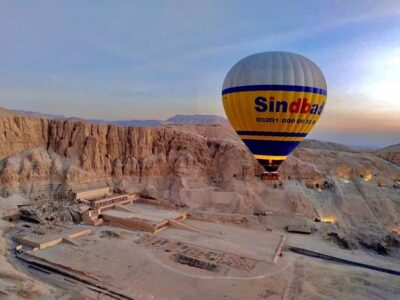
2-Day Luxor Tour with Hotel, Balloon, & Boat Ride
Read our review →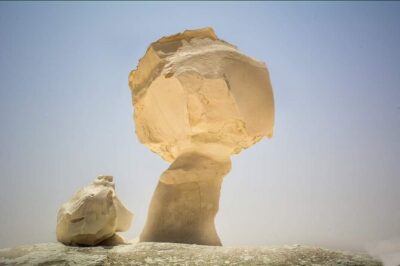
White & Black Desert tour 2 Days 1 night camping from Cairo.
Read our review →

White & Black desert camping tour 2 Days 1 night From Cairo
Read our review →
2 days cairo and giza attractions plus Gem, private tour
Read our review →
All Inclusive 2-Day Private Tour to All Pyramids and Cairo and 2 evenings
Read our review →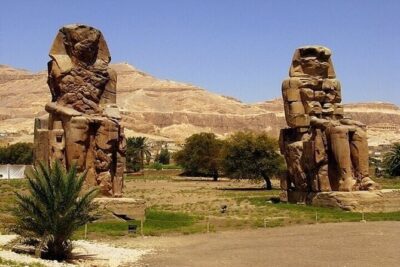
2-Day Top Attractions and Adventures Package in Luxor with Accommodation
Read our review →
2-Day Bahariya & White Desert Private Camp Adventure
Read our review →Browse the lists this tour appears in