Reviewed · ABU SIMBEL TOURS
4-Day-3 Night Nile Cruise Aswan & Luxor + Abu Simbel, Air Balloon
Egypt’s greatest monuments line this four-day route. This Aswan to Luxor Nile cruise combines Abu Simbel, Philae, Kom Ombo, Edfu, Karnak, the Valley of the Kings, and a sunrise hot-air balloon ride in one tightly planned journey. I like the way the cruise turns long road transfers into time on the Nile, and I also like the full-board setup, which keeps meals and overnight lodging simple.
The biggest strengths are the Egyptology guide and the range of major sights packed into four days. You get help with the temples, transport, airport or hotel transfers, and the early morning Abu Simbel trip. The main drawback is pace. Abu Simbel begins around 4:30 a.m., the sightseeing days are full, and entrance fees plus domestic airfare are extra.
This is not a lazy river holiday. It is a brisk introduction to Upper Egypt, with a comfortable ship serving as your moving base. If you want to see the essential temples without arranging several separate transfers, the plan makes good sense. If you prefer long, quiet mornings and unhurried museum visits, it may feel too compressed.
In This Review
- Key Points to Know Before Booking
- What the $720 Price Really Covers
- Day One: The High Dam and Philae on Agilkia Island
- Day Two: Abu Simbel’s Colossal Temples
- Kom Ombo and the Nile Sailing Rhythm
- Day Three: Horus, Karnak, and Luxor Temple
- Day Four: Sunrise by Balloon Over Ancient Thebes
- Guide Quality and the Human Side of the Trip
- Who Should Book This Nile Cruise?
- Should You Book It?
- FAQ
- How long is the Nile cruise?
- Does the tour include domestic airfare?
- Is pickup available?
- Are meals included?
- Is Abu Simbel included?
- What time does the Abu Simbel trip begin?
- Is the hot-air balloon ride included?
- Are entrance fees included for the temples?
- Can I cancel for a full refund?
Key Points to Know Before Booking
- Abu Simbel requires a pre-dawn start: You leave around 4:30 a.m. and return after a long excursion of roughly 10 hours.
- The cruise runs from Aswan to Luxor: You spend three nights aboard a 5-star Nile ship with breakfast, lunch, and dinner included.
- Philae Temple requires a boat ride: The temple sits on Agilkia Island, reached by sailing across the Nile.
- The final morning begins above Luxor: A hot-air balloon flight at sunrise is followed by the Valley of the Kings and Hatshepsut’s temple.
- Many entrance tickets cost extra: The tour price covers the guide and listed meals, but not sightseeing admission fees or domestic airfare.
- The price is $720 per person: That is a useful package value if you make full use of the ship, guide, meals, and included balloon ride.
What the $720 Price Really Covers
At $720 per person, the package offers a lot for four days, but you need to read the inclusions carefully. Your three nights on a 5-star Nile cruise are based on full board, so breakfast, lunch, and dinner are included. Four breakfasts, three lunches, and three dinners are specified, which fits the cruise schedule and the final morning departure.
You also get meet-and-assist service on arrival and departure, air-conditioned vehicle transport, an Egyptology guide, the hot-air balloon flight, and the group transfer to Abu Simbel. Those services matter in Egypt, where the value often lies in having someone coordinate the small moving parts.
The price does not include domestic airfare. The schedule describes arriving in Aswan by domestic flight after pickup from a hotel or airport in Cairo, so you should budget for that flight separately. Entrance fees to the listed sights are also excluded. That can add a noticeable amount, especially with Abu Simbel, Philae, Kom Ombo, Edfu, Karnak, Luxor Temple, the Valley of the Kings, and Hatshepsut’s temple all on the program.
Tipping is not included either. The wording calls it tipping and gratitude, so plan for customary gratuities as an additional expense. The package is still appealing, but the advertised price is not the complete cost of the trip.
More Boat Trips in Aswan
- 4-Days Nile Cruise From Aswan To Luxor including Abu Simbel and Hot Air Balloon
★ 5.0 · 3,142 reviews - 4-Day 3-Night Nile Cruise from Aswan to Luxor&Abu Simbel+Balloon
★ 5.0 · 2,023 reviews - 4-Day 3-Night Nile Cruise from Aswan to Luxor including Abu Simbel, Air Balloon
★ 4.5 · 612 reviews
Day One: The High Dam and Philae on Agilkia Island
Your Upper Egypt program begins after arrival in Aswan. The first stop is the Aswan High Dam, an enormous embankment dam built across the Nile. The visit lasts about an hour and gives you a clear look at the modern engineering project that changed water control, farming, and settlement along the river.
It is not an ancient temple, and some people may find it less exciting than the monuments that follow. Still, it provides useful context. The Nile is not just scenery here. It is the reason this civilization developed, and the dam is part of the modern story of how Egypt manages that river.
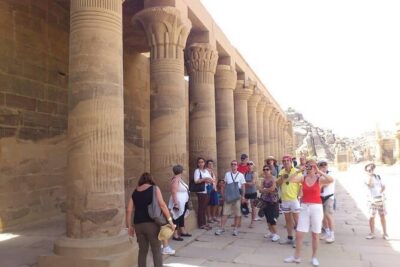
Next comes Philae Temple, dedicated to Isis, the goddess associated with magic. The temple is on Agilkia Island, so you cross the Nile by boat before exploring the site. That short ride is part of the pleasure. Philae is not approached from an ordinary city street. You arrive by water, with the temple setting up its own dramatic entrance.
The program allows about two minutes in the schedule for this stop, which is clearly a timing error when compared with the temple visit itself. The important practical point is that Philae is a proper sightseeing stop, not a quick photo pause. Admission is extra, and you should confirm the exact entry arrangements and visit duration before departure.
After Philae, you check in to the cruise ship. This is where the trip changes character. Instead of packing and unpacking each night, you settle into one floating base while the Nile carries you toward Luxor.
Day Two: Abu Simbel’s Colossal Temples
Abu Simbel is the day that sets the alarm clock. Departure is planned for around 4:30 a.m., with arrival near 8 a.m. The full outing lasts about 10 hours, making it the longest and most tiring section of the trip.
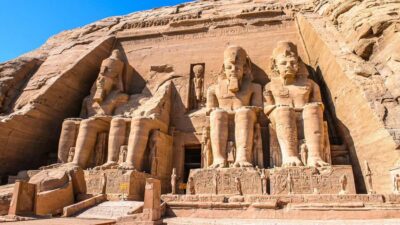
The reward is one of Egypt’s most powerful ancient sites. Ramesses II ordered the larger rock-cut temple, which is dedicated to the god Re-Horakhty. Four huge statues of the king dominate the front façade. Their size is the first thing you notice, but the interior reliefs and the deliberate setting beside Lake Nasser give the site its full force.
A second temple honors Queen Nefertari, the beloved wife of Ramesses II. It is smaller, but calling it a minor attraction would be a mistake. Its statues and decoration make it an essential part of the visit, not an optional extra.
The excursion is listed as having free admission, though the general inclusions also say entrance fees are not included. That is an important inconsistency to clarify with Exodus Travel before you pay. Do not assume every ticket is covered simply because Abu Simbel is described as free in the schedule.
The early start has another effect. By the time you return, you have spent much of the day on the move. You will want the cruise lunch and a quiet stretch afterward. This is one reason the full-board setup helps. You do not need to solve dinner arrangements after a long road excursion.
Kom Ombo and the Nile Sailing Rhythm
After lunch, you visit Kom Ombo, a temple dedicated in part to Sobek, the crocodile god associated with fertility. The temple is unusual because its design reflects two religious traditions, giving the site a different feel from the single-deity focus at Philae or the monumental royal emphasis at Abu Simbel.
The nearby Crocodile Museum adds a memorable detail. It displays preserved mummified crocodiles, showing how an animal that could be feared in daily life also became part of religious practice. This small museum helps turn a strange-looking collection into a clearer lesson about ancient Egyptian belief.
The visit is planned for around two hours. Admission is not included. Afterward, the ship sails toward Edfu. This sailing section is one of the best reasons to choose a cruise rather than a road-based temple circuit. You can rest, eat, and watch the river pass without another vehicle transfer.
The cruise ship is described as 5-star, but no cabin details, deck facilities, or ship name are provided. I would ask about the exact vessel before booking if the onboard experience matters as much to you as the temples. The value is strongest for someone who sees the ship as a comfortable base and a practical way to move between sites.
More Evening Trips in Aswan
- 4-Day 3-Night Nile Cruise from Aswan to Luxor – Private Tour
★ 5.0 · 369 reviews - 4-Day 3-Night Nile Cruise from Aswan to Luxor With Balloon and Abu Simbel
★ 5.0 · 327 reviews - 2 Night Nile Cruise from Aswan to Luxor
★ 5.0 · 311 reviews - 1 Night Nile Cruise from Aswan to Luxor
★ 5.0 · 229 reviews
Day Three: Horus, Karnak, and Luxor Temple
Edfu Temple is dedicated to Horus and is described as one of the best-preserved temples in Egypt. Its location in the Nile-side town of Edfu gives the visit a more local setting than the grand monuments of Luxor.
The planned visit lasts about two hours. Admission is extra. The temple’s good preservation makes it easier to understand how an ancient Egyptian temple complex was organized, especially after you have already seen sites altered by time, relocation, or partial ruin.
The next major stop is Karnak, the vast temple complex on Luxor’s east bank. The name Ipet-Isut means Most Select of Places, and the scale explains why it can feel less like one building and more like an entire sacred district. The complex was dedicated to the gods of Thebes and expanded by successive rulers over many centuries.
You have about three hours here, which is helpful. Karnak needs time. Its columns, courts, gateways, and open-air museum cannot be appreciated by rushing from one photo point to the next. The exact balance of explanation and free walking depends on your guide, but the schedule gives you a reasonable chance to see the main areas.
Admission is not included, so remember that the package price does not cover this important ticket. Wear practical shoes and expect sun exposure. The program moves through several large outdoor sites, and even a good guide cannot make the stone walkways shorter.
Luxor Temple follows, with about an hour on site. Known as Ipet Resyt, or the Southern Sanctuary, it played an important role in the Opet Festival, when the sacred connection between Luxor and Karnak was celebrated.
Luxor Temple works well after Karnak because the two sites are linked by religious purpose, yet they do not feel identical. Karnak is sprawling and monumental. Luxor Temple is easier to grasp as a focused ceremonial space. Together, they give you a stronger understanding of ancient Thebes than either site would alone.
Day Four: Sunrise by Balloon Over Ancient Thebes
The final day begins before most of Luxor is fully awake. You take a hot-air balloon ride at sunrise, with the flight lasting about an hour. The takeoff site is in Luxor, and breakfast is included on board before checkout.
This is the most unusual feature in the package. Temple visits put you close to the stone, while the balloon gives you a broad view of the remains of ancient Thebes. The changing light at sunrise is a natural fit for the experience, though balloon operations depend on conditions beyond the tour company’s control.
The flight is included, unlike most of the entrance tickets. Because checkout follows the balloon ride, keep your belongings organized and be ready for a busy morning. The schedule leaves little room for a slow breakfast or an extended return to the ship.
Afterward, you visit the Valley of the Kings for about three hours. Ancient Egyptian kings cut tombs into the mountains here to hide their burials and protect their mummies and treasures. The setting explains why this area was chosen, but the real interest lies underground, where decorated passageways lead toward burial chambers.
Admission is not included. Entry rules can vary by the tombs open on the day, so confirm what your ticket covers. The schedule allows enough time for a solid visit, though you will not be able to see every tomb in one morning.
The next stop is the mortuary temple of Queen Hatshepsut at Deir Al-Bahri. Its terraces and position against the cliffs make it one of the most recognizable monuments on the west bank. A good guide can help you understand both Hatshepsut’s rule and the purpose of a mortuary temple, rather than leaving you with only a striking photograph.
You then pass the Colossi of Memnon, two massive sandstone statues of Amenhotep III. This is a shorter final sight, but it provides a useful closing image of royal power before your transfer to the airport, station, or hotel.
Guide Quality and the Human Side of the Trip
The strongest human feature of the experience is the support from the local team. The company’s Egypt guides and drivers receive praise for friendly service, clear historical explanations, and help with the practical side of moving around Egypt. That includes airport support and assistance when something goes wrong, such as recovering a lost phone at an airport.
You should still ask who your guide will be and whether the same person stays with you for the full route. The package promises a qualified Egyptology guide, but no name is provided for this specific cruise. Other Exodus guides praised by name include Michael, Sam, Adel, Michel, and Khiro, but that does not mean one of them will lead this journey.
A useful detail from the company’s service style is its effort to protect visitors from unreliable sellers and direct them toward legitimate shops. That can be helpful, though legitimate does not always mean inexpensive. If you are taken to a shop, compare prices and buy only what you actually want.
The overall service is best suited to someone who values reassurance and organization. You have airport or hotel pickup options, air-conditioned transport, a guide, meals, and a defined route. You give up some independence, but you also avoid having to negotiate every transfer yourself.
Who Should Book This Nile Cruise?
I would recommend this trip to a first-time visitor who wants the main Upper Egyptian sights in a short period. It works especially well if you want Abu Simbel but do not want to arrange a separate excursion, and if the idea of sleeping on the Nile appeals to you.
It also suits couples, families, and small private groups who prefer their own group rather than a large shared tour. The activity is described as private, with only your group participating, while the Abu Simbel transfer is specifically described as a group arrangement. Confirm that distinction if privacy is important to you.
You should think twice if you dislike pre-dawn departures, long sightseeing days, or extra costs at the entrance gates. The itinerary is full enough that fatigue is a real possibility, especially after Abu Simbel and before the balloon flight.
Exodus Travel offers group discounts, though no discount amount is given. Ask for the current rate if you are booking with several people. Free cancellation is available up to 24 hours before the experience begins. Changes or cancellations inside that window are not accepted for a refund.
Should You Book It?
Book this cruise if your priority is seeing a large share of Upper Egypt with transport, meals, a ship, and a guide arranged in advance. The combination of Abu Simbel, the major Luxor temples, and a sunrise balloon flight gives the four-day route real range.
Before paying, ask for the exact cruise ship, the domestic airfare cost, the complete entrance-fee estimate, the tipping guidance, and clarification about Abu Simbel admission. If those extras fit your budget, $720 per person can be good value for such a concentrated program.
I would not choose it for a slow Nile holiday. I would choose it for an efficient first look at Egypt’s ancient core, with enough support to keep the trip manageable and enough memorable moments to justify the early alarms.
FAQ
How long is the Nile cruise?
The experience lasts approximately four days and includes three nights aboard a 5-star Nile cruise ship, sailing from Aswan to Luxor.
Does the tour include domestic airfare?
No. Domestic airfare is specifically excluded, even though the schedule describes arrival in Aswan by domestic flight from Cairo.
Is pickup available?
Yes. Pickup is offered from a hotel or airport in Cairo, with meet-and-assist service on arrival and departure.
Are meals included?
Yes. The cruise is based on full board and includes four breakfasts, three lunches, and three dinners.
Is Abu Simbel included?
The Abu Simbel excursion is included as a group transfer and visit, but the information about admission is inconsistent. The schedule says admission is free, while the general terms exclude entrance fees, so confirm this before booking.
What time does the Abu Simbel trip begin?
The transfer to Abu Simbel is planned for around 4:30 a.m., with arrival at approximately 8 a.m. The excursion lasts about 10 hours.
Is the hot-air balloon ride included?
Yes. The one-hour sunrise hot-air balloon flight in Luxor is included, along with breakfast on board.
Are entrance fees included for the temples?
No. Entrance fees to the listed sightseeing sites are generally excluded. This includes sites such as Philae, Kom Ombo, Edfu, Karnak, Luxor Temple, the Valley of the Kings, and Hatshepsut’s temple.
Can I cancel for a full refund?
Yes, if you cancel at least 24 hours before the experience starts. Cancellations or changes made less than 24 hours in advance are not accepted for a refund.
More Nile Cruises in Aswan
- From Aswan: 4-Day Nile Cruise from Aswan to Luxor with Guide
★ 4.1 · 593 reviews - From Aswan:4 Days Nile Cruise Luxor Abu Simbel & Air Balloon
★ 4.4 · 310 reviews - Private 04 Days Days Nile Cruise from Aswan to Luxor
★ 5.0 · 278 reviews - 4-Day Nile Cruise sails Aswan to Luxor&Abu Simbel.Hot air Balloon
★ 4.5 · 247 reviews
More Hot Air Balloon Rides in Aswan
- From Aswan: 3-Day Cruise to Luxor with Hot Air Balloon
★ 4.3 · 598 reviews - 4-Days Nile Cruise From Aswan To Luxor including Abu Simbel and Hot Air Balloon
★ 4.5 · 509 reviews - 4 Days Nile Cruise from Aswan to Luxor including Abu Simbel and Hot Air Balloon
★ 4.5 · 356 reviews - 4-Days Nile Cruise Aswan&Luxor,Hot Air Balloon&Abu Simbel.Hot deal
★ 5.0 · 322 reviews
Just added around Aswan
- Private Day Tour to Abu Simble Temple from Aswan★ 4.5 · 23 reviews
- Nile Cruise 2 Nights from Aswan to Luxor with Hot air Balloon★ 4.5 · 23 reviews
- Private Aswan Airport Arrival/Departure One Way Transfer★ 4.5 · 23 reviews
- Best of Luxor in 2 Days Hotel,Tours,Felucca,Camel&Balloon by Plane from Cairo★ 5.0 · 23 reviews
- (3-Nights Cruise From Aswan To Luxor & Balloon, Abu Simbel)★ 4.5 · 23 reviews
- Full Day Sharing Trip To Abou simple Temple form Aswan★ 5.0 · 24 reviews
- Enjoy 2 nights Nile cruise from Aswan to Luxor,Hot deal★ 4.5 · 24 reviews
- 3-Day 2-Night Tour to Aswan, Abusimbel & Luxor★ 5.0 · 24 reviews
Abu Simbel Tours, compared.

4-Days Nile Cruise From Aswan To Luxor including Abu Simbel and Hot Air Balloon
Read our review →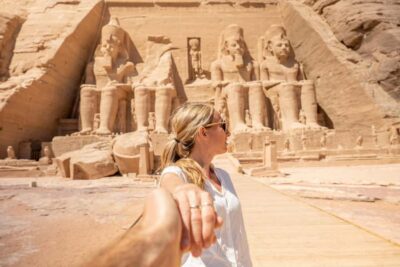
4-Day 3-Night Nile Cruise from Aswan to Luxor including Abu Simbel, Air Balloon
Read our review →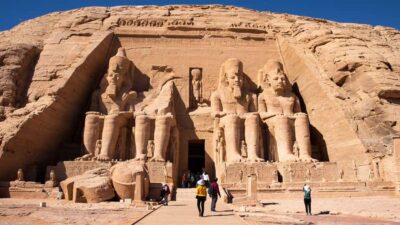
Abu Simbel Temple Private Guided Day Trip with Lunch
Read our review →4-Days Nile Cruise From Aswan To Luxor including Abu Simbel and Hot Air Balloon
Read our review →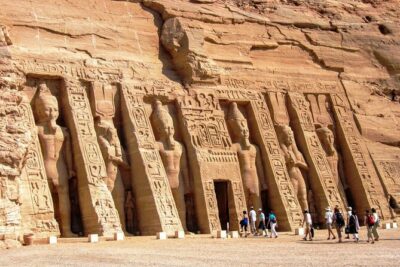
Private Day Tour to Abu Simbel Temples from Aswan
Read our review →4 Days Nile Cruise from Aswan to Luxor including Abu Simbel and Hot Air Balloon
Read our review →