
Reviewed · 5-DAY EXPERIENCES
5 Days 4 Nights from Luxor to Aswan on Gentle Breeze Dahabyia
Catch the Nile at its most peaceful. This five-day journey from Luxor to Aswan combines a small-boat cruise with major ancient sites, including Karnak, Luxor, Edfu, Kom Ombo, and Philae. I like the private English-speaking Egyptologist, who gives the temples context instead of leaving you to guess what you are seeing. I also like that meals, transfers, entrance fees, and four nights aboard the Gentle Breeze Dahabiya are included.
The main caution is the boat itself. It is sold as a five-star cruise, yet one serious complaint describes diesel smells, standing water, dirty linens, and poor food. Other passengers found the boat comfortable, the food good, and the staff helpful, so the standard may vary by cabin or sailing. At $1,300 per person, that makes the condition of the vessel an important part of your booking decision.
In This Review
- Key points to know before you book
- Why a Luxor to Aswan dahabiya works so well
- Day one: Karnak and Luxor Temple before boarding
- Day two: royal tombs and Hatshepsut’s terraces
- Day three: Edfu and the two-god temple at Kom Ombo
- Day four: the engineering and stonework of Aswan
- Day five: disembarking in Aswan
- What the $1,300 price really covers
- Guides, transport, and the pace of sightseeing
- Who should book this Nile cruise
- Should you book the Gentle Breeze Dahabiya?
- FAQ
- How long is the Luxor to Aswan cruise?
- What sites are included?
- Are entrance fees included?
- Are meals included?
- Is a guide included?
- Is transportation included?
- What is not included in the price?
- Can I be picked up from a railway station or airport?
- Can I cancel for a full refund?
Key points to know before you book
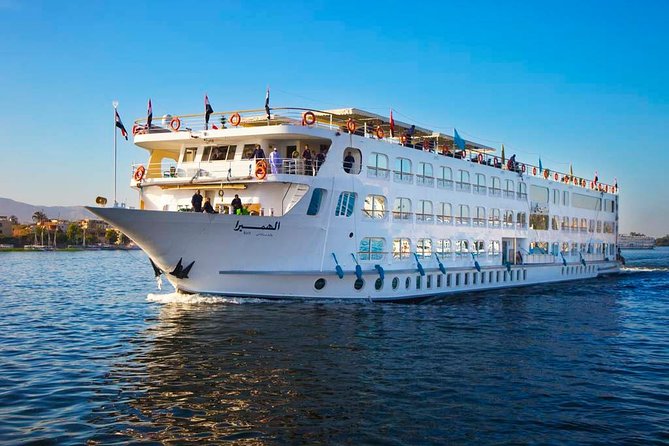
- Four nights on the Nile: You sleep aboard the Gentle Breeze Dahabiya while moving from Luxor to Aswan.
- Private sightseeing: Your group has a private English-speaking Egyptologist guide and private air-conditioned transfers.
- Admissions and meals included: Entrance fees, four breakfasts, four lunches, and four dinners are covered.
- Major temples in one route: The program includes Karnak, Luxor Temple, the Valley of the Kings, Hatshepsut, Edfu, Kom Ombo, the High Dam, the Unfinished Obelisk, and Philae.
- A small but important final day: You disembark after breakfast in Aswan, with optional time for Abu Simbel or a Nubian Village visit.
- Strong overall satisfaction, with a real caveat: The experience is rated 4.7 out of 5 and recommended by 96 percent, but the negative boat report is specific enough to take seriously.
Why a Luxor to Aswan dahabiya works so well
A Nile cruise gives your Egyptian sightseeing a useful rhythm. Instead of packing and unpacking between Luxor, Edfu, Kom Ombo, and Aswan, you return to the same cabin each day. The river becomes your moving view between the archaeological stops.
The route also makes geographic sense. Luxor is the center of the first part of the trip, with temples on both sides of the Nile. As you move south, the visits become more focused: Edfu and Kom Ombo provide two excellent temple stops, then Aswan brings the High Dam, the granite quarries, and Philae.
I like this format for someone who wants a guided introduction to ancient Egypt without building every transfer independently. Your guide handles the site visits, and the private vehicle takes you between the boat and the monuments. You still have a structured schedule, but the cruise keeps the trip from feeling like one long series of road transfers.
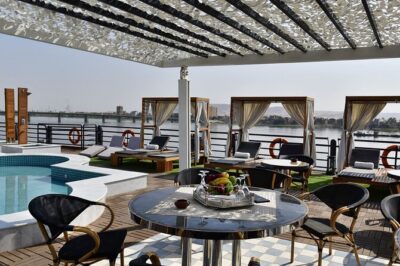
The Gentle Breeze Dahabiya is described as a five-star boat, but the available information does not give a cabin count, deck plan, room size, or exact onboard facilities. One passenger had a ground-floor cabin and found it acceptable, while another described the vessel as old and below the advertised standard. Ask for current cabin photos and written confirmation of the boat’s condition before paying.
More things to do in Luxor:
- Hurghada: Luxor Valley of the Kings & Tutankhamun Tomb Trip
★ 4.7 · 13,208 reviews - Luxor Day Trip from Hurghada Small Group & Tutankhamun Tomb
★ 4.8 · 5,366 reviews - Hot Air Balloon Ride in Luxor Egypt with Transfers Included
★ 5.0 · 4,319 reviews
Day one: Karnak and Luxor Temple before boarding
Your first day begins with pickup from a Luxor hotel, railway station, or airport. That flexibility is useful if you are arriving by train or flying in rather than spending the previous night in a hotel.
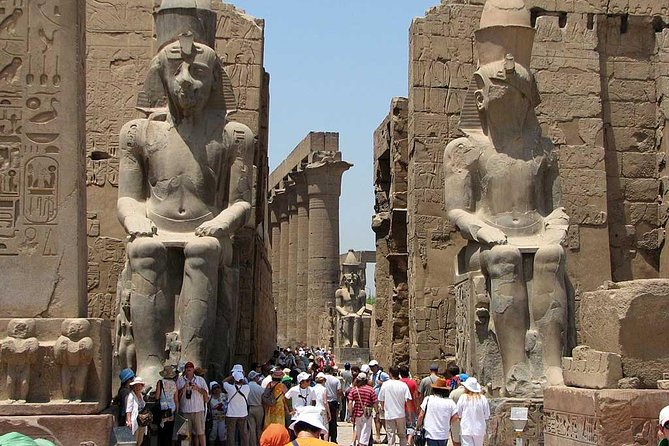
Karnak deserves the generous three-hour visit planned here. This is not one compact temple but a large sacred complex dedicated mainly to Amun, with connections to Mut and Khonsu. The scale is the point. Huge columns, pylons, courtyards, and carved walls make it easier to understand how powerful the Theban religious center once was.
Your Egyptologist can also explain the peace treaty associated with Ramesses II and the Hittites. The Egyptian version was preserved on a wall in the Temple of Amun at Karnak, giving the visit a useful link between monument, politics, and international relations.
After Karnak, you spend about two hours at Luxor Temple. Built under Amenhotep III and completed under Ramesses II, it was dedicated to the Theban triad of Amun-Ra, Mut, and Khonsu. The temple’s association with different rulers gives your guide plenty to point out, especially where later construction added to an earlier sacred site.
The Obelisk of Ramesses II in front of the first pylon is one of the clear visual highlights. After the visit, you transfer to the cruise and check in. Since the day includes up to five hours at major sites before boarding, wear practical shoes and carry water. The schedule is manageable, but it is not a gentle first morning if you have arrived just before pickup.
Day two: royal tombs and Hatshepsut’s terraces
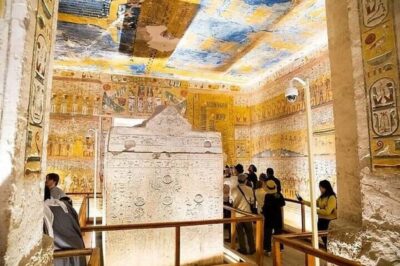
The second day takes you to Luxor’s West Bank, beginning with roughly three hours in the Valley of the Kings. This is where the route shifts from grand public temples to hidden royal burial places.
The program names tombs associated with Tutankhamun, Ramesses VI, Thutmose III, and Amenhotep II. Entry rules and available tombs can change, so you should confirm exactly which tombs are covered on your sailing. The included entrance fees are convenient, but they do not necessarily mean every special tomb or extra ticket is included.
The Valley can feel hot, exposed, and crowded at busy times. Your guide’s explanations matter here because the tombs often have similar-looking entrances from outside, while the painted scenes and religious texts inside tell very different stories. Tutankhamun’s tomb is famous for its discovery, but the smaller space means you should not expect the same scale as Ramesses VI.
Next comes the Temple of Hatshepsut at Deir el-Bahari, planned for about two hours. Its broad terraces rise against the cliffs, creating a very different setting from the Valley of the Kings. Hatshepsut’s reign is especially interesting because she was a woman who ruled as pharaoh and helped establish trading routes.
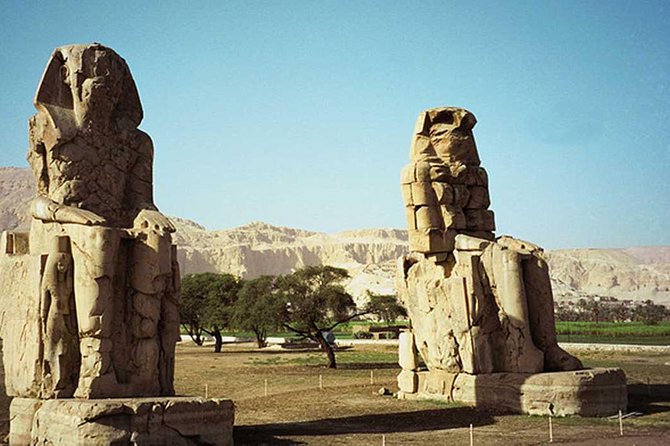
The final West Bank stop is the Colossi of Memnon. Allow only about 20 minutes, which is enough for photographs and a short explanation. The twin statues portray Amenhotep III. The story of the northern colossus singing after an earthquake is a memorable bit of ancient legend, but treat it as folklore rather than a sound you should expect to hear.
After the statues, you return to the boat, which sails toward Edfu. This is one of the most appealing parts of the trip. You have finished the concentrated sightseeing and can watch the Nile pass by without another hotel transfer that evening.
Day three: Edfu and the two-god temple at Kom Ombo
Edfu Temple gets about two hours, and that is enough time for a focused guided visit. It is dedicated to Horus and preserves scenes and inscriptions connected with the sacred conflict between Horus and Seth.
The temple is valuable because its surviving reliefs make Egyptian religious stories easier to follow. Look for your guide to explain the symbols rather than simply naming the gods. Horus is linked with the sky and kingship, while the temple’s story presents the struggle with Seth through formal ritual scenes.
The next sailing stop is Kom Ombo, with about two hours for the temple. Kom Ombo is unusual because it was shared by two gods: Sobek, the crocodile god associated with the Nile, military power, and fertility, and Horus, associated with the sky and kingship.
That double dedication gives the temple a pleasing sense of order. You can see how one sacred site served two cults, with the paired arrangement reflected in its design and decoration. Your guide should help you separate the roles of Sobek and Horus, since the imagery can become confusing when viewed quickly.
After Kom Ombo, the boat continues toward Aswan. This day has fewer stops than the West Bank day, but the two temples are substantial. The schedule also gives you more time to enjoy the boat, assuming its condition matches the better reports. One positive account praised the food and helpful staff, while another specifically said towels needed changing. I would pack a small personal towel and basic cabin supplies, not because that should be necessary, but because it is a sensible precaution when boat standards are uncertain.
A few more Luxor trips worth weighing up
- 5 Days Private Guided Nile River Cruise Tour from Luxor to Aswan
★ 5.0 · 229 reviews - From Luxor: 5-Day Nile Cruise to Aswan with Balloon Ride
★ 4.2 · 168 reviews - Luxury 5 Days Nile River Cruise from Luxor to Aswan with Private Tour Guide
★ 5.0 · 114 reviews - From Luxor: 5 Days 4 Nights Nile Cruise to Aswan
★ 4.5 · 108 reviews
Day four: the engineering and stonework of Aswan
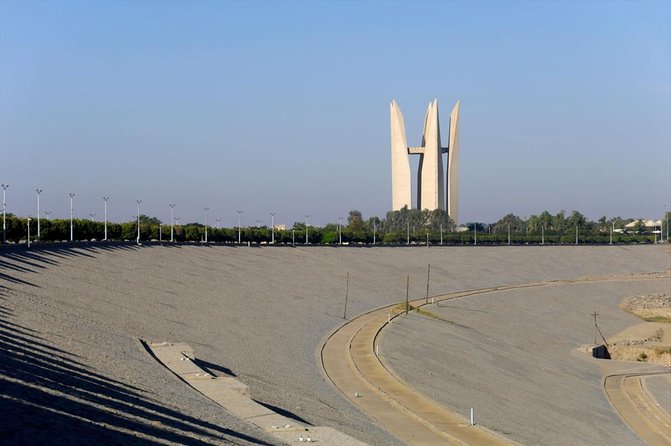
The Aswan High Dam is the first stop, with about an hour planned. It controls Egypt’s water supply and changed the seasonal behavior of the Nile. The program describes storage equal to three years of Nile water, a detail that helps show the scale of the project.
The dam is not an ancient monument, but it gives the trip an important modern chapter. You see how Egypt manages the same river that shaped its earliest civilization. I appreciate that the day is not limited to pharaohs and temples.
Next is the Unfinished Obelisk, with two hours to explore the quarry. The massive stone was abandoned before completion, allowing you to see how an obelisk was cut directly from the bedrock. The figures supplied for the stone are striking: about 1,168 tons in its unfinished state and an estimated 1,200 tons if completed.
The quarry also connects to the Giza pyramids, since many casing stones for the two pyramids came from Aswan. That link makes the site more than a single abandoned monument. It helps you picture how large blocks were selected, shaped, and moved for royal construction.
The last major visit is Philae Temple, dedicated to Isis, who represented health, marriage, and wisdom. The temple is one of the prettiest stops on this route, but its importance goes beyond appearance. It preserves the long religious life of Isis worship and adds a different mood after the stark quarry and monumental dam.
The supplied schedule says you are transferred back to the cruise after Philae. It does not specify the exact transport method or how much free time you have in Aswan, so ask your operator if you want a more precise evening plan.
Day five: disembarking in Aswan
After breakfast, you leave the dahabiya and have about an hour at the Aswan Market. This is a short final visit, not a full day of shopping or independent exploration.
You may also choose an optional tour to Abu Simbel or a Nubian Village, or spend time seeing Aswan on your own. These options are not included in the $1,300 price, and tipping is also excluded. If Abu Simbel is a priority, ask about its timing and cost before the cruise begins, since the final morning may not leave much spare time.
The final day is best for people who already have onward plans from Aswan or are adding extra nights there. If you need a relaxed departure, confirm when the market visit ends and when your private transfer is scheduled.
What the $1,300 price really covers
At $1,300 per person, the price is not simply paying for transportation on the river. It includes four nights aboard the dahabiya, all meals during those four nights, entrance fees, private air-conditioned transfers, a private English-speaking Egyptologist, meet-and-assist service, taxes, and service charges.
That bundle can be good value if you would otherwise pay separately for Luxor transfers, West Bank sightseeing, a guide, temple tickets, and a one-way trip to Aswan. The private format also matters. Your group participates on its own rather than joining a large shared excursion.
Meals are included as breakfast, lunch, and dinner for four days. One account praised the food, saying each day brought new dishes, while another described it as disgusting. That conflict is the clearest warning in the whole package. Food quality may have changed, or cabin and sailing conditions may differ, but I would ask for current details about menus, dietary requests, and onboard food service.
The 4.7 rating from 24 reviews and 96 percent recommendation indicate that most customers were satisfied. Still, the one-star complaint is too detailed to dismiss. Dirty sheets, dirty towels, diesel fumes, standing water in a shower, and a boat that feels closer to one star than five would seriously reduce the value of the trip.
Guides, transport, and the pace of sightseeing
The strongest part of the program is likely the guiding. A private Egyptologist can adjust explanations to your group and connect the monuments instead of rushing through a standard speech. One praised guide named Rushdi for being prompt and for explaining the pharaohs, the High Dam, and the Nubian Village clearly.
The plan uses private air-conditioned vehicles for transfers. That is especially useful on the West Bank and in Aswan, where you want transport waiting after walking around large sites. Pickup is available from a hotel, railway station, or airport in Luxor.
The pace is active but reasonable for most people. Day one includes Karnak and Luxor Temple. Day two is the longest sightseeing day, with the Valley of the Kings, Hatshepsut, and the Colossi of Memnon. Day four also includes three stops, but the High Dam and quarry require less walking than the West Bank sites.
The tour states that most people can participate, and service animals are allowed. No special mobility details are provided, so ask about walking surfaces, vehicle access, and cabin location if those points matter to you.
Who should book this Nile cruise
I would recommend this trip to someone visiting Egypt for the first time who wants the main Luxor to Aswan sights arranged in one private package. It suits you especially well if you value a guide, want entrance fees handled, and prefer not to organize each transfer yourself.
It also works for couples, families, or a small private group that wants a slower river journey rather than a bus-based route. The boat’s changing views are a major part of the appeal, and the sailing time gives you a break between temple visits.
I would be more cautious if you need reliable five-star accommodation, have strong food or cleanliness concerns, or expect a polished luxury cruise. The product information does not provide enough cabin detail to prove that standard, and the negative account raises genuine questions about maintenance.
Book only after confirming the current boat, cabin category, and recent condition. Ask whether your room is on the ground floor, since one passenger had a ground-floor cabin, and request clear information about towels, linens, showers, and diesel fumes. Those questions are more important here than a small difference in price.
Should you book the Gentle Breeze Dahabiya?
Book it if your priority is a well-organized Luxor to Aswan route with private guiding, included meals, included admissions, and four nights on the Nile. The ancient sites are exceptionally well chosen, and guide Rushdi’s praised service shows how much a good Egyptologist can add.
Hold off if the operator cannot confirm the boat’s present condition in writing. The high rating and excellent temple route make this tempting, but the $1,300 price only feels strong value if the dahabiya delivers a clean, comfortable cabin and decent meals. For this experience, the boat is not a minor detail. It is your hotel for four nights.
FAQ
How long is the Luxor to Aswan cruise?
The experience lasts approximately five days and four nights, traveling from Luxor to Aswan aboard the Gentle Breeze Dahabiya.
What sites are included?
Included visits are Karnak Temple, Luxor Temple, the Valley of the Kings, the Temple of Hatshepsut, the Colossi of Memnon, Edfu Temple, Kom Ombo Temple, the Aswan High Dam, the Unfinished Obelisk, Philae Temple, and the Aswan Market.
Are entrance fees included?
Yes. Entrance fees for the included sites are part of the tour price.
Are meals included?
Yes. The package includes four breakfasts, four lunches, and four dinners served aboard the cruise.
Is a guide included?
Yes. A private English-speaking Egyptologist guide is included.
Is transportation included?
Yes. Meet-and-assist services and all transfers by private air-conditioned vehicle are included.
What is not included in the price?
Optional tours, such as Abu Simbel or a Nubian Village visit, are not included. Tipping is also excluded.
Can I be picked up from a railway station or airport?
Yes. Pickup is offered from your hotel, railway station, or airport in Luxor.
Can I cancel for a full refund?
You can cancel for a full refund if you do so at least 24 hours before the experience begins. Changes or cancellations made less than 24 hours before the start time are not accepted for a refund.
Just added around Luxor
- Private Tour foll day to East and West Banks of Luxor★ 5.0 · 23 reviews
- East and West Bank Luxor★ 5.0 · 23 reviews
- Full Day Tour to Luxor (East & West Bank)★ 5.0 · 23 reviews
- Big brother travel★ 5.0 · 23 reviews
- Luxor Day Tour :Valley of Kings & queen & Hatshepsut & Habu city★ 5.0 · 23 reviews
- Luxor: Scenic Camel or Horse Ride★ 3.9 · 24 reviews
- From Cairo: 4-Day Nile Cruise from Aswan to Luxor with Meals★ 4.4 · 24 reviews
- Traditional Egyptian Breakfast at the AlHabib Arabian Horse Farm★ 5.0 · 24 reviews
5-Day Experiences, compared.
5-Day Egypt Highlights Private Tour with Flights
Read our review →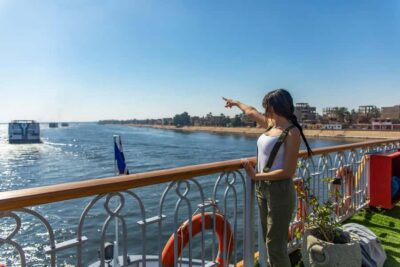
Egypt: Private 5-Day Tour, Nile Cruise, Flights & Balloon
Read our review →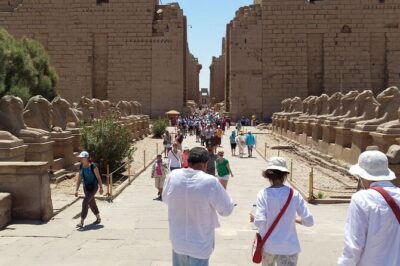
5 Days Private Guided Nile River Cruise Tour from Luxor to Aswan
Read our review →
Our Exceptional 5 days Cairo, Luxor and Abu Simbel Tour Package
Read our review →
5-Day Nile Cruise to Aswan with Balloon Ride
Read our review →
Luxury 5 Days Nile River Cruise from Luxor to Aswan with Private Tour Guide
Read our review →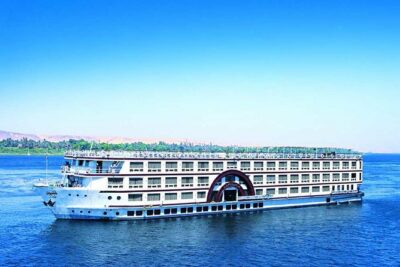
Browse the lists this tour appears in