
Reviewed · NILE CRUISES
From Luxor: 5 Days 4 Nights Nile Cruise to Aswan
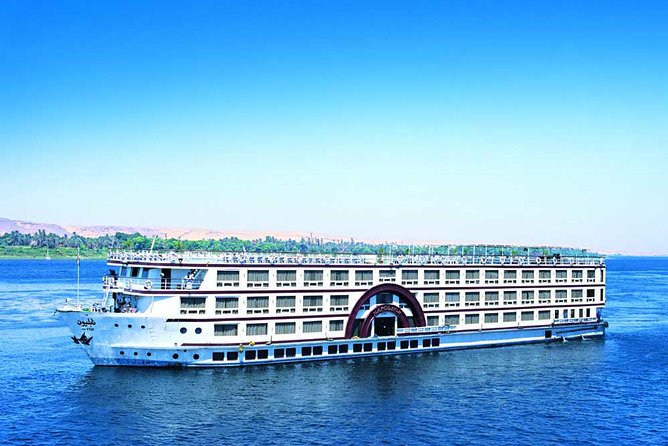
The Nile turns sightseeing into a moving show. This four-night cruise links Luxor and Aswan with guided visits to Karnak, the Valley of the Kings, Edfu, Kom Ombo, and Philae, while your hotel, meals, transport, and entry fees are handled in one package. I like the easy north-to-south route and the chance to watch Nile life pass from the deck.
I also like that an Egyptologist guide accompanies the major temple visits, giving the monuments more meaning than a quick walk-by. The main caution is the ship standard: some passengers received comfortable, friendly service, while others reported old cabins, engine noise, diesel smells, weak air conditioning, or even a last-minute ship change.
In This Review
- Key points to know before booking
- What the $1,000.83 price really covers
- Day one: Karnak and Luxor Temple set the tone
- Day two: royal tombs on Luxor’s West Bank
- Day three: Edfu’s Horus Temple and the divided temple at Kom Ombo
- Day four: Aswan’s engineering and the rescued temple of Isis
- Day five: choose Abu Simbel, Nubian Village, or a slower Aswan morning
- Life aboard the ship: food, service, and cabin reality
- The guide can make or break the archaeology
- Who will enjoy this Nile cruise most
- Should you book the Luxor to Aswan cruise?
- FAQ
- How long is the Nile cruise?
- Where does the cruise start?
- Where does the cruise end?
- Are meals included?
- Are entrance fees included?
- Is an Egyptologist guide included?
- Are Abu Simbel and Nubian Village included?
- Is tipping included?
Key points to know before booking
- Four nights aboard a 5-star Nile cruise: Breakfast, lunch, dinner, lodging, transfers, and listed sightseeing are included.
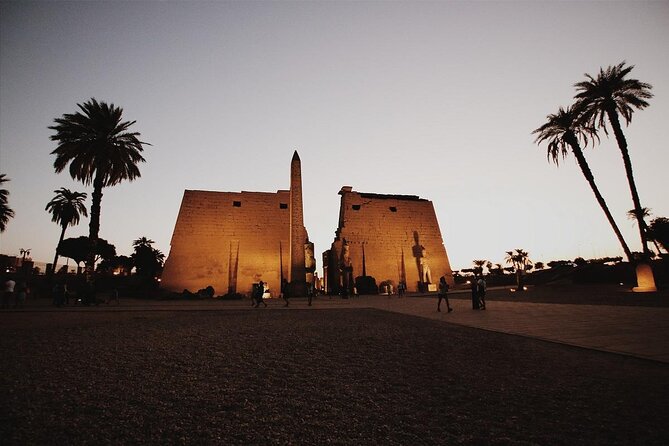
- Luxor gets two full sightseeing days: You visit Karnak and Luxor temples, then the Valley of the Kings, Hatshepsut’s temple, and the Colossi of Memnon.
- The cruise route includes Egypt’s essential river temples: Edfu and Kom Ombo break up the sailing with two very different ancient sites.
- Aswan sightseeing is built in: The High Dam, Unfinished Obelisk, and Philae Temple fill the fourth day.
- The final morning is flexible: Abu Simbel and Nubian Village are optional, or you can spend time in Aswan.
- Ship quality deserves careful checking: Service and food can be excellent, but cabin location and vessel assignment may affect the trip.
What the $1,000.83 price really covers
At $1,000.83 per person, this is not a bargain-basement way to see the Nile. It is a bundled sightseeing trip that includes four nights on board, full-board meals, air-conditioned private transfers, an Egyptologist guide, bottled water during tours, entrance tickets, service charges, and taxes.
That bundle can offer solid value if you already plan to visit most of these sites. Karnak, Luxor Temple, the Valley of the Kings, Hatshepsut’s temple, Edfu, Kom Ombo, the High Dam, the Unfinished Obelisk, and Philae would otherwise require separate transport, tickets, and planning. Here, the river cruise provides the structure.
I would look at the price as payment for convenience as much as accommodation. You are not simply buying a cabin. You are buying a moving base, coordinated transfers, organized visits, and a guide who connects the monuments to ancient Egyptian religion and royal power.
The value drops if you dislike fixed schedules or expect a modern luxury hotel at every turn. A 5-star label does not appear to guarantee the same condition on every vessel used for this trip. Before paying, ask which ship is planned, whether the ship can change, and what cabin locations are available.
The experience is commonly booked about 44 days ahead, so planning early is sensible. Free cancellation is available until 24 hours before the start time for a full refund. Changes or cancellations inside that 24-hour window are not accepted for a refund, and poor weather may lead to a different date or a full refund.
More Boat Trips in Luxor
- Hurghada: 2-Day Luxor Tour with Hotel, Balloon, & Boat Ride
★ 4.5 · 1,113 reviews - From Luxor: 3-Night Nile Cruise to Aswan and Hot Air Balloon
★ 3.7 · 297 reviews - Amazing Sunset sailing by Felucca in Luxor -2 Hours (Private)
★ 5.0 · 255 reviews
Day one: Karnak and Luxor Temple set the tone
The first day begins with pickup in Luxor from your hotel, railway station, or airport. Your representative and Egyptologist guide then take you to Karnak Temple, with admission included.
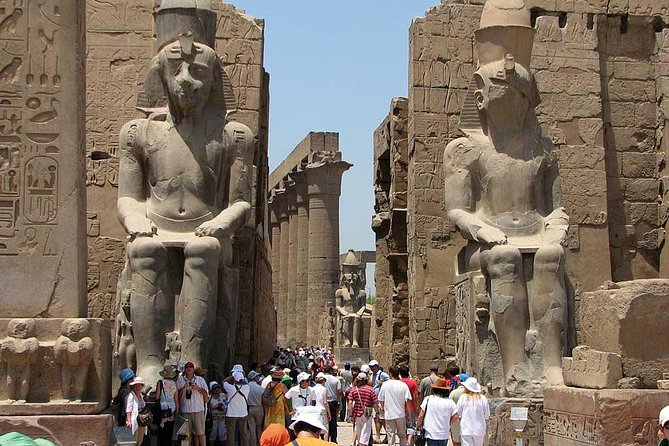
Allow about two hours at Karnak. This is not one small temple but a large sacred complex dedicated mainly to Amun, along with Mut and other connected deities. The scale matters. Columns, pylons, courts, and inscriptions make it easier to understand how religious worship and royal power were displayed in ancient Thebes.
The itinerary highlights the peace treaty preserved on a wall at Karnak. Your guide can help place that treaty in its political setting, which is one reason a guided visit is useful here. Without context, Karnak can become a tiring parade of huge stones. With explanation, the carvings and names begin to make sense.
Next comes Luxor Temple, usually a shorter visit of about one hour. Built under Amenhotep III and completed by Ramesses II, it was dedicated to the Theban triad of Amun-Ra, Mut, and Khonsu. The remaining obelisk of Ramesses II near the first pylon gives the entrance a memorable focal point.
After Luxor Temple, you transfer to the ship and check in. The timing makes day one efficient, but it also means you begin with two major monuments before settling into your cabin. If you arrive in Luxor tired, tell your guide and ship representative early. The first day has real sightseeing weight.
Day two: royal tombs on Luxor’s West Bank
After breakfast, you cross to the West Bank and visit the Valley of the Kings. The scheduled visit lasts about two hours and includes admission, though specific tomb access can vary in practice.
The valley is famous for the burial places of pharaohs, including Tutankhamun, Ramesses VI, Thutmose, and Amenhotep II. The real reward is inside the tombs, where painted chambers and carved passages show a very different side of royal Egypt than the open-air temples.
Tomb visits can be physically demanding. You may walk over uneven ground, enter narrow passages, and deal with heat. Wear practical shoes and carry water. Bottled water is supplied during tours, but you will still want to keep it close.
The visit to Hatshepsut’s temple at Deir el-Bahari follows. Its terraces rise against the cliffs, creating one of the most recognizable settings on the West Bank. Hatshepsut ruled as pharaoh and promoted trade routes, so the monument also gives your guide a chance to explain how royal authority worked for a woman who took the full title and imagery of a king.
The last stop is the Colossi of Memnon, a quick visit of about 20 minutes. These twin statues of Amenhotep III once formed part of a much larger temple complex. Earthquake damage to the northern statue helped create the ancient story that it sang near sunrise, a reminder that famous monuments often collect legends long after their original purpose is forgotten.
You then return to the ship, which sails toward Edfu. This is one of the cruise’s best transitions. Instead of spending the afternoon in another vehicle, you can watch the riverbanks, villages, fields, and changing light from the boat.
Day three: Edfu’s Horus Temple and the divided temple at Kom Ombo
The third day brings two river temples, beginning with Edfu’s Temple of Horus. The guided visit is planned for about two hours.
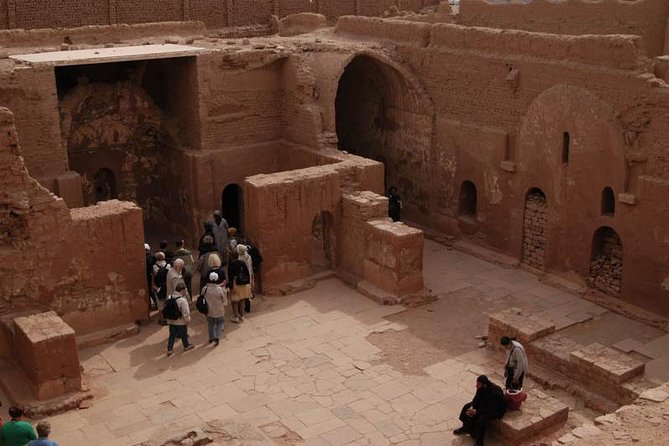
Edfu is dedicated to Horus, the falcon-headed god associated with kingship and the sky. Its inscriptions preserve scenes connected with the conflict between Horus and Seth, often called the sacred drama. The temple’s relatively complete form helps you picture how a major Egyptian sanctuary functioned, from its monumental entrance to its ceremonial spaces.
The visit is especially valuable for anyone who has already seen older ruins and wants to understand what a more intact temple looked like. Your guide’s explanation is important because the inscriptions are not decorative filler. They describe religious stories, rituals, and the authority of the gods and king.
The ship then continues to Kom Ombo. This temple is unusual because it served two gods: Sobek, the crocodile god linked with the Nile, military strength, and fertility, and Horus, connected with the sky and kingship.
Plan about two hours here. The shared design gives Kom Ombo its appeal. One side relates to Sobek and the other to Horus, making the site a clear lesson in how Egyptian worship could accommodate different traditions in one place.
The schedule can feel busy on day three. You are visiting two major temples, often around the ship’s sailing timetable. Keep track of where and when to meet your guide. Clear pickup instructions matter, and it is reasonable to ask for them before leaving the vessel rather than trying to sort them out at the ruins.
More Nile Cruises in Luxor
- 5 Days Private Guided Nile River Cruise Tour from Luxor to Aswan
★ 5.0 · 229 reviews - Historia Hotel Nile Cruise, Mon. from Luxor 4 nts inc. Excursions
★ 5.0 · 185 reviews - From Luxor: 5-Day Nile Cruise to Aswan with Balloon Ride
★ 4.2 · 168 reviews - 4 Days Aswan and Luxor Nile cruise&Abu Simbel by plane from Cairo
★ 5.0 · 155 reviews
Day four: Aswan’s engineering and the rescued temple of Isis
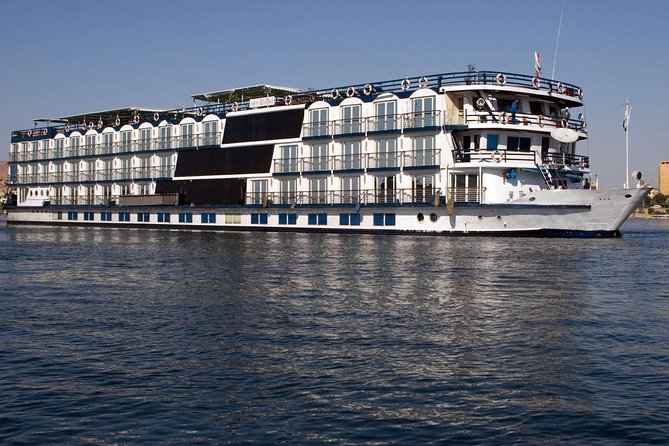
By day four, the cruise reaches Aswan. After breakfast, the program begins with the Aswan High Dam, a one-hour visit.
The dam is a modern counterpoint to the ancient monuments. It controls the Nile’s water supply, and the tour description notes that about three years of Nile water can be stored. That detail helps explain why the dam matters to Egypt, even though it lacks the carved columns and royal statues found elsewhere on the route.
Next comes the Unfinished Obelisk, also about one hour. The enormous stone remains in the Aswan quarry, showing how ancient workers began shaping a monument and then abandoned it after a flaw appeared. The stated weight is about 1,168 tons in its unfinished condition, with a projected finished weight of roughly 1,200 tons.
The quarry visit gives you something that the polished temples cannot: a look at the work behind ancient construction. You can see the stone still attached to the bedrock rather than only the finished object moved into a ceremonial setting. The site also connects Aswan to pyramid building, since casing stones for the pyramids at Giza came from this area.
The final major visit is Philae Temple, reached as part of a two-hour excursion. Dedicated to Isis, associated here with health, marriage, and wisdom, Philae is one of Aswan’s most attractive ancient sites. Its position on an island gives the visit a different feel from the inland temples and adds a boat transfer to the outing.
The tour returns you to the cruise ship after Philae. By this point, the program has covered the main sights included in the package, but it has also delivered four early starts or tightly timed sightseeing days. I would protect some quiet time on deck. The Nile itself is part of the attraction, not just the transport between monuments.
Day five: choose Abu Simbel, Nubian Village, or a slower Aswan morning
After breakfast, you leave the ship in Aswan. The listed three-hour opportunity is free of charge, but the optional tours are not included.
You can use this time for Abu Simbel, Nubian Village, or independent time enjoying Aswan’s sights. Since no optional-tour price is provided, confirm the cost and pickup details before adding anything.
Abu Simbel is the choice for visitors who want another major pharaonic monument. Nubian Village offers a different cultural focus. Staying in Aswan may be the better option if you have had enough early starts or if your onward transport is soon.
The trip ends in Aswan Governorate. The advertised start is in Luxor City, with pickup also available from a Luxor hotel, railway station, or airport.
Life aboard the ship: food, service, and cabin reality
The cruise includes four breakfasts, four lunches, and four dinners. Food is one of the more reliable pleasures of the package, with several passengers praising the meals, variety, and attentive dining service. One especially positive account singled out an Egyptian dinner, while another described the food and crew care as excellent.
The staff also receive strong praise in the best accounts. A crew arranged a birthday cake for one passenger, and guides named Samir and Mohamed Mousa were praised for being friendly, organized, and helpful. Those personal touches can make a scheduled tour feel warmer.
Still, the ship itself is the most important uncertainty. Some cabins appear comfortable and clean, while other reports describe tired interiors, dirty bathrooms, worn carpeting, poor air conditioning, and beds that caused itching. Engine-side cabins were associated with loud machinery and diesel odors, and a nearby ship’s pumps created nighttime noise for at least one passenger.
I would make three requests before departure:
- Ask for the exact ship name and what happens if the operator changes vessels.
- Request a cabin away from the engines if noise or fumes affect your sleep or breathing.
- Confirm how your family or group will be assigned so you are not separated.
Wi-Fi is not included in the package, and some accounts report that it is paid on board. Ask about current access and cost before relying on the ship’s connection.
The guide can make or break the archaeology
The itinerary includes an Egyptologist guide throughout the excursions. That is a major benefit, since Karnak, the Valley of the Kings, and Kom Ombo reward explanation rather than hurried photography.
Guide quality may vary. Samir and Mohamed Mousa received especially warm praise for organization, friendliness, and communication. Another guide helped arrange optional Abu Simbel and a hot-air-balloon trip over the Valley of the Kings, though both activities cost extra.
Language ability also matters. One Italian-speaking passenger had trouble with a guide’s communication and felt visits were rushed, then had a much better experience after a replacement guide took over. If you need a particular language, confirm it before booking and repeat the request when you receive your guide assignment.
Ask each day for the meeting time, meeting place, and expected return time. This is simple advice, but it protects you from confusion when several cruise ships are moored together and excursions run on tight schedules.
Who will enjoy this Nile cruise most
I would recommend this trip to you if you want the main Luxor to Aswan sights in one organized package. It suits first-time visitors who prefer a guide, included transport, and fixed meals over arranging each temple independently.
It is also a good match for families and small private groups, since only your group participates in the private tour arrangement. Group discounts may be available, though the amount is not specified.
You should think carefully if you are sensitive to noise, odors, poor air conditioning, or inconsistent room standards. The advertised 5-star category may not feel like a luxury hotel in every cabin or on every assigned ship.
This is also not ideal for someone who wants long, unhurried visits at each monument. The schedule covers a lot, and the river cruise provides relaxation between stops, but the sightseeing days remain structured.
Should you book the Luxor to Aswan cruise?
I would book this cruise for the route, the included archaeology, and the ease of moving from Luxor to Aswan without repeatedly arranging cars and hotels. A 4.7 rating from 108 ratings and a 94 percent recommendation rate reflect a generally positive experience, especially for the food, crew, river views, and strong guides.
I would not book it without asking detailed questions about the vessel and cabin. The gap between excellent accounts and serious complaints about ship condition is too large to ignore.
If the operator confirms a suitable ship, keeps your group together, and can provide a quiet cabin, the $1,000.83 price offers a practical way to see Egypt’s classic Nile route. If cabin quality matters as much as the temples, compare the vessel details before committing.
FAQ
How long is the Nile cruise?
The experience lasts approximately five days and includes four nights aboard the cruise ship.
Where does the cruise start?
The cruise starts in Luxor City, with pickup available from a hotel, railway station, or airport in Luxor.
Where does the cruise end?
The cruise ends in Aswan Governorate after you disembark on the fifth morning.
Are meals included?
Yes. The package includes four breakfasts, four lunches, and four dinners on a full-board basis.
Are entrance fees included?
Yes. Admission is included for Karnak Temple, Luxor Temple, the Valley of the Kings, Hatshepsut’s Temple, Edfu Temple, Kom Ombo Temple, the High Dam, the Unfinished Obelisk, and Philae Temple.
Is an Egyptologist guide included?
Yes. An Egyptologist guide accompanies the listed excursions.
Are Abu Simbel and Nubian Village included?
No. On day five, Abu Simbel and Nubian Village are optional tours and are not included in the package price.
Is tipping included?
No. Tipping is not included. The package does include service charges and taxes, but gratuities remain your responsibility.
More 5-Day Experiences in Luxor
- Luxury 5 Days Nile River Cruise from Luxor to Aswan with Private Tour Guide
★ 5.0 · 114 reviews - Nile cruise 5 days Private full board accommodation transferred guided tours
★ 4.0 · 104 reviews - 5-Day Nile Cruise to Aswan from Luxor with Hot Air Balloon Ride
★ 4.5 · 87 reviews - 5 Day 4 Night – Deluxe Nile Cruise Luxor to Aswan – Private Tour
★ 5.0 · 86 reviews
Just added around Luxor
- Private Tour foll day to East and West Banks of Luxor★ 5.0 · 23 reviews
- East and West Bank Luxor★ 5.0 · 23 reviews
- Full Day Tour to Luxor (East & West Bank)★ 5.0 · 23 reviews
- Big brother travel★ 5.0 · 23 reviews
- Luxor Day Tour :Valley of Kings & queen & Hatshepsut & Habu city★ 5.0 · 23 reviews
- Luxor: Scenic Camel or Horse Ride★ 3.9 · 24 reviews
- From Cairo: 4-Day Nile Cruise from Aswan to Luxor with Meals★ 4.4 · 24 reviews
- Traditional Egyptian Breakfast at the AlHabib Arabian Horse Farm★ 5.0 · 24 reviews
Nile Cruises, compared.

4-Days Nile Cruise From Aswan To Luxor including Abu Simbel and Hot Air Balloon
Read our review →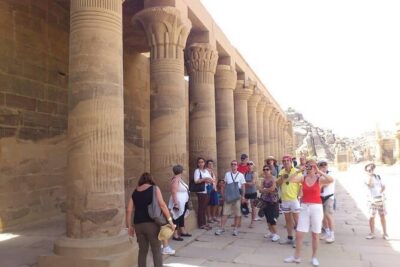
4-Day 3-Night Nile Cruise from Aswan to Luxor including Abu Simbel, Air Balloon
Read our review →
4-Day Nile Cruise from Aswan to Luxor with Guide
Read our review →4-Days Nile Cruise From Aswan To Luxor including Abu Simbel and Hot Air Balloon
Read our review →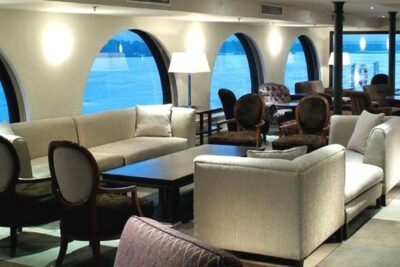
4-Day 3-Night Nile Cruise from Aswan to Luxor – Private Tour
Read our review →4 Days Nile Cruise from Aswan to Luxor including Abu Simbel and Hot Air Balloon
Read our review →
4-Day 3-Night Nile Cruise from Aswan to Luxor With Balloon and Abu Simbel
Read our review →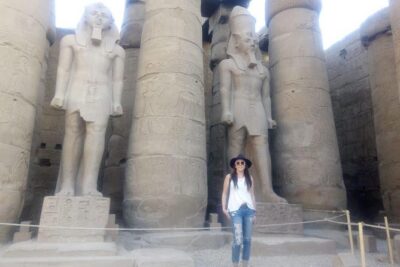
4-Days Nile Cruise Aswan&Luxor,Hot Air Balloon&Abu Simbel.Hot deal
Read our review →Browse the lists this tour appears in