
Reviewed · NILE CRUISES
Historia Hotel Nile Cruise, Mon. from Luxor 4 nts inc. Excursions
Four nights turns the Nile into your hallway. Historia combines a modern boutique ship with a well-planned run of Egypt’s great temples, from Karnak and Luxor to Philae and the Unfinished Obelisk. You unpack once, eat aboard, and wake to a new stretch of river scenery.
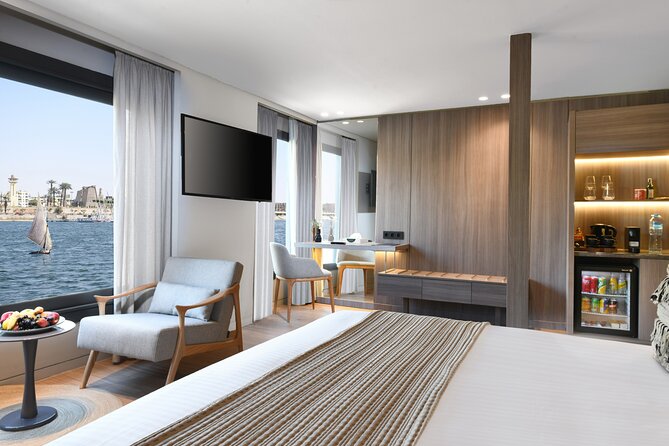
I especially like the clean, spacious rooms, many with clear Nile views, and the consistently praised service from staff members such as Khaled, Hussein El Omada, ElHussein, and Chef Mahmoud. The food is another strong point, with fresh meals, special attention to dietary needs, and an Egyptian buffet night. The main drawback is practical: the internet can be unreliable, and the $3,498 price per person makes this a serious luxury purchase rather than a casual add-on.
This is a five-day cruise from Luxor to Aswan, with four breakfasts, four lunches, four dinners, transport during excursions, entrance fees, and assistance included. The sightseeing takes place in a shared cruise group, although Historia also describes private cars and personal guides when a sightseeing package is booked. Confirm exactly what your reservation includes before paying.
In This Review
- Key points to know before booking
- What $3,498 buys you on the Nile
- Boarding in Luxor and seeing Karnak first
- West Bank wonders: the Valley of the Kings and Hatshepsut
- Sailing south to Kom Ombo and Edfu
- Aswan’s Philae Temple and the Unfinished Obelisk
- The ship: modern rooms, food, and service
- The daily rhythm and group experience
- Who will enjoy Historia most
- Should you book this Nile cruise?
- FAQ
- How long is the Historia Nile Cruise?
- Where does the cruise begin?
- What time does the cruise start?
- Where does the cruise end?
- Which temples are included?
- Are entrance fees included?
- Are meals included?
- Is transportation included?
- Are the excursions private?
- Can I cancel the booking for a refund?
Key points to know before booking
- The route covers Egypt’s essential Nile temples: Karnak, Luxor Temple, the Valley of the Kings, Hatshepsut, Kom Ombo, Edfu, Philae, and Aswan.
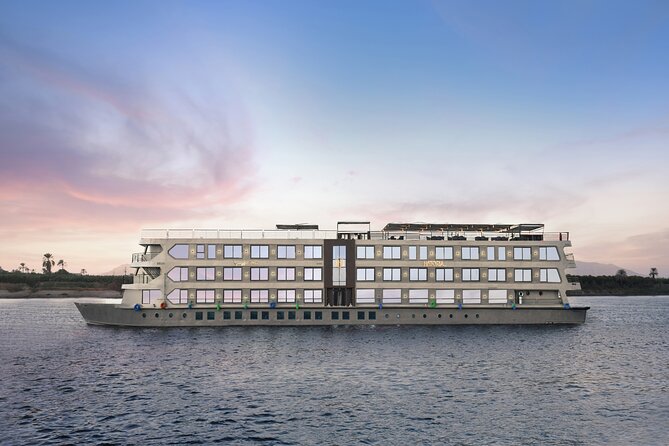
- The ship is designed as a floating boutique hotel: Expect modern rooms, Nile views, a polished public atmosphere, a top deck, dining, entertainment, and a Seneb spa.
- Food receives unusually strong praise: Chef Mahmoud and his team are repeatedly singled out for flavor, presentation, variety, and care with food restrictions.
- The cruise runs from Luxor Airport to Aswan: Pickup from Luxor Airport begins at noon, while the final drop-off is at the Nile Cruise Port on Nile Corniche Street.
- Excursions are included in the listed price: Admission tickets, sightseeing fees, air-conditioned vehicle transfers, and cruise excursions are part of the package.
- Plan around the cancellation terms: The booking is non-refundable and cannot be changed, except when poor weather or insufficient numbers cause the operator to cancel.
What $3,498 buys you on the Nile
At $3,498 per person, Historia is priced for people who want comfort, service, and a single organized package. This is not the cheapest way to travel between Luxor and Aswan. You are paying for the ship, four nights of full-board dining, sightseeing fees, transfers during the program, and organized assistance.
The value improves if you would otherwise arrange each temple visit separately. Entrance fees are included, as are breakfast, lunch, and dinner for all four cruise nights. The package also removes much of the daily guesswork. You do not need to find a taxi after every stop or negotiate with a driver before sunrise.
Still, the price needs a close look. Transportation to and from Historia Nile Cruise is not included. The listed start is Luxor Airport, and the cruise ends at Diverso Cafe on Nile Corniche Street in Aswan, at the Nile Cruise Port. If you arrive somewhere else in Luxor or leave Aswan by airport transfer, train, or private car, budget for those extra arrangements.
The sightseeing is described as taking place in a shared Nile cruise group, with a maximum of two travelers noted in the booking information. That wording is worth clarifying because the cruise description also refers to private cars and in-person guides for a sightseeing package. Ask if your exact booking includes private guiding or shared excursions.
More Boat Trips in Luxor
- Hurghada: 2-Day Luxor Tour with Hotel, Balloon, & Boat Ride
★ 4.5 · 1,113 reviews - From Luxor: 3-Night Nile Cruise to Aswan and Hot Air Balloon
★ 3.7 · 297 reviews - Amazing Sunset sailing by Felucca in Luxor -2 Hours (Private)
★ 5.0 · 255 reviews
Boarding in Luxor and seeing Karnak first
The first sightseeing day begins with Karnak Temple, one of the biggest religious complexes ever built. Allow about two hours here. That sounds generous, but Karnak rewards a slow pace because it is not one single building. It is a large collection of pylons, courtyards, chapels, columns, and damaged structures built and rebuilt over many centuries.
The setting can feel overwhelming at first. A good Egyptologist guide matters here, since the scale alone does not explain how the complex worked. The information provided for this cruise identifies guides such as Mohammed and Terek in particularly positive terms. Mohammed is also noted for speaking excellent Spanish, which may be useful for Spanish-speaking passengers.
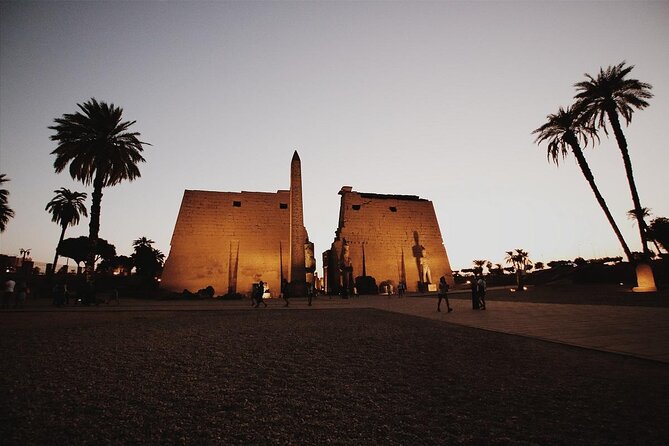
After Karnak, you visit Luxor Temple for another two hours. It sits on the east bank and has a different feel from Karnak. Rather than serving only as a vast temple compound, Luxor Temple was linked to the renewal of kingship. The columns, statues, and nighttime atmosphere make it one of the most memorable stops on the route.
These first visits are an efficient introduction to ancient Thebes. The trade-off is that two major sites in one day can leave you tired, especially in Egypt’s heat. Wear practical shoes, carry water, and use the cruise as a quiet place to recover afterward.
West Bank wonders: the Valley of the Kings and Hatshepsut
Day two moves to the west bank and the Valley of the Kings. The valley contains 63 known tombs, ranging from simple chambers to elaborate corridors and rooms. The exact tombs open to visitors can vary, so you should not assume every famous pharaoh’s burial place will be part of your visit.
The attraction is the tomb decoration and the sense of how much labor went into these underground burial places. Ramses II, Tutankhamun, and Seti I are associated with the valley, but the experience is not just a checklist of royal names. It is the chance to see painted walls and carved passages in their original setting.
The two-hour allocation includes the practical business of moving through the site, so your guide’s organization will matter. The heat can be intense, and the ground may be uneven. If you have concerns about walking, ask the operator for current details before booking.
Next comes the Temple of Hatshepsut at Deir el-Bahari. The temple rises beneath the cliffs, with broad terraces and a strong horizontal design. Its reliefs tell the story of Hatshepsut’s divine birth and her claim to kingship as a female pharaoh.
I like the contrast between these two sites. The Valley of the Kings takes you underground into private royal burial spaces. Hatshepsut’s temple opens outward toward the cliffs and sky. Two hours at each stop gives you time to understand the basic layout without turning the day into a rushed photo stop.
Sailing south to Kom Ombo and Edfu
The third day brings two temples that are especially rewarding for their clear designs. Kom Ombo is a double temple from the Ptolemaic period. Its halls, courts, rooms, and sanctuaries are duplicated for two gods, with Sobek, the crocodile god, on one side and Horus the Elder on the other.
The symmetry makes Kom Ombo easy to understand, even if you know little about Egyptian religion. You can literally follow the two-part plan through the site. The temple also offers a different visual experience from the larger monuments around Luxor, with the Nile close by and the remains set against the river environment.
Edfu Temple, dedicated to Horus, is one of the best-preserved ancient Egyptian temples. Built from sandstone between 237 BC and 57 BC, it retains extensive walls and inscriptions. Those texts provide clues about religion, myths, and the Egyptian language.
The two-hour visits are a good length for both sites. You get enough time for a guided explanation and a look at the major details, but you are not asked to spend half a day at each ruin. One practical point: the itinerary calls the stop Temple of Horus and then identifies it as Edfu Temple. They are the same place.
These days also show the advantage of a cruise. You can visit an important monument, return to the ship for meals and rest, then continue along the river without changing hotels. The schedule is still structured, so this will not suit you if you prefer to linger for hours at one site or wander independently.
More Nile Cruises in Luxor
- 5 Days Private Guided Nile River Cruise Tour from Luxor to Aswan
★ 5.0 · 229 reviews - From Luxor: 5-Day Nile Cruise to Aswan with Balloon Ride
★ 4.2 · 168 reviews - 4 Days Aswan and Luxor Nile cruise&Abu Simbel by plane from Cairo
★ 5.0 · 155 reviews - 4 Nights Luxor to Aswan Nile cruise with Abu Simbel&Air Balloon
★ 5.0 · 155 reviews
Aswan’s Philae Temple and the Unfinished Obelisk
Day four is devoted to Aswan. The first stop is Philae Temple, associated in the itinerary with Elephantine Island and the area near the First Cataract. The site connects ancient worship with Aswan’s role at the southern edge of Upper Egypt and its old trade links in ivory.
The information provided does not specify every transfer detail at Philae, so confirm how the final approach is handled. The temple’s island setting is part of its appeal, but the exact boat or vehicle arrangements should not be assumed from the general cruise description.
The second stop is the Unfinished Obelisk in an Aswan granite quarry. This is one of those places where an incomplete monument teaches more than a finished one. Cracks appeared while workers were carving the obelisk from bedrock, so the project was abandoned.
If completed, it would have been about 42 meters high and weighed roughly 1,090 tons. It was intended to be around one-third larger than any other ancient Egyptian obelisk. The visible marks offer a direct look at the stone-working process, rather than only the polished result.
The two-hour visit is enough to grasp the scale and the reason the obelisk was left behind. It is also a reminder that ancient construction was not magic. It involved planning, testing, and the occasional very expensive mistake.
The ship: modern rooms, food, and service
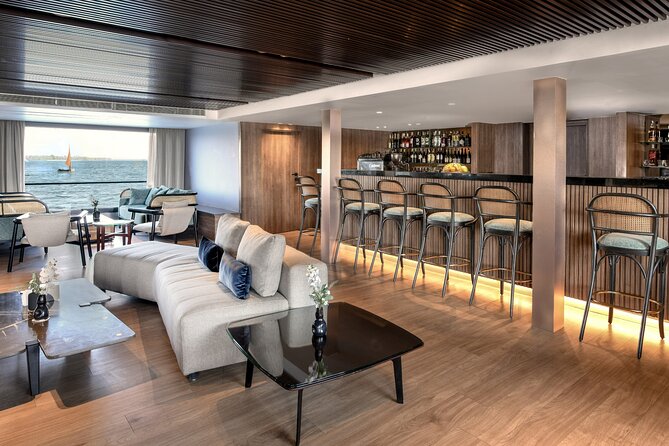
Historia is presented as a small luxury cruise rather than a huge floating resort. The rooms are repeatedly described as modern, clean, spacious, and comfortable, with clear views of the Nile. Some passengers received complimentary suite upgrades, but you should treat that as a possibility rather than a promised feature.
The strongest part of the onboard experience appears to be the staff. Individual names such as Khaled, Hussein El Omada, ElHussein, Tarek, and Saber are connected with warm service and personal attention. That matters on a short cruise, because a friendly crew can make scheduled meals, transfers, and excursion times feel easy instead of mechanical.
Food is another major reason to consider Historia. Chef Mahmoud and his team receive specific praise for fresh, beautifully presented meals, good variety, and willingness to prepare special dishes for children and people with food restrictions. One evening includes an Egyptian buffet, and dining on deck at sunset is a particularly appealing part of the experience.
The cruise includes full board, but the material does not specify every menu, beverage, or dining timetable. If you have allergies or strict dietary requirements, tell the company before departure and confirm what can be provided.
A top deck gives you a place to watch the river pass. The views are the point here: fields, villages, desert edges, and changing light along the Nile. Onboard entertainment is also offered, including a praised Egyptian-themed evening. The Seneb spa adds another comfort-focused feature, though the details of treatments and prices are not provided.
The weak spot is internet access. It may work, but reliability is uncertain. If you need constant contact, treat the cruise as a place to slow down rather than a dependable office. Do not rely on onboard internet for an urgent arrangement.
The daily rhythm and group experience
This is an organized program with a clear structure. You start in Luxor at noon, visit two major sites on the first day, spend the next three days moving through major temples and Aswan monuments, then enjoy Aswan views before checkout on day five.
The listed stop times are generally two hours each. That gives you a useful framework, but it does not mean two uninterrupted hours inside every monument. Transfers, meeting points, security, and the pace of the group all use part of the day.
The cruise excursions are shared group outings according to the package details. That can keep costs under control and make transport simple, but it also means you have less freedom than with a private itinerary. If you want to linger at Hatshepsut, skip a stop, or photograph the river at your own pace, ask about a private option.
Most travelers can participate, and the experience is described as being near public transportation. Still, the itinerary involves ancient sites, outdoor walking, uneven surfaces, and heat. The available information does not provide detailed mobility guidance, so ask Historia directly if that is important for you.
Who will enjoy Historia most
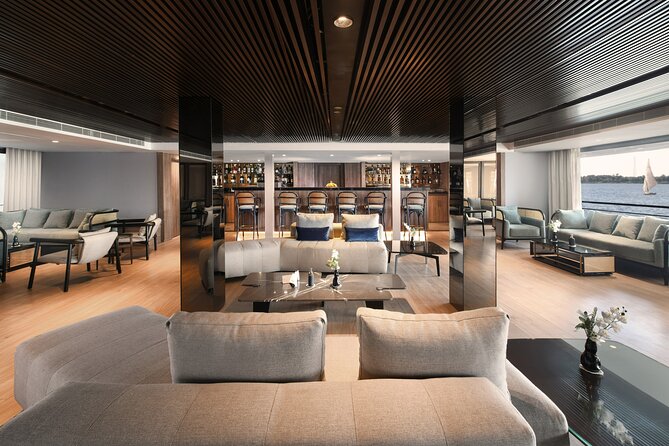
I would recommend this cruise to you if you want the classic Luxor to Aswan route with comfort handled in one booking. It works well for first-time visitors to Egypt, couples seeking a polished trip, families who value full-board meals, and anyone who prefers a guide to explain what they are seeing.
It is also a good fit if food matters to you. The attention from Chef Mahmoud and the kitchen team is one of the clearest strengths, particularly if you need meals adapted to dietary restrictions.
I would be more cautious if you are watching your budget, need dependable internet, or prefer a loose schedule. The all-in price is high, transportation before and after the cruise is extra, and the non-refundable policy leaves little room for a change of plans.
Booking confirmation is expected within 48 hours and depends on availability. The experience can also be canceled if poor weather affects the operation or if the minimum number of travelers is not reached. In either case, a different date or experience, or a full refund, is offered. For a personal cancellation, however, the amount paid is not refunded.
Should you book this Nile cruise?
Book Historia if you want a high-comfort Nile itinerary with modern rooms, strong food, attentive service, and the major temples already arranged. The cruise turns a complicated stretch of Egypt into a tidy five-day journey, while still giving you real time at Karnak, Luxor Temple, the royal tombs, Edfu, Kom Ombo, and Aswan.
Before paying, confirm three points: how your airport and final transfers work, whether your sightseeing is shared or private, and what room category is guaranteed. If those details suit you and the price fits your budget, Historia looks like a polished and rewarding way to see the Nile.
FAQ
How long is the Historia Nile Cruise?
The cruise lasts approximately five days and includes four nights aboard the ship.
Where does the cruise begin?
The stated starting point is Luxor Airport in Luxor, Egypt.
What time does the cruise start?
The listed start time is 12:00 pm.
Where does the cruise end?
It ends in Aswan at the Nile Cruise Port on Nile Corniche Street, with the listed end point near Diverso Cafe.
Which temples are included?
The itinerary includes Karnak Temple, Luxor Temple, the Valley of the Kings, the Temple of Hatshepsut, Kom Ombo Temple, Edfu Temple, Philae Temple, and the Unfinished Obelisk.
Are entrance fees included?
Yes. All fees and taxes, sightseeing fees, and admission tickets for the listed excursions are included.
Are meals included?
Yes. The package includes four breakfasts, four lunches, and four dinners on a full-board basis.
Is transportation included?
Transfers by modern air-conditioned deluxe vehicle during the excursions are included. Transportation to and from Historia Nile Cruise is not included.
Are the excursions private?
The package describes the Nile Cruise excursions as shared group excursions. Historia also describes private cars and personal guides for certain sightseeing packages, so you should confirm the exact arrangement for your booking.
Can I cancel the booking for a refund?
The experience is non-refundable and cannot be changed for personal reasons. If Historia cancels because of poor weather or because the minimum number of travelers is not met, you will be offered another date or experience, or a full refund.
Just added around Luxor
- Private Tour foll day to East and West Banks of Luxor★ 5.0 · 23 reviews
- East and West Bank Luxor★ 5.0 · 23 reviews
- Full Day Tour to Luxor (East & West Bank)★ 5.0 · 23 reviews
- Big brother travel★ 5.0 · 23 reviews
- Luxor Day Tour :Valley of Kings & queen & Hatshepsut & Habu city★ 5.0 · 23 reviews
- Luxor: Scenic Camel or Horse Ride★ 3.9 · 24 reviews
- From Cairo: 4-Day Nile Cruise from Aswan to Luxor with Meals★ 4.4 · 24 reviews
- Traditional Egyptian Breakfast at the AlHabib Arabian Horse Farm★ 5.0 · 24 reviews
Nile Cruises, compared.

4-Days Nile Cruise From Aswan To Luxor including Abu Simbel and Hot Air Balloon
Read our review →
4-Day 3-Night Nile Cruise from Aswan to Luxor including Abu Simbel, Air Balloon
Read our review →
4-Day Nile Cruise from Aswan to Luxor with Guide
Read our review →4-Days Nile Cruise From Aswan To Luxor including Abu Simbel and Hot Air Balloon
Read our review →
4-Day 3-Night Nile Cruise from Aswan to Luxor – Private Tour
Read our review →4 Days Nile Cruise from Aswan to Luxor including Abu Simbel and Hot Air Balloon
Read our review →
4-Day 3-Night Nile Cruise from Aswan to Luxor With Balloon and Abu Simbel
Read our review →
4-Days Nile Cruise Aswan&Luxor,Hot Air Balloon&Abu Simbel.Hot deal
Read our review →Browse the lists this tour appears in