
Reviewed · FULL-DAY
All-Inclusive Full Day To Explore Luxor’s East & West Bank
Ancient Egypt comes thick and fast here. This private six-hour tour links Luxor’s biggest sights, from the painted tombs of the Valley of the Kings to the giant columns of Karnak. I especially like the private vehicle and guide, which let you move between the East and West Banks without sorting out taxis or negotiating stops yourself. I also like that the main entrance fees, bottled water, transport, and hotel pickup are included.
The main caution is the pace. Five major stops are packed into roughly six hours, and each deserves more time than the schedule allows. Lunch is not included, and special tombs such as Tutankhamun, Ramses VI, and Seti I cost extra. Still, at $89 per person, this is a strong choice if you have one busy day in Luxor and want the major monuments explained rather than simply photographed.
In This Review
- What makes this Luxor tour useful
- How the six-hour route works
- Karnak Temple: one hour among giant columns
- Luxor Temple: history layered over history
- Crossing to the West Bank and the Valley of the Kings
- Hatshepsut’s temple and the story of Punt
- The Colossi of Memnon: a quick but worthwhile pause
- What the guide adds to the monuments
- Is $89 good value?
- Who should book this day?
- Practical details before you go
- Should you book it?
- FAQ
- How long does the Luxor East and West Bank tour last?
- Is the tour private?
- Which sites are included?
- Are entrance fees included?
- Is lunch included?
- Is hotel pickup available?
- Is transportation included?
- Is a guide included?
- Are tips included in the price?
- What level of fitness is required?
What makes this Luxor tour useful
- Karnak and Luxor temples share the morning: You see Luxor’s two major East Bank monuments in one practical route.
- The West Bank includes three essential stops: The Valley of the Kings, Hatshepsut’s temple, and the Colossi of Memnon give you a clear picture of royal burial and temple building.
- Your group stays private: Only your own party takes part, with private transportation and an Egyptologist guide.
- Main admission fees are covered: You do not need to pay again for the standard entries listed in the tour.
- The guides are a major strength: Names praised in connection with the company include Rania Raouf, Shimaa Arabi, Ghada Kamel, Ahmed Aziz, Emil, and Mohamed Kamel Soliman.
- The itinerary is efficient but demanding: Expect plenty of walking, steps, sun, and standing, with a moderate fitness level recommended.
How the six-hour route works
The order can be adjusted by the guide, but the advertised plan begins on Luxor’s East Bank, crosses to the West Bank, then returns you to your hotel. The listed sightseeing time adds up to about five hours, leaving the rest for driving, pickup, security checks, and moving between sites.
That distinction matters. This is not a slow archaeological study with long café breaks. It is a concentrated introduction to Luxor’s essential monuments. If you have only one day, I see the appeal. If you have two or more days, I would consider splitting the East and West Banks into separate half-day outings.
The private format helps. You are not waiting for a large coach to load, and you can ask your guide to adjust the amount of explanation or move on when your attention starts to fade. The company has arranged private programs for families and longer Egypt trips, and the strongest praise repeatedly goes to the guides’ storytelling, patience, and ability to adapt plans.
More things to do in Luxor:
- Hurghada: Luxor Valley of the Kings & Tutankhamun Tomb Trip
★ 4.7 · 13,208 reviews - Luxor Day Trip from Hurghada Small Group & Tutankhamun Tomb
★ 4.8 · 5,366 reviews - Hot Air Balloon Ride in Luxor Egypt with Transfers Included
★ 5.0 · 4,319 reviews
Karnak Temple: one hour among giant columns
Karnak is the biggest site on this route and arguably the place where you first grasp the scale of ancient Thebes. It is not one single temple. It is a vast group of temples, chapels, pylons, and courtyards built and altered across many centuries, beginning in the Middle Kingdom and continuing into the Ptolemaic period.
Your guide will connect the buildings to the Theban triad: Amun, his consort Mut, and their son Khonsu. That context gives the stonework a purpose. You are not just walking through a field of ruins. You are moving through a major religious center that grew as rulers added their own mark.
The one-hour allocation is enough for an orientation and the main highlights, but it is not generous. Karnak is physically large, and the open-air setting means heat and glare can become part of the visit. Wear practical shoes, carry the supplied water, and keep your hat or other sun protection handy.
I would pay close attention to the guide here. A good explanation can turn a forest of columns into a readable sequence of halls, processional routes, and sacred spaces. Several guides associated with Egypt Tailor Made, including Rania Raouf and Shimaa Arabi, have been praised for bringing complicated subjects to life through stories and clear explanations.
Luxor Temple: history layered over history
Luxor Temple offers a different mood from Karnak. It is more compact, and its walls preserve scenes connected with ancient festivals. The inner section was built under Amenhotep III, while Ramses II added the outer portion, so the temple shows how different rulers reshaped important religious sites.
One of the most interesting details is the later use of the temple. Inside, you can see the mosque of Abu Al-Haggag, built over the remains of a church, which itself occupied part of the ancient complex. Chapels connected with Thutmose III and Alexander the Great are also found toward the rear.
That layering makes Luxor Temple especially rewarding for anyone interested in how monuments change over time. Ancient Egyptian, Christian, Islamic, and later uses are all present in the same place. The guide’s interpretation matters because the details are easy to miss if you simply follow the central path.
The scheduled hour should give you enough time to see the major sections and ask questions. It may feel short if you want to study every relief. I would use this stop to focus on the festival scenes, the later religious additions, and the contrast with Karnak rather than trying to inspect every wall.
Crossing to the West Bank and the Valley of the Kings
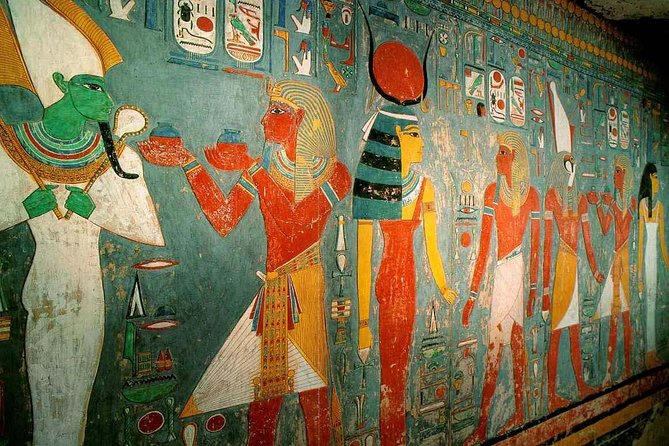
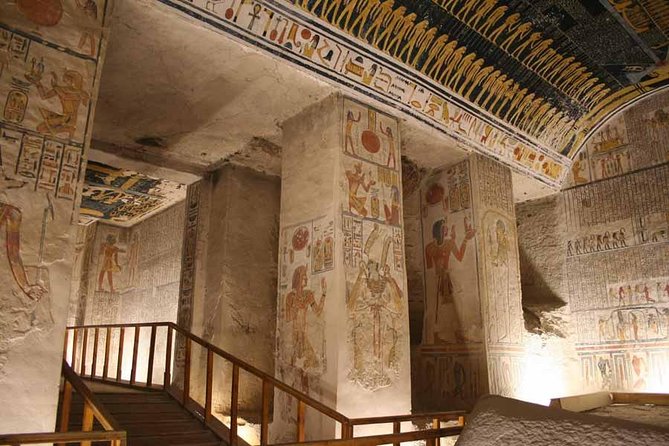
The West Bank changes the subject from public worship to royal burial. In the Valley of the Kings, pharaohs of the New Kingdom were buried in rock-cut tombs, including Ramses II and the young ruler Tutankhamun.
The standard admission covers the main entrance, but it does not include optional tomb tickets. The tour specifically identifies the tombs of Tutankhamun, Ramses VI, and Seti I as additional purchases. That is important when judging the $89 price. You receive the core visit, but the most famous or specially ticketed tombs may require more money.
The Valley is also the point where expectations should be realistic. You may find that the tombs available for entry change, and the experience depends on which ones are open under the standard ticket. Your guide can help you understand the decoration and burial purpose, but the tour details do not promise entry to Tutankhamun’s tomb or any other particular optional tomb.
An hour here gives you a focused look, not an exhaustive survey. Tomb interiors can involve uneven ground, narrow passages, stairs, and heat. The stated moderate fitness requirement is relevant, even though this is not presented as a strenuous hike.
I would ask your guide at the start of the day which tombs are included and which optional tickets are available. That simple question helps you decide if an extra charge is worthwhile before you reach the entrance.
A few more Luxor trips worth weighing up
- Luxor: Shared Full-Day Tour to Luxor West and East Banks
★ 4.5 · 1,812 reviews - Full Day Tour to East and West Banks of Luxor
★ 5.0 · 1,449 reviews - Luxor : Full Day Tour to Luxor West and East Banks & Lunch
★ 5.0 · 870 reviews - Full Day Tour of Luxor West Bank Temples and Tombs (Private)
★ 5.0 · 722 reviews
Hatshepsut’s temple and the story of Punt
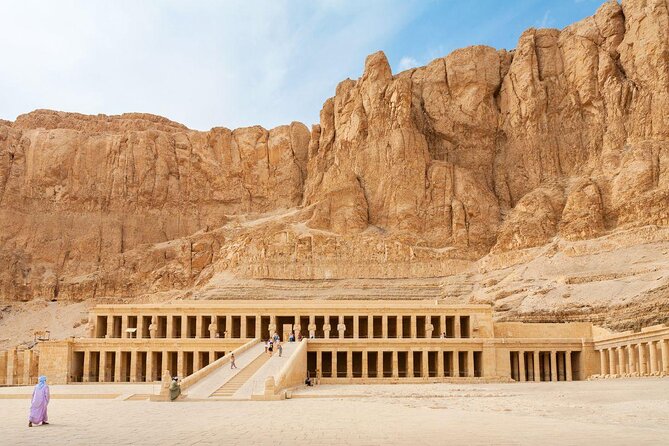
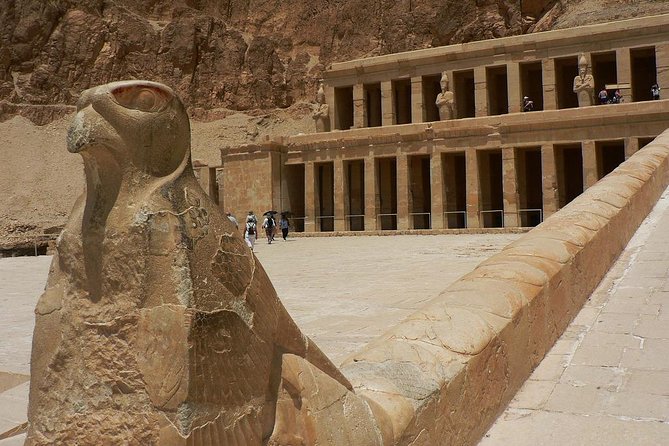
The Mortuary Temple of Hatshepsut is one of the most visually ordered stops. Its three levels rise against the cliffs at Deir el-Bahari, connected by ramps. Compared with the crowded tombs, the broad terraces give you a sense of ceremony and royal display.
The wall scenes focus on Hatshepsut’s divine birth and her trading expedition to Punt. Those reliefs are valuable because they show more than names and dates. They present how the queen wanted her rule understood and record a major commercial journey through images of ships, goods, and foreign lands.
The temple was dedicated mainly to Amun-Ra and is also known as the Holy of Holies. Your guide can help separate the building’s religious role from the modern habit of treating it as simply a striking monument beneath the cliffs.
The one-hour stop includes time for the approach, terraces, and main reliefs, but the ramps and open spaces can be tiring in strong sun. If your knees or balance are limited, take the route slowly. The vehicle reduces the strain of getting between sites, but it does not remove the walking required inside them.
The Colossi of Memnon: a quick but worthwhile pause
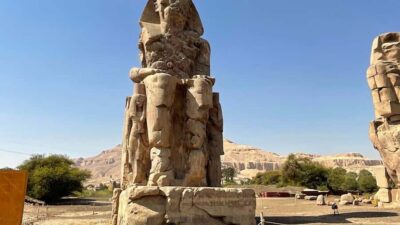
The Colossi of Memnon are two enormous seated statues of Amenhotep III. The scheduled visit lasts only 15 minutes, and that is probably enough for a look, photographs, and a short explanation.
This is not a full archaeological stop. It functions more like a roadside pause between the West Bank monuments. Even so, the scale is impressive, and the statues provide a useful link to the temple-building program of Amenhotep III, whose work you also encounter at Luxor Temple.
I would not expect a long guided visit here. Treat it as a chance to stretch, take in the size of the figures, and let the guide explain what remains of the original setting.
What the guide adds to the monuments
The strongest reason to book this as a private tour is the guide, not simply the air-conditioned vehicle. Luxor’s sites are full of names, gods, rulers, building phases, and repeated symbols. Without help, the details can blur together by midday.
The company’s guides have received especially warm praise for storytelling and care. Rania Raouf is noted for reading hieroglyphs and explaining the stories behind the symbols. Shimaa Arabi is praised for her historical skill, patience with children, and attention to comfort. Ghada Kamel, Ahmed Aziz, Emil, and Mohamed Kamel Soliman are also associated with strong experiences, including flexible scheduling and clear explanations.
Your assigned guide may be someone else. The useful point is to ask for an Egyptologist guide who suits your interests. If you care about architecture, religion, royal succession, or hieroglyphs, say so early. A private tour gives you more room to shape the conversation than a fixed group outing.
The reviews also suggest that guides help with practical choices, including which tombs to visit and where to eat on longer programs. On this tour, lunch is not included, so ask your guide how the timing will work before the day begins.
Is $89 good value?
At $89 per person, the price is reasonable for a private six-hour tour if you value convenience and explanation. The package includes private transportation, an air-conditioned vehicle, an Egyptologist guide, the main entrance fees, bottled water, hotel pickup and drop-off in the East Bank or downtown, taxes, and return transport.
You are paying for more than entry tickets. A private driver saves you from arranging separate rides between the East and West Banks, while the guide gives structure to a dense group of monuments. That is particularly useful for a first visit or for a family that wants one organized day.
The price does not include lunch, other meals, drinks, tips, or optional tomb tickets. Those extras can alter the final cost. If you want Tutankhamun’s tomb, Ramses VI, or Seti I, ask about the current extra fees before booking.
Group discounts are offered, which may improve the value for larger parties. Since the activity is private, the per-person price can also make more sense when shared by a family or group of friends.
Who should book this day?
I would recommend it to a first-time visitor with limited time in Luxor, especially if you want the major temples and tombs in one organized outing. It also suits families, since a private guide can respond to questions and adjust the pace more easily than a large group.
It is a good fit if you prefer history explained in person rather than reading a guidebook at every stop. The company’s strongest feedback centers on guides who are warm, flexible, and able to make ancient subjects understandable.
I would hesitate if you dislike tight schedules or want long, quiet periods at each monument. Luxor rewards slow looking, and six hours cannot give every site the attention it deserves. If you have two days, separate East Bank and West Bank visits may be more comfortable.
The tour also requires moderate physical fitness. You will walk through large temple grounds, cross uneven surfaces, and use ramps or steps at some sites. Summer heat can make the schedule feel harder, though a private vehicle and bottled water help.
Practical details before you go
Pickup is offered from hotels in Luxor’s East Bank and downtown. If you are staying elsewhere, confirm the pickup area before paying.
Bring comfortable walking shoes and clothing suited to strong sun. The supplied vehicle is air-conditioned, but the monuments are open-air sites with limited shade. Keep some time and budget for lunch, drinks, and optional tomb admission.
Confirmation is provided at booking. You can cancel for a full refund if you do so at least 24 hours before the local start time. Changes or cancellations made within 24 hours are not accepted for a refund.
Should you book it?
Book this tour if you have one packed day, want private transport, and care about having an Egyptologist connect the temples, tombs, rulers, and religious ideas. The combination of Karnak, Luxor Temple, the Valley of the Kings, Hatshepsut’s temple, and the Colossi gives you a solid first look at Luxor for a fair price.
Skip it in favor of two half-day visits if you want to linger, avoid midday fatigue, or see several optional tombs. Either way, confirm the assigned guide, included tomb tickets, pickup point, and lunch plan before you go. With those details clear, this is a practical and well-supported introduction to Luxor’s greatest ancient sites.
FAQ
How long does the Luxor East and West Bank tour last?
The tour lasts approximately six hours, including transportation between sites and hotel pickup and drop-off.
Is the tour private?
Yes. Only your own group participates in the activity.
Which sites are included?
The route includes Karnak Temple, Luxor Temple, the Valley of the Kings, Hatshepsut’s Temple at Deir el-Bahari, and the Colossi of Memnon.
Are entrance fees included?
Main entrance fees are included. Optional tickets for tombs such as Tutankhamun, Ramses VI, and Seti I are not included.
Is lunch included?
No. Lunch, other meals, and beverages are not included.
Is hotel pickup available?
Yes. Pickup and drop-off are offered from hotels in Luxor’s East Bank and downtown.
Is transportation included?
Yes. The package includes private transportation and an air-conditioned vehicle.
Is a guide included?
Yes. An Egyptologist tour guide is included.
Are tips included in the price?
No. Tipping is not included.
What level of fitness is required?
A moderate level of physical fitness is recommended because the tour involves walking through temple grounds, tomb areas, and ramps.
Just added around Luxor
- Private Tour foll day to East and West Banks of Luxor★ 5.0 · 23 reviews
- East and West Bank Luxor★ 5.0 · 23 reviews
- Full Day Tour to Luxor (East & West Bank)★ 5.0 · 23 reviews
- Big brother travel★ 5.0 · 23 reviews
- Luxor Day Tour :Valley of Kings & queen & Hatshepsut & Habu city★ 5.0 · 23 reviews
- Luxor: Scenic Camel or Horse Ride★ 3.9 · 24 reviews
- From Cairo: 4-Day Nile Cruise from Aswan to Luxor with Meals★ 4.4 · 24 reviews
- Traditional Egyptian Breakfast at the AlHabib Arabian Horse Farm★ 5.0 · 24 reviews
Full-Day, compared.
Shared Full-Day Tour to Luxor West and East Banks
Read our review →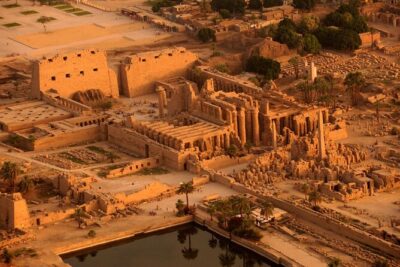
Full Day Tour to East and West Banks of Luxor
Read our review →

Private Full-Day Tour of Historical Alexandria
Read our review →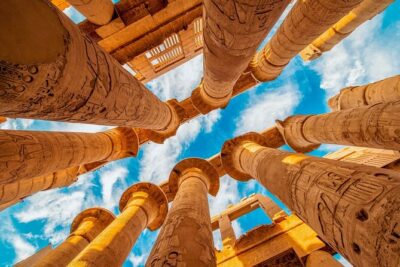
Full Day Tour to Luxor West and East Banks & Lunch
Read our review →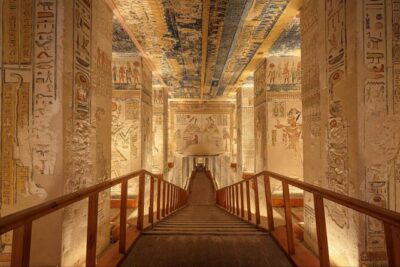
Full Day Tour of Luxor West Bank Temples and Tombs (Private)
Read our review →Browse the lists this tour appears in