
Reviewed · FULL-DAY
Luxor: Shared Full-Day Tour to Luxor West and East Banks
Ancient Egypt rewards an early start. This $90 shared tour packs Luxor’s major monuments into one full day, with an Egyptologist guide connecting tombs, temples, gods, and royal ambition. I like the balance between guided explanations and time to look around on your own, and I like that lunch and East Bank hotel pickup are included. The main drawback is the pace: eight hours is a tight window for five major stops, and the day can stretch longer once driving and group movement are added.
The guide can make or break a day like this. Names praised by guests include Alaa Hassan, Ahmed Bahaa, Gabriel, Adam, Omar, Mena Oweda, and Beshoy, with repeated praise for clear English, patience, humor, photos, and flexible planning. You should expect a small-group format, not the freedom of a private car, and one note mentions that the minibus felt a little cramped.
In This Review
- Key points to know before booking
- Why this one-day Luxor route works
- West bank first: the Valley of the Kings
- Hatshepsut’s three terraces at Deir el-Bahari
- The Colossi of Memnon and a quick royal pause
- Lunch at a local restaurant
- Karnak Temple: the day’s grandest religious complex
- Luxor Temple after sunset or late in the day
- The guide matters more than the vehicle
- Timing, comfort, and the real cost of the day
- Who should book this Luxor tour?
- Should you book it?
- FAQ
- How long does the Luxor tour last?
- Which places are included?
- Is lunch included?
- Are entrance fees included?
- Is hotel pickup included?
- What languages are available?
Key points to know before booking
- Five major Luxor sights in one day: The route covers the Valley of the Kings, Hatshepsut’s temple, the Colossi of Memnon, Karnak Temple, and Luxor Temple.
- The west and east banks tell different stories: The west focuses on royal tombs and funerary monuments, while the east presents grand temples used for worship and ceremony.
- Guide quality is a major strength: Alaa Hassan, Ahmed Bahaa, Gabriel, Adam, Omar, and others are praised for strong explanations, friendly manners, and help with photographs.
- Lunch is part of the package: You eat at a local restaurant, with one meal described as a buffet overlooking a tomato farm.
- Plan for heat and a long day: One guest advises starting early because the schedule includes much walking, driving, and sun.
- Check the booking option carefully: Entrance fees are included only if you choose the option that includes them, and languages other than English may cost extra.
Why this one-day Luxor route works
Luxor is not a place where the headline sights sit around one compact square. The ancient city spreads across both banks of the Nile, and the major monuments need a sensible route and a vehicle between them.
This tour handles the basic geography well. You start on the west bank, where ancient rulers prepared for the afterlife, then stop for lunch before visiting the east bank temples. That order gives the day a clear shape rather than feeling like a random parade of ruins.
At $90 per person, the value comes from combining transport, a guide, lunch, and the main entrance fees if selected. Buying these pieces separately may give you more control, but it also leaves you to arrange movement between sites and find someone to explain what you are seeing.
The shared setup keeps the price below a private tour. It also means you may need to wait for other people at entrances, shops, or meeting points. The strongest experiences seem to come when the guide manages the group well. Ahmed Bahaa, Gabriel, Alaa Hassan, and Omar are repeatedly praised for giving clear explanations while allowing time for photographs and independent looking.
More things to do in Luxor:
- Hurghada: Luxor Valley of the Kings & Tutankhamun Tomb Trip
★ 4.7 · 13,208 reviews - Luxor Day Trip from Hurghada Small Group & Tutankhamun Tomb
★ 4.8 · 5,366 reviews - Hot Air Balloon Ride in Luxor Egypt with Transfers Included
★ 5.0 · 4,319 reviews
West bank first: the Valley of the Kings
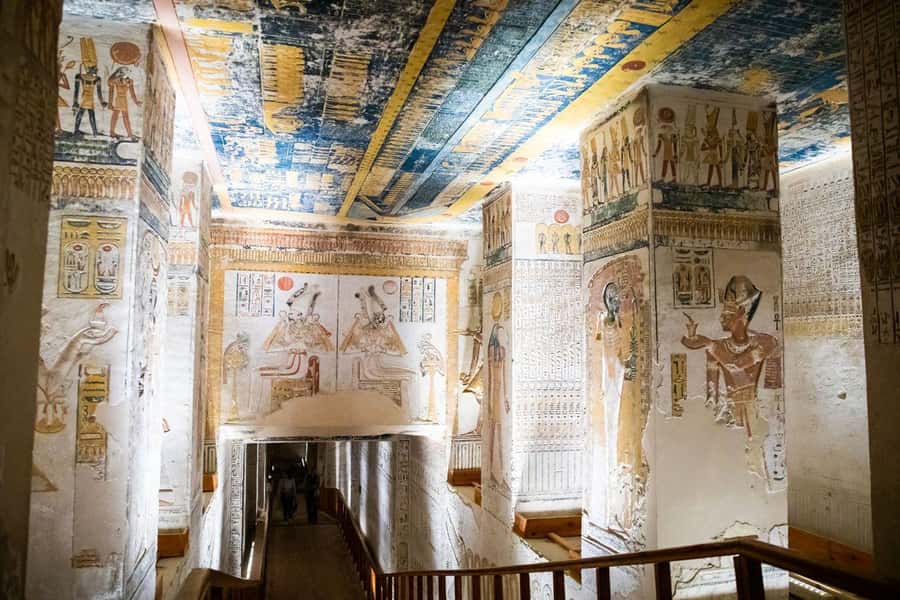
The Valley of the Kings is the emotional center of the morning. Instead of the huge pyramids associated with earlier Egypt, this dry valley hides royal tombs cut into the rock. Its name is also translated as the Valley of the Gates of the Kings, a fitting description for the decorated entrances leading into the hills.
Your guide should help you understand why the tombs matter, not just point out painted walls. The decoration was part of a religious journey, with images, symbols, and texts intended to help the dead king pass into the next world.
The standard visit gives you access to selected tombs. An important practical detail is that special tombs can require an additional ticket. One guest specifically used the opportunity to buy an extra ticket for King Tutankhamun’s tomb, so you should carry some flexibility in your budget if a particular burial chamber matters to you.
King Tut’s tomb is famous less for its size than for the discovery of the largely intact burial equipment. The regular Valley visit remains worthwhile even if you do not add it, but this is the point where you may want to ask your guide which tombs are open and which best match your interests.
The drawback is time. The valley has more to see than a single group can cover comfortably, especially if you want to study every painted scene. Alaa Hassan and other guides are praised for showing the most important details efficiently, but this is still a highlights visit rather than an archaeological deep study.
Wear practical shoes and bring water. The supplied information confirms that the tour provides water in at least some cases, but you should still treat hydration as your responsibility in Luxor’s heat.
Hatshepsut’s three terraces at Deir el-Bahari
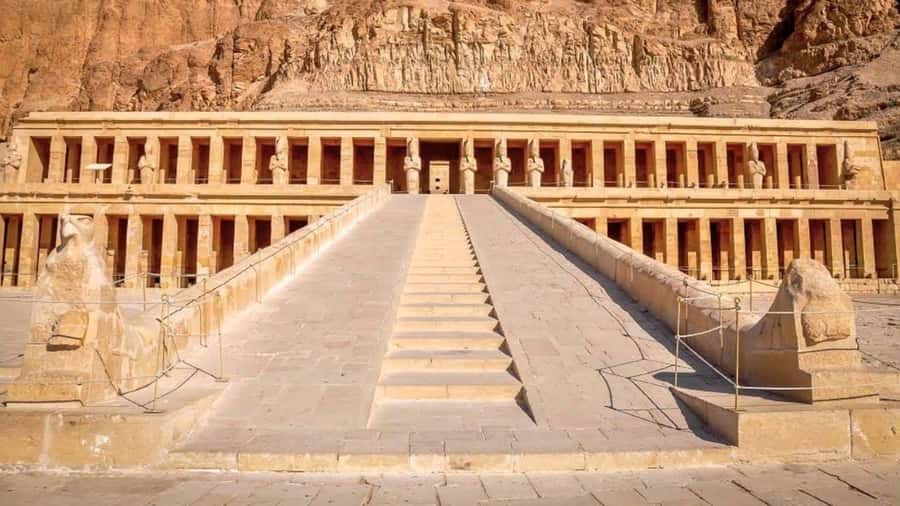
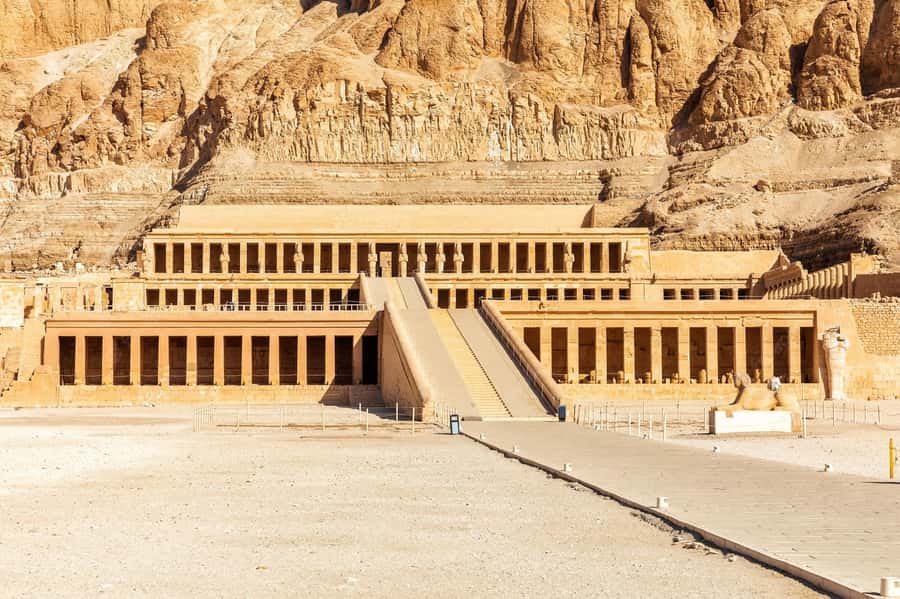
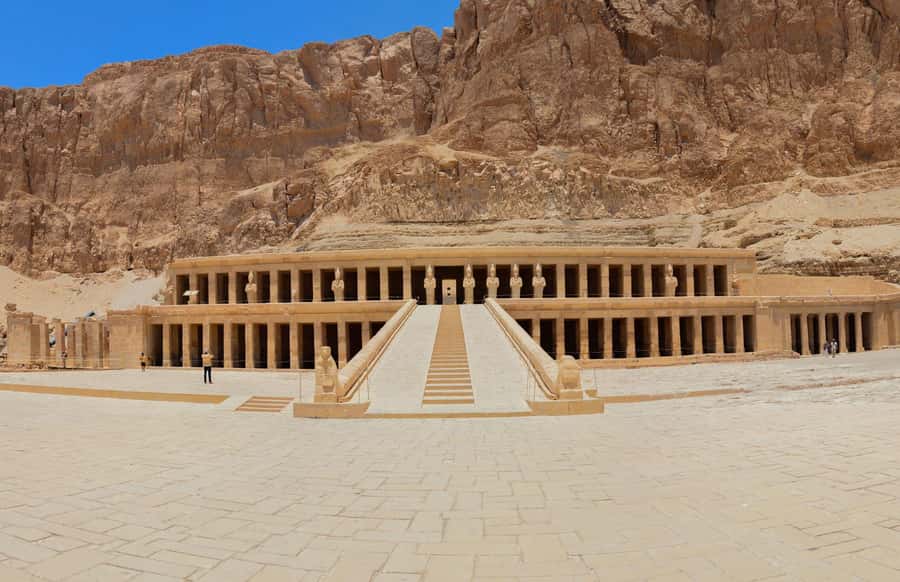
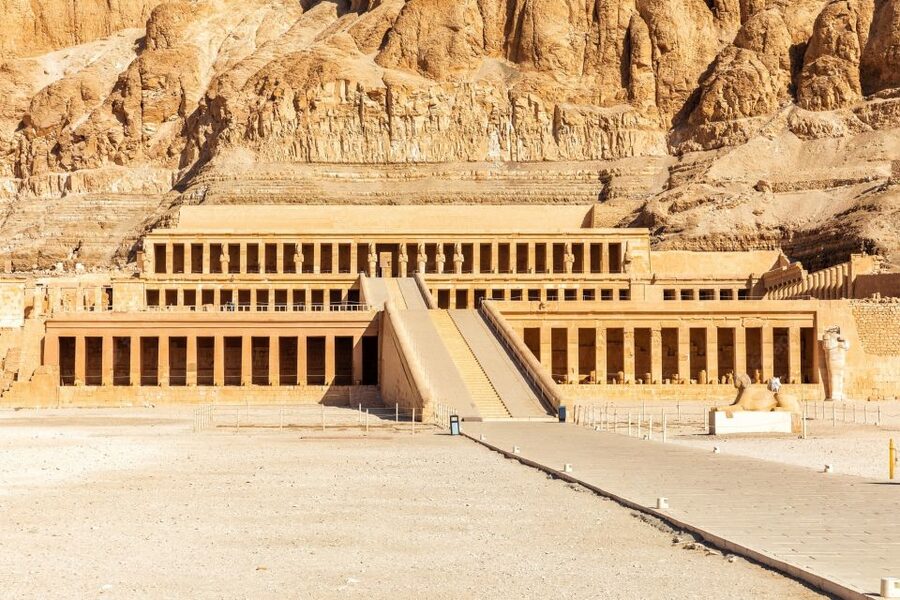
From the valley, the route continues to the Mortuary Temple of Queen Hatshepsut. The building sits opposite modern Luxor at Deir el-Bahari, where three broad terraces rise from the desert floor toward the cliffs.
This is one of the day’s most visually striking stops. The temple’s design uses strong horizontal lines against the rock face, creating a deliberate meeting of architecture and mountain. It feels different from the enclosed tombs in the Valley of the Kings. Here, open courtyards, ramps, terraces, and cliffs shape the visit.
Hatshepsut’s story also gives your guide plenty to explain. She ruled as pharaoh in a position usually held by men, and the temple’s art and inscriptions helped present her authority as legitimate. A good guide can point out how royal images, religious scenes, and building design worked together to support that message.
You should allow time for photographs here, but avoid treating the stop as only a photo opportunity. The best explanations connect the temple to the wider funerary world of the west bank and show why it was built in this particular place.
The approach can feel exposed, especially as the day warms. The schedule is manageable for most visitors who can walk around archaeological sites, but there is little reason to rush from one terrace to the next. The most satisfying pace is a clear explanation followed by a few quiet minutes to look on your own, a balance several guests appreciated with guides such as Ahmed and Omar.
The Colossi of Memnon and a quick royal pause
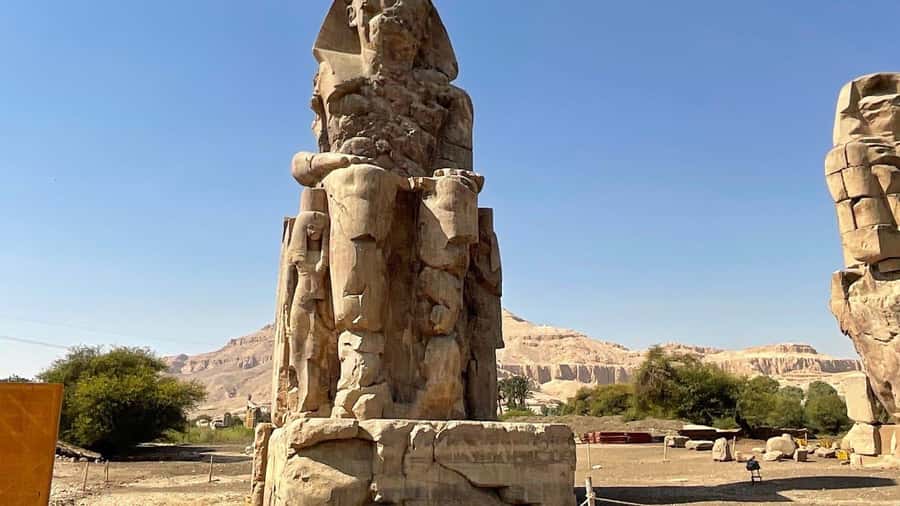
The Colossi of Memnon are a short but memorable stop. These two enormous seated statues once guarded the entrance to the mortuary temple of Amenhotep III.
Much of the original temple is gone, which makes the statues even more useful as a lesson in scale. They give you a sense of the monumental gateway that once welcomed people to the complex. Your guide can also place Amenhotep III within the 18th Dynasty and explain the role of a mortuary temple in royal worship after death.
Do not expect a long visit here. The Colossi work best as a brief stop between the larger west-bank monuments and lunch. That is not a flaw, since the statues can be seen without spending the same amount of time needed for a valley or temple complex.
This is also where a tightly scheduled tour becomes apparent. If you enjoy lingering at individual monuments, you may wish the stop lasted longer. If your aim is to see Luxor’s essential sights in a single day, the short visit helps protect time for Karnak and Luxor Temple.
A few more Luxor trips worth weighing up
- Full Day Tour to East and West Banks of Luxor
★ 5.0 · 1,449 reviews - Luxor : Full Day Tour to Luxor West and East Banks & Lunch
★ 5.0 · 870 reviews - Full Day Tour of Luxor West Bank Temples and Tombs (Private)
★ 5.0 · 722 reviews - Private Full-Day Luxor Highlights East and West Banks
★ 5.0 · 663 reviews
Lunch at a local restaurant
Lunch breaks up the ancient sites and gives you a chance to sit down before the east-bank temples. The package includes a meal at a local restaurant, and one account describes tasty local food served buffet-style on a terrace overlooking a tomato farm.
That setting sounds more connected to everyday Luxor than a meal in a hotel dining room. The value is practical as well as cultural: you do not need to find a restaurant during a busy sightseeing day, and the group can resume the route without a long search.
Food quality can vary from day to day, as it does on any group excursion. Still, the meal is repeatedly treated as a positive part of the day, with local dishes and a comfortable pause. If you have dietary restrictions, ask when booking because the supplied information does not specify special menus.
Some tours include shopping stops, and one guest noted an alabaster factory visit that was outside the core route. The stop was described as easy to decline without pressure. Keep that in mind if your priority is archaeological sites and you want to protect every minute.
Karnak Temple: the day’s grandest religious complex
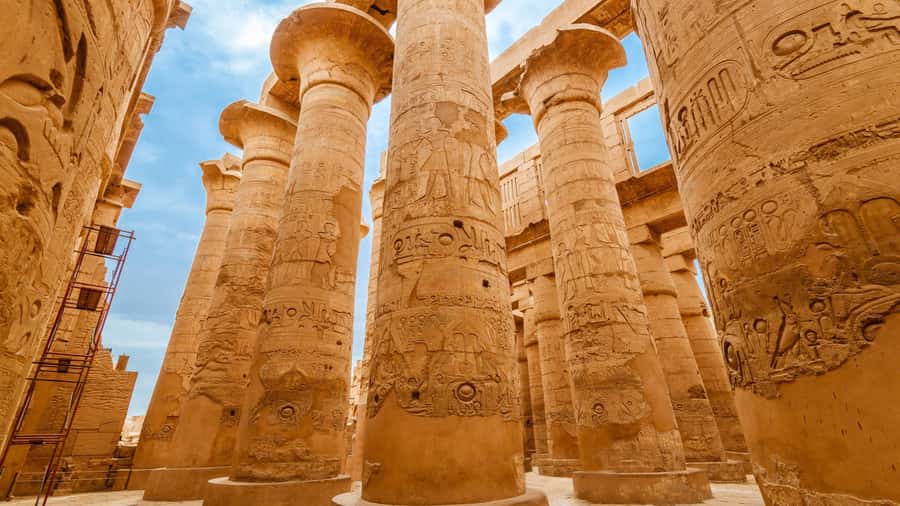
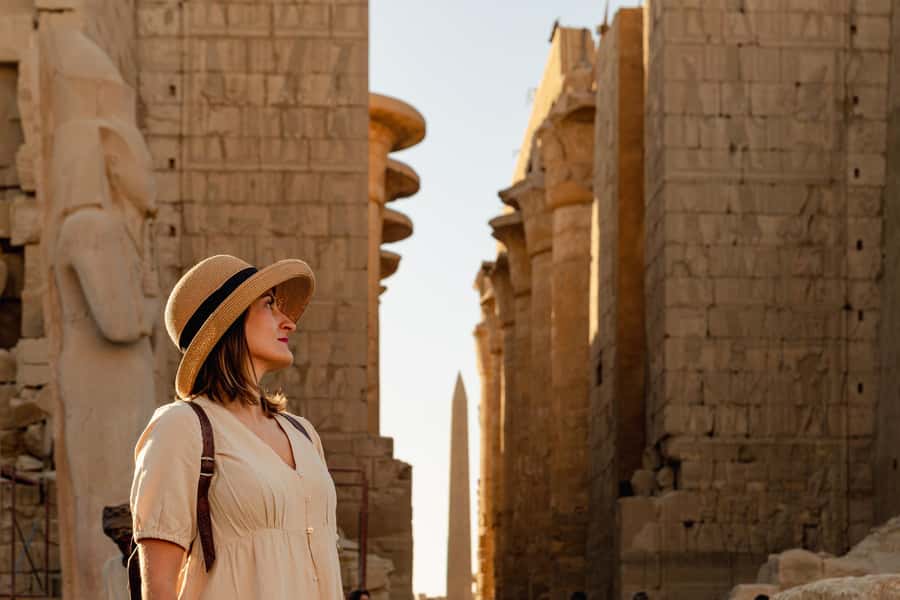
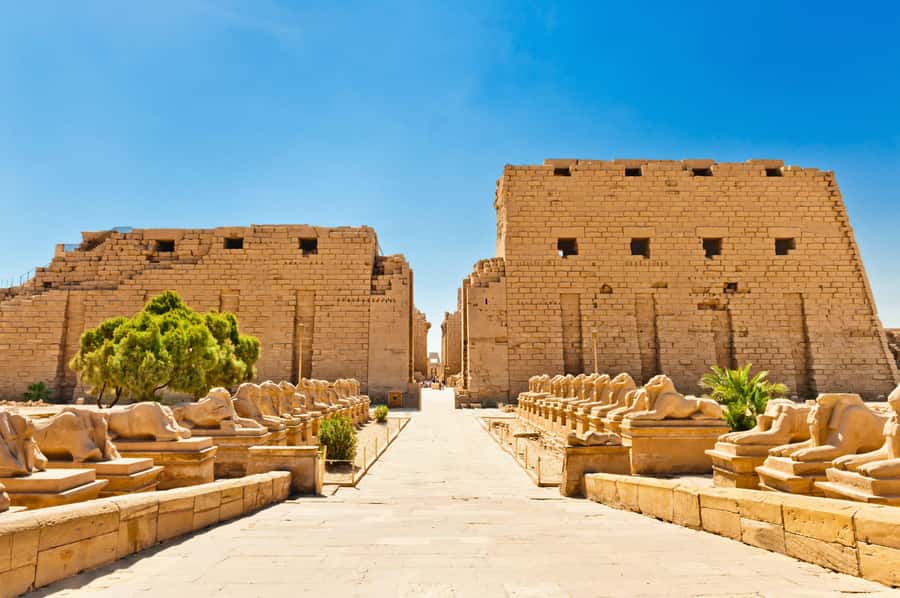
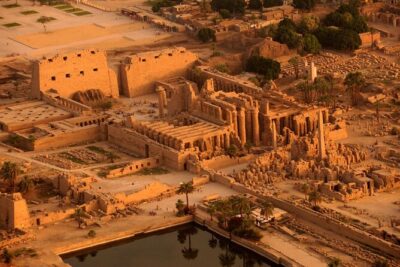
Karnak is the largest and most demanding monument on the route. It was dedicated to Amun, his wife Mut, and their son Khonsu, forming the Theban triad. The complex grew over many generations, so it feels less like one finished building and more like a record of changing royal power and religious practice.
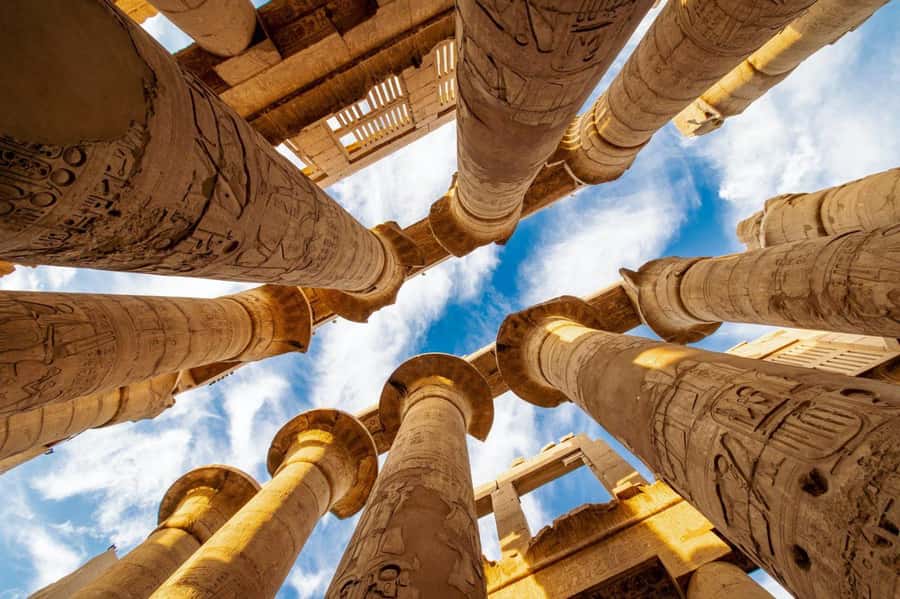
The scale becomes clear as you move through its courts and columns. The famous hypostyle hall, with its forest of massive columns, can make even a large group feel small. This is where an Egyptologist guide earns the fee. Without context, you see stone, inscriptions, and broken statues. With a good explanation, you begin to read the complex as a place of processions, offerings, kingship, and divine presence.
A guide such as Gabriel is especially useful for visitors who want more than dates and names. His explanations are praised for covering Egyptian mythology, the reasons behind the temple’s structure, and the meaning of the artwork. Alaa Hassan is also praised for pointing out symbolism and the best spots for photographs.
Karnak can be tiring late in the day. There is a lot of open ground, and the size of the site makes it easy to lose track of time. The guide’s job is to choose the important sections and keep the group moving without turning the visit into a forced march.
You should expect some free time after the main explanation. That is valuable because Karnak rewards a second look. I would use those minutes for columns, reliefs, and details your guide has just explained, rather than trying to cover every corner.
Luxor Temple after sunset or late in the day
The final major stop is Luxor Temple, built by Amenhotep III in the 18th Dynasty and completed by Ramses II. Its position in the modern city gives it a different feel from the west-bank monuments and Karnak.
Luxor Temple was tied to royal ceremony and the worship of the Theban gods. Its broad courts, statues, columns, and avenues show how rulers used architecture to present themselves as part of the sacred order.
The temple is a strong finish because it is easier to understand after Karnak. Your guide can explain links between the two places and the Theban triad, helping you see the east bank as a connected religious center rather than two unrelated ruins.
The site also has a more immediate relationship with present-day Luxor. You are not isolated in a desert valley. The ancient stones sit within the living city, which makes the past feel close to daily life.
By this stage, fatigue is the chief concern. Several people describe the day as long but worthwhile, and one account calls it a ten-hour activity even though the advertised duration is eight hours. Allow extra time in your evening plans and do not schedule an important departure immediately afterward.
The guide matters more than the vehicle
The strongest part of this tour is the human element. Names vary because the operator uses a team, but the same qualities appear again and again: clear English, strong command of Egyptian history, patience, humor, and a willingness to answer questions.
Alaa Hassan is praised for passionate explanations, quick movement through busy locations, and good photographs. Ahmed Bahaa is repeatedly described as friendly, thorough, and attentive to free time. Gabriel receives praise for detailed mythology and storytelling, while Adam is noted for humor and knowing good photo angles.
Beshoy is described as kind and good at explaining attractions along the way. Omar is praised for checking that everyone was comfortable, and Mena Oweda for using images to help explain tombs, mummies, and local markets. These details matter because shared tours can feel impersonal when the guide simply recites a script.
The vehicle appears to be in good condition, with a capable driver, but one person found the minibus small. If you dislike close group transport, a private option may suit you better. If you are comfortable sharing space in exchange for a lower price, the arrangement appears to offer solid value.
English is included. French, German, and Spanish are listed as available, though the supplied details also indicate those languages may be add-ons. Confirm the exact language price and availability before paying.
Timing, comfort, and the real cost of the day
The advertised duration is eight hours, but the route can run longer. Pickup times vary, so check the available start time and choose the earliest practical departure. An early beginning helps with heat, queues, and the sheer amount of ground covered.
The day includes walking, outdoor exposure, vehicle transfers, and repeated stops. Bring water, sun protection, comfortable shoes, and a small amount of cash for optional tickets or purchases. The tour may provide water, and one guest also received a soft drink and bracelet, but those extras should not be treated as guaranteed inclusions.
Hotel pickup and drop-off are included for hotels on Luxor’s East Bank. If you are staying elsewhere, confirm the meeting arrangement before booking. The stated pickup location is Luxor, and the tour returns there.
Cancellation is free up to 24 hours before departure, and you can reserve now and pay later. Those policies are useful if your Egyptian schedule is still moving, but the bigger decision is pace. This tour gives you breadth, not a slow archaeological day.
Who should book this Luxor tour?
I would choose it if you have only one day in Luxor and want the major sights handled in a logical order. It also suits solo visitors, couples, and small groups who want a guide without paying for a private vehicle.
It is a good fit for people who enjoy stories, mythology, and historical context. The repeated praise for guides such as Alaa Hassan, Ahmed Bahaa, Gabriel, and Adam suggests that asking questions can make the day much better.
I would think twice if you want to spend hours inside one tomb, photograph every column at leisure, or avoid group transport. The minibus may feel tight, the schedule is full, and optional stops can appear unless you make your priorities clear.
At $90, the package is fairly priced for transport, lunch, a live English-speaking guide, and the main sites with entrance fees included in the selected option. The tour’s value is highest when your time is limited and you want a well-managed introduction to both banks of Luxor.
Should you book it?
Book this tour if your goal is to see Luxor’s essential monuments in one energetic day and learn what you are looking at. Start early, confirm entrance fees and language costs, ask about any optional shopping stop, and tell the guide if a special tomb matters to you.
Skip it in favor of a private or slower arrangement if you value solitude above coverage. For most first-time visitors with limited time, this is a strong practical choice, especially when you are matched with one of the highly praised guides.
FAQ
How long does the Luxor tour last?
The advertised duration is eight hours, although the full day may run longer. One account describes around ten hours of activity, so avoid scheduling an important evening commitment immediately afterward.
Which places are included?
The route includes the Valley of the Kings, the Mortuary Temple of Queen Hatshepsut, the Colossi of Memnon, a local restaurant for lunch, Karnak Temple, and Luxor Temple.
Is lunch included?
Yes. Lunch at a local restaurant is included. One meal was described as local food served buffet-style on a terrace overlooking a tomato farm.
Are entrance fees included?
All entrance fees are included only if you select the option that includes them. Extra tickets for special tombs, such as King Tutankhamun’s tomb, may cost more.
Is hotel pickup included?
Hotel pickup and drop-off are included for hotels on Luxor’s East Bank. The stated pickup location is Luxor.
What languages are available?
English is included, and French, German, and Spanish are listed as available options. The supplied details indicate that non-English guides may be an add-on, so confirm the price and availability when booking.
Just added around Luxor
- Private Tour foll day to East and West Banks of Luxor★ 5.0 · 23 reviews
- East and West Bank Luxor★ 5.0 · 23 reviews
- Full Day Tour to Luxor (East & West Bank)★ 5.0 · 23 reviews
- Big brother travel★ 5.0 · 23 reviews
- Luxor Day Tour :Valley of Kings & queen & Hatshepsut & Habu city★ 5.0 · 23 reviews
- Luxor: Scenic Camel or Horse Ride★ 3.9 · 24 reviews
- From Cairo: 4-Day Nile Cruise from Aswan to Luxor with Meals★ 4.4 · 24 reviews
- Traditional Egyptian Breakfast at the AlHabib Arabian Horse Farm★ 5.0 · 24 reviews
Full-Day, compared.
Full Day Tour to East and West Banks of Luxor
Read our review →
Private Full-Day Tour of Historical Alexandria
Read our review →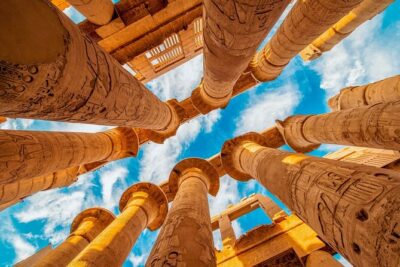
Full Day Tour to Luxor West and East Banks & Lunch
Read our review →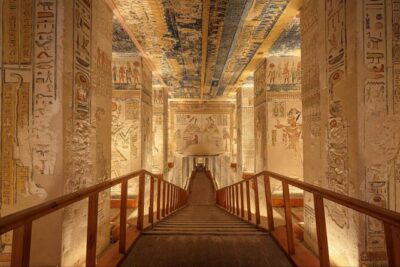
Full Day Tour of Luxor West Bank Temples and Tombs (Private)
Read our review →
Browse the lists this tour appears in