
Reviewed · 4-DAY EXPERIENCES
Aswan to Luxor: 4-Day Private Nile Journey
Ancient Egypt unfolds from the river. This four-day private journey combines a three-night Nile cruise with Aswan’s Philae Temple, Kom Ombo, Karnak, Luxor Temple, and the Valley of the Kings. I like the easy one-way route from Aswan to Luxor, and I like having an Egyptologist guide explain the carvings instead of leaving you to guess at them. The main drawback is the packed schedule, especially if you add the optional Abu Simbel trip.
The cruise runs on Fridays, Mondays, and Wednesdays, so you need to fit your plans around those departure days. The $840 price includes a five-star standard boat, meals, transport, guides, and listed site entrances, but drinks, tips, flights, and optional outings cost extra. Small groups are capped at 10 people, and guide Tamer has earned especially strong praise for his organization and service.
In This Review
- Key points to know before booking
- Why this Aswan to Luxor route works well
- Day 1: Philae, the High Dam era, and Aswan’s granite
- Day 2: Choosing between Abu Simbel and Kom Ombo
- Day 3: Edfu, Karnak, and Luxor after sunset
- Day 4: Hatshepsut, the Valley of the Kings, and a costly choice
- What the $840 price really covers
- Comfort, group size, and the feel of the cruise
- Who should book this Nile journey?
- Should you book the Aswan to Luxor cruise?
- FAQ
- How long is the Aswan to Luxor journey?
- Where does the tour start?
- Where does the tour end?
- Which days does the cruise depart?
- Is Abu Simbel included?
- Are meals included?
- Is the entrance to Tutankhamun’s tomb included?
- How many people can join the tour?
- Can I cancel for a full refund?
Key points to know before booking
- Three nights on the Nile: You travel by boat between Aswan, Kom Ombo, and Luxor rather than changing hotels each night.
- A private route with a small group: The maximum group size is 10, allowing more room for questions and smoother transfers.
- Philae requires a boat ride: The temple sits on Agilika Island, reached by motorized boat from Aswan.
- Abu Simbel is optional but demanding: The drive takes about three and a half hours each way from Aswan.
- Tutankhamun’s tomb costs extra: The Valley of the Kings is included, but the entrance to Tutankhamun’s tomb is paid on site.
- The final day ends at Luxor Airport: This is useful for onward travel, but less convenient if you want another full day in Luxor.
Why this Aswan to Luxor route works well
I like the direction of this trip. You begin in Aswan, where the Nile feels broad and calm, then move north toward Luxor as the number of major ancient sites increases. The boat gives you a steady base, so you are not packing and unpacking every morning.
The cruise lasts three nights and operates on a full-board basis. Breakfast, lunch, and dinner are included during the cruise, which makes the price easier to judge. You still pay for drinks on board, and tipping for the crew, guides, and drivers is not included.
The tour uses modern air-conditioned vehicles for airport transfers and shore excursions. Pickup begins in Aswan, including arrival at Aswan Airport, where a representative meets you at the exit door with a sign bearing your name. The journey ends with a transfer to Luxor Airport.
That one-way design saves time, but it also leaves little room for delay. The daily sightseeing is tightly arranged, and the optional Abu Simbel drive makes Day 2 especially long. I would treat this as a focused Egypt route, not a slow holiday.
More things to do in Aswan:
- 4-Days Nile Cruise From Aswan To Luxor including Abu Simbel and Hot Air Balloon
★ 5.0 · 3,142 reviews - From Aswan: Abu Simbel Temple Day Trip with Hotel Pickup
★ 4.4 · 2,807 reviews - 4-Day 3-Night Nile Cruise from Aswan to Luxor&Abu Simbel+Balloon
★ 5.0 · 2,023 reviews
Day 1: Philae, the High Dam era, and Aswan’s granite
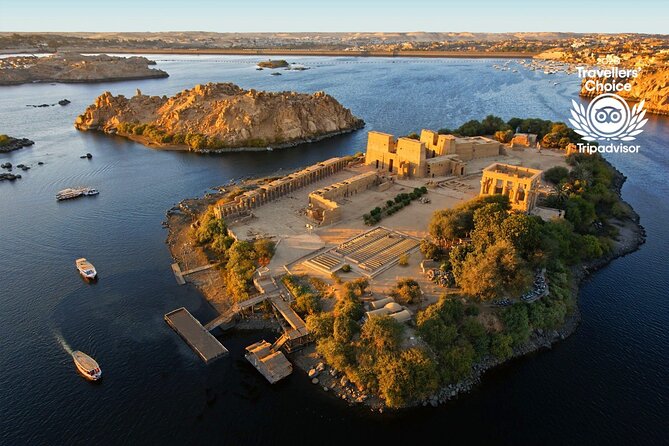
Your first major visit is the Temple of Philae. A motorized boat carries you to Agilika Island, where the temple complex was rebuilt after the Aswan High Dam threatened its original location.
Philae was dedicated to Isis, one of ancient Egypt’s most important goddesses. The site also reflects Egyptian, Greek, and Roman building periods, so you are not looking at one single moment in history. The carvings and structures show how worship continued and changed across centuries.
The relocation of Philae gives the visit a modern layer. The temple was dismantled and reassembled piece by piece to protect it from rising water. I find that context especially useful because the setting is not simply an ancient ruin. It also tells the story of a huge twentieth-century engineering project and the international effort to preserve Egypt’s monuments.
A boat trip adds time and atmosphere, but it also means your schedule depends on the transfer to the island. The listed visit takes about two hours, and entrance fees are included in the overall package, although some stop descriptions show admission as separate. The inclusion section states that entrances to the listed sites are covered, so confirm the exact ticket arrangement before departure.
Next comes the Unfinished Obelisk in Aswan’s granite quarries. This massive stone was abandoned before completion, giving you a rare chance to see how ancient stone workers shaped a monument before it left the ground.
The obelisk would have been about one-third taller than any other ancient Egyptian obelisk if finished. Cracks in the granite halted the work. For me, this is a useful counterpoint to the polished temples: you see not only finished monuments, but also the practical risks, skill, and hard labor behind them.
Day 1 includes airport assistance, a guide, transport, and the boat transfer to Philae. It is a sensible introduction, but you should expect a full sightseeing day after arriving in Aswan.
Day 2: Choosing between Abu Simbel and Kom Ombo
Day 2 offers the trip’s biggest optional decision. You can leave early by car for Abu Simbel, a journey of roughly three and a half hours each way from Aswan, or remain with the cruise schedule and visit Kom Ombo.
Abu Simbel is one of Egypt’s great set pieces. The temple of Ramses II has four colossal statues on its facade, each about 70 feet tall. Nearby, the temple of Queen Nefertari honors one of ancient Egypt’s most important royal women.
Like Philae, Abu Simbel was moved to protect it from the waters created by the Aswan High Dam. That makes the site especially interesting for anyone who wants to connect ancient Egypt with modern preservation work.
The tradeoff is simple: Abu Simbel is spectacular, but the road journey is long. You are looking at about seven hours of driving in total, before adding the visit itself. I would choose it if this may be your only Egypt trip and you place a high value on seeing Ramses II’s temples. I would skip it if you prefer a calmer cruise day or already have Abu Simbel planned elsewhere.
The scheduled cruise continues to Kom Ombo, known in ancient times as the Hill of Gold. The Greco-Roman temple here is unusual because it honors two gods, Haroeris and Sobek. Haroeris is linked with the sun, while Sobek has the form of a crocodile and was regarded by some ancient Egyptians as the creator of the world.
Kom Ombo is a good stop because the temple’s shared dedication makes it different from the single-god focus at Philae. You also get a look at how older Egyptian beliefs continued within a later Greco-Roman building tradition.
The visit takes about two hours. You leave the boat, explore the temple with the guide, then return to the cruise. That rhythm is one of the best features of a Nile journey: the boat remains your hotel, while each shore stop supplies a different chapter.
Day 3: Edfu, Karnak, and Luxor after sunset
The itinerary includes the Temple of Horus, the falcon-headed god of the sky, before the cruise continues toward Luxor. The temple was built in 230 BC by Ptolemy III and is noted for its strong state of preservation and surviving color.
The schedule identifies this stop within the cruise portion of the trip, then moves to Luxor’s east bank. The Temple of Horus is commonly associated with Edfu, so ask your tour company to confirm the exact sailing and visit sequence before you go. This is worth checking because the timing between Edfu and Luxor affects the rest of the day.
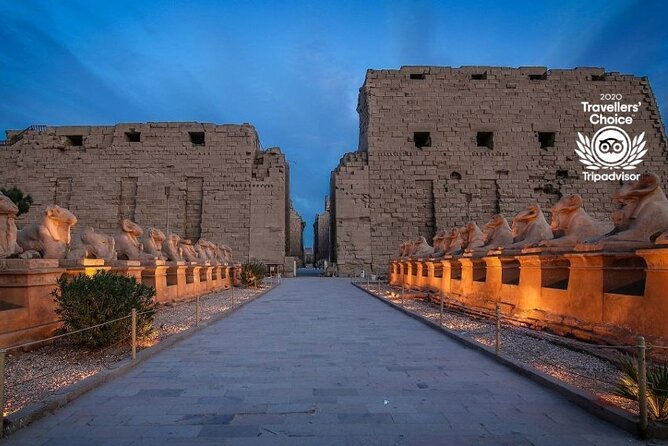
In Luxor, you visit Karnak Temple, one of the largest religious complexes in Egypt. Its Great Hypostyle Hall is the visual centerpiece, with rows of columns rising about 80 feet. The scale can be hard to grasp in photographs. On site, the aligned columns make you feel how much effort went into building a sacred precinct meant to impress both worshippers and later rulers.
Karnak was expanded by generations of pharaohs, many of whom wanted their names recorded there. Your guide’s role matters at this point. Without explanation, the walls can look like a mass of figures and symbols. With a good Egyptologist, the scenes become a record of royal power, religious rituals, and repeated building campaigns.
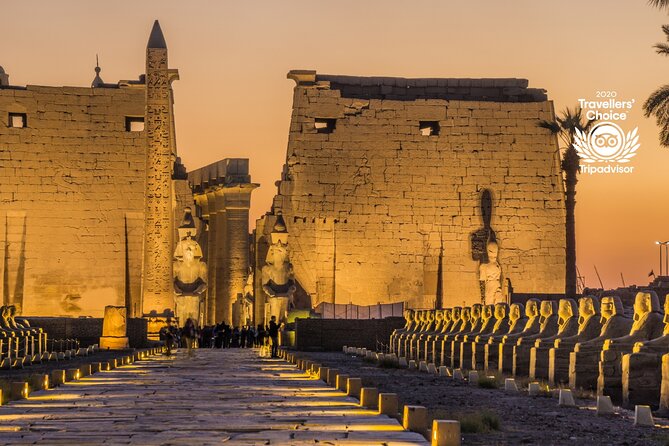
The day continues at Luxor Temple. You see the statues of Ramses II at the front pylons, the Courtyard of Ramses II, and the Colonnade of Amenhotep III. The colonnade contains 50-foot columns and gives the temple a strong sense of procession.
Karnak and Luxor work well together. Karnak feels vast and ceremonial, while Luxor Temple is more compact and connected to the heart of the ancient city. Visiting both on the same day provides useful contrast, though it also creates a long stretch of sightseeing. Wear practical shoes and keep water close, especially during warm weather.
The guide is one of the tour’s strongest practical features. Tamer is specifically praised for being exceptionally organized, and that matters when boat departures, vehicle transfers, and temple visits all have to line up. The crew also receives high marks for polite, attentive service, which can make the ship feel more comfortable after a demanding shore day.
A few more Aswan trips worth weighing up
- 4-Day 3-Night Nile Cruise from Aswan to Luxor including Abu Simbel, Air Balloon
★ 4.5 · 612 reviews - From Aswan: 4-Day Nile Cruise from Aswan to Luxor with Guide
★ 4.1 · 593 reviews - 4-Day 3-Night Nile Cruise from Aswan to Luxor – Private Tour
★ 5.0 · 369 reviews - 4 Days Nile Cruise from Aswan to Luxor including Abu Simbel and Hot Air Balloon
★ 4.5 · 356 reviews
Day 4: Hatshepsut, the Valley of the Kings, and a costly choice
The final morning crosses to Luxor’s west bank and the Necropolis of Thebes. First comes the Colossi of Memnon, two huge seated statues that once guarded the entrance to a much larger temple complex.
The stop is brief but useful as an introduction to the west bank. From there, you continue to the Temple of Hatshepsut, built for Egypt’s first female pharaoh. Its terraces and clean architectural lines make it different from the crowded columns of Karnak.
Hatshepsut ruled during the 18th Dynasty and is regarded as one of Egypt’s most successful pharaohs. Her temple also raises interesting questions about royal identity and how later rulers treated her memory. Your guide can help connect the visible structure with the political story behind it.
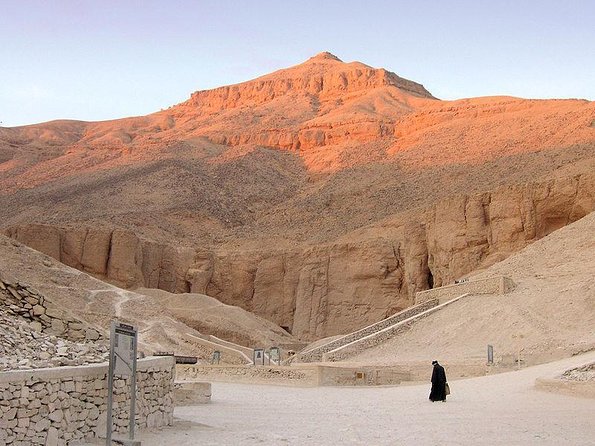
The main event is the Valley of the Kings, the burial ground of pharaohs and nobles for about 500 years beginning in the 16th century BC. The valley is a UNESCO World Heritage Site, but its importance is not just the designation. The tombs show how rulers shifted from large visible monuments to hidden chambers cut into the desert hills.
The standard visit includes the Valley of the Kings, but not every tomb. Tutankhamun’s tomb requires an extra ticket purchased on the spot. The chamber is famous because Howard Carter found it in 1922, and its name carries enormous weight. Still, you should decide based on interest and budget rather than assuming it is automatically the best tomb in the valley.
The final sightseeing portion lasts about four hours, followed by a transfer to Luxor Airport. Breakfast is included on this day. Because the airport transfer comes afterward, keep your departure timing in mind when arranging flights. The tour is designed to finish at the airport, not to provide a relaxed final afternoon in Luxor.
What the $840 price really covers
At $840 per person, the package is not a bare sightseeing tour. It includes three nights aboard a five-star standard cruise, full-board meals, airport meet-and-assist service, a qualified Egyptologist guide, air-conditioned ground transport, and the listed excursions.
That bundle gives the price solid value if you want one company handling the complicated parts. You are paying for more than temple admission. You also get boat accommodation, transfers between airports and sites, shore arrangements, and help during the journey.
The price does not include domestic flights, drinks on board, gratuities, Abu Simbel, or a Luxor hot-air balloon ride. Tutankhamun’s tomb also requires an extra ticket on site. Add these costs before comparing the tour with a cheaper-looking cruise.
Food is another practical point. The ship serves daily buffets with plenty of choices, according to the available trip details. That does not mean every meal will suit every preference, but full board removes the need to search for lunch and dinner during a busy sightseeing schedule.
Comfort, group size, and the feel of the cruise
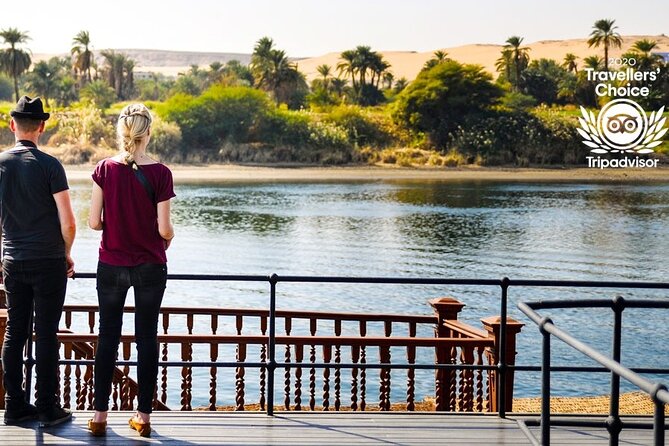
The vessel is described as a five-star standard cruise ship, not a luxury boutique boat. That distinction matters. You should expect a comfortable base and full meals, but avoid booking this package if you want an ultra-luxury sailing experience.
The maximum group size is 10 people. That is small enough for a guide to hear your questions and for vehicle transfers to stay manageable. It also gives the trip a more personal feel than a large coach group.
The crew’s service is a major strength. Polite, attentive staff can make a real difference when you return tired from hot archaeological sites. The guide’s organization is equally important, and Tamer is singled out for excellent work.
The cruise schedule is fixed to departures every Friday, Monday, or Wednesday. Plan around those days rather than assuming you can start whenever you arrive in Aswan. The experience is booked on average about 60 days ahead, so popular dates may require early planning.
Who should book this Nile journey?
I would recommend it to a first-time Egypt visitor who wants the country’s major Nile sights in one organized route. It suits you especially well if you value a guide, prefer a small group, and like having transport, meals, and accommodation arranged together.
It also works for people who want to finish in Luxor and fly onward. The final airport transfer is convenient, though you lose the option of a leisurely last day unless you arrange extra nights separately.
I would think twice if you dislike early starts, long road drives, or a firm schedule. Abu Simbel is optional, but the core itinerary still covers several large temple complexes in only four days. The trip gives you a strong first look at ancient Egypt, not a slow study of every site.
The 4.9 rating from 152 published ratings and a 99 percent recommendation rate support the package’s strongest points: an organized program, a comfortable boat, attentive crew, and capable guiding. I would still confirm the exact cruise ship, entrance ticket details, and optional tour prices before paying.
Should you book the Aswan to Luxor cruise?
Book it if you want an efficient, well-supported route through Egypt’s essential Nile monuments and you are happy to trade free time for organization. The combination of Philae, Kom Ombo, the Temple of Horus, Karnak, Luxor Temple, Hatshepsut, and the Valley of the Kings gives you a powerful four-day introduction.
Add Abu Simbel only if the long drive fits your priorities. Leave time in your budget for drinks, tips, flights, and extra tomb tickets. If you accept those limits, this is a practical way to see the Nile corridor with a small group and a guide who helps the stones speak.
FAQ
How long is the Aswan to Luxor journey?
The experience lasts approximately four days and includes three nights aboard a Nile cruise.
Where does the tour start?
The tour starts in Aswan, in Aswan Governorate, Egypt. Airport pickup is offered, with a representative meeting you at the exit door with a sign bearing your name.
Where does the tour end?
The journey ends in Luxor, with a transfer to Luxor Airport after the west bank sightseeing on Day 4.
Which days does the cruise depart?
Cruises are scheduled to depart every Friday, Monday, or Wednesday.
Is Abu Simbel included?
No. Abu Simbel is an optional outing from Aswan by car and is not included in the main price. The drive takes about three and a half hours each way.
Are meals included?
Yes. The cruise includes breakfast, lunch, and dinner for three days on a full-board basis. Drinks on board are not included.
Is the entrance to Tutankhamun’s tomb included?
No. The Valley of the Kings visit is included, but Tutankhamun’s tomb requires an extra ticket purchased on site.
How many people can join the tour?
The maximum group size is 10 people.
Can I cancel for a full refund?
Yes. You can cancel at least 24 hours before the experience starts for a full refund. Cancellations or changes made less than 24 hours before the start time are not accepted for a refund.
Just added around Aswan
- Private Day Tour to Abu Simble Temple from Aswan★ 4.5 · 23 reviews
- Nile Cruise 2 Nights from Aswan to Luxor with Hot air Balloon★ 4.5 · 23 reviews
- Private Aswan Airport Arrival/Departure One Way Transfer★ 4.5 · 23 reviews
- Best of Luxor in 2 Days Hotel,Tours,Felucca,Camel&Balloon by Plane from Cairo★ 5.0 · 23 reviews
- (3-Nights Cruise From Aswan To Luxor & Balloon, Abu Simbel)★ 4.5 · 23 reviews
- Full Day Sharing Trip To Abou simple Temple form Aswan★ 5.0 · 24 reviews
- Enjoy 2 nights Nile cruise from Aswan to Luxor,Hot deal★ 4.5 · 24 reviews
- 3-Day 2-Night Tour to Aswan, Abusimbel & Luxor★ 5.0 · 24 reviews
4-Day Experiences, compared.
4-Day 3-Night Nile Cruise from Aswan to Luxor including Abu Simbel, Air Balloon
Read our review →
4-Day Nile Cruise from Aswan to Luxor with Guide
Read our review →
4-Day 3-Night Nile Cruise from Aswan to Luxor – Private Tour
Read our review →
4 Days Nile Cruise from Aswan to Luxor including Abu Simbel and Hot Air Balloon
Read our review →
4-Day 3-Night Nile Cruise from Aswan to Luxor With Balloon and Abu Simbel
Read our review →
4 Days Nile Cruise Luxor Abu Simbel & Air Balloon
Read our review →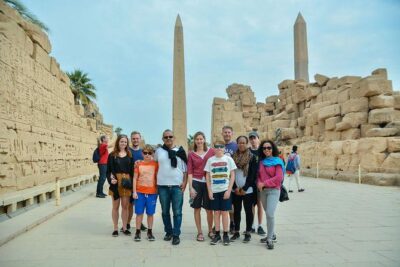
4-Day Nile Cruise sails Aswan to Luxor&Abu Simbel.Hot air Balloon
Read our review →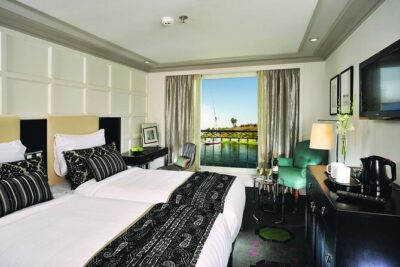
4-Day Nile Cruise Aswan and Luxor Hot Air Balloon with Abu Simbel
Read our review →Browse the lists this tour appears in