
Reviewed · ABU SIMBEL TOURS
From Cairo: 2-Day Abu Simbel & Luxor Tour
Ancient Egypt packs a powerful punch here. This two-day private tour links Abu Simbel, Aswan, and Luxor with domestic flights, hotel accommodation, guides, entrance fees, lunch, and ground transport included. You get the big sights of southern Egypt without arranging several separate bookings.
I like the way the tour handles the awkward logistics, especially the Cairo to Aswan flight and the return from Luxor to Cairo. I also like the chance to see both the Valley of the Kings and Abu Simbel in one compact trip. The main drawback is the pace: early starts, long drives, flights, and several major temples leave little time for wandering or quiet reflection.
The price is $815 per person, so this is not a budget outing. Still, for a private group with flights, a four-star hotel, a multilingual Egyptologist guide, transfers, admissions, and lunch, it can be good value if your time in Egypt is short. A public score of 3.9 out of 5 from 136 ratings suggests a generally strong experience, but also a few practical issues worth considering.
In This Review
- Key points to know before booking
- What the two-day route really involves
- Philae Temple and the High Dam in Aswan
- Abu Simbel: the day’s grandest sight
- The overnight stay in Aswan
- The Valley of the Kings and Hatshepsut Temple
- Colossi of Memnon: a short stop with a big view
- Luxor Temple and the East Bank
- Karnak Temple and its 134 columns
- Guides, drivers, and the private-group format
- Is $815 a fair price?
- Who should book this two-day Egypt tour?
- Practical details before you go
- Should you book it?
- FAQ
- How long does the tour last?
- Are domestic flights included?
- Is hotel accommodation included?
- Which attractions are included in Aswan?
- Which attractions are included in Luxor?
- Is the tour private?
- Which guide languages are available?
- Is lunch included?
- What should I bring?
Key points to know before booking
- Abu Simbel requires a long day: The temples sit far from Aswan, so expect substantial road time in addition to sightseeing.
- The route uses two domestic flights: You fly Cairo to Aswan, then Luxor to Cairo, avoiding a long overland return.
- You see both banks of the Nile in Luxor: The West Bank brings tombs and Hatshepsut Temple, while the East Bank includes Luxor and Karnak temples.
- The tour is private: You travel with your own group rather than joining a large coach party.
- Guiding is a major strength: Guides named in feedback include Samir, Shireen, Salwa, Khaled, Ahmed Omar, and Mostafa.
- Safety and hotel standards need attention: Ask for careful driving and confirm the exact hotel before departure.
What the two-day route really involves
This is best understood as a two-day sightseeing program with a great deal of transport between the stops. The listed duration is 10 hours, but the schedule clearly spans two calendar days, including overnight accommodation and three domestic flight segments.
On day one, you leave your Cairo hotel for the airport and fly to Aswan. A representative meets you on arrival, then the touring begins. The route takes in the High Dam, Philae Temple, Abu Simbel, and the smaller temple of Nefertari before you reach your hotel.
Day two starts after breakfast. You transfer to Luxor, visit the West Bank, cross to the East Bank, see Karnak, then continue to Luxor Airport for your flight back to Cairo. A representative meets you in Cairo and transfers you to your hotel.
That arrangement is useful if you have only a week or less in Egypt. It is also tiring. You should book it for access and efficiency, not for a relaxed Nile holiday.
More ways to reach Abu Simbel:
- Our Exceptional 5 days Cairo, Luxor and Abu Simbel Tour Package
★ 5.0 · 212 reviews - 3 Night Luxor and Aswan Nile Cruise with Hot Air Balloon, Abu Simbel from Luxor
★ 5.0 · 76 reviews - Egypt 8 Day :Cairo, Aswan , Nile Cruise , Luxor, Abu Simbel,Hotel
★ 5.0 · 42 reviews
Philae Temple and the High Dam in Aswan
Your first Aswan stops provide a useful introduction to the region. The High Dam is a major modern engineering project, while Philae shows the scale and artistry of ancient Egyptian temple building.
Philae Temple is reached by boat, and that short ride adds something special to the visit. The temple complex sits on an island, and arriving by water gives you a clear sense of why the site feels separate from modern Aswan. The trip includes time to see the carved gateways, columns, and reliefs, with your guide explaining the religious purpose of the complex.
A guide can make a real difference here. Samir received particular praise for giving clear information while also asking about personal preferences. That matters at a site where the carved scenes can seem repetitive if you do not know what to look for.
The High Dam is a shorter stop, but it gives the day useful context. Your guide can explain how modern water control changed life along the Nile. The contrast between the dam and the much older temples helps you understand that Egypt is not only an archaeological destination. It is also a country shaped by one enormous river and the need to manage it.
Abu Simbel: the day’s grandest sight
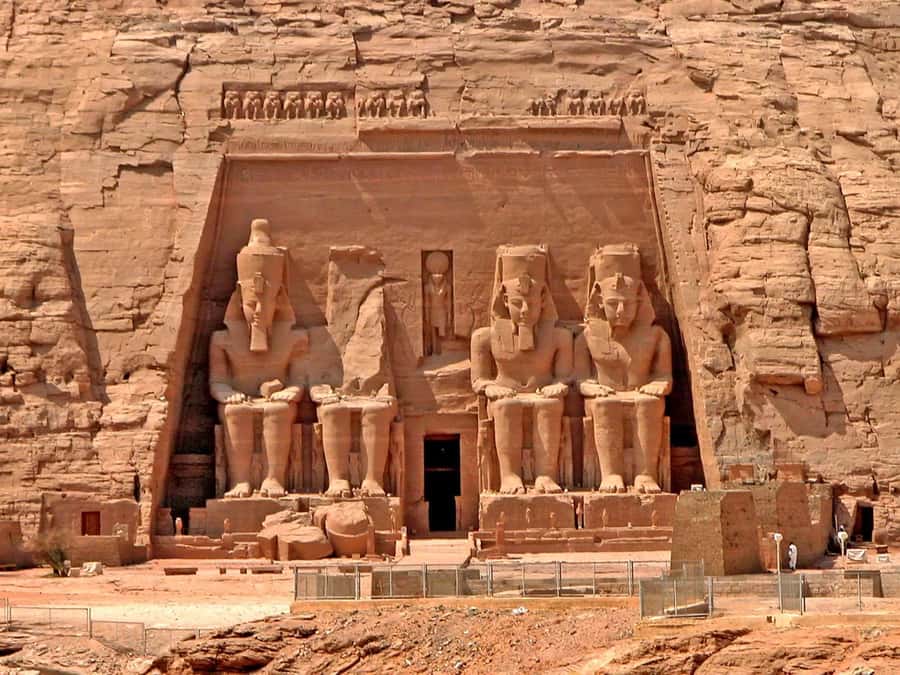
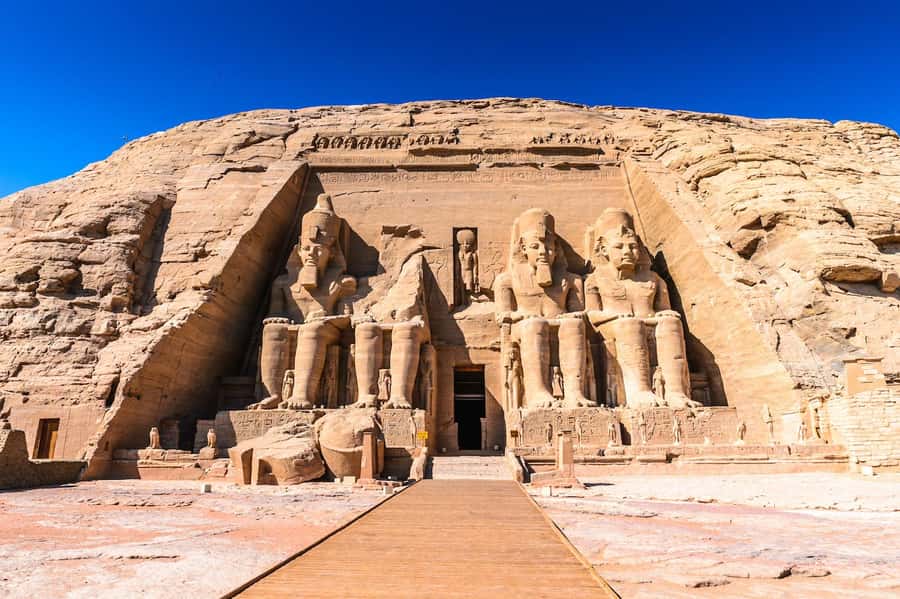
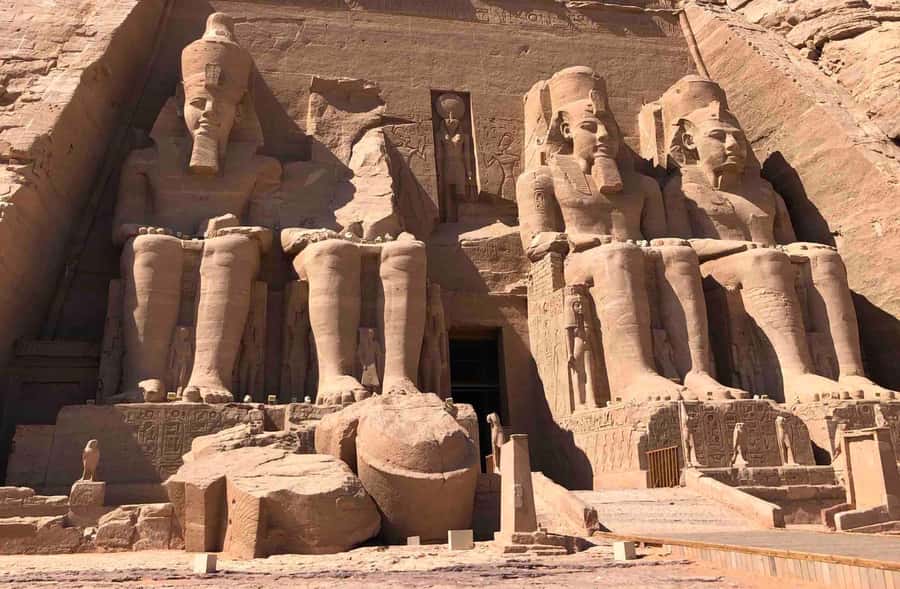
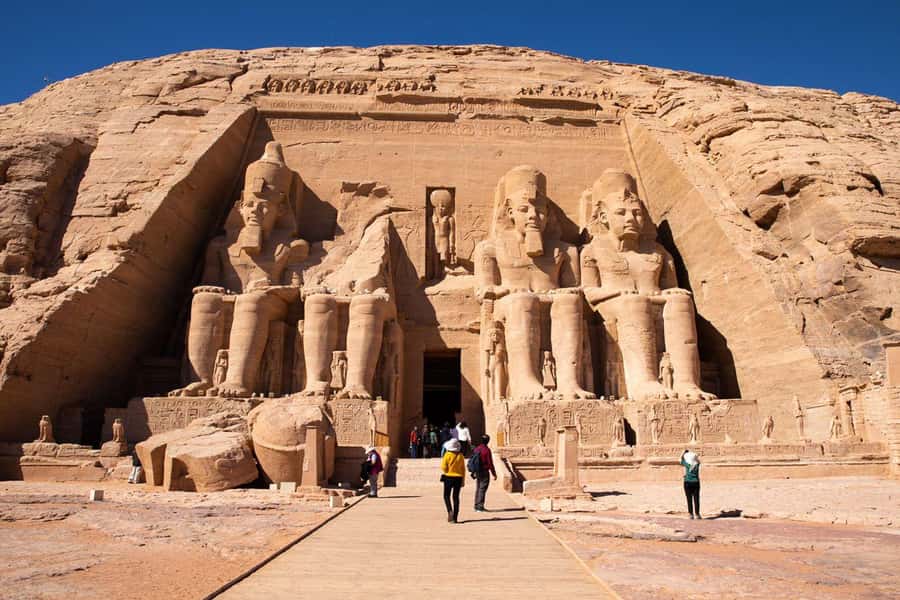
Abu Simbel is the reason many people choose this tour. The main temple was commissioned by Ramses II and cut into a sandstone cliff. Four huge seated figures of the king face outward from the façade, creating one of the most memorable approaches in Egypt.
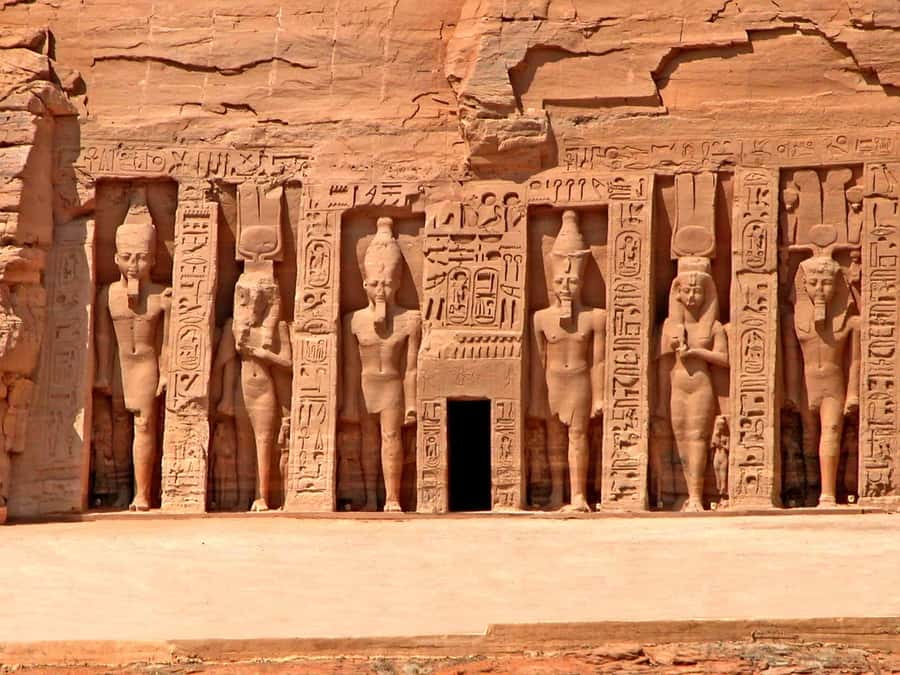
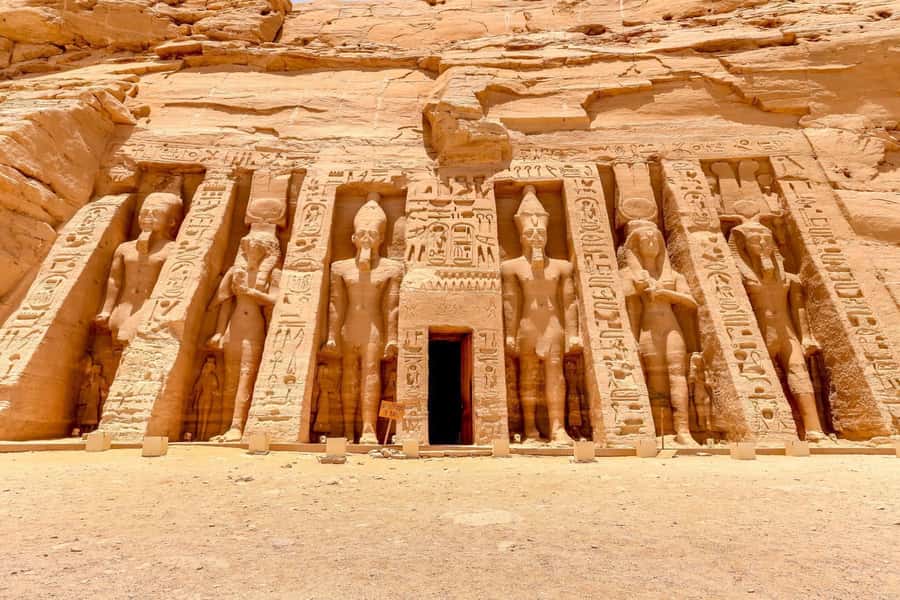
Inside, the scale changes but the impact remains. You see halls, columns, and carved scenes connected with Ramses II and the gods. The smaller temple nearby is dedicated to Nefertari and the goddess Hathor. Its façade gives the queen an unusually prominent place beside the king, making it more than an afterthought to the larger monument.
The Abu Simbel visit is also the part of the trip most likely to test your patience. The temples are far from Aswan, and the drive takes a significant share of the day. The reward is a site that feels very different from the temple clusters around Luxor.
You should discuss driving standards before setting off. One booking party reported speeding and dangerous maneuvers on the Aswan to Abu Simbel route, including a speed above 150 kilometers per hour. After asking for safer driving, conditions improved. That is useful advice: be direct, wear your seatbelt, and ask the driver to slow down if needed.
Mostafa was praised as an Abu Simbel guide, while Shazle was noted as a courteous driver. Names and assignments can change, but you can request an experienced guide when booking.
The overnight stay in Aswan
The package includes one night in a four-star hotel with breakfast. The itinerary identifies the Pyramisa Isis Hotel, while individual arrangements have also referred to Basma Hotel. Because hotel assignments may vary, confirm the name and room arrangements before you pay.
The overnight stop is practical rather than leisurely. You arrive after Philae and Abu Simbel, then need to be ready for the next morning’s transfer to Luxor. A pleasant room and a good shower matter more here than resort facilities.
Hotel standards have not been perfectly consistent. One booking party liked the setting and facilities at Basma but reported a shower drainage problem. Another found a later short-use hotel in poor condition. You should ask the operator to confirm the exact property and report any room problem promptly.
Breakfast is included, but the schedule may not allow you to enjoy it. On one departure, the group left very early and had no time for the morning meal. If breakfast matters to you, ask whether a takeaway option can be arranged.
More things to do in Cairo:
- Cairo: Pyramids & Great Sphinx Private Tour with Camel Ride
★ 4.9 · 6,335 reviews - Tour to Giza Pyramids and The Egyptian Museum
★ 5.0 · 6,016 reviews - VIP All inclusive Best of the best Giza Pyramids,Sakkara,Memphis
★ 5.0 · 3,164 reviews - From Cairo: Pyramids of Giza, Sphinx, Saqqara & Memphis Tour
★ 4.7 · 3,110 reviews
The Valley of the Kings and Hatshepsut Temple
Day two begins on Luxor’s West Bank. The Valley of the Kings contains royal tombs from several dynasties, with decorated burial chambers cut into the hills. Your admission generally covers the site entrance, but the details of which individual tombs are open or included can vary, so ask your guide on the day.
Inside the tombs, the walls are the main event. Painted figures, texts, and religious scenes continue through narrow passages and chambers. The heat, steps, and uneven surfaces can make this tiring, especially after the previous day’s travel. Bring water and wear shoes that are comfortable for walking.
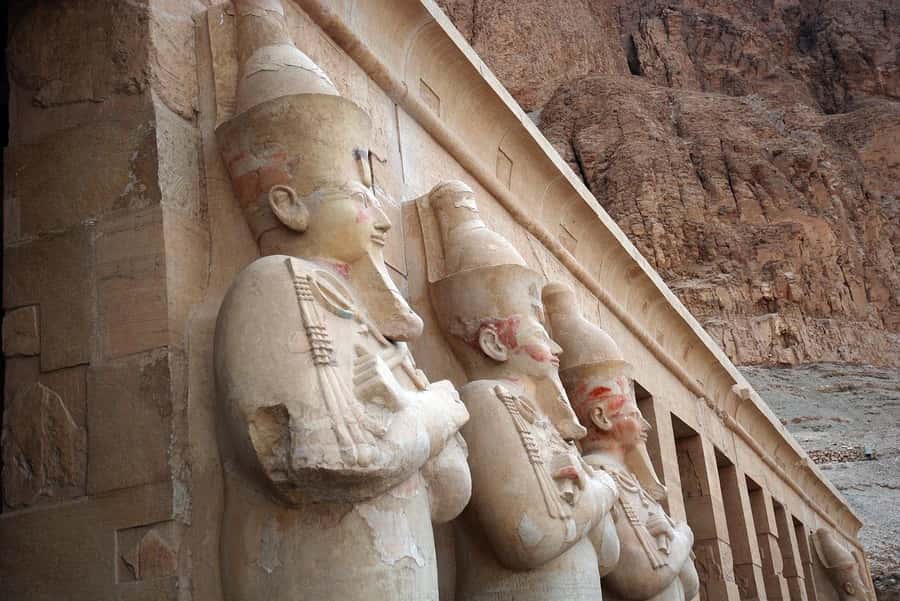
The nearby Deir el-Bahari area leads you to the Temple of Hatshepsut. Its broad terraces and strong horizontal lines make it different from the enclosed temple spaces at Karnak or Abu Simbel. Hatshepsut’s story also gives your guide a chance to explain the unusual position of a woman who ruled Egypt as pharaoh.
Salwa, Khaled, Ahmed Omar, and Shireen were all singled out in different bookings for their help and historical explanations. Salwa was also praised for allowing plenty of time for photographs. That is worth requesting if you want more than a quick group snapshot.
Colossi of Memnon: a short stop with a big view
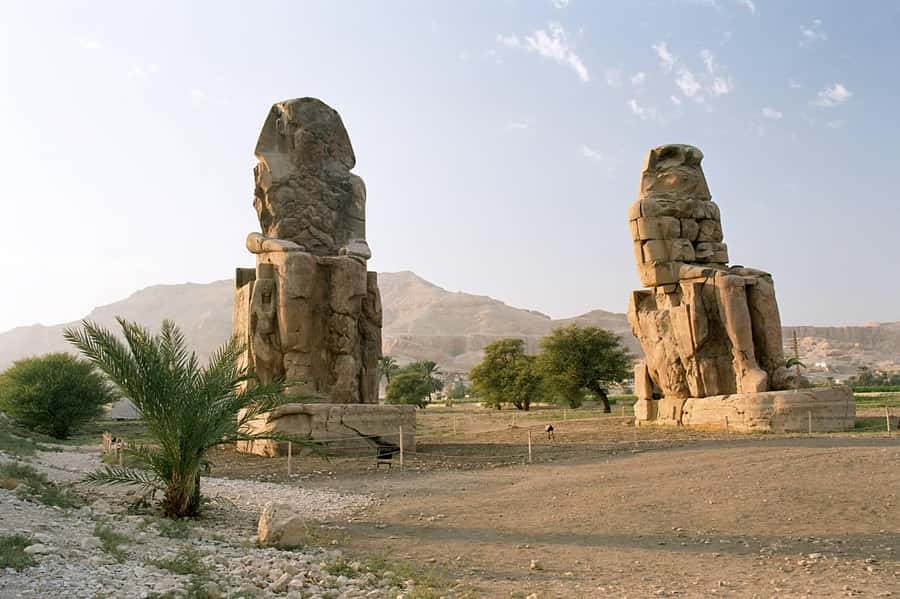
The Colossi of Memnon are two enormous seated statues of Amenhotep III, facing toward the Nile. They are positioned near the road, so this is a brief visit rather than a long archaeological walk.
Do not dismiss it as a photo stop. The statues give you a clear impression of the scale ancient rulers wanted to project. Your guide can also point out the damage and surviving details in the stone.
After the Valley of the Kings and Hatshepsut Temple, this stop is a welcome breather. You get out, see the monuments, take photographs, and continue without adding much strain to an already full day.
Luxor Temple and the East Bank
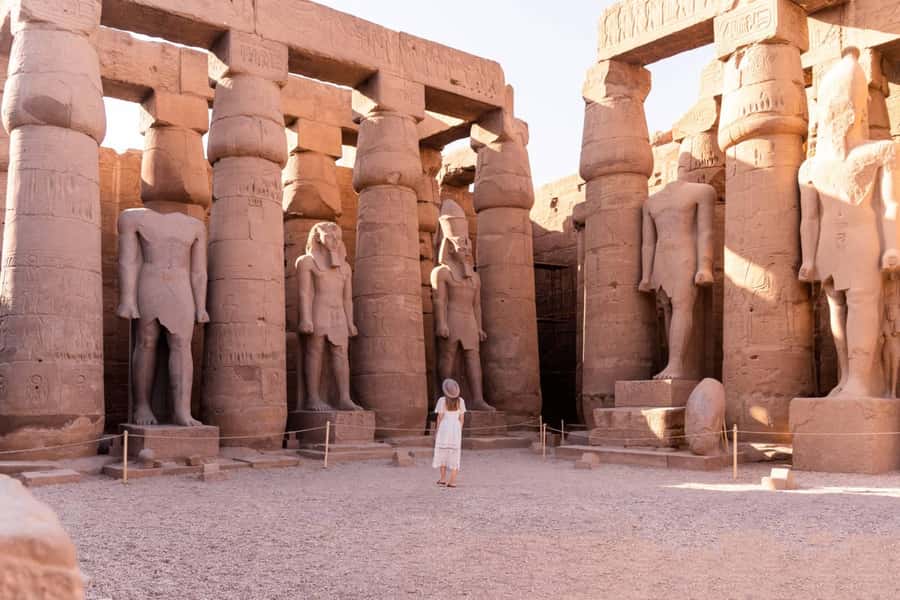
Luxor Temple works well later in the day because its courtyards and statues provide a change of pace after the tombs. You walk through large open spaces, pass granite figures associated with Ramses II, and see how the temple was shaped by several rulers over time.
The Avenue of the Sphinxes once linked Luxor Temple with Karnak. Even if you only see part of the route, it helps you understand that these were not isolated buildings. They formed part of a ceremonial center along the Nile.
Some bookings have had free time after the main sightseeing, and one group arranged a Luxor Temple light and sound show at an extra cost. It was considered worthwhile because the return flight was later that evening. The show is not included, so treat it as an optional add-on rather than part of the standard schedule.
Karnak Temple and its 134 columns
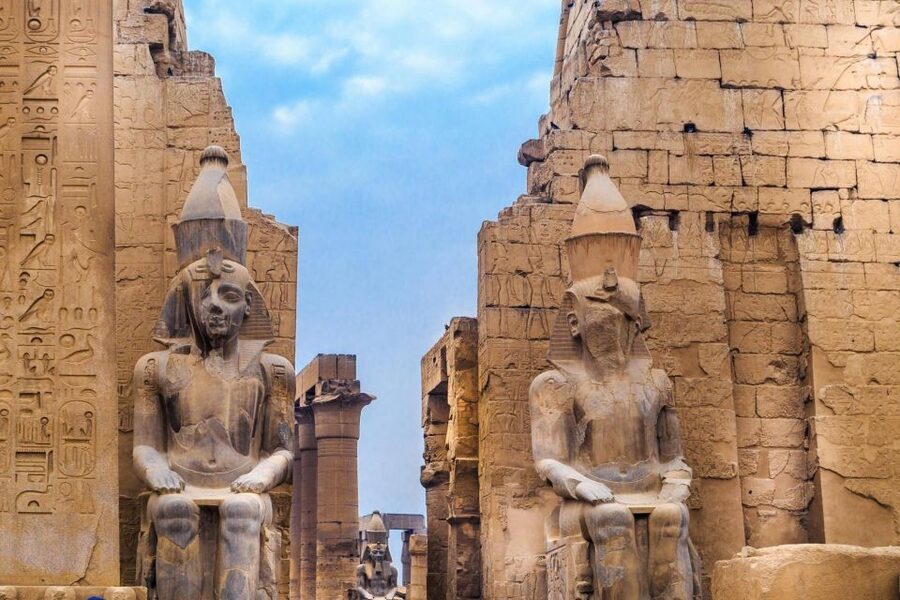
Karnak is the largest and most demanding temple complex on this route. It was built and expanded under different rulers, so you move through layers of Egyptian religious and royal history rather than one single monument.
The approach begins at the Avenue of Sphinxes. From there, the route includes the unfinished Propylon, the vast Hypostyle Hall, and obelisks linked with Queen Hatshepsut. The Hypostyle Hall’s 134 huge columns are the visual high point. Their scale can make you feel very small, which is exactly what the builders intended.
You may travel between Luxor’s major stops by bus or carriage, according to the day’s arrangements. Ask your guide how much walking remains before you set off. Karnak is not a quick glance from the roadside. You need time to look upward, follow the carvings, and understand the plan of the complex.
The timing can work in your favor. One booking party arranged to visit Luxor before Aswan and felt that the first temple of the trip was less crowded. Crowd levels depend on the day, and cruise schedules can affect conditions. If you have flexibility, ask the operator about days when large Nile cruise groups are not expected.
Guides, drivers, and the private-group format
The private-group format is one of this tour’s strongest features. You can ask questions, adjust the pace within reason, and communicate directly with the guide. That is much better than being one voice in a large coach.
The available guide languages are English, Spanish, German, and Arabic. The quality of the explanation matters at sites such as Karnak, where an unstructured visit can turn into a long walk among columns with little sense of purpose.
The staff also handles a complicated chain of airport pickups, road transfers, admission tickets, hotel arrangements, and the final Cairo drop-off. Communication through WhatsApp was praised, and several guides and drivers were described as punctual, friendly, and attentive.
The weak point is that transport quality can vary. One car was reported as dusty, while another group raised serious concerns about speed and seatbelts. Ask for a vehicle in good condition and make safe driving a clear requirement from the start.
Is $815 a fair price?
At $815 per person, the tour costs more than arranging a slower southern Egypt trip yourself. The price includes Cairo to Aswan, Luxor to Cairo, and the connecting domestic flight arrangements, along with private transfers, a guide, entrance fees, lunch, and a hotel night with breakfast.
That bundle has real value. Flight schedules, airport transfers, long-distance driving, and multiple archaeological admissions are easy to mishandle when arranged separately. You are also paying for a staff member to meet you at the airports and keep the trip moving.
The price makes less sense if you have plenty of time or are happy with simpler hotels and slower transport. One booking party suggested that a less expensive hotel could reduce the cost. A Nile cruise or independent rail and hotel plan may suit a larger budget-conscious group better, though those choices require more planning.
I would compare the $815 price against three questions:
- How much is your Cairo hotel time worth?
- Do you want private guiding rather than shared transport?
- Would arranging flights, drivers, tickets, and hotels yourself save enough to justify the work?
If the answer to the first two is yes, the package is easier to justify.
Who should book this two-day Egypt tour?
I would recommend it for first-time visitors with limited time who want the major monuments of Upper Egypt without changing hotels every night. Couples, families, and small private groups should appreciate the direct airport transfers and the ability to communicate with their own guide.
It also suits people who do not want to take a Nile cruise. In two days, you see major sites in Aswan and Luxor while sleeping on land.
I would hesitate if you dislike early mornings, long road journeys, or tightly managed days. Abu Simbel alone requires patience, and adding Luxor’s West and East Banks the following day makes the program physically demanding.
The tour is also not ideal if you want a slow archaeological visit. You will see a lot, but you will not have unlimited time at every temple or tomb.
Practical details before you go
Bring your passport or ID card. You need it for the domestic flights and should keep it accessible throughout the trip.
Wear light clothing, supportive shoes, and sun protection. Carry water, especially during the Valley of the Kings and Abu Simbel portions, where walking and heat can add up quickly.
Ask these questions before departure:
- Which hotel is confirmed in Aswan?
- What time is the Cairo pickup?
- Is breakfast available before the early Luxor transfer?
- Which tombs are included at the Valley of the Kings?
- Can I request a slower, safer driving pace?
- Who is my guide in Aswan and Luxor?
Free cancellation is available up to three days before departure for a full refund. The tour is sold as a private group, and the guide languages are English, Spanish, German, and Arabic.
Should you book it?
Book this tour if you want maximum ancient Egypt in minimum time and value having flights, drivers, tickets, meals, and airport transfers handled together. Abu Simbel, Philae, the Valley of the Kings, Hatshepsut Temple, Luxor Temple, and Karnak make a powerful pair of days.
Skip it if you have time for a slower trip or if $815 feels uncomfortable. You may prefer a simpler hotel, independent transport, or a Nile cruise. For everyone else, the tour offers a practical shortcut through southern Egypt, provided you confirm the hotel and insist on safe driving.
FAQ
How long does the tour last?
The experience takes place over two days and includes one overnight stay. The activity information also lists a 10-hour duration, which likely refers to a scheduled activity segment rather than the full two-day program.
Are domestic flights included?
Yes. The package includes flights from Cairo to Aswan, Aswan to Luxor, and Luxor back to Cairo.
Is hotel accommodation included?
Yes. One night in a four-star hotel with breakfast is included. The itinerary identifies the Pyramisa Isis Hotel, but you should confirm the exact property before departure.
Which attractions are included in Aswan?
The Aswan portion includes the High Dam, Philae Temple, Abu Simbel Temple, and the smaller Temple of Nefertari.
Which attractions are included in Luxor?
The Luxor program includes the Valley of the Kings, Deir el-Bahari, the Colossi of Memnon, Hatshepsut Temple, Luxor Temple, and Karnak Temple.
Is the tour private?
Yes. It is described as a private-group experience.
Which guide languages are available?
Guiding is available in English, Spanish, German, and Arabic.
Is lunch included?
Yes. Lunch is included in the package.
What should I bring?
Bring your passport or ID card. Comfortable walking shoes, water, and sun protection are also sensible choices for the archaeological sites.
More 2-Day Experiences in Cairo
- White & Black Desert tour 2 Days 1 night camping from Cairo.
★ 5.0 · 649 reviews - Cairo: 2-Day Bahariya Oasis Camp and Desert Tour
★ 4.9 · 616 reviews - White & Black desert camping tour 2 Days 1 night From Cairo
★ 5.0 · 467 reviews - 2 days cairo and giza attractions plus Gem, private tour
★ 5.0 · 231 reviews
Just added around Cairo
- Day Tour To Giza Pyramids, Great Sphinx, Saqqara Pyramids & Memphis Capital★ 5.0 · 23 reviews
- GEM Grand Egyptian Museum Private Tour from Cairo Giza hotels★ 5.0 · 23 reviews
- Cairo vip two or one day pyramids ,Museum,memfis ,saqra and7 places★ 5.0 · 23 reviews
- Giza Pyramids, Sphinx, Saqqara, and Dahshur Tour with Camel Ride★ 5.0 · 23 reviews
- Full-Day Tour to Giza Pyramids Saqqara Memphis Sphinx Private★ 5.0 · 23 reviews
- 8 Day Cairo Pyramids and Nile cruise and Alexandria All inclusive Private Tour★ 5.0 · 23 reviews
- Full-Day Tour to Giza Pyramids, memphis and Sakkara Step Pyramid★ 5.0 · 23 reviews
- Half Day Guided Trip To Egyptian Museum★ 4.5 · 23 reviews
Abu Simbel Tours, compared.

4-Days Nile Cruise From Aswan To Luxor including Abu Simbel and Hot Air Balloon
Read our review →
4-Day 3-Night Nile Cruise from Aswan to Luxor including Abu Simbel, Air Balloon
Read our review →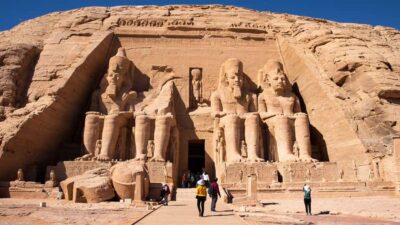
Abu Simbel Temple Private Guided Day Trip with Lunch
Read our review →4-Days Nile Cruise From Aswan To Luxor including Abu Simbel and Hot Air Balloon
Read our review →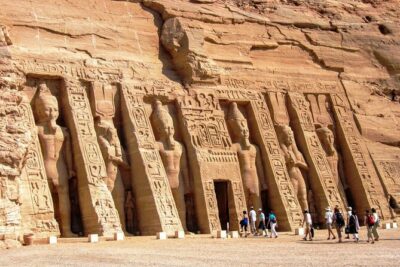
Private Day Tour to Abu Simbel Temples from Aswan
Read our review →4 Days Nile Cruise from Aswan to Luxor including Abu Simbel and Hot Air Balloon
Read our review →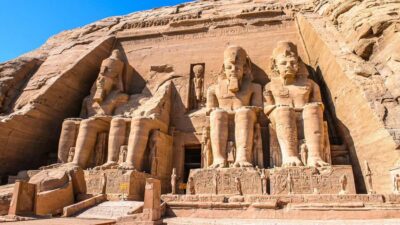
Browse the lists this tour appears in