
Reviewed · VALLEY OF THE KINGS TOURS
FULL Day Tour:Valley of the Kings &Queens &Hatshepsut Temple&more
Ancient tombs, royal temples, and one busy day. This $25 private Luxor tour packs the West Bank’s major sights into about eight hours, with an Egyptologist guide, hotel pickup, air-conditioned transport, entrance fees, lunch, and a bottle of water included. I especially like the chance to see both famous royal tombs and the less-visited village of Deir el-Medina, and I like that your own group gets a private guide rather than being folded into a large coach party.
The main drawback is the pace. Seven stops in one day means you will spend much of your time moving between sites, and two hours at the Valley of the Kings plus two hours at Hatshepsut Temple can feel demanding in the heat. Still, for the price, this is a strong way to cover Luxor’s West Bank when your time is limited.
In This Review
- Five details that shape the day
- Why this Luxor West Bank tour offers good value
- Entering the Valley of the Kings
- A quieter look at the Valley of the Queens
- Reading Hatshepsut’s temple through its architecture
- Lunch and the practical reset in Luxor
- The Colossi of Memnon: a brief roadside stop
- Habu Temple and the walls of Ramesses III
- Deir el-Medina and the people behind the tombs
- The guide’s role and the private format
- Timing, transport, and the heat factor
- Who should book this $25 experience?
- Should you book it?
- FAQ
- How long does the tour last?
- Is hotel pickup included?
- Is airport pickup available?
- Is this a private tour?
- What type of guide leads the tour?
- Are entrance fees included?
- Is lunch provided?
- Can I cancel for a full refund?
Five details that shape the day
- Seven West Bank stops: You visit the Valley of the Kings, Valley of the Queens, Hatshepsut Temple, Colossi of Memnon, Habu Temple, and Deir el-Medina, with lunch in Luxor.
- Private touring: Only your group participates, so you can ask questions and spend free time at each site without keeping up with strangers.
- About eight hours: The schedule gives the royal tombs and major temples serious attention, but the day remains full.
- $25 per person: That price includes transport, a licensed English-speaking Egyptologist guide, archaeological entrance fees, lunch, and bottled water.
- A guide-led introduction, then free time: The guide explains each place before you explore, a style praised for giving visitors both useful context and room to look around independently.
Why this Luxor West Bank tour offers good value
Luxor’s west bank is spread across a broad area, and arranging every stop on your own can mean sorting out transport, entrance tickets, and site order. This experience puts those pieces together for you. You are collected from your Luxor hotel, driven in an air-conditioned vehicle, and returned after the final stop.
At $25 per person, the value is unusually strong if the advertised inclusions are important to you. You are not paying only for a ride. The fee covers the guide, vehicle, bottled water, entrance fees for the listed archaeological sites, and lunch. Airport pickup costs an extra $10, so hotel pickup is the better fit for this tour.
The private format matters. You can ask why a tomb was built, how the workers lived, or why Hatshepsut’s temple looks so different from Habu Temple. The schedule still has fixed stops, but your group has more freedom than it would on a large shared bus.
The booking pattern also gives you a useful planning clue: this experience is often reserved about 32 days ahead. That does not guarantee it will sell out on your dates, but booking early is sensible if you want a particular day during a busy period.
More Valley of the Kings tours:
- Hurghada: Luxor Valley of the Kings & Tutankhamun Tomb Trip
★ 4.7 · 13,208 reviews - Luxor Day Tour: Valley of Kings & Queens & Hatchepsut Temples
★ 5.0 · 1,496 reviews - Luxor: Valley of the Kings and Hatshepsut Temple Day Tour
★ 4.4 · 1,404 reviews
Entering the Valley of the Kings
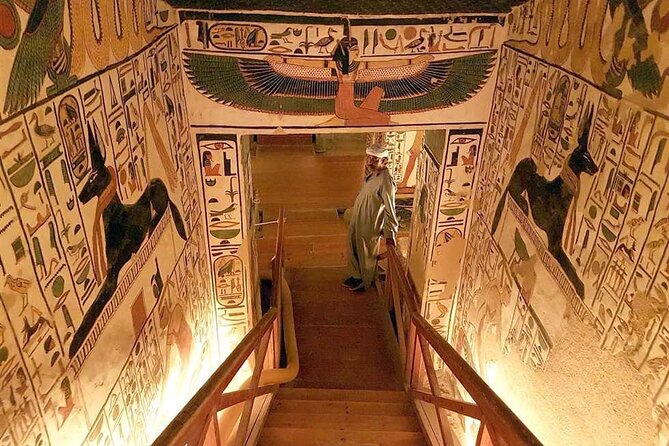
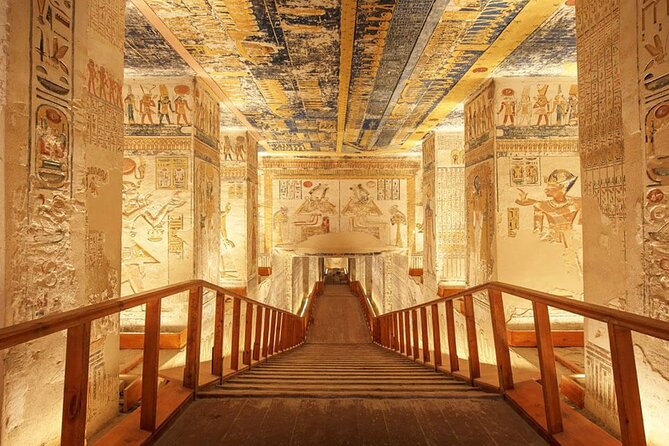
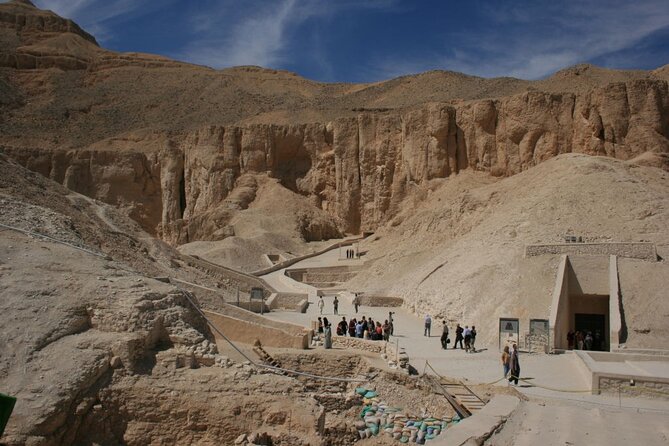
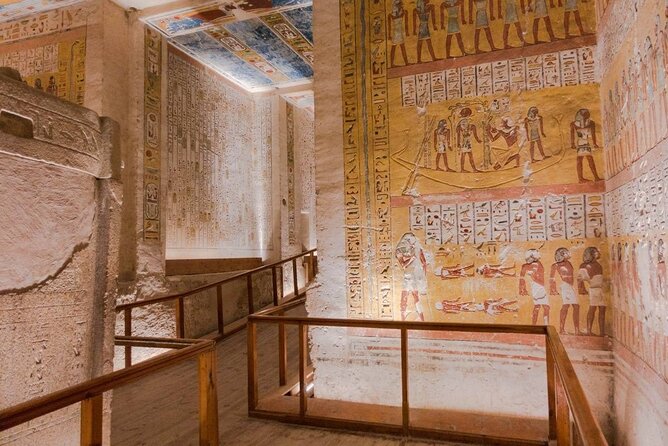
The day begins at the Valley of the Kings, the royal burial ground of Theban pharaohs. You can expect about two hours here, the longest single site visit on the schedule. That gives you time to see the valley itself, enter the included tombs, and study the painted walls and hieroglyphics without treating the stop as a quick photo break.
The site is famous because Tutankhamun’s tomb is here, but the valley is not simply a one-tomb attraction. Your guide can help place the burial chambers within the wider story of pharaonic rule, religious beliefs, and royal burial customs. The useful part of a guide’s role is explaining what you are looking at before you enter, then allowing you to take in the details at your own pace.
The tombs are underground chambers, so the experience changes from open desert to enclosed spaces filled with painted decoration. If you enjoy ancient art, this is likely to be the strongest stop. If you dislike heat, stairs, or enclosed spaces, two hours may feel long, especially after the walk from the vehicle.
Entrance fees for the archaeological sites are included, which removes one common nuisance. The tour does not state how many individual tombs are open on your date, so do not assume you will see every famous burial chamber. Ask your guide what is available when you arrive.
A quieter look at the Valley of the Queens
The Valley of the Queens receives about 45 minutes. It is a shorter stop than the Valley of the Kings, but it adds an important balance to the day. Here, the focus shifts from pharaohs to queens and royal children, giving you a broader view of the people connected to the royal household.
The shorter time means you will need to keep moving. Your guide’s introduction can help you decide what deserves your attention before you begin exploring. This is exactly where private touring helps: you can ask for a little more explanation or use the available time for your own photographs and close looks at the tomb decoration.
The tour description does not promise entry to a specific tomb at the Valley of the Queens. Conditions at archaeological sites can vary, so treat the stop as a chance to see the area and the tombs that are open rather than a guarantee of one named chamber.
Reading Hatshepsut’s temple through its architecture
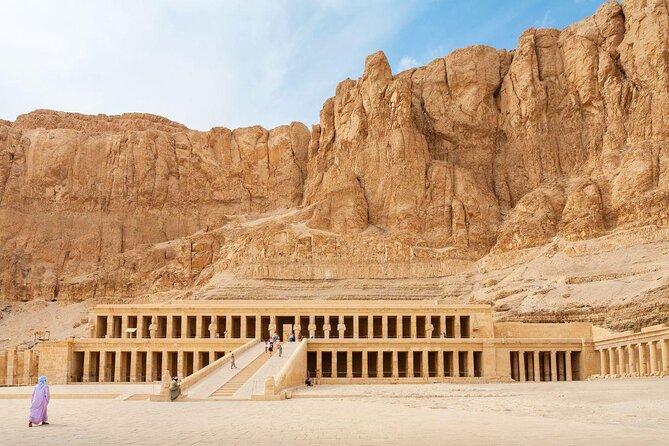
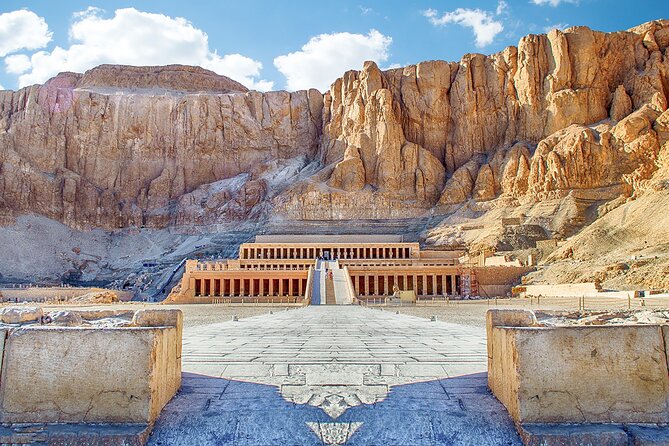
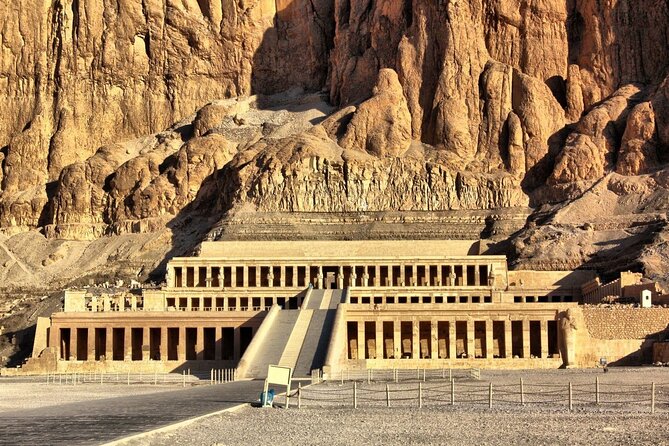
Hatshepsut Temple receives two hours, matching the time at the Valley of the Kings. That tells you something about the priorities of the day. This is not a quick stop at the entrance followed by a short photo session. You have time to look at the terraces, broad lines, reliefs, and setting at Deir el-Bahari.
Hatshepsut ruled as a female pharaoh, and the temple gives your guide a natural place to explain her authority and public image. The architecture is also a useful contrast to the underground tombs. At the Valley of the Kings, you read painted walls in enclosed chambers. Here, you take in large outdoor spaces and a temple designed for ceremony and display.
I like the way this stop breaks up the tomb visits. You get open air, strong architectural forms, and a different side of royal power. The drawback is exposure to the sun. The tour includes an air-conditioned vehicle and bottled water, but you should still plan for a long day outdoors.
Because the tour is private, your guide can adjust the explanation to your interests. If you care about ancient religion, ask about the temple’s purpose. If architecture interests you more, ask how the terraces and colonnades shape the approach. The provided schedule allows time for both, within reason.
More Hatshepsut temple visits:
- Hurghada: Valley of Kings Hatshepsut & Karnak Luxor Day Trip
★ 4.5 · 375 reviews - Shared Day Tour to Valley of the Kings, Hatshepsut ,Memnon &lunch
★ 5.0 · 275 reviews - Private Half Day West Bank Tour to Valley of the Kings Queen Hatshepsut Temple and Colossi of Memnon
★ 5.0 · 268 reviews - Luxor Day Tour: Explore Valley of Kings, Queens, Hatshepsut& More
★ 5.0 · 251 reviews
Lunch and the practical reset in Luxor
Lunch takes about one hour and is included in the day. This break is more than a meal between monuments. After the first three major stops, you will appreciate time to sit, eat, and recover before returning to the sites.
The details of the restaurant and menu are not specified, so you should not book this expecting a particular cuisine or dining setting. The useful point is that lunch is built into the schedule and does not require you to find food on your own while the clock is running.
If you have dietary needs, ask the provider before booking. The supplied information does not list special meal arrangements. The same applies to drinks beyond the included bottle of water.
The Colossi of Memnon: a brief roadside stop
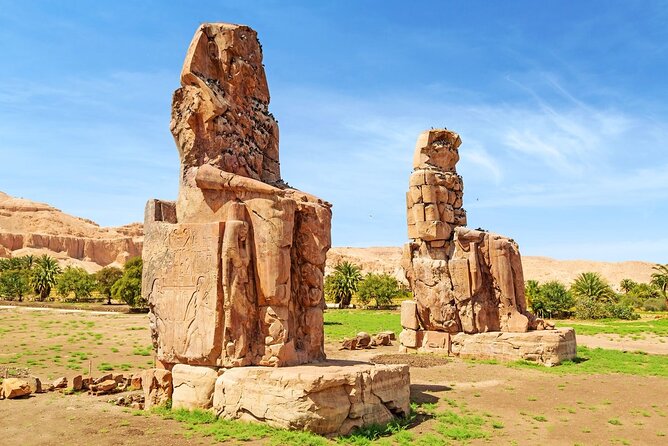
The Colossi of Memnon takes about 15 minutes, making it the shortest stop. These massive statues once guarded the grand temple of Amenhotep III. Their scale is easy to appreciate even during a brief visit, and they provide a quick pause between the larger temple sites.
Do not expect a long guided exploration here. The schedule gives you time to see the statues, hear the main explanation, and take photographs before moving on. This is a useful stop for seeing a famous Luxor landmark without allowing it to consume the afternoon.
The short duration can also be a relief. After underground tombs and a large temple, a 15-minute visit gives you a simple, focused sight. You see the statues, consider their original setting, and return to the vehicle.
Habu Temple and the walls of Ramesses III
Habu Temple, also called the Mortuary Temple of Ramesses III, receives about one hour. For many people, this will be one of the most rewarding stops because its reliefs and architectural details are especially useful for understanding royal temples.
The carvings show battles, religious ceremonies, and scenes from everyday life. That range gives your guide plenty to work with. You are not looking only at decorative stone. You are also seeing how ancient Egypt presented military power, religious duty, and the world of ordinary activity.
One hour is enough for a focused visit, but it is not enough to inspect every relief closely. Ask your guide to point out the most important scenes early in the stop. Then use your free time to return to the details that catch your eye.
I like that Habu Temple follows the Colossi of Memnon. The statues give you a brief look at royal scale, while Habu gives you walls filled with explanation and visual detail. Together, the stops help you connect individual monuments to the larger role of the pharaoh.
Deir el-Medina and the people behind the tombs
The last major stop is Deir el-Medina, also known as the Valley of the Artisans. You spend about one hour at the ancient village where craftsmen and laborers lived while working on the tombs in the Valley of the Kings and Valley of the Queens.
This stop changes the focus of the day. Earlier, you see royal burial places and temples built for rulers. At Deir el-Medina, you get a look at the homes, tombs, and remains connected to the skilled workers and their families. That makes the visit especially valuable for anyone who wants more than a parade of royal monuments.
The village helps you think about the people who made the famous tombs possible. Their work required planning, craft, painting, stone cutting, and organized labor. The site puts human faces, even if only indirectly through houses and artifacts, behind the grand names of the pharaohs.
One hour should give you a useful introduction, though the stop may feel short if you want to examine every house and tomb. I would pay close attention to the guide’s explanation at the start, then use the remaining time to explore the parts that interest you most.
The guide’s role and the private format
The guide is an English-speaking Egyptologist who is described as qualified and fully licensed. That matters at Luxor, where a site can seem like a collection of walls until someone explains the symbols, purpose, and political story behind it.
The strongest praise for the guiding style focuses on two things: clear explanations before entering each site and free time afterward. That combination works well. You get the background needed to understand the tomb or temple, but you are not forced to stand beside the guide for every minute.
The private arrangement also makes the day more personal. Only your group participates, and the guide can respond to your questions rather than delivering a fixed speech to a large crowd. The exact group size is not provided, so private does not necessarily mean one or two people. It means your booking is not combined with another group.
The guide’s subject knowledge is particularly useful for Egyptian mythology, and the strongest praise highlights a kind, gentlemanly manner. Those qualities matter during a long day. Good explanations help you see more, while a respectful manner makes the repeated transfers and site visits easier.
Timing, transport, and the heat factor
The advertised duration is about eight hours. The site times add up to more than seven hours before allowing for driving, pickup, drop-off, and transitions, so expect a full schedule rather than a relaxed day with long pauses.
Pickup and return transport from your Luxor hotel are included. The vehicle is air-conditioned, an important comfort in Luxor. You also receive a bottle of water, though you may want to ask about carrying additional drinks since the tour provides only one bottle.
The itinerary moves between enclosed tombs, open temple grounds, and village ruins. Wear practical clothing and shoes suitable for walking, but the exact dress requirements are not stated. The tour data says most travelers can participate, yet it does not provide a detailed accessibility description. If you have mobility concerns, confirm the walking conditions with the provider before booking.
Because the schedule is busy, keep personal shopping and long café stops for another time. This tour is built around archaeological sites. You will get the most from it if you arrive ready to listen, walk, and use short free periods well.
Who should book this $25 experience?
I would choose this tour if you have one full day in Luxor and want the West Bank’s principal sites handled in one package. It suits first-time visitors who want context, transport, tickets, and lunch arranged together.
It also fits history-minded visitors who want more than the two headline stops. Deir el-Medina and Habu Temple add substance, while the Valley of the Queens gives the day a wider royal focus.
You may want a different option if you prefer slow photography, long independent exploration, or a schedule with only two or three monuments. The eight-hour plan is efficient, but it is not leisurely. The $25 price is excellent for the number of inclusions, yet the value comes from coverage and convenience rather than spacious pacing.
Free cancellation is available if you cancel at least 24 hours before the start time. Cancellations or changes within 24 hours are not refunded or accepted, and the times are based on Luxor’s local time.
Should you book it?
Book this tour if you want a low-cost private day that covers the West Bank thoroughly, with a guide to explain the monuments and a vehicle to connect them. The best reasons are the unusually broad route, included entrance fees, lunch, and the chance to see Deir el-Medina and Habu Temple alongside the famous tombs.
Think twice if you want a quiet, unhurried day. Seven stops make this a full Egyptian history workout, with heat and walking mixed in. For most first visits to Luxor, though, the combination of price, private guiding, and site coverage makes this a practical choice.
FAQ
How long does the tour last?
The tour lasts approximately eight hours.
Is hotel pickup included?
Yes. Pickup and return transportation from your Luxor hotel are included.
Is airport pickup available?
Yes, but airport pickup costs an additional $10.
Is this a private tour?
Yes. Only your group participates in this private activity.
What type of guide leads the tour?
An English-speaking, qualified, fully licensed Egyptologist guide leads the tour.
Are entrance fees included?
Yes. Entrance fees for the archaeological sites listed in the itinerary are included.
Is lunch provided?
Yes. The itinerary includes a one-hour lunch break and describes lunch as included.
Can I cancel for a full refund?
Yes, if you cancel at least 24 hours before the experience start time. Cancellations or changes made within 24 hours are not refunded.
More Full-Day in Luxor
- Luxor: Shared Full-Day Tour to Luxor West and East Banks
★ 4.5 · 1,812 reviews - Full Day Tour to East and West Banks of Luxor
★ 5.0 · 1,449 reviews - Luxor : Full Day Tour to Luxor West and East Banks & Lunch
★ 5.0 · 870 reviews - Full Day Tour of Luxor West Bank Temples and Tombs (Private)
★ 5.0 · 722 reviews
Just added around Luxor
- Private Tour foll day to East and West Banks of Luxor★ 5.0 · 23 reviews
- East and West Bank Luxor★ 5.0 · 23 reviews
- Full Day Tour to Luxor (East & West Bank)★ 5.0 · 23 reviews
- Big brother travel★ 5.0 · 23 reviews
- Luxor Day Tour :Valley of Kings & queen & Hatshepsut & Habu city★ 5.0 · 23 reviews
- Luxor: Scenic Camel or Horse Ride★ 3.9 · 24 reviews
- From Cairo: 4-Day Nile Cruise from Aswan to Luxor with Meals★ 4.4 · 24 reviews
- Traditional Egyptian Breakfast at the AlHabib Arabian Horse Farm★ 5.0 · 24 reviews
Valley of the Kings Tours, compared.
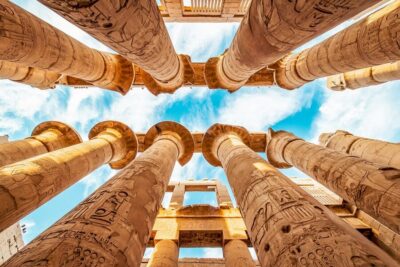
Luxor Valley of the Kings & Tutankhamun Tomb Trip
Read our review →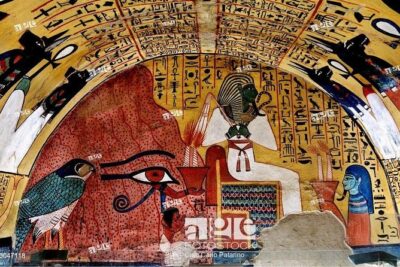
Luxor Day Tour: Valley of Kings & Queens & Hatchepsut Temples
Read our review →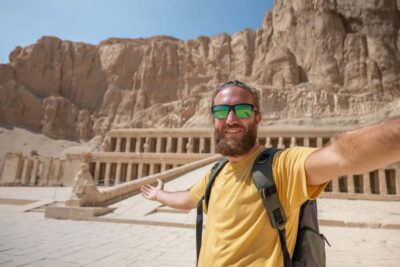
Valley of the Kings and Hatshepsut Temple Day Tour
Read our review →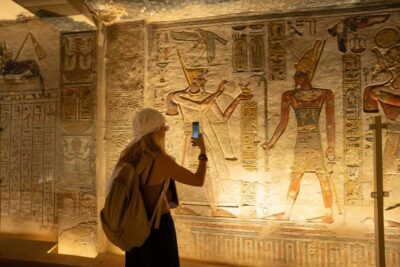
Luxor Tour with Valley of Kings, Karnak & Tut Tomb
Read our review →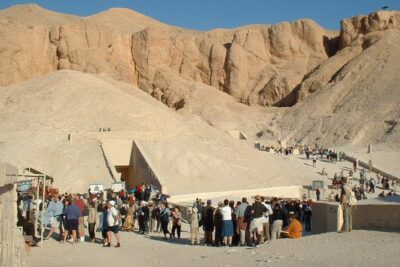
Valley of Kings, Hatchepsut Temple ,Karnak & Luxor-DayTour
Read our review →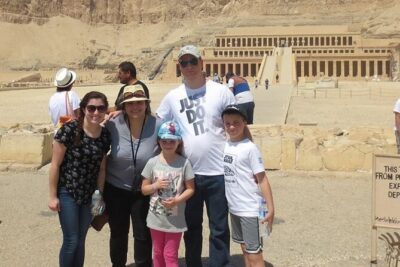
Small Group Excursion to Luxor Valley of the Kings from Hurghada
Read our review →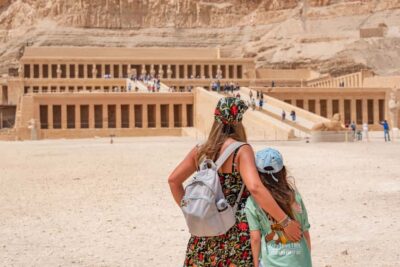
Valley of Kings Hatshepsut & Karnak Luxor Day Trip
Read our review →
Valley of the Kings and Queens Guided Tour with Lunch
Read our review →Browse the lists this tour appears in