
Reviewed · GIZA PYRAMIDS & SPHINX TOURS
Giza Pyramids, the Sphinx, Islamic & Coptic Cairo Tour
Ancient stone, living faith, one long day. This private Cairo excursion links the Giza Pyramids and Sphinx with Coptic churches, Islamic monuments, and the Cairo Citadel, making it a useful choice when you have only one full day. I like the door-to-door hotel pickup and the flexibility of a private Egyptologist guide. I also like the unusual range of stops, from the Great Pyramid to the Hanging Church and Al-Azhar’s historic quarter.
The main drawback is the packed schedule. You cover major sights across Giza and Cairo in about eight hours, with entrance fees and lunch costing extra. The camel ride and an essential-oil visit may also appeal more to some people than others.
In This Review
- Key points to know before booking
- One day, three eras of Cairo
- Giza Pyramids: the ancient world in one morning
- The Sphinx and Valley Temple
- Coptic Cairo and the Hanging Church
- Old Cairo’s gates, mosques, and old university
- The Museum of Islamic Art
- Cairo Citadel and Muhammad Ali Mosque
- What the $43 price really covers
- Who will enjoy this Cairo day most
- Should you book this tour?
- FAQ
- What is the duration of the tour?
- What time does the tour start?
- Is hotel pickup included?
- Is this a private tour?
- Is transportation included?
- Is an Egyptologist guide included?
- Is the camel ride included?
- Are entrance fees included?
- Is lunch included?
- Can I cancel for a full refund?
Key points to know before booking
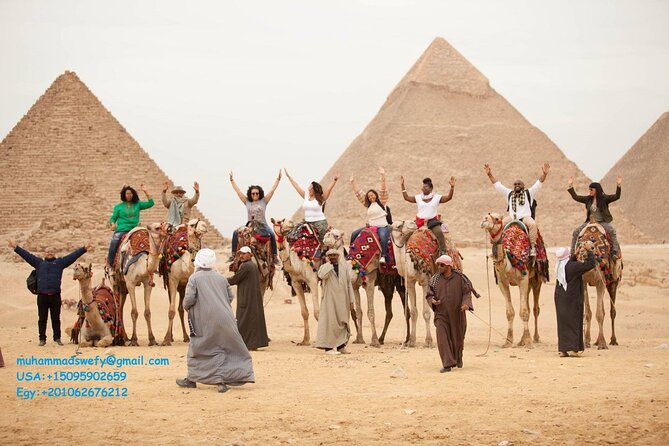
- Nine pyramids from camelback: The Giza portion includes the three famous pyramids, smaller pyramids, panoramic views, and a short camel ride.
- A private day with hotel pickup: Your own group travels in an air-conditioned vehicle with an Egyptologist guide.
- More than the standard Cairo circuit: The route includes Coptic Cairo, Bab Zuweila, historic mosques, Islamic monuments, and the Citadel.
- Muhammad Ali Mosque is a visual highlight: Its Ottoman design, twin minarets, and alabaster interior make it one of Cairo’s most recognizable buildings.
- Budget for extra costs: Entrance tickets, meals, drinks, and gratuities are not included in the $43 price.
- A strong satisfaction record: The experience has a 4.9 rating from 98 reviews, with 98 percent recommending it.
One day, three eras of Cairo
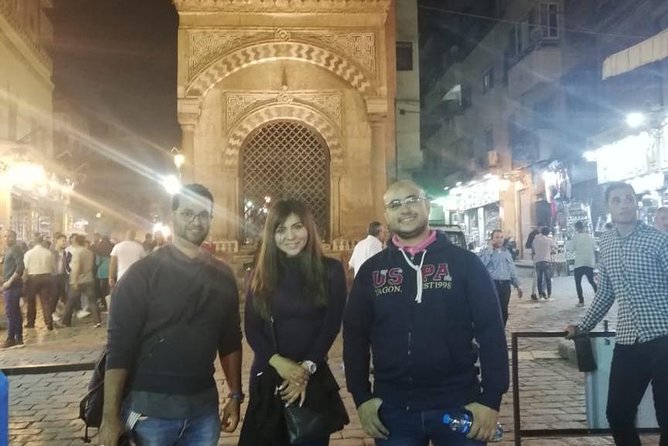
Cairo and Giza can feel like several cities pressed together. The pyramids belong to the age of pharaohs. Coptic Cairo recalls Egypt’s early Christian centuries. The mosques, gates, madrasas, and mausoleums of Old Cairo tell the story of later Islamic rule.
This tour tries to connect all three parts in one private outing. That is its greatest strength. You do not spend the whole day at the pyramids and miss the city itself. You also avoid arranging separate cars, guides, and meeting points for each district.
You begin at 9:00 a.m., with pickup from your Cairo or Giza hotel. The air-conditioned vehicle matters here. Cairo’s distances, traffic, heat, and dust can wear you down quickly, so a private car gives you a place to cool off between visits.
The private format also gives your guide room to adjust the pace. If you want more time at a church, a mosque, or a viewpoint, you can ask. If your energy drops after the pyramids, you can keep the visit moving without waiting for a large group.
More ways to see the pyramids and the Sphinx:
- From Cairo: Half-Day Tour to Pyramids of Giza and the Sphinx
★ 4.6 · 2,891 reviews - Private guided tour to Giza Pyramids, and Great Sphinx
★ 5.0 · 1,755 reviews - Giza Pyramids and Sphinx: Half-Day Private or Group Tour
★ 4.4 · 1,424 reviews
Giza Pyramids: the ancient world in one morning
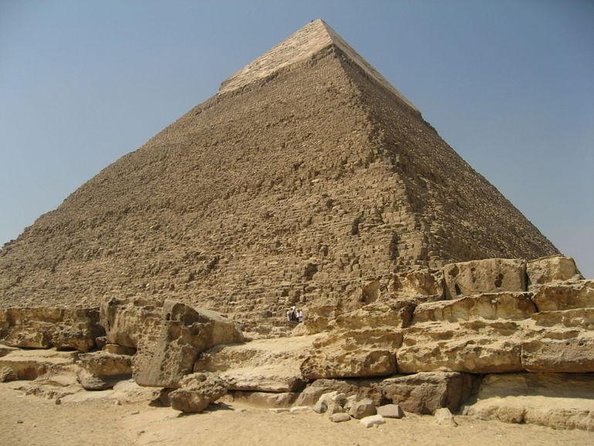
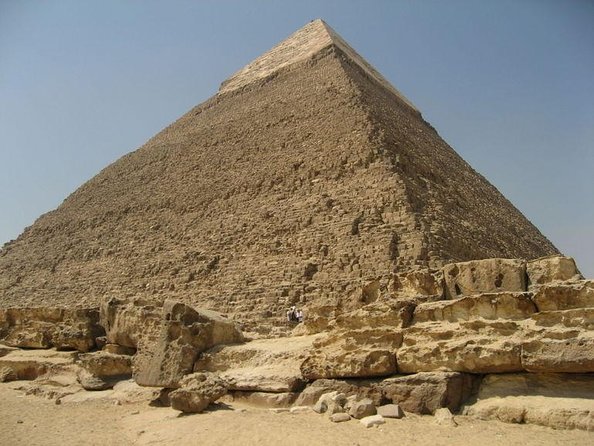
The first major stop is the Giza Plateau, home to the Great Pyramid of Cheops, the Pyramid of Chephren, and the Pyramid of Mykerinus. The Great Pyramid is the only surviving wonder of the ancient world, and seeing it in person gives you a better sense of its scale than any photograph can.
The visit also includes the smaller pyramids and related structures, bringing the total view to nine pyramids. From the panoramic point, you can frame several pyramids in one photograph. This is one of the best places to appreciate how the monuments sit together rather than treating each pyramid as an isolated attraction.
Allow about three hours for this section. That sounds generous, but the plateau includes several stops: the pyramids, the panoramic viewpoint, the Great Sphinx, the Valley Temple, photographs, and the camel ride.
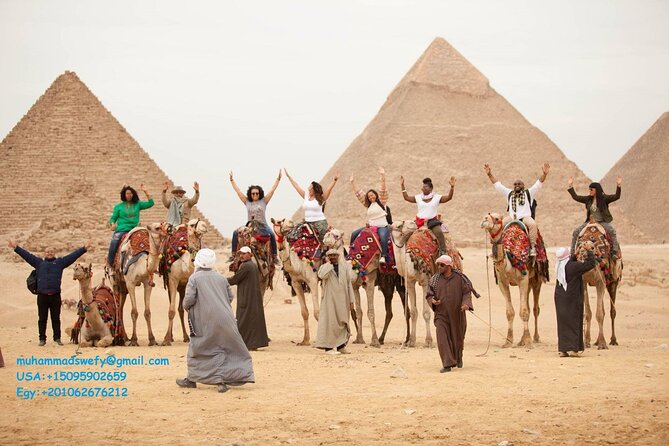
The short camel ride is designed mainly as a scenic experience. You ride with the pyramids behind you and the Sahara around you, rather than setting out on a long desert journey. The view makes the ride worthwhile, especially if you want a classic Egypt photograph.
You should be comfortable with the fact that camel riding can feel awkward at first. The animal rises and kneels in stages, and the motion may be challenging if you have limited physical fitness. The tour requires a moderate fitness level, and children must be accompanied by an adult.
The guide can help you decide if the ride suits you. One particularly praised guide, Muhammad Swefy, is described as eager to show both famous sights and less obvious corners. Another guide was especially attentive about water, snacks, lunch, and small details, even helping one visitor choose a camel named Mickie. Those details point to the value of having a private guide who watches your comfort rather than simply reciting facts.
The Sphinx and Valley Temple
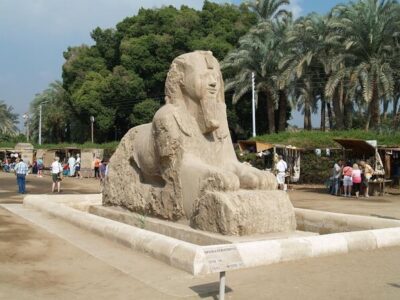
The Great Sphinx receives its own short visit of about 20 minutes, though it is also part of the wider Giza stop. This enormous sculpture, carved from a single block of stone, has the body of a lion and the head associated with a pharaoh.
The Sphinx is best approached with some context from your Egyptologist guide. Without explanation, you may spend a few minutes taking photographs and move on. With a guide, you can connect the sculpture to the nearby Pyramid of Chephren and the ceremonial buildings around it.
The Valley Temple faces the Sphinx and provides another important piece of the Giza complex. It is easy to overlook because the pyramids are so dominant, but the temple helps you understand that Giza was not just a collection of tombs. It was a carefully planned funerary site.
The schedule also includes a visit to essential-oil makers. You learn about oils associated with ancient Egyptian body care, spiritual practices, and mummy preservation. This stop may be interesting if you enjoy traditional products, but it is not one of the core archaeological sights. If shopping presentations are not your priority, ask your guide how much time will be spent there.
Coptic Cairo and the Hanging Church
After Giza, the tour shifts from pharaonic monuments to Coptic Cairo. This district includes the Babylon Fortress, the Coptic Museum, the Hanging Church, the Greek Church of St. George, and other Christian sites.
Coptic Cairo is one of the most important parts of the day because it shows a side of Egypt that can disappear from a first-time visit focused only on pyramids and mosques. Christian traditions connect the area with the Holy Family’s stay in Egypt, particularly at the Church of Saints Sergius and Bacchus, also called Abu Serga.
The area’s churches were built across different periods, including after the Muslim conquest of Egypt in the seventh century. That long continuity gives the district a particular character. You are not just visiting one old church. You are seeing a compact part of Cairo where religious communities and traditions have endured for centuries.
About two hours are allocated to Coptic Cairo, including the Hanging Church. That should give you time to look at the church’s interior and understand its setting, though the exact pace depends on the day and the amount of time spent at other sites.
The Hanging Church, formally Saint Virgin Mary’s Coptic Orthodox Church, is one of Egypt’s oldest churches. Its name comes from its position above the remains of the Roman-era Babylon Fortress. The church’s history on this site reaches back to the third century.
This is a place where a guide adds real value. The architecture, religious symbols, and layered setting are easier to understand when someone explains what you are seeing. The guide can also help you move through the district without treating each church as just another photo stop.
More Coptic Cairo visits:
- All inclusive private tour Egyptian Museum/Coptic Cairo/Bazaar
★ 5.0 · 95 reviews - Cairo City Tour 2 (Coptic & Islamic Cairo)
★ 5.0 · 57 reviews - Private Day Tour to Coptic Cairo, Islamic Cairo and Bazaar
★ 4.5 · 36 reviews - Day Tour at The Egyptian Museum and Coptic Cairo
★ 5.0 · 23 reviews
Old Cairo’s gates, mosques, and old university
The route continues through the old city with a series of Islamic monuments. These include Al-Ishaqi Mosque, Bab Zuweila, Al-Salih Tala’i Mosque, the Faraj ibn Barquq funerary complex, Sabil-Kuttab, Al Kurdi Mosque, Gani Bek Mosque, Al Burdayni Mosque, Saint Safiyya Mosque, and the Museum of Islamic Art.
That is an ambitious list. Some stops may be brief, especially if traffic, opening conditions, or time spent at the pyramids affects the schedule. Still, the variety is useful. You see mosques, schools, charitable water buildings, gates, and tomb complexes rather than only one grand mosque.
Bab Zuweila is a particularly memorable point along the route. This Fatimid gate once marked an entrance into Cairo, and its stories include long periods of conflict and political change. It gives you a physical sense of the old city’s former defenses.
Al-Salih Tala’i Mosque brings you closer to 12th-century Islamic architecture. Faraj ibn Barquq is a funerary complex that may also have served as a traditional madrasa, or religious school. These places show how worship, education, charity, and burial were often linked in one architectural setting.
The visit also touches on Al-Azhar University, one of the oldest continuously operating universities in the world. That context helps explain why Cairo became such an important center of Islamic learning. You are seeing more than decorative buildings. You are following the city’s role as a place of scholarship and religious study.
The Museum of Islamic Art
The Museum of Islamic Art is included among the Old Cairo stops. It holds one of the world’s major collections of Islamic art and artifacts from across the Islamic world.
The supplied schedule does not give a separate visit length, so you should ask your guide how much time is planned for the museum. If you enjoy objects, manuscripts, metalwork, ceramics, and architectural details, you may want to protect time for this stop. If your priority is outdoor monuments, your guide may keep it shorter.
This is one reason a private tour can work better than a fixed group schedule. You can explain whether you prefer museum interiors, churches, mosques, or photographs, then adjust the balance where possible.
Cairo Citadel and Muhammad Ali Mosque
The final major section takes you to the Cairo Citadel, also called the Citadel of Saladin. The medieval fortification was founded by Salah ad-Din and later expanded by Egyptian rulers. For nearly 700 years, it served as a seat of government and a residence for rulers.
The Citadel visit is planned for about 90 minutes. That gives you time to take in the setting and visit the Mosque of Muhammad Ali, also known as the Alabaster Mosque.
Muhammad Ali Pasha commissioned the mosque between 1830 and 1848 in memory of his eldest son, Tusun Pasha, who died in 1816. Built in an Ottoman style, the mosque is marked by its twin minarets and prominent silhouette.
Inside, the broad design and alabaster surfaces create a very different mood from the stone structures at Giza or the older churches of Coptic Cairo. The mosque is also one of the first Cairo landmarks you may notice when approaching the city from many directions, so visiting it gives meaning to a building you may already have seen from afar.
The mosque receives about 30 minutes within the Citadel visit. That is enough for the main impressions and photographs, but not an extended architectural study. You may need to keep your expectations realistic if you want long, quiet time inside.
What the $43 price really covers
At $43 per person, this tour can offer good value if your group wants a private vehicle, hotel transfers, and a guide for a full day. You are paying for transport across several widely separated districts, not simply admission to one monument.
The price includes:
- Private tour service
- Pickup and return to your hotel
- Private air-conditioned vehicle
- Qualified Egyptologist guide
- Mineral water in the vehicle
- Service charges and taxes
It does not include entrance fees, food, drinks, or gratuities. The Giza Pyramids and Cairo Citadel both list admission as extra, so you should set aside additional money before the morning begins.
Lunch is planned at a deluxe Egyptian food court, but you pay for your own meal. This is practical because everyone can choose what to eat, but the schedule does not appear to include a formal meal break in the price.
One useful point comes from the guide feedback: a full day can pass quickly without a pause. One person specifically wished for a morning and afternoon coffee break and a clearer lunch proposal after several hours of sightseeing. Bring water, use the supplied mineral water, and tell your guide when you need food or a rest. A private tour makes that request easier.
Who will enjoy this Cairo day most
I would choose this tour if you want a broad first look at Cairo and Giza without arranging several separate excursions. It suits couples, families with older children, and small private groups that value personal attention and hotel pickup.
It is also a good fit if your interests stretch beyond ancient Egypt. The pyramids receive the biggest share of attention, but Coptic churches, Islamic architecture, the Citadel, Al-Azhar, and the Museum of Islamic Art give the day a wider purpose.
You may prefer a more focused tour if you want a slow archaeological visit, extended museum time, or a relaxed half-day at the pyramids. The schedule covers a lot of ground, and the long list of mosques and old-city sites means some visits may be short.
Dress appropriately for the weather and religious sites. The tour operates in all weather conditions, so comfortable clothing, practical shoes, and sun protection are sensible choices. A moderate level of physical fitness is expected.
The private format is the tour’s most useful feature. Guides such as Muhammad Swefy are praised for enthusiasm and for showing familiar sights with extra context. The strongest guide experience here comes from asking questions, stating your interests, and speaking up about breaks.
Should you book this tour?
Book it if you want the pyramids, Sphinx, camel ride, Coptic Cairo, Old Cairo, the Citadel, and Muhammad Ali Mosque in one organized day. At $43 per person before admissions and lunch, the combination of private transport and an Egyptologist guide is appealing.
Skip it if you want a slow, single-theme visit or dislike busy schedules. Also check the extra entrance costs before booking, since the advertised price does not cover tickets.
For most first-time visitors with limited time, I think this is a strong introduction to Cairo. Its 4.9 rating from 98 reviews and 98 percent recommendation rate match the main strengths: attentive guides, personal pacing, hotel transfers, and a wide cultural range. Just start early in spirit, take breaks when needed, and treat the camel ride and essential-oil stop as optional parts of a much larger day.
FAQ
What is the duration of the tour?
The tour lasts approximately eight hours.
What time does the tour start?
The stated start time is 9:00 a.m.
Is hotel pickup included?
Yes. Pickup and return are provided from Cairo or Giza hotels.
Is this a private tour?
Yes. Only your group participates in the private activity.
Is transportation included?
Yes. The tour uses a private air-conditioned vehicle.
Is an Egyptologist guide included?
Yes. A qualified Egyptologist guide is included.
Is the camel ride included?
The Giza itinerary includes a short camel ride, but the supplied information does not separately state an additional camel fee. Confirm the exact arrangements when booking.
Are entrance fees included?
No. Entrance fees are not included in the tour price.
Is lunch included?
No. Lunch and drinks are not included. A lunch stop is made at a deluxe Egyptian food court, where you pay for your meal.
Can I cancel for a full refund?
Yes. You can cancel at least 24 hours before the start time for a full refund. Changes or cancellations made less than 24 hours in advance are not accepted for a refund.
Just added around Giza
- From Giza: Day tour to Giza Pyramids Tour with Pickup★ 4.7 · 23 reviews
- 8-Hour Private Tour to Giza Pyramids, Memphis and Sakkara★ 5.0 · 23 reviews
- Day Tour at The Egyptian Museum and Coptic Cairo★ 5.0 · 23 reviews
- Private 7-Night Cairo, Luxor, and Nile Cruise, with Flights★ 5.0 · 24 reviews
- Explore Fayoum Oasis and modawara mountain ( sand-board )★ 5.0 · 24 reviews
- Cairo: Giza Pyramids, Egyptian Museum & Nile Dinner Cruise.★ 4.4 · 24 reviews
- Day Tour to Alexandria from Cairo★ 5.0 · 25 reviews
- Private Tour Giza Pyramids Wonders All inclusive★ 5.0 · 26 reviews
Giza Pyramids & Sphinx Tours, compared.
Pyramids & Great Sphinx Private Tour with Camel Ride
Read our review →
Tour to Giza Pyramids and The Egyptian Museum
Read our review →
VIP All inclusive Best of the best Giza Pyramids,Sakkara,Memphis
Read our review →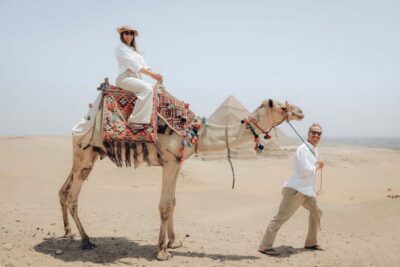
Pyramids of Giza, Sphinx, Saqqara & Memphis Tour
Read our review →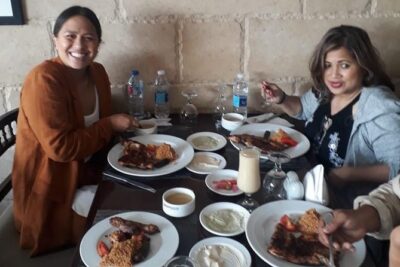
Cairo 8 Hour Private Tour of Pyramids, Egyptian Museum and Bazaar
Read our review →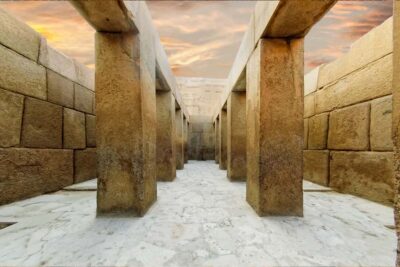
Half-Day Tour to Pyramids of Giza and the Sphinx
Read our review →
Browse the lists this tour appears in