
Reviewed · SOUND & LIGHT SHOWS
Luxor: All-Inclusive West Bank Tour, Sound & Light Show
Ancient Egypt fills one very long day. This private Luxor tour packs the West Bank’s major sights into a carefully arranged outing, then adds a felucca ride and the evening Sound and Light Show at Karnak. I especially like the private Egyptologist guide, which makes the tombs and carvings far easier to understand, and the wide range of sites, from royal burial chambers to ordinary officials’ painted tombs. The main concern is the felucca ride, which may be much shorter than the description suggests.
You pay $130 per person for 12 hours, including transport, entrance fees, lunch, the boat ride, and hotel pickup and drop-off on Luxor’s East Bank. That can be good value if you want one full day handled for you. Still, confirm exactly which Sound and Light tickets and extra tomb entrances are covered before you set out. One guest reported unexpected costs, while the daytime sightseeing and guide were praised.
In This Review
- Key points to know before booking
- Why this 12-hour Luxor plan works
- Entering the Valley of the Kings
- Queen Hatshepsut’s temple at Deir el-Bahari
- Medinet Habu and the military face of Ramses III
- The Valley of the Nobles reveals everyday life
- The Colossi of Memnon make a quick photo stop
- Lunch gives the day a needed pause
- The felucca ride needs realistic expectations
- Karnak after dark brings a different kind of drama
- Is $130 a fair price?
- Who should book this Luxor day?
- Should you book it?
- FAQ
- How long does the tour last?
- What sites are included on the West Bank?
- Is hotel pickup included?
- Is lunch included?
- Is the felucca ride included?
- Is the Karnak Sound and Light Show included?
- What languages are available for the guide?
- Can I cancel the booking?
Key points to know before booking
- Five major West Bank stops: The route includes the Valley of the Kings, Hatshepsut’s Temple, Medinet Habu, the Valley of the Nobles, and the Colossi of Memnon.
- A guide makes the tombs readable: Guides such as Hamdy, Manal, Beshoy, Majed Hassan, Isa, Aladdin, and Summer Hilmy received especially strong praise for their history knowledge, kindness, humor, and practical help.
- The felucca ride is a quiet break, not necessarily a long sail: One detailed account described roughly 20 to 25 minutes on the river, with the boat traveling only a short distance before returning.
- The evening show changes the pace: Karnak after dark offers music, lights, and narration rather than another daytime temple visit.
- The package is built for East Bank hotels: West Bank pickup and drop-off costs an extra $5 per person.
- The price covers a lot, but check the fine print: French, German, or Spanish guiding costs an additional $65, and you should verify the Sound and Light admission arrangement.
Why this 12-hour Luxor plan works
Luxor rewards careful planning because its best sights are spread across both banks of the Nile. This outing deals with the geography for you: morning pickup from your East Bank hotel, a private air-conditioned vehicle, a full circuit of the West Bank, lunch, a felucca ride, and a return later for Karnak.
I like the structure because it gives you royal monuments, private tombs, river scenery, and a nighttime performance in one day. You are not simply looking at one temple after another. The program shifts from enormous stone monuments to painted burial chambers, then from archaeology to a slow river ride.
The tradeoff is stamina. Twelve hours is a serious day in the Egyptian sun, even with vehicle transfers and lunch. You will get a strong overview, but this is not a relaxed schedule. If you want long, unhurried visits inside every tomb, you may prefer to split the West Bank over two days.
The private format helps. You can ask questions, request a little more time at a favorite stop, and get explanations tailored to your interests. The strongest guide comments center on people such as Hamdy, Manal, Beshoy, Majed Hassan, Isa, Aladdin, and Summer Hilmy. Specific praise included clear explanations, humor, good advice, kindness, and strong photography help. Your assigned guide may differ, but the guide can make or break a Luxor day.
More sound and light shows:
- Book online Sound and Light Show at Karnk Temple in Luxor
★ 4.2 · 61 reviews - Private VIP Day trip: 5 temples, lunch,felucca and sound and light
★ 4.5 · 31 reviews - Karnak Sound and Light Show with Private Transport
★ 4.0 · 29 reviews
Entering the Valley of the Kings
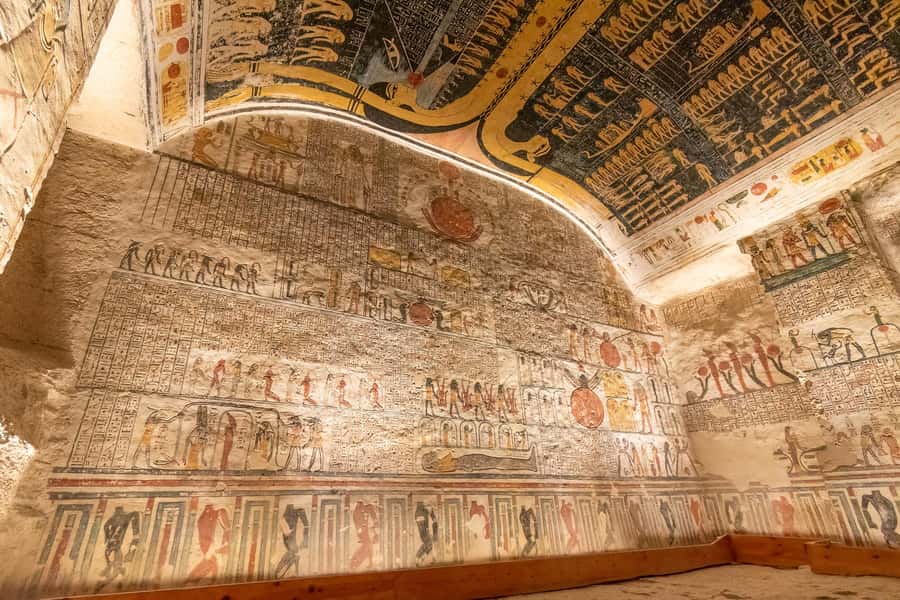
The day begins with Egypt’s famous royal cemetery, the Valley of the Kings. This is where New Kingdom pharaohs were buried in rock-cut tombs, surrounded by scenes and texts meant to help them pass into the afterlife.
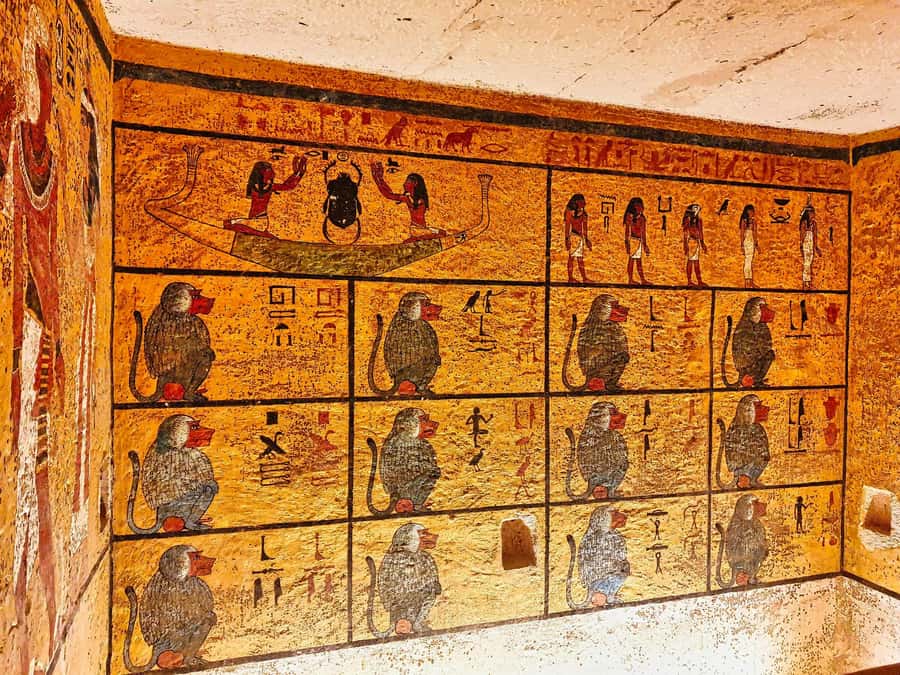
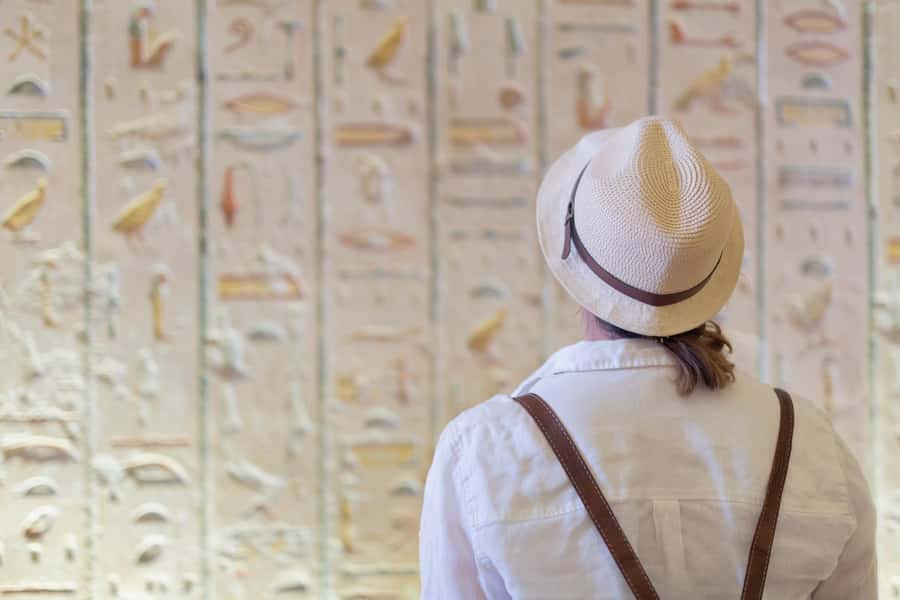
The best part is going inside the tombs. From the outside, a tomb entrance can look modest. Inside, painted corridors and chambers reveal gods, rituals, symbols, and carefully ordered scenes. Your guide’s explanations matter here because the art is full of signs that are not obvious at first glance.
The tour includes entrance fees and a selection of tombs, but specific tombs can change. Some famous burial chambers require separate tickets, and that is where you should ask direct questions before paying for anything extra. A detailed complaint about this tour involved charges for additional tombs, so do not assume every tomb in the valley is included in the base price.
You should also expect heat, steps, and a fair amount of walking. Wear shoes with a solid grip, carry water, and bring a hat. Photography rules can vary by area and ticket, so ask your guide before taking pictures inside.
Queen Hatshepsut’s temple at Deir el-Bahari
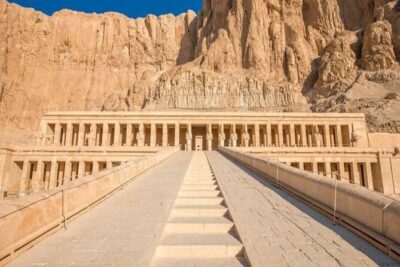
The Mortuary Temple of Queen Hatshepsut is one of Luxor’s most striking settings. Its terraces are cut into the cliffs of Deir el-Bahari, creating a sharp contrast between broad, orderly stone platforms and the bare rock behind them.
Hatshepsut’s story adds political drama to the visit. She ruled as pharaoh at a time when Egypt was usually led by a man, and her temple presents her authority through architecture, reliefs, and religious imagery. A good guide can explain how she presented herself as a legitimate ruler and why her monument looks so different from many other temples.
This stop is more about scale, setting, and royal messaging than about wandering through a maze of rooms. The open terraces can feel exposed in the midday heat. Take your photos, listen carefully, and use the shade whenever you find it.
Medinet Habu and the military face of Ramses III
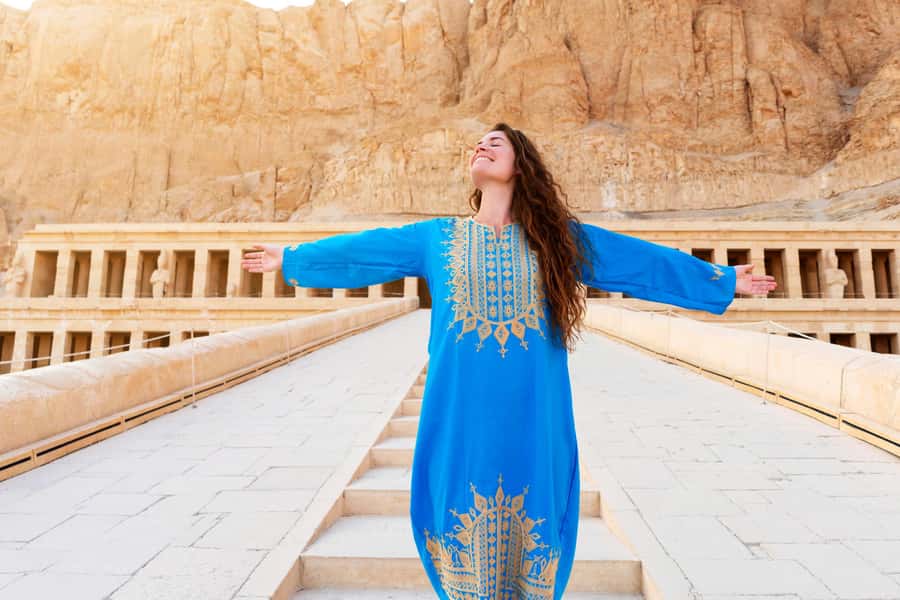
Medinet Habu is the mortuary temple of Ramses III, and it feels more like a fortified complex than a quiet memorial. Its entrance and walls carry scenes of warfare, victories, gods, and royal power.
I consider this one of the most useful stops on the route because it adds material that you do not get from Hatshepsut’s temple alone. The carvings show Egypt’s rulers presenting themselves as defenders of order. The huge surfaces also give your guide plenty to interpret, from battle scenes to religious symbols.
The temple can be especially rewarding if you enjoy details. Look closely at the reliefs rather than rushing only toward the largest gateway. Colors and carved figures can still be seen in places, and the walls give a sense of how ancient rulers used public art to shape their image.
As with the other sites, the visit takes place in a demanding climate. The private vehicle and organized routing are helpful because you can recover between stops rather than arranging separate transport each time.
More things to do in Luxor:
- Hurghada: Luxor Valley of the Kings & Tutankhamun Tomb Trip
★ 4.7 · 13,208 reviews - Luxor Day Trip from Hurghada Small Group & Tutankhamun Tomb
★ 4.8 · 5,366 reviews - Hot Air Balloon Ride in Luxor Egypt with Transfers Included
★ 5.0 · 4,319 reviews - Luxor: Shared Full-Day Tour to Luxor West and East Banks
★ 4.5 · 1,812 reviews
The Valley of the Nobles reveals everyday life
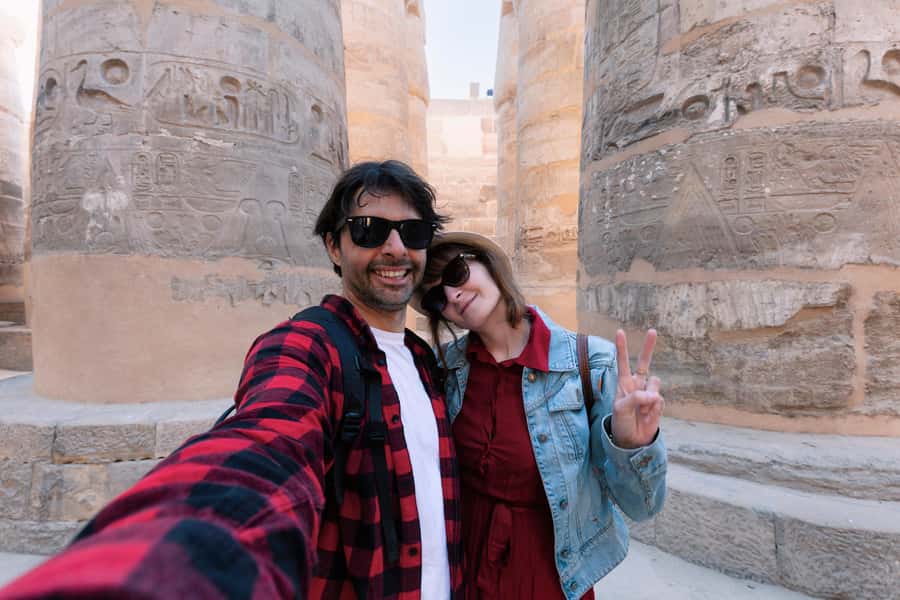
The Valley of the Nobles changes the mood. Instead of focusing only on kings, these tombs belonged to officials and other elite figures. Their wall paintings often show farming, fishing, craft work, food preparation, ceremonies, and household scenes.
This is where the tour adds real variety. Royal tombs are concerned with pharaohs and the afterlife. Noble tombs can feel more personal, showing how people wanted their work, status, family life, and religious duties remembered.
The site is less familiar to many first-time visitors, which gives it a more intimate quality. Conditions and open tombs can vary, so listen to your guide about which chambers are available that day. The paintings are often the main reason to visit, and a guide’s context helps you notice details that would otherwise blur into the walls.
If you are mainly interested in famous monuments for photographs, this may be a quieter stop. If you want to understand ancient Egyptian society beyond pharaohs, it is one of the most valuable parts of the schedule.
The Colossi of Memnon make a quick photo stop
The Colossi of Memnon are two enormous statues of Pharaoh Amenhotep III. They have watched over the West Bank for more than 3,000 years, although the vast mortuary temple behind them has largely vanished.
This is a short stop, but it helps you picture the scale of the ancient complex. The statues once formed part of a much larger temple, and your guide can explain how the missing structure changes what you see today.
Bring your camera, but keep your expectations realistic. The colossi are usually a brief visit rather than a long exploration. That is useful on a packed day because you can see them without draining much of your remaining energy.
Lunch gives the day a needed pause
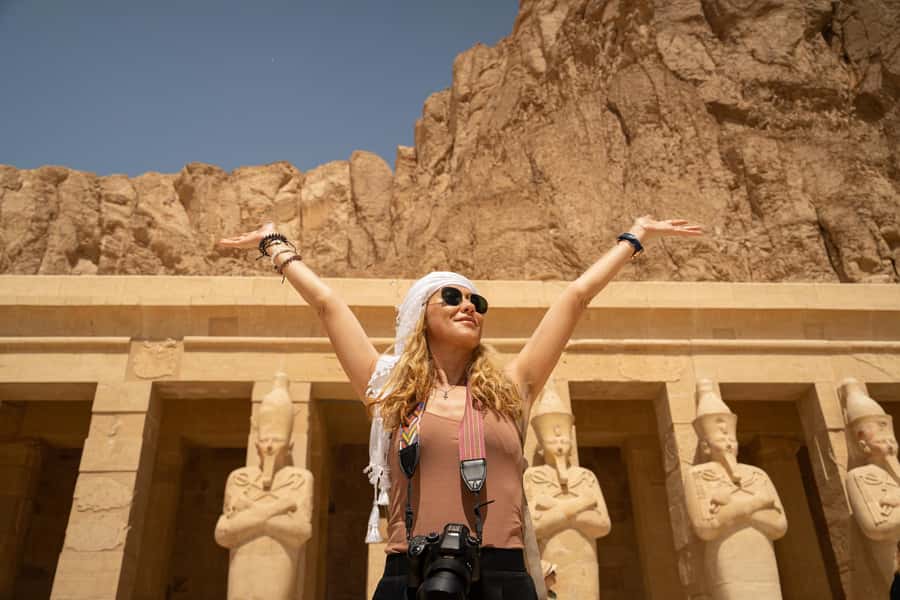
Lunch at a local Egyptian restaurant is included. The meal gives you a chance to sit down, eat, and rest after the morning’s tombs and temples.
The exact dishes are not specified, so you should not book this expecting a particular menu. The value is less about a carefully planned food tasting and more about having a meal arranged inside a long sightseeing day. You do not need to leave the route searching for a restaurant or lose time deciding where to eat.
If you have dietary concerns, tell the operator or guide in advance. The supplied details do not specify special meal arrangements, so it is sensible to ask before departure.
The felucca ride needs realistic expectations
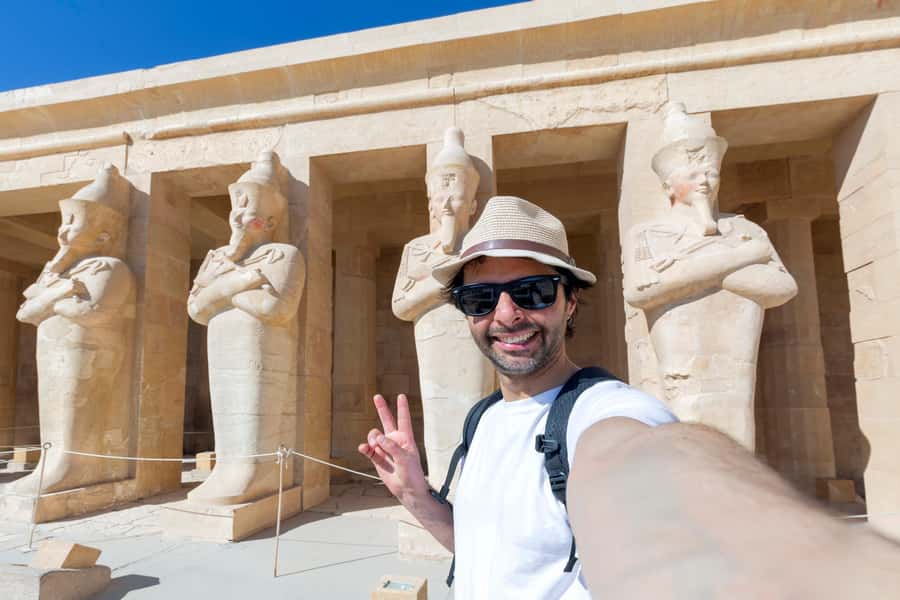
After lunch, you board a traditional felucca on the Nile. In principle, this is a lovely counterpoint to the stone monuments. Palm groves and rural scenery pass by, and the breeze offers relief after hours on the West Bank.
But this is the least dependable part of the experience in terms of expectations. One detailed account described a ride of about 20 to 25 minutes, traveling around 150 meters from the pier, anchoring, including a dance, and then returning. That is not the long, drifting Nile sail many people picture.
I would treat the felucca as a brief river interlude rather than a major cruise. It may still be pleasant, especially if you enjoy the change of pace, but do not book this tour mainly for a substantial sailing experience. If the boat ride matters greatly to you, ask the operator about the planned route and duration before booking.
Karnak after dark brings a different kind of drama
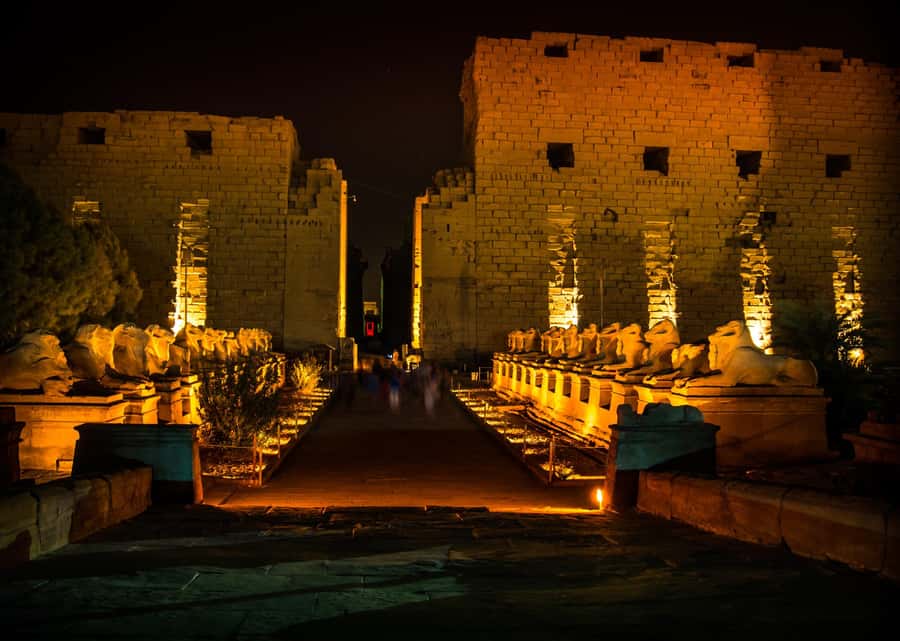
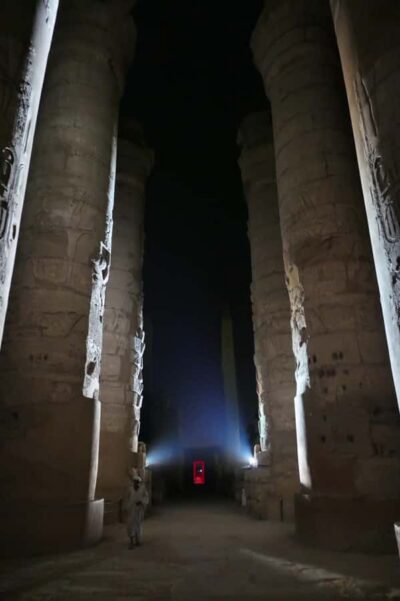
Around 6 PM, you rejoin your driver for the Karnak Sound and Light Show. The evening program uses lighting, music, and narration to tell the story of ancient Thebes while the temple complex is illuminated.
This is not the same as exploring Karnak in daylight. During the day, you focus on columns, reliefs, courtyards, and physical scale. At night, the show creates a staged story, with the ruins used as a backdrop. Some people will enjoy the atmosphere and clear narrative. Others may find the presentation more theatrical than archaeological.
The timing is smart. After a full day among tombs and temples, you get a seated or less physically demanding evening activity rather than another long circuit. The lighting can also make familiar stonework look entirely different.
One practical warning matters here: the package says entrance fees are included, but one guest reported not receiving the Sound and Light ticket and having to pay personally. I would confirm this specific ticket with the company before the day begins and keep any receipts if an issue arises.
Is $130 a fair price?
At $130 per person, this is not the cheapest way to see Luxor. It can still offer fair value because the price includes a private air-conditioned vehicle, an English-speaking Egyptologist guide, entrance fees, lunch, the felucca ride, service charges, taxes, and East Bank hotel pickup and drop-off.
The value is strongest if you want convenience and a guide for the entire day. You are paying to avoid piecing together several rides, restaurants, tickets, and a separate evening show. You also gain explanations at places where a quick solo visit can leave you staring at painted walls without understanding the story.
The value drops if you already have transport, have visited several West Bank sites, or want a long felucca cruise. It also drops if you are surprised by extra tomb charges or a Sound and Light ticket that is not actually handed over.
French, German, or Spanish guiding costs $65 extra. Pickup and drop-off on the West Bank costs $5 per person. Hotel service is otherwise limited to the East Bank, so factor in the added cost if you are staying across the river.
The experience has a 4.7 rating from 41 reviews, with especially strong praise for the guides. Names that received repeated or detailed approval include Majed Hassan, Beshoy, Isa, Aladdin, Hamdy, Manal, and Summer Hilmy. The clearest pattern is that the human service matters most: explanations, humor, safety, photography help, and practical advice can turn a crowded sightseeing day into a useful one.
Who should book this Luxor day?
I would recommend it to a first-time Luxor visitor who wants the main West Bank sights covered in one organized day and likes having a private guide nearby. It also suits anyone with limited time who wants to add a night activity without arranging another taxi or tour.
It is a good match for history fans who want more than famous photo stops. The Valley of the Nobles, Medinet Habu, and the guided tomb visits give the day more substance than a simple Valley of the Kings transfer.
You should think twice if you dislike long days, prefer slow museum-style visits, or are booking chiefly for sailing. The felucca portion may be brief, and the overall schedule leaves little room to linger.
Free cancellation is available up to 24 hours before the experience, and you can reserve now and pay later. Those terms help if your Egyptian itinerary is still shifting, but they do not remove the need to check the exact inclusions.
Should you book it?
Book this tour if you want a well-filled, private introduction to Luxor, especially if the guide’s explanations matter to you. The combination of royal tombs, Hatshepsut, Medinet Habu, the Valley of the Nobles, lunch, and Karnak at night covers a lot of ground for $130.
Before paying, ask three clear questions: Which tombs are included? Is the Karnak Sound and Light ticket in hand? How long will the felucca actually sail? If the answers are satisfactory, this is a strong choice for a time-conscious visitor. If the boat ride or a slow pace is your priority, arrange those parts separately.
FAQ
How long does the tour last?
The experience lasts 12 hours. It includes daytime sightseeing on Luxor’s West Bank, lunch, a felucca ride, and the Karnak Sound and Light Show in the evening.
What sites are included on the West Bank?
The route includes the Valley of the Kings, Hatshepsut’s Temple, Medinet Habu, the Valley of the Nobles, and the Colossi of Memnon.
Is hotel pickup included?
Pickup and drop-off are included for hotels on Luxor’s East Bank. West Bank pickup and drop-off are available for an additional $5 per person.
Is lunch included?
Yes. Lunch at a local Egyptian restaurant is included in the price.
Is the felucca ride included?
Yes. The traditional felucca ride is included, although the exact duration and route are not specified.
Is the Karnak Sound and Light Show included?
The package information states that entrance fees are included, but one guest reported having to pay for the Sound and Light ticket separately. Confirm this specific ticket with the operator before departure.
What languages are available for the guide?
Guiding is available in Arabic, English, French, German, and Spanish. French, German, or Spanish guiding costs an additional $65.
Can I cancel the booking?
You can cancel up to 24 hours in advance for a full refund. The experience also offers a reserve now and pay later option.
More Shows in Luxor
- Cairo: Nile Sunset Dinner Cruise, Show & Optional Transfer
★ 4.1 · 2,184 reviews - Hurghada: Sea & Desert Horse Tour, Stargazing, Dinner & Show
★ 4.5 · 1,592 reviews - Makadi Bay: ATV, Sea View, Camel, Stargazing, Dinner & Show
★ 4.3 · 1,368 reviews - Hurghada: Quad and Buggy Safari with Dinner and Show
★ 4.7 · 1,126 reviews
Just added around Luxor
- Private Tour foll day to East and West Banks of Luxor★ 5.0 · 23 reviews
- East and West Bank Luxor★ 5.0 · 23 reviews
- Full Day Tour to Luxor (East & West Bank)★ 5.0 · 23 reviews
- Big brother travel★ 5.0 · 23 reviews
- Luxor Day Tour :Valley of Kings & queen & Hatshepsut & Habu city★ 5.0 · 23 reviews
- Luxor: Scenic Camel or Horse Ride★ 3.9 · 24 reviews
- From Cairo: 4-Day Nile Cruise from Aswan to Luxor with Meals★ 4.4 · 24 reviews
- Traditional Egyptian Breakfast at the AlHabib Arabian Horse Farm★ 5.0 · 24 reviews
Sound & Light Shows, compared.
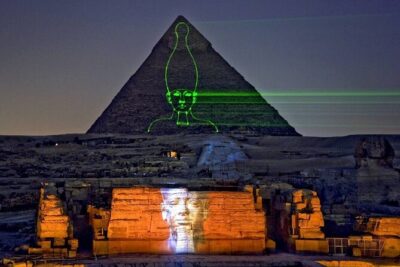
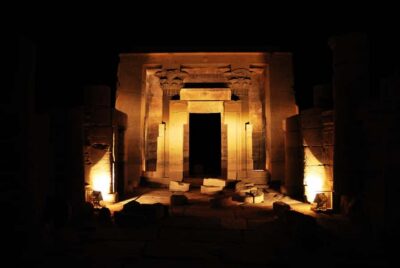
Philae Temple Sound & Light Show with Entrance Fees
Read our review →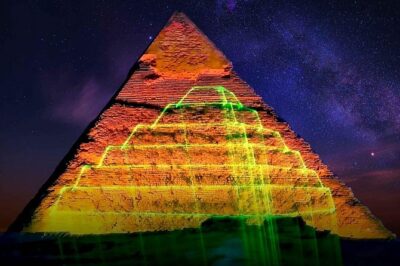
Book online Sound and Light Show at Karnk Temple in Luxor
Read our review →
Full Day Tour to Pyramids of Giza, Saqqara Step Pyramids & Sound and Light Show
Read our review →
Private VIP Day trip: 5 temples, lunch,felucca and sound and light
Read our review →Browse the lists this tour appears in