
Reviewed · LUXOR TOURS
Luxor’s East & West Bank Highlights Tour
Ancient Egypt rewards a full day. This private Luxor tour brings the Valley of the Kings, Hatshepsut Temple, Colossi of Memnon, and Karnak Complex into one well-planned outing, with an Egyptologist guide to explain what you are seeing. I like the private vehicle and hotel pickup, which save time in a city spread across both sides of the Nile. I also like the lunch and bottled water included in the $107.70 price. The main caution is timing: eight hours is a lot of sightseeing, and airport pickup problems have caused serious trouble for at least one booking, so confirm your meeting point carefully.
The tour is designed for your group alone, not a busload of strangers. That gives you a better chance to ask questions, adjust the pace, and spend more time at a favorite temple. Still, entrance tickets are extra, and the advertised schedule does not include every Luxor sight, so check exactly what you want covered before paying.
In This Review
- The key points at a glance
- Why this route works for a first day in Luxor
- Two hours among the royal tombs
- Hatshepsut Temple beneath the cliffs
- A brief stop at the Colossi of Memnon
- Karnak and the scale of ancient Thebes
- What the private vehicle adds
- Is $107.70 a fair price?
- Who should book this Luxor day?
- Should you book it?
- FAQ
- How long does the Luxor East and West Bank tour last?
- Is hotel pickup included?
- Is airport pickup included?
- Is this a private tour?
- Which sights are included?
- Are entrance tickets included?
- Is lunch provided?
- What is the cancellation policy?
The key points at a glance
- Two banks in one day: You cross from Luxor’s west bank tombs and temples to the east bank’s great Karnak complex.
- A private Egyptologist guide: The guide provides context that is hard to get from signs alone, especially at the Valley of the Kings and Karnak.
- Four major stops: The planned route includes the Valley of the Kings, Hatshepsut Temple, Colossi of Memnon, and Karnak Temple.
- Hotel transfers included: Pickup and drop-off by private vehicle make this useful if you are staying in Luxor and want to avoid arranging taxis between sites.
- Lunch and water included: These small comforts matter during a long day in the Egyptian sun.
- Good but not flawless service record: The experience has a 4.9 rating from 221 reviews and a 97 percent recommendation rate, but one serious complaint involved a missed airport pickup.
Why this route works for a first day in Luxor
Luxor is not one compact archaeological park. Its ancient sights are spread over both banks of the Nile, and each side offers a different part of Thebes, the ancient capital of Egypt. The west bank is linked mainly with royal tombs and funerary temples. The east bank centers on huge religious complexes built for worship and ceremony.
That division makes this tour useful. You see the royal burial ground, the memorial temple of a powerful female ruler, the remains of a colossal temple, and one of Egypt’s greatest religious sites in about eight hours. On your own, connecting those places would require more planning and repeated transport arrangements.
I especially value the guide here. At the Valley of the Kings, you are looking at decorated underground chambers, damaged figures, and layers of royal history. At Karnak, the sheer size can be confusing. An Egyptologist can explain what each space was for, how the temples related to one another, and why the monuments were built where they were.
The private format also matters. You can ask for a slower explanation, move on when your attention fades, or spend extra time taking in a detail that catches your eye. The tour is not fully open-ended, since it has a fixed route and approximate durations, but it should feel more personal than a large group outing.
More things to do in Luxor:
- Hurghada: Luxor Valley of the Kings & Tutankhamun Tomb Trip
★ 4.7 · 13,208 reviews - Luxor Day Trip from Hurghada Small Group & Tutankhamun Tomb
★ 4.8 · 5,366 reviews - Hot Air Balloon Ride in Luxor Egypt with Transfers Included
★ 5.0 · 4,319 reviews
Two hours among the royal tombs
The Valley of the Kings is the day’s first major stop, and the planned visit lasts about two hours. That is sensible. The valley is not a single monument, but a royal necropolis cut into the desert hills, where pharaohs were buried after the pyramids had ceased to be the preferred royal burial style.
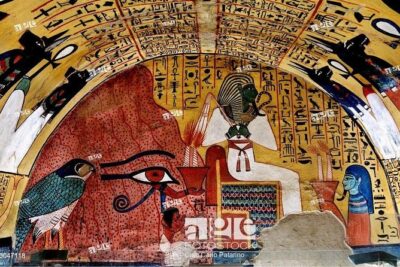
You enter tombs through sloping passages that lead underground. Their walls may carry painted scenes, religious texts, and images meant to guide the dead ruler into the next world. Even when a tomb is partly damaged or empty, the setting helps explain the enormous effort ancient Egyptians devoted to royal burial.
Your guide’s role is particularly helpful here. Tombs can look similar at first glance, and the meaning of the wall scenes is easy to miss. Ask the guide to point out how the decoration changes from one chamber to another and how the burial rooms differ from the passageways.
There is one practical issue: admission tickets are not included in the tour price, despite admission being listed for the individual stops in the schedule. Treat the separate admission note as the controlling information and budget for entry tickets. Extra tickets may also apply if you want access to special tombs, though no specific tombs or prices are provided here.
Two hours gives you room to see the main area without turning the visit into a rushed photo stop. It can also feel like a long time if you are tired, so wear comfortable shoes and bring the supplied water. The tour operates in good weather, and the valley offers little reason to expect a cool, shaded walk between every point.
Hatshepsut Temple beneath the cliffs
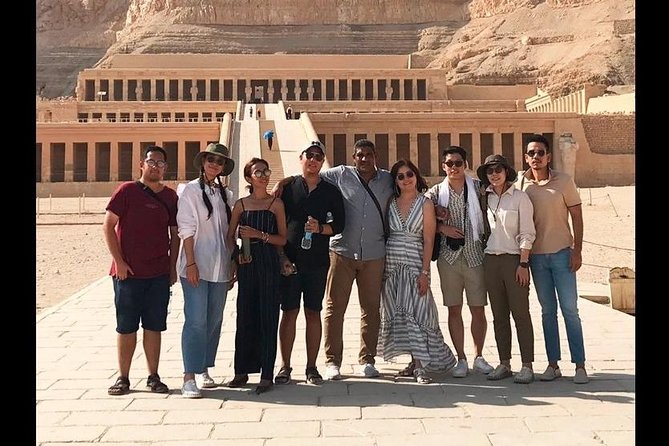
The next stop is the Memorial Temple of Hatshepsut at Deir el Bahari, with about one hour scheduled. The temple’s setting is one of its great pleasures. A pale cliff rises behind the terraces, and the straight architectural lines echo the rock face rather than competing with it.
Hatshepsut ruled Egypt as pharaoh, not simply as a royal consort. The temple’s reliefs help explain how she presented her reign and its connection to Egypt’s prosperity and divine order. Your guide can help you read the wall scenes as political statements, not just decoration.
Look closely at the surviving figures. Many representations of Hatshepsut were damaged after her death, when Thutmose III sought to remove her image from important monuments. That damage is part of the site’s story. It shows that ancient monuments were also tools of memory and power, and later rulers could try to rewrite that memory.
One hour is enough to appreciate the main terraces and reliefs, but it is not generous if you want a slow visit. The temple is visually striking from a distance, while the details require time on foot. If photography matters to you, ask the guide how much time remains before moving on.
The main drawback is not the temple itself, but the heat and exposed setting. You may find the broad terraces tiring in strong sun. Water is included, but bring practical sun protection and do not count on the visit feeling like a quick indoor museum stop.
A brief stop at the Colossi of Memnon
The Colossi of Memnon receive about 15 minutes, making this the shortest stop of the day. Two enormous seated figures face toward the Nile and once guarded the memorial temple of Amenhotep III.
The temple itself was damaged by earthquakes, floods, and time. The two statues are now the most visible remains, while archaeological work continues around them. In ancient times, the complex was far larger and was connected with the worship of Amenhotep III as a god.
The statues also carry a curious story. After an earthquake in 27 BC, one colossus was believed to produce a sound at sunrise. Later repairs ended the sound. It is a memorable detail to hear while standing beside the figures, though the stop is too short for a lengthy exploration.
Fifteen minutes is enough to get out, see the statues, take photographs, and hear the basic explanation. It is not enough for a full archaeological visit, and there is no admission charge listed for this stop. I would treat it as a useful pause between the larger West Bank sites rather than a major attraction requiring extended time.
Lunch at a local restaurant follows. The meal is included, which keeps the day simple and prevents you from having to negotiate a restaurant while moving between monuments. The exact menu and restaurant are not specified, so do not book this tour expecting a particular dish or dining style.
A completely different sort of day out in Luxor:
- Luxor: Shared Full-Day Tour to Luxor West and East Banks
★ 4.5 · 1,812 reviews - Luxor: Hot Air Balloon Ride over Luxor Relics
★ 4.8 · 1,681 reviews - Luxor Day Tour: Valley of Kings & Queens & Hatchepsut Temples
★ 5.0 · 1,496 reviews - Full Day Tour to East and West Banks of Luxor
★ 5.0 · 1,449 reviews
Karnak and the scale of ancient Thebes
Karnak Temple is the final listed stop, with about two hours planned. This is the biggest site on the route and the place where a guide can make the greatest difference.
Karnak was the vast religious center of ancient Thebes, dedicated to the Theban triad of Amun, Mut, and their son Khonsu. The public area includes the precinct of Amun-Ra, while the original complex contained three precincts. That fact gives you a sense of the scale: Karnak is not one temple building but a sprawling series of courts, halls, pylons, and sacred spaces built and altered over many generations.
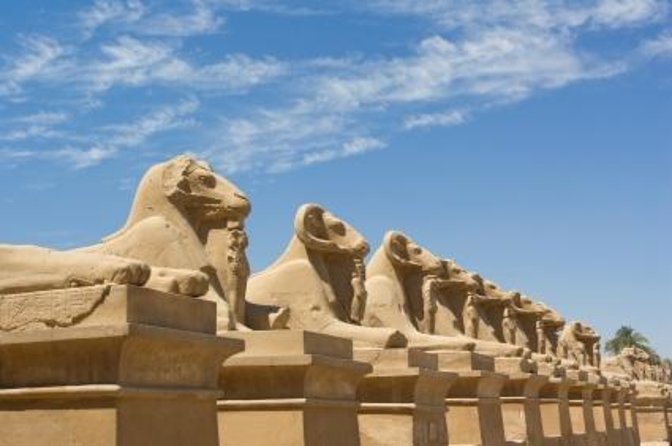
The complex was linked to Luxor Temple by an avenue of sphinxes. During the Opet Festival, images of the Theban gods were carried in procession between the temples. The route connected religious belief, royal ceremony, and the life of the city.
Allow your guide to shape the visit. Karnak can overwhelm you with massive columns and open courts, but the details explain how the site worked. Ask about the Theban triad, the procession route, and the difference between a pylon, court, hall, and sanctuary. Those simple questions can turn a collection of giant stones into a readable place.
Two hours is a fair introduction. You will see the main accessible areas, but you should not expect to inspect every corner of a complex this large. The site can also be tiring late in the day, especially after the Valley of the Kings and Hatshepsut Temple. The private vehicle helps by removing the need to find another ride once your energy drops.
The supplied route refers to two glorious East Bank temples but specifically describes Karnak. It does not clearly promise a visit inside Luxor Temple. If that monument is important to you, confirm it with Magic Carpet Travel before departure rather than assuming it is included.
What the private vehicle adds
Pickup and drop-off at your hotel are included, along with transport in a private vehicle. For Luxor, that is more than a minor convenience. The sites are separated by distance, and a full day of independent taxi arrangements can take attention away from the monuments.
The exact transfer times depend on traffic and time of day. That means the eight-hour duration is approximate, not a guarantee of eight hours inside the archaeological sites. Your actual sightseeing time may shift if roads are busy or your pickup takes longer than expected.
The private arrangement is best for couples, families, and small groups who want control over the day. It also suits people who prefer asking frequent questions without feeling they are holding up a large party. Group discounts are available, so the per-person cost may become more attractive as your party grows.
There is an important warning for anyone arriving by air. One serious complaint describes a booking that included airport pickup but no driver appeared, and the problem was not resolved because the group had only one day in Luxor. The available information does not show that this is common, but the consequence is serious enough to take action: confirm the pickup location, hotel or airport details, and contact method before the tour date. Do not assume that a hotel transfer automatically means an airport transfer unless your booking says so clearly.
Is $107.70 a fair price?
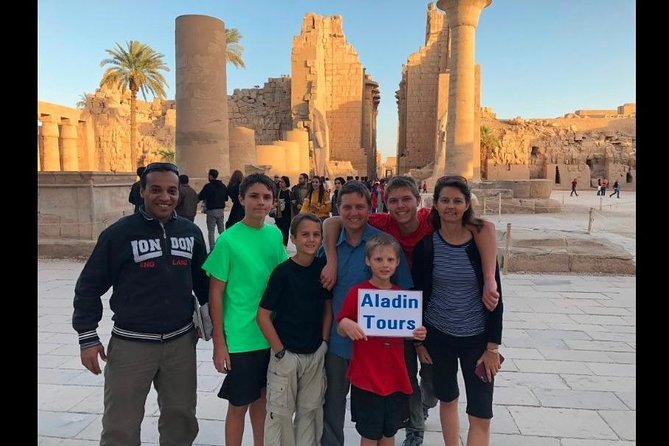
At $107.70 per person, the tour is not the cheapest way to see Luxor. But the price includes an Egyptologist guide, private transport, hotel pickup and drop-off, lunch, bottled water, taxes, and handling charges.
Those inclusions have real value. You are paying for a full day of transport across both banks, not simply for admission to a few monuments. The private vehicle is especially useful if you are short on time or uncomfortable arranging local transport on the spot.
The main extra cost is entry tickets. Because admission is not included, you need to add those costs to the headline price. Tipping is also excluded. The total can therefore be higher than the first figure suggests.
I would call the price reasonable for a private, guided day, especially for two or more people who can benefit from group discounts. A solo visitor focused on spending as little as possible may find it expensive. Someone with only one day in Luxor may find the convenience worth paying for.
Who should book this Luxor day?
This tour suits you if you want the major highlights without building a complicated transport plan. It is also a good fit if you want explanations at the monuments rather than simply taking photographs and moving on.
Families may appreciate the private setup, since the pace can be easier to manage than a fixed large-group schedule. First-time visitors will get a useful overview of both banks, while repeat visitors can use the guide to ask more focused questions.
You may want a different arrangement if you dislike long sightseeing days, want extended time inside individual tombs, or need a tightly guaranteed airport transfer. The route covers a lot, but it cannot offer deep time at every site. It is an efficient introduction, not a slow archaeological study tour.
Free cancellation is available if you cancel at least 24 hours before the start time. Changes made inside that period are not accepted, and poor weather may lead to a different date or a full refund. Most people can participate, but the supplied information does not give detailed mobility guidance, so ask the operator if you have specific access needs.
Should you book it?
Book this tour if your priority is a private, practical introduction to Luxor’s main East and West Bank sights. The combination of an Egyptologist guide, private transport, lunch, and hotel transfers gives you a strong base for one busy day.
Before booking, confirm three points: the exact meeting location, the entry-ticket costs, and whether Luxor Temple is included in addition to Karnak. If those details suit your plan, the tour offers good value for seeing a large amount of Luxor without spending your day arranging rides.
FAQ
How long does the Luxor East and West Bank tour last?
The tour lasts approximately eight hours. Transfer times can change depending on traffic and the time of day.
Is hotel pickup included?
Yes. Hotel pickup and drop-off in Luxor are included in the tour.
Is airport pickup included?
The information confirms hotel pickup and drop-off, but it does not clearly confirm airport pickup as a standard inclusion. Confirm this directly with the provider before booking an airport transfer.
Is this a private tour?
Yes. Only your group participates in the private tour or activity.
Which sights are included?
The planned stops are the Valley of the Kings, Temple of Hatshepsut at Deir el Bahari, Colossi of Memnon, and Karnak Temple.
Are entrance tickets included?
No. Entry tickets are listed as not included, so you should budget for them separately.
Is lunch provided?
Yes. Lunch at a local restaurant and bottled water are included.
What is the cancellation policy?
You can cancel up to 24 hours before the experience starts for a full refund. Cancellations or changes made less than 24 hours before the start time are not accepted for a refund. If poor weather causes cancellation, you will be offered another date or a full refund.
Just added around Luxor
- Private Tour foll day to East and West Banks of Luxor★ 5.0 · 23 reviews
- East and West Bank Luxor★ 5.0 · 23 reviews
- Full Day Tour to Luxor (East & West Bank)★ 5.0 · 23 reviews
- Big brother travel★ 5.0 · 23 reviews
- Luxor Day Tour :Valley of Kings & queen & Hatshepsut & Habu city★ 5.0 · 23 reviews
- Luxor: Scenic Camel or Horse Ride★ 3.9 · 24 reviews
- From Cairo: 4-Day Nile Cruise from Aswan to Luxor with Meals★ 4.4 · 24 reviews
- Traditional Egyptian Breakfast at the AlHabib Arabian Horse Farm★ 5.0 · 24 reviews
Luxor Tours, compared.
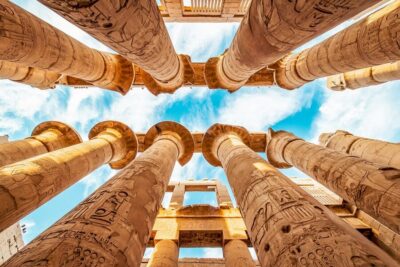
Luxor Valley of the Kings & Tutankhamun Tomb Trip
Read our review →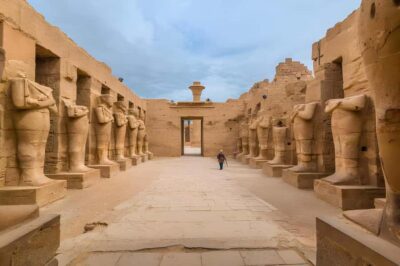
Luxor Day Trip from Hurghada Small Group & Tutankhamun Tomb
Read our review →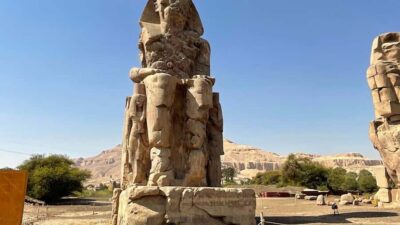
Shared Full-Day Tour to Luxor West and East Banks
Read our review →
Luxor Day Tour: Valley of Kings & Queens & Hatchepsut Temples
Read our review →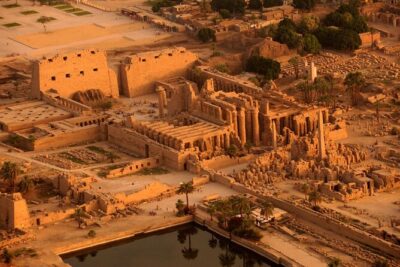
Full Day Tour to East and West Banks of Luxor
Read our review →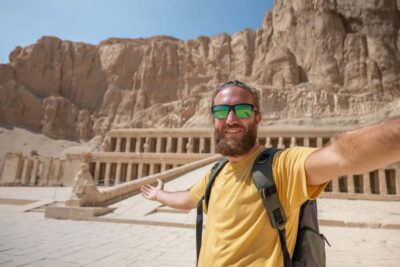
Valley of the Kings and Hatshepsut Temple Day Tour
Read our review →
2-Day Luxor Tour with Hotel, Balloon, & Boat Ride
Read our review →Browse the lists this tour appears in