
Reviewed · 5-DAY EXPERIENCES
Radamis ll Nile cruis 5 days 4 nights from Luxor to Aswan
The Nile turns sightseeing into a slow-moving story. This five-day cruise links Luxor and Aswan aboard the MS Concerto, also associated with Radamis II, with major temples, prepaid admissions, meals, transfers, and a guide included. You spend four nights on the river instead of packing and unpacking between cities.
I like the easy rhythm of the route, especially the way Karnak, the Valley of the Kings, Edfu, Kom Ombo, and Philae fit into one journey. I also like that the package includes private air-conditioned transfers and every breakfast, lunch, and dinner. The main concern is the ship itself: older furnishings, maintenance problems, repetitive food, and blocked views at the docks can make the cruise feel less polished than the price suggests.
This is a good choice if you want Egypt’s main Nile sights handled in one package and prefer a private tour structure. It is a weaker fit if you expect a modern luxury vessel, reliable onboard entertainment, or a balcony view at every stop.
In This Review
- Key points to know before booking
- What the five-day Nile route is really like
- Day one: Luxor’s Karnak and Luxor Temples
- Day two: royal tombs and the temple of Hatshepsut
- Day three: Edfu’s Horus Temple and Kom Ombo
- Day four: Philae, the High Dam, and a felucca ride
- Day five: the long add-on to Abu Simbel
- Life aboard the MS Concerto
- What $1,490 buys you
- Who should book this Nile cruise?
- Should you book Radamis II?
- FAQ
- How long is the Radamis II Nile cruise?
- Does the cruise run from Luxor to Aswan?
- Are meals included?
- Is hotel pickup included?
- Is this a private tour?
- Which major sites are included?
- Can I cancel for a full refund?
Key points to know before booking
- Four nights on the MS Concerto: The ship gives you a moving base between Luxor and Aswan, but it is an older vessel and cabin quality can vary.
- The best sightseeing is on land: Karnak, the Valley of the Kings, Edfu, Kom Ombo, Philae, and Abu Simbel provide the real value.
- Meals are included: Breakfast, lunch, and dinner are covered, though food quality and variety may be uneven.
- A private tour guide travels with your group: This suits families and small parties that want a more personal arrangement.
- Dockside views are not guaranteed: Nile boats often park side by side, so another ship may sit directly outside your window or balcony.
- The final day includes Abu Simbel: Confirm the exact return and drop-off plan, since the published schedule gives only a short visit time.
What the five-day Nile route is really like
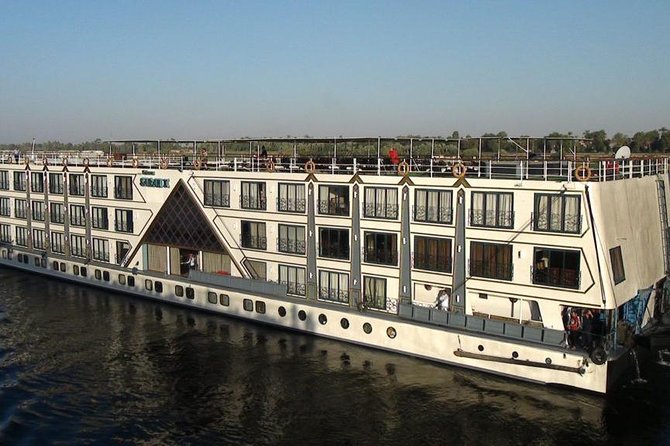
A Nile cruise works because it joins several famous sites without forcing you to change hotels each night. You wake up in a different place, visit an ancient monument, eat back aboard ship, and watch the riverbanks slide past from the deck.
This itinerary runs from Luxor to Aswan and includes pickup from a Luxor hotel or airport. The listed start time is 9:00 a.m., while the day-one description says to meet at 10:00 a.m., so I would confirm the pickup hour before arrival.
The package is described as a private tour, with only your group taking part. That can be valuable for families, older visitors, or anyone who wants the guide to adjust the pace. It also includes private air-conditioned transfers, bottled water, accommodation, and prepaid entry tickets at the principal stops.
The advertised price is $1,490 per person. That is not a bare boat ticket. It covers four nights, the guide, transport, admission fees, and 13 included meals: four breakfasts, five lunches, and four dinners. The value depends heavily on your expectations. For a convenient, organized Egypt itinerary, it may make sense. For a premium ship experience, the vessel’s condition could leave you feeling shortchanged.
More things to do in Luxor:
- Hurghada: Luxor Valley of the Kings & Tutankhamun Tomb Trip
★ 4.7 · 13,208 reviews - Luxor Day Trip from Hurghada Small Group & Tutankhamun Tomb
★ 4.8 · 5,366 reviews - Hot Air Balloon Ride in Luxor Egypt with Transfers Included
★ 5.0 · 4,319 reviews
Day one: Luxor’s Karnak and Luxor Temples
Boarding takes place before lunch, followed by a meal on the ship. The first sightseeing block combines Luxor Temple and Karnak Temple, two of the city’s essential monuments.
Luxor Temple is an approachable first stop. You see its courtyard and the large granite statues of Ramses the Great. The temple sits close to modern Luxor, so the visit gives you an immediate sense of how ancient monuments and present-day city life occupy the same space.
Karnak requires more time and attention. It is not one building but a large group of temples built and expanded by different rulers. The route begins along the Avenue of Sphinxes before moving toward the unfinished first pylon and the Hypostyle Hall.
That hall is the visual high point. Its 134 enormous columns create a forest of stone, with carved surfaces and traces of the religious world that once filled the complex. You also see the obelisks associated with Hatshepsut and Thutmose III, along with the temple of Amun and its lotus and papyrus designs.
The published description allows about four hours for this first excursion. That is useful time, but the exact order can change with docking and local arrangements. Wear shoes with good grip and bring water, even though a bottle is included. The open temple grounds offer little shade.
A carriage or bus may be used between parts of the excursion. The day ends back on the ship, where the schedule lists lunch and the beginning of the cruise program. You might find a tea service or evening entertainment, but the quality of the onboard shows appears inconsistent.
Day two: royal tombs and the temple of Hatshepsut
Day two crosses to Luxor’s West Bank. The main visit includes the Valley of the Kings, the Colossi of Memnon, and the Temple of Hatshepsut at Deir el Bahari.
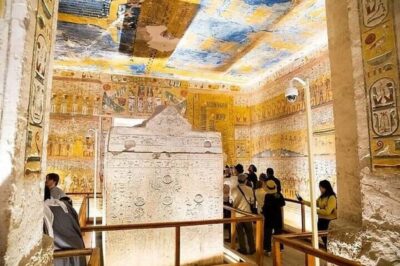
The Valley of the Kings is the stop where a guide matters most. You visit selected tombs from different dynasties, but entrance arrangements and the tombs available for viewing can change. The ticket normally covers a set number of tombs, while special tombs may require an additional fee. Since the package promises prepaid admissions, ask your guide exactly which tombs are included.
Inside, the painted walls are the attraction. The spaces are often narrow and the floors uneven, so this stop may be tiring for anyone with mobility concerns. Photography rules can also vary by tomb and current site policy.
The Temple of Hatshepsut has a different character. Its broad terraces and strong lines rise against the cliffs, making it one of Luxor’s most recognizable settings. The monument tells the story of a powerful female ruler, and its design gives you a fine contrast to the enclosed tombs visited earlier.
The Colossi of Memnon is a brief roadside stop. Two huge seated figures of Amenhotep III face toward the Nile. Do not expect a long visit, but it is a worthwhile photo pause and helps you understand the scale of royal building projects in ancient Thebes.
After lunch, the ship sails toward Esna. The evening schedule includes afternoon tea and a disco party, with an overnight stay in Edfu. Entertainment is included in the program, but it should not be the reason you choose this cruise. The archaeological visits are the dependable part of the trip.
Day three: Edfu’s Horus Temple and Kom Ombo
The day begins with a visit to the Temple of Horus in Edfu. This is one of the best-preserved major temples along the Nile, and its condition makes the layout easier to understand than at many more weathered sites.
The temple was dedicated to Horus, shown as a falcon or a falcon-headed deity. Its massive entrance, courtyards, columns, and carved walls give you a strong sense of how a Ptolemaic temple functioned. The listed visit lasts about two hours, which is enough for the main halls with a focused guide.
After returning to the ship, you sail toward Kom Ombo for lunch and another temple visit. Kom Ombo is unusual because it was dedicated to two gods, Sobek and Haroeris. Sobek has the form of a crocodile, while Haroeris is a form of Horus.
The paired layout is the point. You see duplicated sanctuaries and religious spaces, reflecting the temple’s shared dedication. The site also has a memorable position beside the river, although the visit may be affected by heat, crowds, and the ship’s docking time.
Dinner is followed by a galabeya party. This can be a cheerful bit of shipboard fun, but it is optional in spirit even if listed in the schedule. Pack something comfortable for the evening rather than buying an outfit solely for the event.
The ship spends the night in Kom Ombo. By this stage, you will have a clear idea of the boat’s strengths and weaknesses. Staff service is one of the more reliable positives, with particular praise for friendly waiters and attentive housekeeping. Some passengers have found the beds comfortable and the cabins clean after daily service.
A few more Luxor trips worth weighing up
- 5 Days Private Guided Nile River Cruise Tour from Luxor to Aswan
★ 5.0 · 229 reviews - From Luxor: 5-Day Nile Cruise to Aswan with Balloon Ride
★ 4.2 · 168 reviews - Luxury 5 Days Nile River Cruise from Luxor to Aswan with Private Tour Guide
★ 5.0 · 114 reviews - From Luxor: 5 Days 4 Nights Nile Cruise to Aswan
★ 4.5 · 108 reviews
Day four: Philae, the High Dam, and a felucca ride
The route reaches Aswan on day four. The sightseeing includes the High Dam, the granite quarries, and the Temple of Philae, followed by a felucca ride around Kitchener’s Island and the Agha Khan Mausoleum.
The High Dam helps explain modern Egypt’s relationship with the Nile. It controls flooding and created Lake Nasser, but it also led to the relocation of major ancient monuments. That background makes the later visit to Philae more meaningful.
At the granite quarries, you see the unfinished obelisk and the marks left by ancient stoneworkers. The stop is less decorated than a temple, but it gives you a practical look at how huge monuments were cut from the ground.
Philae is the day’s main prize. The temple complex was moved to Agilkia Island after the original island was threatened by rising water. It is closely linked with Isis, the goddess whose worship spread far beyond Egypt.
Reaching the temple by boat adds to the visit. You approach it from the water, which helps explain why the setting mattered. The schedule lists a two-hour visit, so stay close to the guide and watch the time.
Later, the felucca ride offers a quieter view of Aswan. These traditional sailing boats are open and simple. You glide around Kitchener’s Island and the Agha Khan Mausoleum, seeing the river from a lower, slower vantage point than the cruise ship.
The sailing portion is one of the most authentic-feeling parts of the program, but conditions can change with wind and local arrangements. Bring sun protection. Afternoon tea and dinner follow, with the night spent in Aswan.
Day five: the long add-on to Abu Simbel
The final day is devoted to Abu Simbel, home to the colossal temples built by Ramses II. The main temple is cut into a sandstone cliff, with huge figures carved into the facade. Nearby is the smaller temple dedicated to Nefertari and the goddess Hathor.
This is one of Egypt’s great monuments, and its inclusion adds real value to the itinerary. The temples were saved from the rising waters of the Nile after the construction of the High Dam, a major engineering and preservation effort.
The schedule gives the Abu Simbel visit two hours and says you return to Aswan afterward. It does not spell out the transport arrangements or provide a detailed end-of-tour timetable. Since Abu Simbel is not in central Aswan, confirm how the transfer works, when it leaves, and where you will be dropped off.
The general tour information says you can choose a transfer to the airport or a local hotel after the cruise. Another section says the activity ends back at the meeting point. These details do not fully match, so get the final drop-off confirmed in writing if you have a flight or hotel reservation that day.
Life aboard the MS Concerto
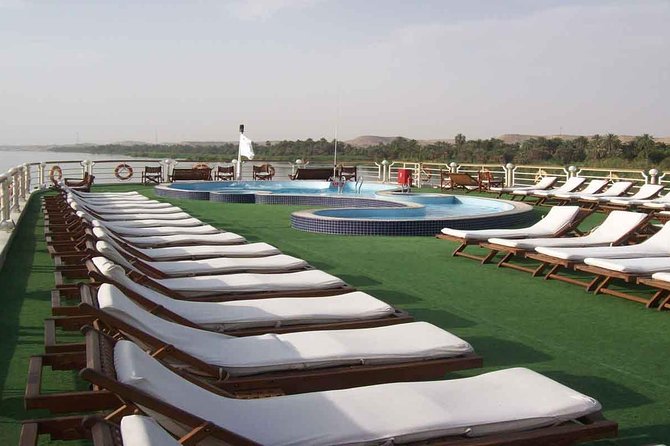
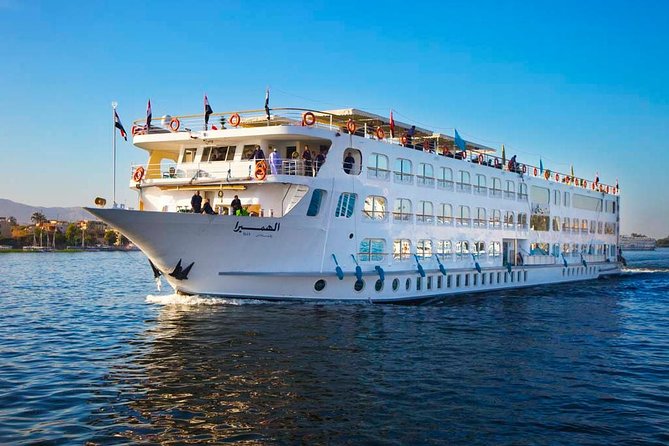
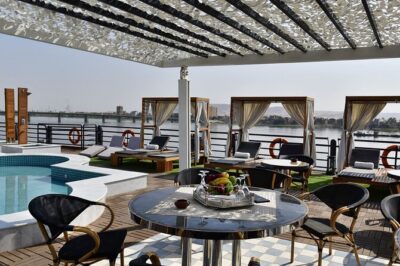
The boat is the biggest question mark. The MS Concerto is described in some places as recently refurbished or upgraded, but the experience can vary by cabin and by the ship’s current condition.
Some cabins have been found spacious, clean, and comfortable. Daily housekeeping and friendly service are important positives. Waiters and room attendants appear to be the staff members most likely to make the stay pleasant.
Other details are less encouraging. Complaints include dated rooms, worn towels, squeaky cupboards, small safes, nonworking televisions, dusty corners, weak bathroom maintenance, and occasional mold around shower fittings. Power sockets may also be limited. If you need reliable charging, bring the appropriate adapter and a small power solution that is permitted for use aboard the ship.
Balcony cabins deserve special caution. Nile boats often dock beside one another, sometimes three vessels tightly lined up. Your balcony may face another ship rather than open water while the boat is in Luxor or Aswan. The best river views usually come while sailing, not while tied up.
The food receives mixed treatment. Meals are included and food can be perfectly serviceable, with some strong praise for the cooking. At other times, the buffet has been described as dry, repetitive, bland, or short on variety. If food is central to your holiday, set your expectations at a practical middle level rather than a luxury-resort standard.
Drinks are another point to check. Water and tea are not always free beyond the included bottle or stated meal arrangements. Ask what is covered before ordering, and keep small Egyptian pound notes available for service tips.
What $1,490 buys you
At $1,490 per person, this is an all-in package rather than a simple cabin reservation. You receive four nights aboard ship, private transfers, a guide, accommodation, bottled water, entrance tickets, and all listed meals.
The private format can justify part of the cost. You are not joining a large public group, and your guide can focus on your party. Pickup from a Luxor hotel or airport also removes some of the usual first-day confusion.
The value drops if the vessel is the main reason you are booking. The ship’s age, cabin upkeep, blocked dockside views, and uneven food service make it hard to treat this as a high-end cruise. I would price it as a convenient sightseeing package with a basic-to-midrange boat, not as a luxury river voyage.
Tipping is not included. The program says tipping is extra, and you should budget for it. Ask your guide how the ship handles pooled tips and what is expected for drivers, room staff, and waiters. Clear information early can prevent awkward requests throughout the trip.
Who should book this Nile cruise?
I would recommend it to someone who wants the classic Luxor to Aswan route in one organized package. It suits first-time visitors to Egypt, families, and small groups that value a private guide and private vehicle more than polished ship facilities.
It also works for anyone who wants the key temples without arranging separate hotels, tickets, and long transfers. The combination of Karnak, the Valley of the Kings, Edfu, Kom Ombo, Philae, and Abu Simbel is strong.
I would be cautious if you are sensitive to cleanliness, need dependable cabin equipment, or expect a modern balcony room. I would also compare other boats if you care deeply about food, entertainment, or uninterrupted river views from your cabin.
The 3.1 rating attached to the experience reflects that split. The Nile route and the staff can create a memorable trip, while the ship itself may produce serious frustration.
Should you book Radamis II?
Book it if the ancient sites, private guide, and simple all-in planning matter most. The itinerary covers an excellent stretch of the Nile, and the included meals, transfers, and tickets reduce the number of details you must arrange.
Before paying, ask for the ship’s current name, the exact cabin category, recent cabin photos, the included tombs in the Valley of the Kings, Abu Simbel transport details, and the final drop-off plan. I would also ask how many power sockets the room has and what drinks cost.
Choose another cruise if you want a dependable luxury standard. Choose this one if you can accept an older floating hotel in exchange for a well-loaded route through southern Egypt.
FAQ
How long is the Radamis II Nile cruise?
The cruise lasts approximately five days and includes four nights aboard the MS Concerto.
Does the cruise run from Luxor to Aswan?
Yes. The stated route begins in Luxor and finishes in Aswan, with Abu Simbel included on the fifth day.
Are meals included?
Yes. The package includes four breakfasts, five lunches, and four dinners.
Is hotel pickup included?
Yes. Pickup is offered from a Luxor hotel or from Luxor Airport, with private air-conditioned transfers included.
Is this a private tour?
Yes. The tour is described as a private activity for your group, with a guide accompanying you.
Which major sites are included?
The itinerary includes Karnak Temple, Luxor Temple, the Valley of the Kings, the Temple of Hatshepsut, the Colossi of Memnon, Edfu Temple, Kom Ombo Temple, the High Dam, the granite quarries, Philae Temple, a felucca ride, and Abu Simbel.
Can I cancel for a full refund?
You can receive a full refund if you cancel at least six full days before the experience start time. Cancellations two to six days ahead receive a 50 percent refund, while cancellations less than two full days ahead are not refunded.
Just added around Luxor
- Private Tour foll day to East and West Banks of Luxor★ 5.0 · 23 reviews
- East and West Bank Luxor★ 5.0 · 23 reviews
- Full Day Tour to Luxor (East & West Bank)★ 5.0 · 23 reviews
- Big brother travel★ 5.0 · 23 reviews
- Luxor Day Tour :Valley of Kings & queen & Hatshepsut & Habu city★ 5.0 · 23 reviews
- Luxor: Scenic Camel or Horse Ride★ 3.9 · 24 reviews
- From Cairo: 4-Day Nile Cruise from Aswan to Luxor with Meals★ 4.4 · 24 reviews
- Traditional Egyptian Breakfast at the AlHabib Arabian Horse Farm★ 5.0 · 24 reviews
5-Day Experiences, compared.
5-Day Egypt Highlights Private Tour with Flights
Read our review →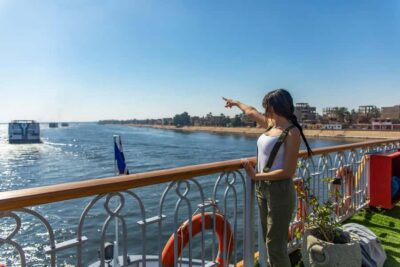
Egypt: Private 5-Day Tour, Nile Cruise, Flights & Balloon
Read our review →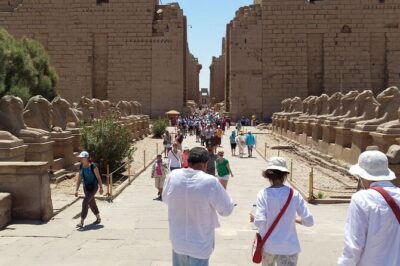
5 Days Private Guided Nile River Cruise Tour from Luxor to Aswan
Read our review →
Our Exceptional 5 days Cairo, Luxor and Abu Simbel Tour Package
Read our review →
5-Day Nile Cruise to Aswan with Balloon Ride
Read our review →
Luxury 5 Days Nile River Cruise from Luxor to Aswan with Private Tour Guide
Read our review →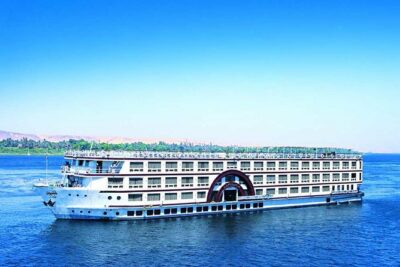
Browse the lists this tour appears in