
Reviewed · ABU SIMBEL TOURS
10 Day Ultimate Egypt Tour & Nile Cruise From Luxor to Aswan & Abu Simbel Inc
Ancient Egypt rewards a well-planned route. This 10-day Egypt tour links Cairo, Luxor, Aswan, and Abu Simbel with an Egyptologist guide, private transfers, hotels, and a four-night Nile cruise. You get the country’s major sights without having to arrange every train, flight, car, ticket, and hotel yourself.
I especially like the excellent coverage of Egypt’s essential monuments, from the Pyramids of Giza and Saqqara to the Valley of the Kings and Abu Simbel. I also like the four-night cruise, which gives you a slower stretch between long sightseeing days. The main concern is hotel quality. One serious complaint describes very dirty hotels and difficulty changing rooms, so I would confirm the exact properties before paying.
The tour is private for your group, but the schedule is full. You will see a great deal in ten days, though some days begin early and include long road transfers. At $2,905 per person, the price is high, yet it may offer fair value if the included meals, entrance fees, domestic flights, cruise, guide, and transfers match your expectations.
In This Review
- Key points to know before booking
- Cairo begins with pyramids, tombs, and old capitals
- Cairo’s museums, churches, citadel, and market
- Luxor connects museums with the Nile
- Karnak and Luxor Temple explain Thebes
- The Valley of the Kings requires an early start
- Edfu and Kom Ombo make the cruise worthwhile
- Abu Simbel is the long day worth protecting
- What the four-night Nile cruise adds
- Price, inclusions, and the hotel question
- Who should book this Egypt itinerary?
- Should you book it?
- FAQ
- How long is the Egypt tour?
- Where does the tour start?
- How many nights are spent on the Nile cruise?
- Which cruise ships are used?
- Are meals included?
- Is Abu Simbel included?
- Is Tutankhamun’s tomb included?
- Is this a private tour?
- Can children join the tour?
Key points to know before booking
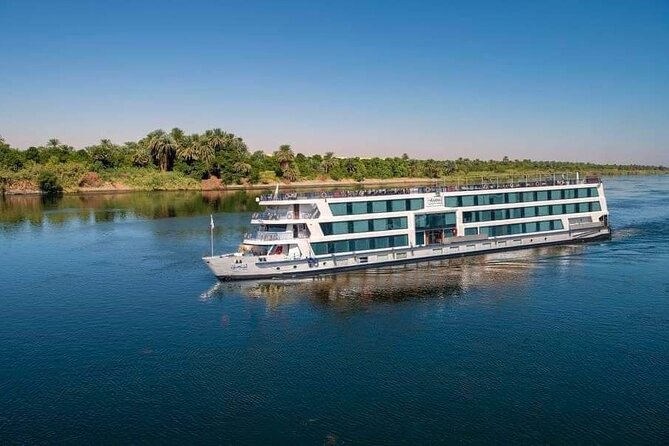
- Four nights on the Nile: The cruise turns the Luxor to Aswan route into part of the experience, with full-board service aboard the MS Blue Shadow, MS Concerto, or a similar ship.
- Egypt’s major ancient sites: You visit Giza, Saqqara, Memphis, Karnak, Luxor Temple, the Valley of the Kings, Edfu, Kom Ombo, and Abu Simbel.
- A guide throughout the trip: An Egyptologist explains the monuments and helps connect Cairo’s museums, ancient temples, royal tombs, and Christian and Islamic sites.
- A private group format: Only your group participates, which can make timing and questions easier than on a large coach tour.
- Abu Simbel requires patience: The excursion takes about nine hours, but the two rock temples are among the most memorable sights in southern Egypt.
- Hotel standards need checking: The itinerary promises five-star accommodation, but one poor account raises a real question about the quality of some overnight stays.
Cairo begins with pyramids, tombs, and old capitals
Your first day is mainly arrival day. Staff meet you at the airport, help with formalities, and transfer you to your hotel. That assistance matters in Cairo, where a smooth airport arrival can save time and stress, especially if you are tired after a long flight.
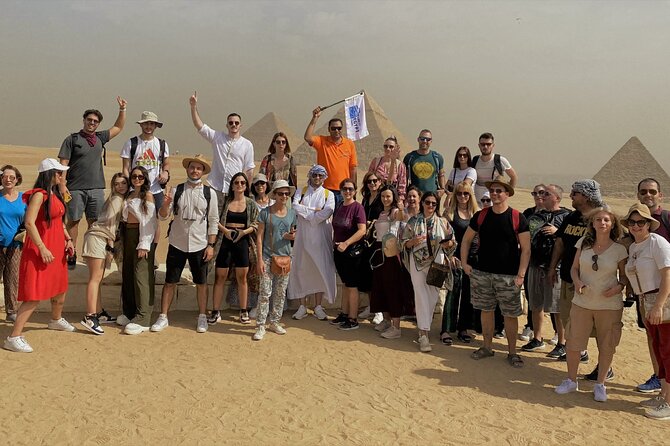
Day two begins with the Pyramids of Giza and the Sphinx. These are not sights that need much introduction, but the real experience is larger and more imposing than photographs suggest. The three main pyramids sit on the Giza plateau, and the Sphinx watches from below. Your three-hour visit includes admission, giving your guide time to explain the monuments and help you make sense of the site.
You should plan for heat, uneven ground, and plenty of walking. The pyramids are not a quick photo stop, although the itinerary moves on after three hours. If entering a pyramid matters to you, ask in advance what is included, since standard admission and special interior tickets are not always the same.
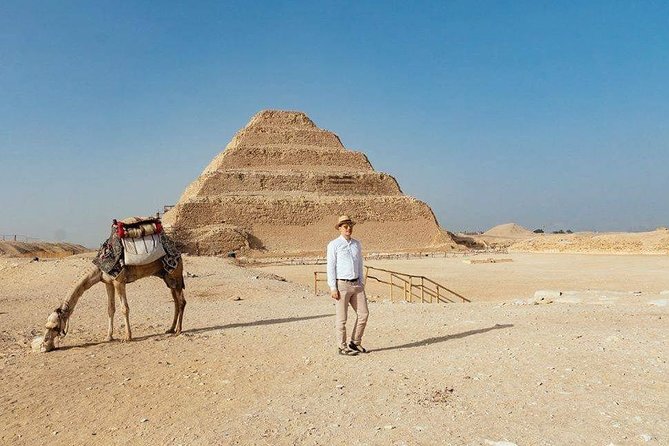
From Giza, the day continues to Saqqara and the Step Pyramid of Djoser. This pyramid, built for the Third Dynasty ruler Djoser, is generally regarded as Egypt’s earliest major stone pyramid. Its six rising levels show how pyramid design developed from earlier mastaba tombs.
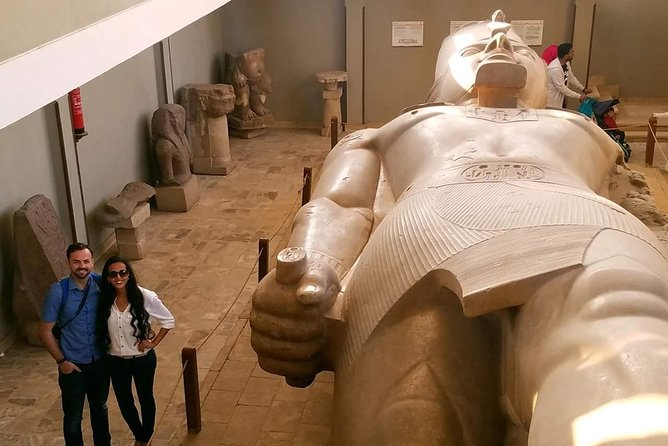
Saqqara is important because it feels less concentrated than Giza. You can better see the ancient burial ground as a broad area filled with monuments from different periods. The tour also includes Memphis, the former capital of ancient Egypt. The ruins include a massive statue of Ramses II and an alabaster sphinx associated with Hatshepsut.
This is a full first sightseeing day. Giza, Saqqara, and Memphis fit together well, but the order means you will spend much of the day outside. Comfortable shoes, sun protection, and water are practical necessities.
More Boat Trips in Cairo
- Cairo: Dinner Cruise on the Nile River with Entertainment
★ 4.2 · 2,190 reviews - Cairo: Nile Sunset Dinner Cruise, Show & Optional Transfer
★ 4.1 · 2,184 reviews - Cairo: Nile Dinner Cruise with Belly Dancer Show with Pickup
★ 4.4 · 835 reviews
Cairo’s museums, churches, citadel, and market
Day three shifts from open-air monuments to Cairo’s major cultural sites. At the Museum of Egyptian Antiquities, you get two hours with a collection of about 120,000 ancient objects, with a representative portion displayed. Two hours is enough for a guided introduction, but not enough to inspect everything carefully.
That is not necessarily a weakness. Egyptian collections can overwhelm you when every case contains a statue, coffin, tool, or piece of jewelry. A guide can point out the most important objects and give the collection a useful structure. If you want a slow museum visit, you may need to return on your own, but this tour is designed for broad coverage.
Next comes Coptic Cairo, the Christian quarter of Old Cairo. The area includes the Babylon Fortress, the Coptic Museum, the Hanging Church, the Greek Church of St. George, and other historic churches. This stop adds a side of Egypt that is often missed on ancient-focused tours. You see how the country’s story continued through the Christian era, not only through the pharaohs.
The Cairo Citadel provides a change of scale and pace. Built as a medieval Islamic fortification, it sits on Mokattam Hill and was once valued for its fresh air and city views. The one-hour visit gives you a compact introduction to Islamic Cairo and to the later rulers who shaped the city.
The day ends at Khan Al-Khalili, Cairo’s famous bazaar district. One hour is enough for a first walk through the market, but not much more. This is the place to browse, compare prices, and enjoy the old streets. Keep your expectations sensible: the market is a major tourist stop as well as a working bazaar, so shopping requires patience and bargaining.
Luxor connects museums with the Nile
On day four, you fly from Cairo to Luxor. Once there, the Luxor Museum offers one of Egypt’s best-organized collections. Its objects come mainly from temples and tombs around ancient Thebes, and the displays cover periods from the Old Kingdom through the Mamluk era.
The museum is smaller than Cairo’s Egyptian Museum, which makes it easier to appreciate in a two-hour visit. It is a smart stop before the major temple and tomb days because it gives you context for the objects and rulers you will encounter around Luxor.
The Mummification Museum follows. The planned stop is listed as only one minute, which appears too brief for a meaningful visit. The exhibits explain mummification through preserved remains, tools, materials, painted coffins, and mummified animals. An image of Anubis, the jackal-headed god linked with embalming, greets visitors at the entrance.
This is one part of the schedule I would clarify before departure. Ask whether the one-minute listing is a typing error or simply a brief photo stop. The museum deserves more than a passing glance if it is open and included.
Karnak and Luxor Temple explain Thebes
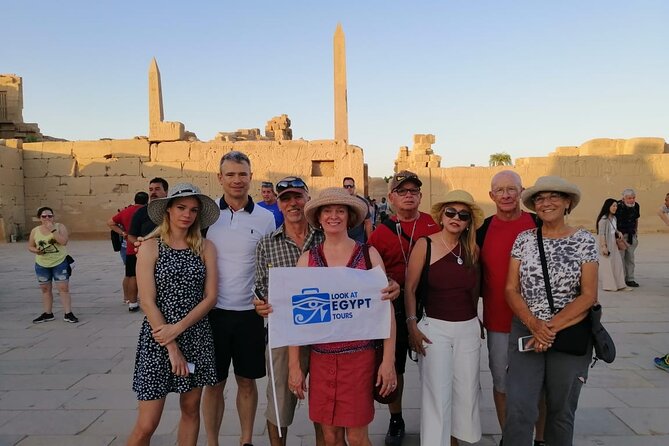
Day five is devoted to two major temples on Luxor’s east bank. Karnak is a huge complex dedicated mainly to Amun and developed over centuries, beginning as early as 2000 BC. Its scale can be hard to absorb, so the two-hour visit is useful. You can focus on the major avenues, courts, columns, and sacred spaces without trying to understand every stone.
Luxor Temple is smaller and more urban in feel. Built around 1400 BC and known in ancient Egyptian as ipet resyt, the southern sanctuary, it served a different role from Karnak. The one-hour visit works well after Karnak because you can compare the two rather than treating them as duplicate temple stops.
You will probably notice that Luxor’s east-bank sights are easier to visit than the royal tombs on the west bank. The east bank was linked with temples and religious life, while the west bank held the royal burial grounds and mortuary temples. That simple distinction helps the layout of ancient Thebes make sense.
More Nile Cruises in Cairo
- 6 Days Hypnotic Cairo & Nile Cruise Tour Package
★ 5.0 · 248 reviews - Egypt: Private 5-Day Tour, Nile Cruise, Flights & Balloon
★ 4.1 · 248 reviews - Cairo: 6-Day Egypt Tour with Flights and Nile Cruise
★ 3.8 · 177 reviews - Private Tour: 7 Nights Pyramids & Nile Cruise +Flights from Cairo
★ 4.5 · 157 reviews
The Valley of the Kings requires an early start
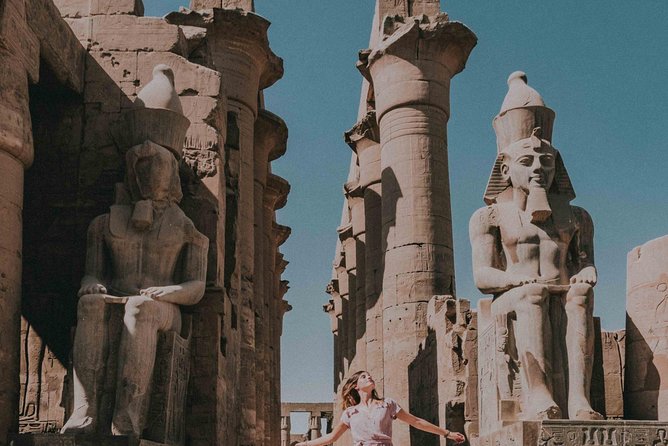
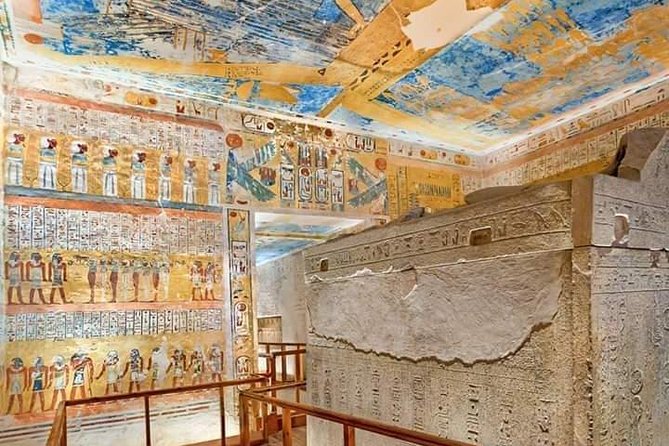
Day six crosses to the west bank for the Valley of the Kings. A standard ticket allows entry to three of the 63 tombs, while Tutankhamun’s tomb requires a separate ticket. The visit lasts about three hours, giving you time to see several tombs and understand why the valley was chosen for New Kingdom pharaohs.
Inside, the decorated walls are the main attraction. They show scenes and symbols tied to the pharaoh’s journey after death. Flash photography and heavy foot traffic have damaged some paintings and reliefs, so follow the site rules and avoid touching walls. It is a small courtesy that helps preserve what you came to see.
Tutankhamun’s tomb is famous because its contents were found almost intact in 1922, but it is not included in the standard three-tomb ticket. If you have your heart set on entering, confirm the extra cost and arrangements before the day begins.
The Temple of Hatshepsut at Deir el Bahari follows, with one hour scheduled. The temple’s terraces rise against the cliffs, and its design feels very different from Karnak or Luxor Temple. Hatshepsut ruled Egypt for about 16 years and presented herself as a male king, reflecting the political limits placed on a woman ruler at the time.
The supplied description repeats an old, simplified account of Hatshepsut’s family and the destruction of her images by Thutmose III. Your guide may offer a more careful explanation, but you should treat dramatic claims about her death and supposed revenge with caution. The building itself is the reason to visit: its terraces, setting, and surviving reliefs are striking.
The Colossi of Memnon are a brief photo stop on the west bank. These two enormous statues depict Amenhotep III and have guarded the Theban necropolis for roughly 3,400 years. They are easy to see from the road and make a good final stop before returning to the cruise or hotel.
Edfu and Kom Ombo make the cruise worthwhile
Day seven brings you to the Temple of Horus at Edfu. Built during the Ptolemaic period between 237 and 57 BC, it is one of Egypt’s best-preserved temples. Sand protected much of the complex after pagan worship ended, and the roof remains intact.
That intact roof changes the mood inside. The temple feels enclosed and atmospheric in a way many open ruins do not. The reliefs and inscriptions are also easier to read because large sections survived. Three hours gives you enough time to appreciate the entrance, halls, sanctuary, and carved walls without rushing.
Kom Ombo is another Ptolemaic temple, built between 180 and 47 BC, but its plan is unusual. It is a double temple, with one half dedicated to Horus and the other to Sobek, the crocodile god. The paired design makes this stop especially useful for understanding how Egyptian religious practice could bring different gods and traditions together in one place.
Two hours is a sensible amount of time at Kom Ombo. The temple is smaller than Karnak, but its river setting and unusual layout make it more than a routine ruin. The cruise schedule also gives you a welcome change from long road days.
Abu Simbel is the long day worth protecting
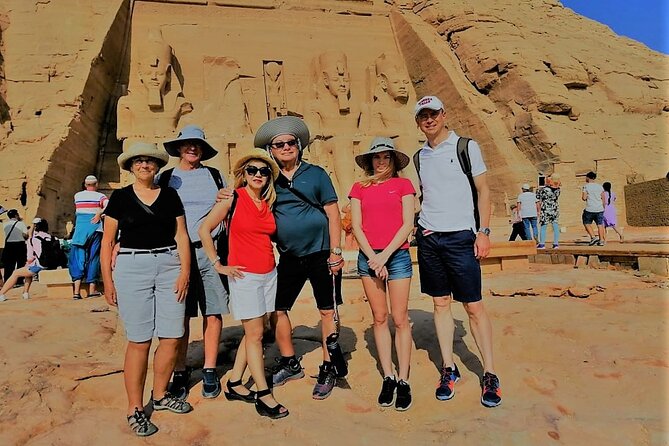
Day eight is devoted to Abu Simbel, with about nine hours assigned to the excursion. The complex contains two massive rock temples near the border with Sudan, on the western side of Lake Nasser and about 230 kilometers southwest of Aswan.
This is the hardest day physically because of the travel time. Still, Abu Simbel is the sight I would be most reluctant to remove. The colossal figures carved into the rock face make an immediate impression, and the scale is unlike the temples around Luxor.
You should approach this day as a major outing, not a relaxed cruise excursion. Expect a long transfer and limited free time. The schedule does not provide a detailed transport breakdown, so ask how the journey is arranged, what time you leave, and when you return. Those details affect how tiring the day feels.
What the four-night Nile cruise adds
The four-night Nile cruise is the tour’s best pacing idea. After Cairo’s traffic, museums, markets, and crowded monuments, the boat gives you a base for the Luxor to Aswan section. Meals are included aboard the cruise, and the listed ships are the MS Blue Shadow, MS Concerto, or a similar vessel.
The word similar matters. Ship quality, cabin size, deck space, and dining arrangements can vary, so request the confirmed ship name before departure. The cruise is listed as full board for four nights, with four dinners and eight breakfasts included across the complete trip, along with seven lunches.
A cruise also reduces the need to repack every night. That is a real benefit on a tour that covers several cities. At the same time, you are following the ship’s timetable, so independent sightseeing is limited during the cruise portion.
Price, inclusions, and the hotel question
At $2,905 per person, this is not a budget Egypt trip. The value comes from the amount organized into one package: an Egyptologist guide, private round-trip transfers, entrance fees, meals, hotel stays, a four-night Nile cruise, and the planned Cairo, Luxor, Aswan, and Abu Simbel program.
The itinerary also includes flights from Cairo to Luxor and from Aswan back to Cairo in the schedule, but the supplied inclusions do not clearly list domestic airfare as a separate included item. I would ask for written confirmation before booking. The same applies to the exact hotels and the meaning of five-star accommodation.
This matters because one poor account describes extremely dirty hotels and an unsuccessful request for a room change, despite apparently empty rooms. That is a serious warning, even though the overall recommendation rate is 97 percent and the rating is 4.8 from 39 ratings.
The positive pattern is clear: the guides receive the strongest praise. A good Egyptologist can make a crowded monument readable, explain confusing royal family trees, and help you use limited time well. The guide is especially important at Saqqara, the Valley of the Kings, Karnak, and the Ptolemaic temples.
Who should book this Egypt itinerary?
I would recommend this tour to a first-time Egypt visitor who wants the major sights in one carefully arranged trip. It suits you if you value a private group, a guide throughout, included entrance fees, and the convenience of having transfers and meals handled.
It is also a good match if you want both Cairo and the Upper Egypt route. Many shorter Egypt trips stop at Giza and Luxor, but this one adds Saqqara, Memphis, Coptic Cairo, the Citadel, Khan Al-Khalili, Edfu, Kom Ombo, Aswan, and Abu Simbel.
I would hesitate if you want slow mornings, long museum visits, or full control over hotels. The schedule is busy, Abu Simbel takes most of a day, and the hotel complaint deserves a direct answer before payment. Children must be accompanied by an adult, though most people can participate.
The tour starts at 8:00 am, and confirmation is provided at booking. Cancellation is generous only when handled early: a full refund requires cancellation at least six full days before the start time. From two to six days ahead, the stated refund is 50 percent, and cancellations less than two days before the start receive no refund.
Should you book it?
Book this tour if you want Egypt’s greatest hits with a private guide and a Nile cruise, and if you are willing to accept a fast pace. The route is strong, the ancient sites are exceptional, and the guide support could make the difference between seeing ruins and understanding them.
Before you commit $2,905, get three answers in writing: the exact hotels, the confirmed cruise ship, and whether the Cairo to Luxor and Aswan to Cairo flights are included in the price. If those details are satisfactory, this is a practical way to cover a huge amount of Egypt in ten days.
FAQ
How long is the Egypt tour?
The tour lasts approximately 10 days, beginning with arrival in Cairo and ending with an airport escort on day 10.
Where does the tour start?
The tour is based in Cairo, with a listed start time of 8:00 am. Airport pickup and transfer assistance are offered.
How many nights are spent on the Nile cruise?
The itinerary includes four nights aboard a full-board Nile cruise from Luxor toward Aswan.
Which cruise ships are used?
The listed ships are the MS Blue Shadow, MS Concerto, or a similar vessel.
Are meals included?
Yes. The inclusions list seven lunches, four dinners, and eight breakfasts.
Is Abu Simbel included?
Yes. Abu Simbel Temple Complex is included on day eight, with approximately nine hours assigned to the excursion.
Is Tutankhamun’s tomb included?
The standard Valley of the Kings admission covers three tombs, but Tutankhamun’s tomb is specifically excluded from that ticket.
Is this a private tour?
Yes. Only your group participates in the private tour or activity.
Can children join the tour?
Yes, but children must be accompanied by an adult. The tour information also states that most people can participate.
More Ways to Reach Abu Simbel
- Our Exceptional 5 days Cairo, Luxor and Abu Simbel Tour Package
★ 5.0 · 212 reviews - From Cairo: 2-Day Abu Simbel & Luxor Tour
★ 3.9 · 136 reviews - 3 Night Luxor and Aswan Nile Cruise with Hot Air Balloon, Abu Simbel from Luxor
★ 5.0 · 76 reviews - Egypt 8 Day :Cairo, Aswan , Nile Cruise , Luxor, Abu Simbel,Hotel
★ 5.0 · 42 reviews
Just added around Cairo
- Day Tour To Giza Pyramids, Great Sphinx, Saqqara Pyramids & Memphis Capital★ 5.0 · 23 reviews
- GEM Grand Egyptian Museum Private Tour from Cairo Giza hotels★ 5.0 · 23 reviews
- Cairo vip two or one day pyramids ,Museum,memfis ,saqra and7 places★ 5.0 · 23 reviews
- Giza Pyramids, Sphinx, Saqqara, and Dahshur Tour with Camel Ride★ 5.0 · 23 reviews
- 8 Day Cairo Pyramids and Nile cruise and Alexandria All inclusive Private Tour★ 5.0 · 23 reviews
- Full-Day Tour to Giza Pyramids Saqqara Memphis Sphinx Private★ 5.0 · 23 reviews
- Full-Day Tour to Giza Pyramids, memphis and Sakkara Step Pyramid★ 5.0 · 23 reviews
- Half Day Guided Trip To Egyptian Museum★ 4.5 · 23 reviews
Abu Simbel Tours, compared.

4-Days Nile Cruise From Aswan To Luxor including Abu Simbel and Hot Air Balloon
Read our review →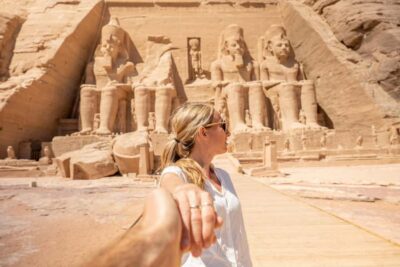
4-Day 3-Night Nile Cruise from Aswan to Luxor including Abu Simbel, Air Balloon
Read our review →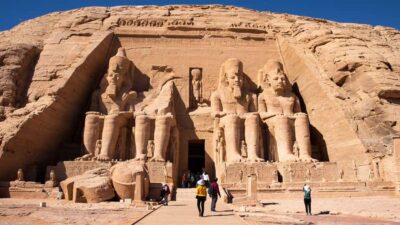
Abu Simbel Temple Private Guided Day Trip with Lunch
Read our review →4-Days Nile Cruise From Aswan To Luxor including Abu Simbel and Hot Air Balloon
Read our review →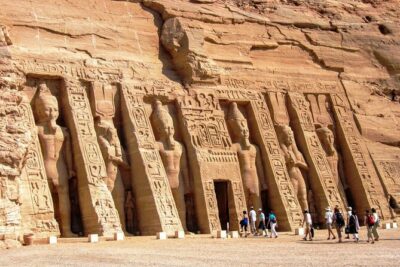
Private Day Tour to Abu Simbel Temples from Aswan
Read our review →4 Days Nile Cruise from Aswan to Luxor including Abu Simbel and Hot Air Balloon
Read our review →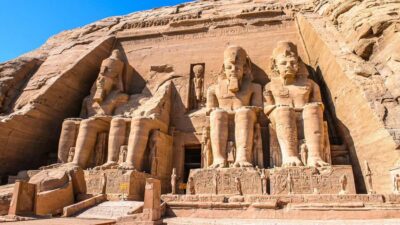
Browse the lists this tour appears in