
Reviewed · ABU SIMBEL TOURS
3-Day Luxor Aswan and Abu Simbel Historical Sites Private Tour
Three days can cover a lot of Egypt. I like this private tour for two clear reasons: it links Luxor, Aswan, and Abu Simbel without making you arrange trains, cars, and boats yourself, and it gives your group an Egyptologist guide rather than leaving you to decode giant walls alone. The private format also lets you spend more time at the places that interest you most.
I also like the first-class train between Luxor and Aswan and the motorboat ride to Philae Temple. Guide Khaled is repeatedly praised for his warm, funny, and informative approach, while coordinator Mohamed is noted for keeping in touch and adjusting plans. The main drawback is the pace: three days is efficient, not leisurely, and entrance fees, meals, and accommodation are extra.
In This Review
- Key points to know before booking
- Why this route works in only three days
- Day one: the tombs and temples of Luxor
- Karnak and Luxor Temple after the West Bank
- The Luxor to Aswan transfer
- Day two: Philae, granite, and the High Dam
- Day three: the long road to Abu Simbel
- Guides, drivers, and the private experience
- Is $251.29 a good value?
- Who should book this three-day route?
- Final verdict: book it for coverage, not quiet
- FAQ
- How long does the tour last?
- Is hotel pickup included?
- Is this a private tour?
- Is an Egyptologist guide included?
- Are train tickets included?
- Is the boat to Philae Temple included?
- Are entrance fees included?
- Is accommodation included?
Key points to know before booking
- Luxor packs in five major stops: The Valley of the Kings, Hatshepsut’s temple, the Colossi of Memnon, Karnak, and Luxor Temple all fit into the first day.
- First-class rail travel is included: The train from Luxor to Aswan removes one of the trip’s more confusing planning tasks.
- Philae requires a boat: A short motorboat trip carries you to the island temple, whose present location resulted from the construction of the High Dam.
- Abu Simbel is a long day from Aswan: Allow about eight hours for the vehicle outing, including the return journey.
- Guides cannot enter several tombs and temples: At the Valley of the Kings and Abu Simbel, your guide explains the monuments outside and uses photos or illustrations where needed.
- The price is only part of the budget: At $251.29 per person, transport and guiding are covered, but site tickets, food, drinks, and accommodation are not.
Why this route works in only three days
The great strength here is organization. Luxor and Aswan are separated by a considerable distance, and Abu Simbel lies much farther south. Trying to arrange each transfer independently can mean bargaining over cars, finding the right train station, and working out the boat to Philae.
This tour gives you a private, air-conditioned vehicle for the road portions, hotel pickup and drop-off, a first-class train ticket from Luxor to Aswan, and the boat ride to Philae. Fuel, parking, the driver, service charges, and taxes are also included. You pay for a tightly arranged route, not simply a guide standing beside a monument.
The private setup matters. Only your party takes part, so you can ask questions, slow down for photographs, or tell the guide when you have had enough of one site. The pace remains brisk, but you are not tied to the preferences of a large bus group.
Still, this is not a relaxed Nile holiday. The plan gives you the major ancient sites, but it leaves little spare time for wandering markets, sitting beside the river, or adding lesser-known tombs. I would choose it for a first visit when time is short, rather than for a slow Egypt trip.
More ways to reach Abu Simbel:
- Luxor: Abu Simbel Temple Private Guided Day Trip with Lunch
★ 4.6 · 546 reviews - 4 Days Aswan and Luxor Nile cruise&Abu Simbel by plane from Cairo
★ 5.0 · 155 reviews - 4 Nights Luxor to Aswan Nile cruise with Abu Simbel&Air Balloon
★ 5.0 · 155 reviews
Day one: the tombs and temples of Luxor
The first day begins on Luxor’s West Bank at the Valley of the Kings. You get about an hour and a half here, including a short stop at the visitors center and time to choose the tombs you want to enter.
This valley served as the burial place of the kings of Thebes, ancient Luxor. Inside, the appeal is not the size of the chambers but the painted walls, religious scenes, and careful decoration that survived in the dry rock. Guides are not allowed inside the tombs, so your Egyptologist will explain the symbols and point out what to look for before you enter.
That arrangement is worth understanding. You receive interpretation, but not a guided talk inside every burial chamber. The standard entrance ticket does not cover every tomb, and the tomb of King Tutankhamun requires an extra payment made directly. Ask your guide which open tombs best fit your interests before spending your ticket budget.
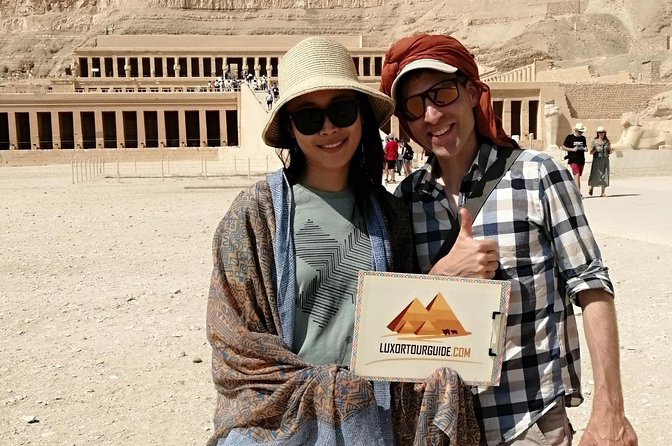
Next comes the Temple of Hatshepsut, one of Luxor’s most recognizable monuments. Its broad terraces rise against the cliffs, giving the site a strong visual shape even before you study the carvings. Your guide explains how Hatshepsut presented herself as a male ruler to secure her position as pharaoh, then you get free time in the courtyards.
I would use that free time for a close look at the hieroglyphic decoration and the temple’s long terraces. The stop lasts about an hour, so it is long enough for a proper visit but not for a slow photographic session in every corner. Entrance is extra.
The Colossi of Memnon is a short stop, about 20 minutes, and admission is free. These two huge statues mark what remains of the funerary temple of Amenhotep III. You will not spend the afternoon here, nor should you. It is a quick chance to see an enormous surviving fragment and take in the scale of the ancient complex.
Karnak and Luxor Temple after the West Bank
Karnak is the day’s largest temple complex and deserves your attention. The route begins near the Avenue of Sphinxes, then leads into a huge religious center built and expanded by successive pharaohs over more than 3,000 years.
The Great Hypostyle Hall is the showpiece. Its 134 columns create the feeling of an ancient stone forest, with carved surfaces catching the light from different angles. The sacred lake offers another useful pause, and your guide can connect the physical layout to the ceremonies once performed here.
The schedule describes a Karnak stop, but the listed duration of two minutes is clearly too short for an actual visit. Treat that figure as a booking-data error and confirm the planned time with the operator before departure. The tour description also promises guided exploration and additional free time, which makes a real visit much longer.
Luxor Temple follows, with about an hour on site. Unlike Karnak, this temple feels more concentrated and direct. Ramses II appears prominently in the statues and decoration, and the remaining section of the Avenue of Sphinxes links the temple to the larger religious center.
Your guide helps explain the hieroglyphs and points out the marks left by later rulers. Alexander the Great added his own connection to the temple, and one of the original pair of obelisks now sits in Paris at Place de la Concorde. That small detail helps connect Luxor to the wider story of how Egyptian monuments were moved, reused, and interpreted over time.
Entrance tickets are not included at Karnak or Luxor Temple. Since every major site on day one has a separate admission cost, budget for tickets before you arrive. The guide can explain the monuments, but you still pay the official site charges yourself.
The Luxor to Aswan transfer
The first-class train ticket is one of the tour’s most useful practical inclusions. Rail travel between Luxor and Aswan is far simpler when the ticket is already arranged, especially if you do not read Arabic or feel comfortable navigating an unfamiliar station.
The information supplied does not give the exact departure time, train duration, or seating details beyond first-class service. Confirm those points before the tour begins. You should also confirm where you will sleep in Aswan, since accommodation is available only by request and is not part of the stated price.
This is an important planning point. The route is sold as a three-day experience, but the supplied details do not name a hotel or specify the overnight arrangements. Mohamed, the coordinator praised for clear communication and flexible logistics, is the person to contact about those details.
More things to do in Luxor:
- Hurghada: Luxor Valley of the Kings & Tutankhamun Tomb Trip
★ 4.7 · 13,208 reviews - Luxor Day Trip from Hurghada Small Group & Tutankhamun Tomb
★ 4.8 · 5,366 reviews - Hot Air Balloon Ride in Luxor Egypt with Transfers Included
★ 5.0 · 4,319 reviews - Luxor: Shared Full-Day Tour to Luxor West and East Banks
★ 4.5 · 1,812 reviews
Day two: Philae, granite, and the High Dam
Day two starts at Philae Temple, reached by a short motorboat ride. The boat journey is included, while the temple admission is not.
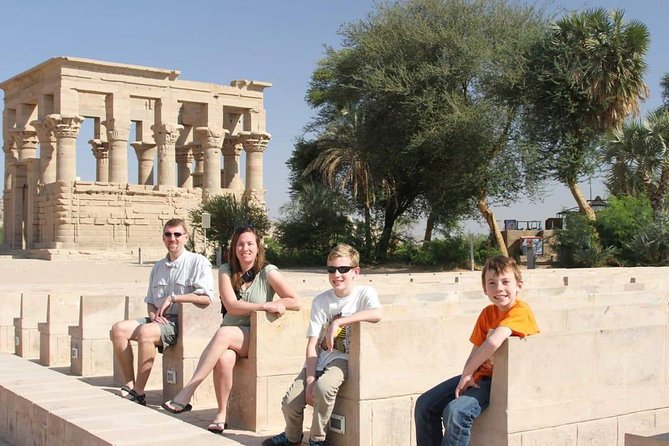
Philae is dedicated to Isis and occupies an island setting in the Nile. Its current position is not the original one. When the High Dam raised the surrounding water, the temple was carefully moved about 500 meters to its present location. The site was arranged to resemble its former setting, so the visit carries both ancient and modern engineering stories.
The boat ride adds something that a roadside temple cannot. You approach the monument across the water, then walk through the sanctuaries and shrines with the river around you. The guided portion lasts about two hours, with free time afterward. That balance is helpful: the guide supplies the explanation, then you can look again at the reliefs without trying to keep up.
The Unfinished Obelisk comes next. In the granite quarries of Aswan, you see a giant monument left in place after a crack appeared during carving. The stop gives you a practical look at how ancient workers shaped the red granite used in temples and colossal statues.
The description refers to a one-ton obelisk, a detail worth clarifying with the guide because the unfinished monument is usually discussed in terms of its enormous intended size. Either way, the main lesson is clear: ancient stonework was not magic. It involved careful cutting, hauling, and the risk of losing a project after a flaw appeared.
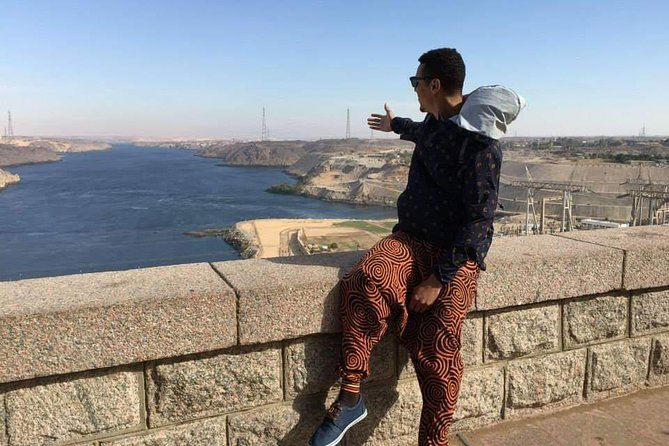
The final stop is the Aswan High Dam. Built from 1960 to 1970, it created Lake Nasser, described here as the world’s second-largest artificial lake. You also cross near the friendship emblem. This is a useful counterpoint to the ancient temples, showing the modern Egyptian project that changed the Nile, agriculture, transport, and the fate of monuments such as Philae.
The dam is less ornate than the ancient sites, but it helps explain why Philae had to move. Without that connection, the earlier boat ride can seem like a scenic extra. With it, the day forms a clear story about water, power, and preservation.
Day three: the long road to Abu Simbel
Abu Simbel is the grand finale, but it requires stamina. The vehicle trip from Aswan takes about eight hours in total, so this is a full road day rather than a quick excursion.
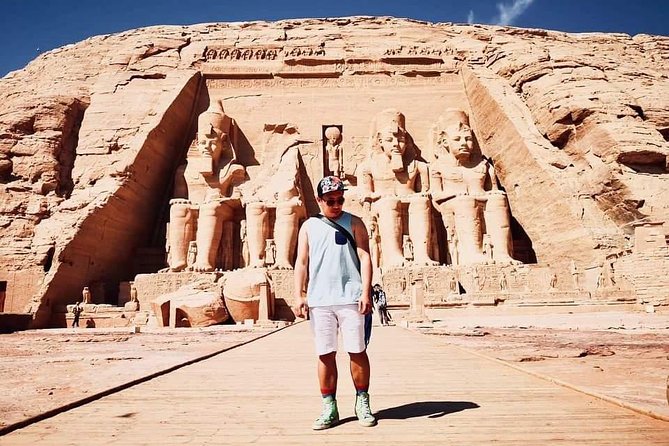
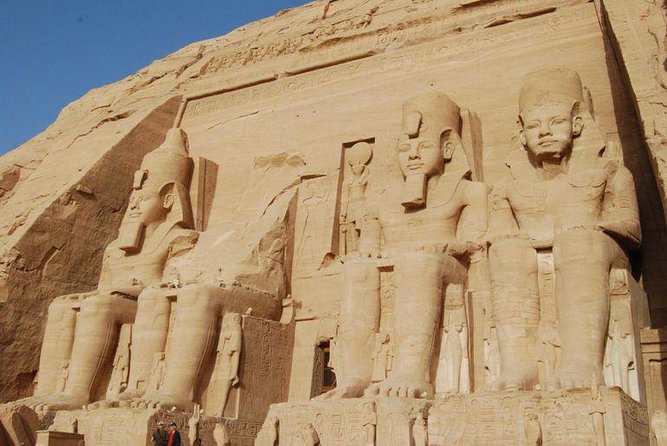
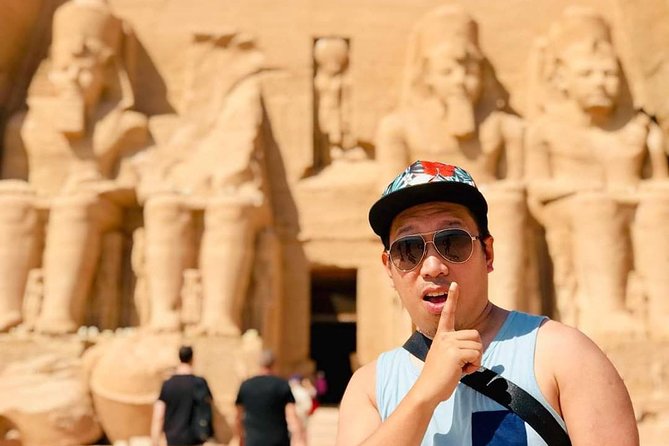
The Great Temple of Ramses II is famous for its four enormous seated figures carved into the rock face. The smaller Temple of Hathor stands nearby. Both temples were relocated to higher ground in a UNESCO-led operation when the creation of Lake Nasser threatened the original site.
Your Egyptologist explains the relocation and how the temples were found by accident in 1813. That background adds real weight to the visit. You are not simply looking at a dramatic facade; you are looking at a monument that survived both ancient construction and a modern rescue effort.
As at the Valley of the Kings, guides are not permitted inside the temples. Your guide uses photos and illustrations to explain the interior carvings and layout, then gives you time to look around. If you expect a continuous talk inside every chamber, adjust that expectation before booking.
The eight-hour duration is the key consideration. Abu Simbel is too important to skip if you want the major southern sights, but the road time can make the day tiring. I would choose this tour only if you are comfortable with a packed schedule and a long drive. The reward is one of Egypt’s most powerful architectural sights, and the private vehicle makes the trip more manageable than joining an unknown large group.
Guides, drivers, and the private experience
The strongest personal praise centers on the people running the tour. Khaled is singled out for being helpful, informative, charismatic, funny, and easy to spend a full day with. That combination matters in Egypt, where a guide must do more than recite dates. The best moments come when someone explains why a relief matters, how a temple changed over time, or what you should notice before entering a tomb.
Mohamed, the company coordinator, receives praise for communication and for suggesting practical arrangements based on the group’s needs. That flexibility is especially useful here because the trip combines rail, road, and boat travel.
Mahmoud is also praised as an excellent driver who handled the roads with care. The vehicle is described as new, clean, modern, comfortable, and air-conditioned. The supplied information does not identify which guide will be assigned to every departure, so request Khaled if having a particular guide matters to you, but do not assume that request is guaranteed.
Because the tour is private, you can shape the day within the fixed route. You still need to visit the listed sites in the available time, but you can ask for the best tomb choices in the Valley of the Kings or spend extra attention on the monuments that interest you most.
Is $251.29 a good value?
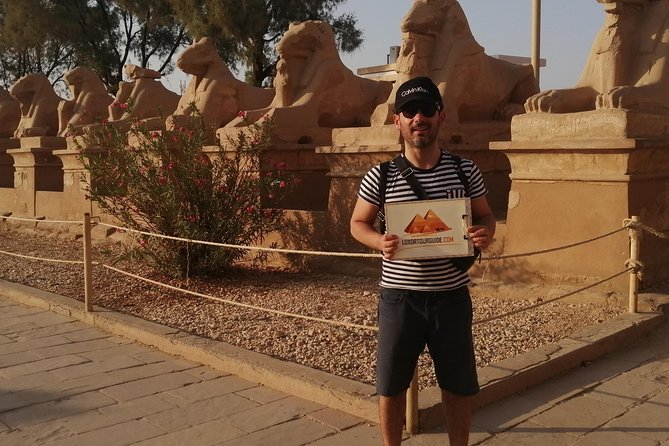
At $251.29 per person, the tour offers solid value for anyone who wants transport and guiding arranged across three difficult days. You receive hotel pickup and drop-off, an air-conditioned vehicle, a driver, first-class rail travel from Luxor to Aswan, the Philae boat, parking, fuel, service charges, and taxes.
The price does not include entrance tickets, meals, drinks, personal expenses, gratuities, or accommodation. Those exclusions matter. The headline price is not your final trip cost, especially because Luxor’s first day includes several paid monuments and Abu Simbel also requires an entrance ticket.
I would compare the price with the cost of arranging a private car, train tickets, a boat, and separate guides. The value is strongest for a small group that can share the private vehicle and guiding cost. Solo visitors should look more closely at the total after tickets and lodging are added.
Gratuities are recommended, so keep some cash available for the guide and driver if the service meets your expectations. The tour has a five-star rating with 100 percent recommendation across 34 reviews, which supports confidence in the staff, though it does not remove the need to clarify the hotel and timing details.
Who should book this three-day route?
I would recommend it to you if:
- You have only three days for Luxor, Aswan, and Abu Simbel.
- You want a private guide instead of a large group.
- You would rather not negotiate taxis or arrange rail tickets.
- You value historical explanation at major monuments.
- You can handle long sightseeing days and the eight-hour Abu Simbel outing.
- You are happy to pay site tickets and meals separately.
I would look for a slower plan if you want relaxed mornings, long museum visits, extra tombs, or free time in Aswan. The route is designed for coverage. It gives you the essential monuments, but it does not pretend that Egypt’s southern sights can be enjoyed at a gentle pace in three days.
Final verdict: book it for coverage, not quiet
I like this tour because it solves the hardest part of a short southern Egypt trip: connecting the monuments. The private guide, first-class train, Philae boat, air-conditioned transport, and responsive coordination make the $251.29 starting price easier to justify.
Book it if Abu Simbel is on your must-see list and you want Luxor and Aswan added without building the route yourself. Before paying, confirm the exact train times, overnight accommodation, total entrance fees, and the planned duration at Karnak. With those details settled, this is a practical, high-value choice for a focused first visit.
FAQ
How long does the tour last?
The experience lasts approximately three days.
Is hotel pickup included?
Yes. Hotel pickup and drop-off are included.
Is this a private tour?
Yes. Only your group participates in the activity.
Is an Egyptologist guide included?
Yes. A qualified Egyptologist guide is included.
Are train tickets included?
Yes. First-class seating on the train from Luxor to Aswan is included.
Is the boat to Philae Temple included?
Yes. The boat journey to Philae Temple is included, but the temple entrance fee is not.
Are entrance fees included?
No. Entrance fees to all sites are excluded and must be paid separately.
Is accommodation included?
Accommodation is not included in the stated price, but it can be arranged by request.
More 3-Day Experiences in Luxor
- From Luxor: 3-Day Nile Cruise to Aswan with Private Guide
★ 4.2 · 147 reviews - Aswan: 3-Day Nile River Cruise to Luxor with Guided Tours
★ 4.4 · 62 reviews - Cheap trip – Nile Cruise 2 nights – 3 days from luxor to aswan
★ 4.5 · 43 reviews - From Luxor: 3-Day Nile Cruise to Aswan with Balloon Ride
★ 3.6 · 43 reviews
More Historical Tours in Luxor
- Sunrise Hot Air Balloon Over the Historical sites in Luxor
★ 5.0 · 697 reviews - From Cairo: Private Full-Day Tour of Historical Alexandria
★ 4.1 · 1,155 reviews - Old Cairo Guided Walk Tour: History, Culture & Street Bites
★ 4.6 · 633 reviews - From Cairo: Historical Alexandria Shared Day Tour with Lunch
★ 4.4 · 260 reviews
Just added around Luxor
- Private Tour foll day to East and West Banks of Luxor★ 5.0 · 23 reviews
- East and West Bank Luxor★ 5.0 · 23 reviews
- Full Day Tour to Luxor (East & West Bank)★ 5.0 · 23 reviews
- Big brother travel★ 5.0 · 23 reviews
- Luxor Day Tour :Valley of Kings & queen & Hatshepsut & Habu city★ 5.0 · 23 reviews
- Luxor: Scenic Camel or Horse Ride★ 3.9 · 24 reviews
- From Cairo: 4-Day Nile Cruise from Aswan to Luxor with Meals★ 4.4 · 24 reviews
- Traditional Egyptian Breakfast at the AlHabib Arabian Horse Farm★ 5.0 · 24 reviews
Abu Simbel Tours, compared.

4-Days Nile Cruise From Aswan To Luxor including Abu Simbel and Hot Air Balloon
Read our review →
4-Day 3-Night Nile Cruise from Aswan to Luxor including Abu Simbel, Air Balloon
Read our review →
Abu Simbel Temple Private Guided Day Trip with Lunch
Read our review →4-Days Nile Cruise From Aswan To Luxor including Abu Simbel and Hot Air Balloon
Read our review →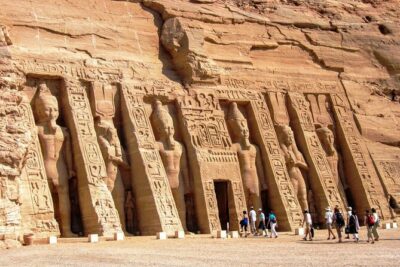
Private Day Tour to Abu Simbel Temples from Aswan
Read our review →4 Days Nile Cruise from Aswan to Luxor including Abu Simbel and Hot Air Balloon
Read our review →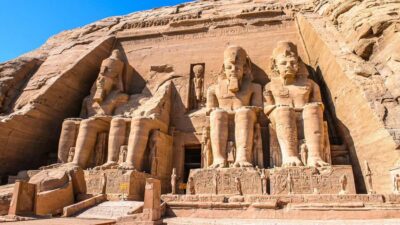
Browse the lists this tour appears in