
Reviewed · HOT AIR BALLOON RIDES
4 Days 3 Nights Nile Cruise, Hot Air Balloon from Aswan to Luxor
Ancient Egypt unfolds one river stop at a time. This four-day cruise links Aswan and Luxor with a strong mix of temples, tombs, guided sightseeing, and quiet hours on the Nile. I especially like the motorboat approach to Philae Temple and the sunrise balloon flight over Luxor’s West Bank.
The private pickup service from Aswan airport, train station, or hotel also makes arrival easy. The main caution is cost planning: the $786.50 price includes the cruise, meals, guides, and most listed entrance fees, but Abu Simbel admission, the balloon ride, and tips are extra.
In This Review
- Key points at a glance
- Why this Aswan to Luxor cruise works
- Day 1: From Aswan arrival to Philae Island
- The Aswan High Dam
- Philae Temple by motorboat
- Day 2: Abu Simbel and the two-faced temple at Kom Ombo
- Abu Simbel’s colossal royal message
- Kom Ombo and its mirrored gods
- Day 3: Edfu, the Esna Lock, and Luxor by night
- Edfu’s Temple of Horus
- Luxor Temple after sunset
- Day 4: A 5:00 am balloon flight over Luxor
- The West Bank: Colossi, royal tombs, and Hatshepsut
- Valley of the Kings
- Hatshepsut at Deir el Bahari
- Guides, meals, and life aboard the ship
- Who gets the best value from the $786.50 price
- Should you book this Nile cruise?
- FAQ
- How long is the cruise?
- Where can pickup take place in Aswan?
- Is this a private tour?
- Which languages are available for the guide?
- Is Abu Simbel admission included?
- Is the hot-air balloon ride included?
- Are meals included?
- What is the cancellation policy?
Key points at a glance
- Philae by motorboat: Reach the island temple dedicated to Isis by water, then return to the ship for dinner and an evening show.
- Abu Simbel in a long day: The seven-hour visit adds one of Egypt’s greatest monuments, but it makes Day 2 demanding.
- A private sightseeing setup: Your group travels with its own guide and air-conditioned vehicle, while the cruise provides the moving base.
- Three major Luxor moments: A sunrise balloon ride, the Valley of the Kings, and Karnak Temple fill the final morning and afternoon.
- Guides shape the experience: Guides named in the feedback include Osama, Taha, Shady, Super Mo, Rabeh, Mahmoud, and Mervat, with special praise for their temple storytelling.
- Good value for a packed route: Three nights aboard the five-star cruise include breakfast, lunch, and dinner each day, but optional extras require a separate budget.
Why this Aswan to Luxor cruise works
A Nile cruise is useful because it turns long transfers into part of the trip. Instead of changing hotels as you move from Aswan toward Luxor, you unpack once and watch villages, fields, desert edges, and passing boats from the deck.
This route also gets the order right for many first visits. You begin with Aswan’s great engineering project and Philae, continue to Kom Ombo and Edfu, then finish among the royal tombs and huge temple courts of Luxor.
I like the balance between guided visits and time aboard the ship. The temples need explanation, especially when a wall shows several gods with similar names and symbols. The sailing hours give you a chance to sit down, eat, and let the Nile do the moving.
The cruise is described as five-star, with stylish public areas, spacious decks, lounges, comfortable beds, and attentive service. Meals receive strong praise for presentation and flavor. Still, you should treat five-star as a cruise category rather than a guarantee of a particular ship, cabin size, or onboard facility, since those details are not specified.
The price is $786.50 per person. That is a fair package value if you would otherwise pay separately for three nights of lodging, daily meals, private transfers, an Egyptology guide, transport, and entrance fees at the main sites. It becomes less attractive if you do not want a tightly scheduled trip or plan to skip Abu Simbel and several Luxor sights.
More Boat Trips in Aswan
- 4-Days Nile Cruise From Aswan To Luxor including Abu Simbel and Hot Air Balloon
★ 5.0 · 3,142 reviews - 4-Day 3-Night Nile Cruise from Aswan to Luxor&Abu Simbel+Balloon
★ 5.0 · 2,023 reviews - 4-Day 3-Night Nile Cruise from Aswan to Luxor including Abu Simbel, Air Balloon
★ 4.5 · 612 reviews
Day 1: From Aswan arrival to Philae Island
Your arrival transfer begins at Aswan International Airport, the train station, or your hotel. A representative from Omar Nile Cruise meets you and arranges an air-conditioned van to the ship.
This is a practical start. You do not need to work out a taxi ride with luggage after arriving in Aswan, and the arrival assistance gives you a clear handoff from land to boat. Pickup is included, along with the departure transfer at the end of the trip.
After boarding, you check in and eat lunch on the cruise. The ship then becomes your base for the next three nights. That matters because Aswan sightseeing can be hot and dusty, while the boat offers a place to cool down between visits.
The Aswan High Dam
The High Dam is not an ancient monument, but it helps explain modern Egypt. Built between 1960 and 1970, it controls flooding and produces electricity. The huge embankment changed the Nile’s seasonal pattern and helped protect settlements from the river’s old flood cycle.
The visit is scheduled for about two hours, with admission included. Do not expect carved columns here. The value is seeing the scale of the project and understanding why the temples along this stretch of the Nile had to be moved or protected when the reservoir formed.
Philae Temple by motorboat
The trip to Philae begins with a short motorboat ride. That approach is part of the pleasure. The temple sits on an island, so you reach it across the water rather than by simply walking in from a parking area.
Philae is dedicated mainly to Isis, one of ancient Egypt’s most important goddesses. Its surviving buildings reflect the Graeco-Roman period, and the carvings show how Egyptian religious traditions continued under later rulers.
Allow about three hours for the visit and boat ride. A guide can help you read the reliefs, identify the figures, and understand how the temple’s setting affects its appearance. Feedback gives special credit to guides including Osama and Mervat for bringing the carvings and stories to life.
Back aboard, you have dinner, a folkloric show, and your first night on the Nile. This evening is a pleasant change of pace after the airport transfer and temple visits, though anyone hoping for an early night should remember that entertainment is part of the schedule.
More Hot Air Balloon Rides in Aswan
- From Aswan: 3-Day Cruise to Luxor with Hot Air Balloon
★ 4.3 · 598 reviews - 4-Days Nile Cruise From Aswan To Luxor including Abu Simbel and Hot Air Balloon
★ 4.5 · 509 reviews - 4 Days Nile Cruise from Aswan to Luxor including Abu Simbel and Hot Air Balloon
★ 4.5 · 356 reviews - 4-Day 3-Night Nile Cruise from Aswan to Luxor With Balloon and Abu Simbel
★ 5.0 · 327 reviews
Day 2: Abu Simbel and the two-faced temple at Kom Ombo
Day 2 carries the most logistical weight. Abu Simbel takes about seven hours, and Kom Ombo adds another two hours. The schedule brings major rewards, but you should be ready for a long sightseeing day with substantial time in transport.
Abu Simbel’s colossal royal message
Near Egypt’s southern border with Sudan, the Abu Simbel complex was cut into a mountainside during the reign of Ramesses II in the 13th century BCE. The Great Temple honors Ramesses and the gods Amun, Ra-Horakhty, and Ptah. Its enormous seated statues announce royal power before you even enter.
The smaller temple is dedicated to Hathor and Queen Nefertari. Its scale and decoration offer a useful contrast with the Great Temple, and the pairing shows how Ramesses presented both himself and his queen.
A remarkable feature is the solar alignment that occurs twice each year. At those times, the rising sun reaches the inner sanctuary and illuminates selected statues. The timing of this cruise does not promise that you will see the alignment, but the design gives the temple an added layer of purpose.
Abu Simbel admission is listed as not included, so ask for the current ticket cost before you commit to the trip. This is important when comparing the headline price with your real budget. The seven-hour visit also means Abu Simbel is best for someone who considers it a priority, not for someone seeking a slow cruise with minimal road travel.
Kom Ombo and its mirrored gods
Kom Ombo is built on a bend of the Nile, giving the approach a fine river view. The temple has a rare double plan, with areas devoted to Sobek, the crocodile god, and Horus, the falcon-headed god.
Look for the mirrored courts, halls, and sanctuaries. The arrangement makes more sense once a guide explains how the two cults share the building. The reliefs also include medical images, including carved surgical tools and procedures.
The nearby Crocodile Museum adds context with crocodile mummies and objects linked to the worship of Sobek. It is a compact but useful addition, especially if you want more than a quick photograph of the temple columns.
The visit lasts about two hours and admission is included. Several guides receive praise for this stop, including Shady, Taha, Super Mo, and Mahmoud. Their strength appears to be turning the unusual details of Kom Ombo into a story rather than treating the site as just another pile of stones.
Day 3: Edfu, the Esna Lock, and Luxor by night
Day 3 gives you more time to enjoy the cruise itself. After breakfast, you visit Edfu, then return to the ship for sailing toward Luxor, lunch, tea on the sundeck, and a look at the Esna Lock.
Edfu’s Temple of Horus
A horse carriage takes you from the ship area to the Temple of Horus. The ride is part of the arranged visit, and your guide accompanies you.
Edfu is known as the best-preserved temple in Egypt. It was built for Horus, and its walls retain a large amount of carved detail. You can expect a more complete sense of the original building here than at many other ancient sites, where time and reuse left only fragments.
The stop takes about three hours, including transport and guiding. Rabeh receives particular praise for explaining the temple with energy and care. If you enjoy architecture, pay attention to the progression from the great entrance toward the inner sacred spaces.
Back on board, the pace changes. You can sit on deck, watch the riverbanks slide past, and enjoy lunch without packing up for another hotel transfer. The ship passes through the Esna Lock, a practical part of Nile cruising that adds a bit of mechanical drama to an otherwise restful afternoon.
Tea on the sundeck is a small pleasure, but it matters after several archaeological visits. You will have time to process what you have seen instead of rushing directly into another museum or temple.
Luxor Temple after sunset
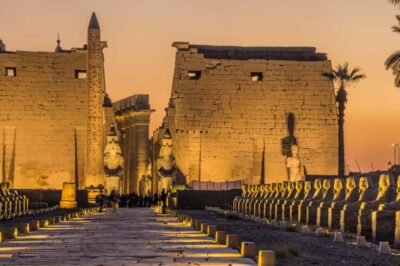
The boat docks in Luxor, and the tour continues to Luxor Temple on the East Bank. The temple brings together ancient Egyptian remains with later Christian and Islamic traces, making it a good place to see how sacred spaces changed over time.
The visit lasts about three hours and includes admission. If the ship reaches the dock by about 3:00 or 3:30 pm, there may also be time for Karnak Temple that afternoon. That possibility depends on the docking time, so do not build your entire plan around seeing both sites before dinner.
Dinner is served back on the ship, followed by a belly dancing show and an overnight stay in Luxor. You may find the evening lively after a quiet afternoon on the river, but the full program can feel busy if you are already tired from the first two days.
Day 4: A 5:00 am balloon flight over Luxor
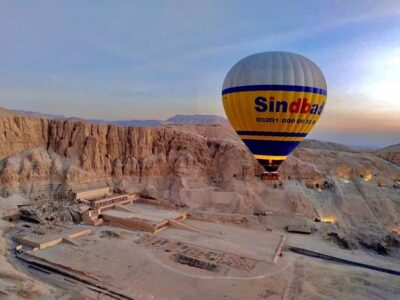
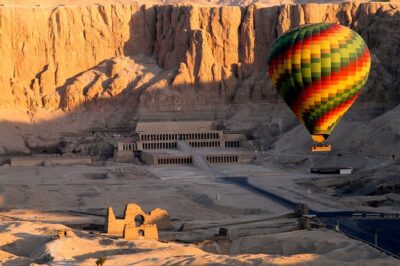
The final day starts around 5:00 am for a hot-air balloon ride over Luxor’s West Bank. The flight lasts about 30 to 45 minutes.
This is the visual highlight for many people. From the air, you can see the Nile, fields, desert edges, and ancient monuments from a perspective that ground-level visits cannot provide. Sunrise also gives the temples and cliffs softer light than the midday sun.
The balloon ride is listed as not included, so confirm the extra charge before booking. It is also weather dependent in practical terms, although the supplied details do not state a specific replacement plan. If you care most about this part, ask what happens if the flight cannot operate.
The early departure creates one tradeoff: you get an unforgettable view, but you give up a full night of sleep. The schedule then continues with breakfast and checkout, so this is not a lazy final morning.
The West Bank: Colossi, royal tombs, and Hatshepsut
The Colossi of Memnon come first or are included during the West Bank circuit. These two enormous statues depict Amenhotep III and once marked the entrance to his mortuary temple, described as the largest temple in the Theban Necropolis.
The stop lasts about 30 minutes and admission is free. That is enough for photographs and a short explanation. The statues are impressive, though the visit is brief compared with the Valley of the Kings and Hatshepsut.
Valley of the Kings
The Valley of the Kings is the main archaeological appointment of the morning. New Kingdom pharaohs cut tombs into the hills to protect royal burials and their treasures.
Admission is included, but the details of which tombs are open or covered are not specified. Tomb access can vary, so ask your guide what your ticket includes on the day. Bring patience for heat and uneven walking conditions, since this is an archaeological site rather than a polished indoor attraction.
I like this stop because it changes your view of Egyptian royal life. The great temples advertised power in public. These tombs were private, symbolic spaces built for the afterlife, and the decoration inside often rewards close attention more than a quick exterior photograph.
Hatshepsut at Deir el Bahari
Queen Hatshepsut’s mortuary temple is arranged against the cliffs at Deir el Bahari. Its terraces and straight lines create a different visual mood from the enclosed halls at Karnak or the carved chambers at Edfu.
The guide explains Hatshepsut’s reign and her relationship with her nephew. Admission is included, and the stop takes about an hour. There is also an optional local lunch, but it is not part of the stated package, so budget for it separately if you want the convenience.
The day ends back on the East Bank at Karnak Temple. The complex grew over more than 2,000 years and covers about 63 acres. Its pillars, obelisks, and broad ceremonial spaces can feel almost too large to take in at once.
Give yourself time to look upward. Karnak works best when you notice scale first, then individual carvings and inscriptions. After the visit, transfer is provided to a Luxor hotel, airport, or railway station around 3:00 to 4:00 pm.
Guides, meals, and life aboard the ship
The guide is central to this experience. The tour includes an Egyptology expert who can work in English or Spanish, and the strongest feedback focuses on personal storytelling at Philae, Kom Ombo, Edfu, and the Valley of the Kings.
Names connected with especially positive comments include Osama, Taha, Shady, Super Mo, Rabeh, Mahmoud, and Mervat. You should not assume you will receive a particular guide, but these examples show the kind of service the operator aims to provide.
The cruise includes three breakfasts, three lunches, and three dinners. Meals are repeatedly praised for fresh preparation, presentation, and taste. Since the package includes both accommodation and food, it removes much of the daily planning that can make an Egypt itinerary tiring.
Onboard entertainment includes a folkloric show on the first evening and belly dancing on the Luxor night. These are included elements of the schedule, but you can skip them if rest matters more to you.
The cruise ship is described as clean, tasteful, spacious, and comfortable, with decks and lounges suited to watching the river. The strongest praise goes to the warm crew and attentive service. Specific cabin dimensions, internet details, pool information, and beverage arrangements are not provided, so ask about those if they affect your choice.
Who gets the best value from the $786.50 price
This package suits you if you want the major Aswan to Luxor sights arranged in one route. It is especially useful for first-time visitors who want a guide, private transfers, meals, and a floating hotel rather than separate bookings.
Families can also benefit from the structure. A guide such as Shady, with interactive storytelling at Kom Ombo, can help younger children stay interested. Still, the Abu Simbel day, the early balloon departure, and the amount of walking may be tiring for small children.
The tour is less suitable if you want a loose schedule. You have fixed sightseeing blocks, a long Abu Simbel day, and a 5:00 am start in Luxor. The private format means only your group participates in the tour activity, which gives you a more personal setup, but the cruise itself remains a shared ship experience.
Remember the extra costs:
- Abu Simbel admission
- Hot-air balloon admission
- Tips
- Optional lunch on the West Bank
Free cancellation is available if you cancel at least 24 hours before the experience starts. Cancellations within 24 hours are not refunded, and changes inside that window are not accepted.
Should you book this Nile cruise?
I would book this trip if you want maximum sightseeing in four days and value having the moving parts handled for you. The route covers Philae, Abu Simbel, Kom Ombo, Edfu, Luxor Temple, Karnak, Hatshepsut, the Valley of the Kings, and a sunrise balloon flight.
I would pause if your ideal Nile holiday means long, unplanned afternoons and very little road travel. Day 2 is long, Day 4 begins before dawn, and the advertised price does not cover every major extra.
For a first Nile cruise from Aswan to Luxor, though, the combination is strong. You get serious archaeology, river views, comfortable onboard meals, private guiding, and a memorable final view of Luxor from the sky. Just confirm the Abu Simbel and balloon costs before paying, then enjoy the river doing what it has done for thousands of years: carrying you toward the next great monument.
FAQ
How long is the cruise?
The experience lasts four days and includes three nights aboard a five-star Nile cruise traveling from Aswan to Luxor.
Where can pickup take place in Aswan?
Pickup is offered from Aswan International Airport, the Aswan train station, or your hotel.
Is this a private tour?
Yes. The sightseeing activity is private, and only your group participates.
Which languages are available for the guide?
An Egyptology guide is available in English or Spanish.
Is Abu Simbel admission included?
No. Abu Simbel is listed as a seven-hour visit, but its admission ticket is not included in the price.
Is the hot-air balloon ride included?
No. The 30 to 45-minute balloon ride over Luxor’s West Bank is listed separately from the included tour services.
Are meals included?
Yes. The package includes three breakfasts, three lunches, and three dinners aboard the cruise.
What is the cancellation policy?
You can receive a full refund if you cancel at least 24 hours before the experience starts. Cancellations or changes made within 24 hours are not accepted, and the amount paid is not refunded.
More 4-Day Experiences in Aswan
- From Aswan:4 Days Nile Cruise Luxor Abu Simbel & Air Balloon
★ 4.4 · 310 reviews - 4-Day Nile Cruise sails Aswan to Luxor&Abu Simbel.Hot air Balloon
★ 4.5 · 247 reviews - 4-Day Nile Cruise Aswan and Luxor Hot Air Balloon with Abu Simbel
★ 5.0 · 234 reviews - Aswan to Luxor: 4-Day Private Nile Journey
★ 5.0 · 152 reviews
More Nile Cruises in Aswan
- From Aswan: 4-Day Nile Cruise from Aswan to Luxor with Guide
★ 4.1 · 593 reviews - 4-Day 3-Night Nile Cruise from Aswan to Luxor – Private Tour
★ 5.0 · 369 reviews - 4-Days Nile Cruise Aswan&Luxor,Hot Air Balloon&Abu Simbel.Hot deal
★ 5.0 · 322 reviews - 2 Night Nile Cruise from Aswan to Luxor
★ 5.0 · 311 reviews
Just added around Aswan
- Private Day Tour to Abu Simble Temple from Aswan★ 4.5 · 23 reviews
- Nile Cruise 2 Nights from Aswan to Luxor with Hot air Balloon★ 4.5 · 23 reviews
- Private Aswan Airport Arrival/Departure One Way Transfer★ 4.5 · 23 reviews
- Best of Luxor in 2 Days Hotel,Tours,Felucca,Camel&Balloon by Plane from Cairo★ 5.0 · 23 reviews
- (3-Nights Cruise From Aswan To Luxor & Balloon, Abu Simbel)★ 4.5 · 23 reviews
- Full Day Sharing Trip To Abou simple Temple form Aswan★ 5.0 · 24 reviews
- Enjoy 2 nights Nile cruise from Aswan to Luxor,Hot deal★ 4.5 · 24 reviews
- 3-Day 2-Night Tour to Aswan, Abusimbel & Luxor★ 5.0 · 24 reviews
Hot Air Balloon Rides, compared.

4-Days Nile Cruise From Aswan To Luxor including Abu Simbel and Hot Air Balloon
Read our review →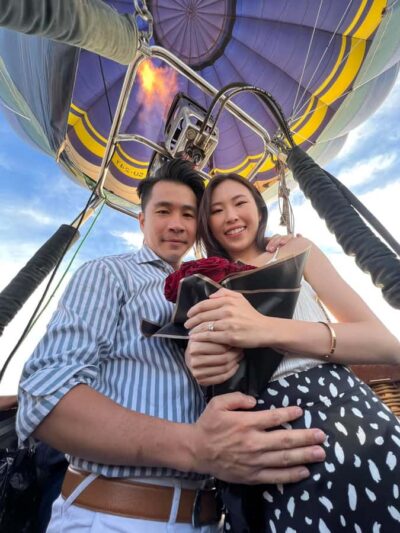
2-Day Luxor Tour with Hotel, Balloon, & Boat Ride
Read our review →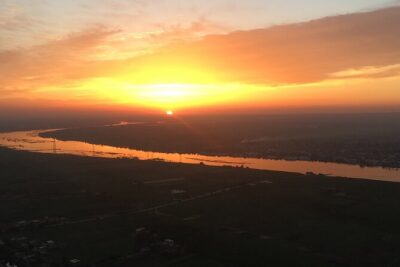
Luxury Sunrise Balloon Ride in Luxor with Hotel Pickup
Read our review →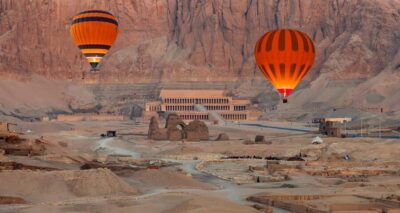
Sunrise Hot Air Balloon Over the Historical sites in Luxor
Read our review →
Hot Air Balloon Ride with Full-Day Sights Tour
Read our review →Browse the lists this tour appears in