
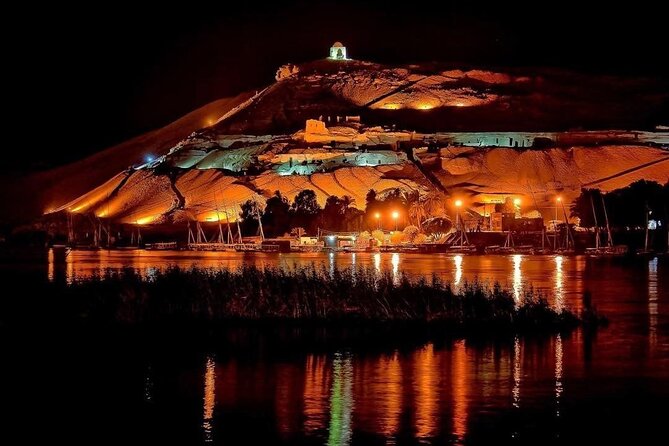
Reviewed · ABU SIMBEL TOURS
5-Day Nile Cruise Luxor to Aswan Abu Simbel and Hot-Air Balloon
Ancient temples, calm water, and one packed journey. This five-day Nile cruise links Luxor and Aswan with guided visits to Egypt’s most important monuments, four nights aboard ship, meals, transfers, Abu Simbel, and optional extras such as a hot-air balloon ride. It gives you a useful mix of sightseeing and downtime, since the ship becomes your hotel between excursions.
I especially like the strong Luxor-to-Aswan route, which includes Karnak, Luxor Temple, the Valley of the Kings, Edfu, Kom Ombo, Philae, and the Aswan High Dam. I also like the repeated praise for the guides and crew, with Mohamed Moniem and Mohamed Abdel Monem singled out for clear explanations, good organization, and personal help. The main drawback is that the pricing and inclusions need careful checking: many visits are marked optional with admission not included, while the package description says all listed sites are included.
In This Review
- Key points to know before booking
- Why this Nile route works so well
- Day one: Karnak and Luxor Temple
- Day two: royal tombs and Hatshepsut’s temple
- Day three: Edfu and Kom Ombo by the river
- Day four: Philae, the High Dam, and a felucca
- What life aboard the ship is like
- Shopping stops and optional extras
- Transfers, group size, and practical value
- Who should book this cruise?
- Should you book the Luxor to Aswan Nile cruise?
- FAQ
- How long is the Nile cruise?
- Where does the cruise begin and end?
- Are meals included?
- Is Abu Simbel included?
- Is the hot-air balloon ride included?
- Are entrance tickets to the temples included?
- What is the maximum group size?
- Are transfers provided?
- Can I cancel for a full refund?
Key points to know before booking
- Four nights on a Nile cruise ship: Your accommodation, meals, and daily transport between many sights are combined in one moving base.
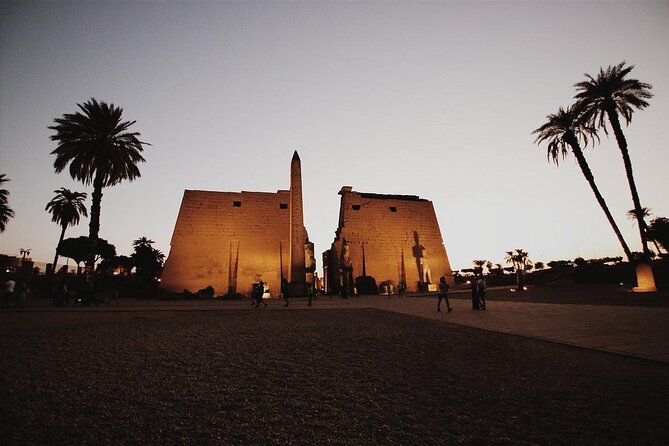
- Luxor’s major temples and tombs: Karnak, Luxor Temple, the Valley of the Kings, Hatshepsut’s temple, the Colossi of Memnon, and Tutankhamun’s tomb fill the first two days.
- Best-preserved temple stops: Edfu and Kom Ombo provide some of the clearest surviving architecture on the route.
- Aswan and Abu Simbel included: Philae, the High Dam, a sunset felucca ride, and an Abu Simbel trip are part of the program, though ticket details should be confirmed.
- Hot-air balloon ride costs extra: The title highlights the balloon experience, but the inclusion details list it under exclusions.
- Small maximum group: The tour accepts up to 20 people, with pickup offered and mobile tickets available.
Why this Nile route works so well
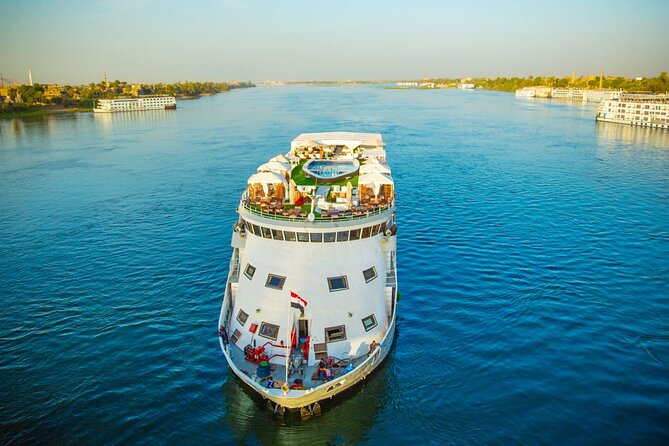
A Nile cruise is a practical way to see Upper Egypt. Instead of changing hotels and arranging separate cars between Luxor and Aswan, you unpack once and let the ship carry you along the river. That matters after hot temple visits, early starts, and long stretches outdoors.
The route also follows a sensible historical arc. Luxor gives you the grandest concentration of ancient sites, Edfu and Kom Ombo break up the sailing days, and Aswan brings a gentler finish with island temples, felucca boats, and views across the water.
The ship is described as comfortable, with decorated public rooms, a spacious sundeck, and cozy cabins. You should think of this as a sightseeing cruise with hotel comforts, not a luxury ocean liner. The strongest points appear to be the setting, the crew, and the ease of having breakfast, lunch, dinner, and a cabin handled in one package.
The advertised price is $764.71 per person. That is potentially good value for four nights of accommodation, four breakfasts, four lunches, four dinners, transfers, a guide, taxes, and a long list of sightseeing. Still, you should ask exactly which entrance tickets are covered before paying. Each itinerary entry says admission is not included, while the general inclusions say all sites mentioned are included. That mismatch is the one financial detail I would not ignore.
More Boat Trips in Luxor
- Hurghada: 2-Day Luxor Tour with Hotel, Balloon, & Boat Ride
★ 4.5 · 1,113 reviews - From Luxor: 3-Night Nile Cruise to Aswan and Hot Air Balloon
★ 3.7 · 297 reviews - Amazing Sunset sailing by Felucca in Luxor -2 Hours (Private)
★ 5.0 · 255 reviews
Day one: Karnak and Luxor Temple
The trip begins in Luxor with Karnak Temple, the huge religious complex dedicated mainly to Amun-Ra. Allow about two hours here. Its scale is the point: vast columns, courtyards, gateways, and layers of construction show how Egyptian rulers kept expanding the sacred center over many centuries.
A guide adds real value at Karnak because the site can feel overwhelming at first. You will get more from the complex if someone explains how the different sections relate to one another instead of simply pointing out large stones. The supplied experience information identifies the main temple with Amun-Ra and traces some construction back to the Middle Kingdom, with earlier references reaching further into Egypt’s past.
Luxor Temple follows, with about an hour for the visit. It sits in the heart of ancient Thebes and has a more focused feel than Karnak. Ramses II played a major role in completing it, and the temple was also linked to Amun-Ra.
I like the pairing of these two sites on the opening day. Karnak gives you size and ceremony, while Luxor Temple lets you see how a major temple worked within the city. The possible downside is that both visits are listed as optional and admission tickets are marked as separate, so confirm the plan with the operator.
Day two: royal tombs and Hatshepsut’s temple
The second day moves into the Theban foothills, beginning with the Valley of the Kings. You have roughly two hours to see the royal cemetery where pharaohs were buried. The basic entry ticket typically covers a limited number of tombs, but the specific ticket arrangement is not stated here, so ask what your admission includes.
The Valley rewards patience. The tombs are not grand from the outside, but their painted corridors and chambers explain why these underground burial places remain among Luxor’s essential stops. Tutankhamun’s tomb is listed separately with about 20 minutes allotted for the visit. That is enough for a short look, but not a leisurely stop.
The tomb of Tutankhamun is famous because the burial discovery brought the young pharaoh worldwide attention. The tomb itself is modest compared with some royal chambers, so you are paying for the connection to the story as much as the size of the space. If an additional ticket is required, you may want to decide in advance how important it is to you.
Next comes the Temple of Hatshepsut at Deir el Bahari, with about two hours. The temple’s terraces and clean lines make it one of Egypt’s most memorable buildings. It was built during the reign of Queen Hatshepsut and served as her mortuary temple.
The setting against the cliffs gives the visit a strong visual punch, but the open site can be demanding in heat. Bring water, use sun protection, and wear shoes suited to uneven ground. You will likely appreciate the cooler interior areas, but the stop remains largely exposed.
The day ends at the Colossi of Memnon, where two huge statues of Amenhotep III receive about 30 minutes. This is a short roadside-style stop rather than a full temple visit. It works well as a quick photo and history break, though you should not expect a long exploration.
This is the busiest sightseeing day. You see royal burial places, a queen’s temple, a famous pharaoh’s tomb, and monumental statues, but the schedule may feel tight if you want to linger. I would choose one or two priorities before departure so you know where to spend extra attention.
Day three: Edfu and Kom Ombo by the river
Edfu Temple is one of the strongest stops on the cruise. The Ptolemaic temple was built between 237 and 57 BC and dedicated to Horus, the avenging son of Isis and Osiris. Desert sand helped preserve it after the pagan cult was banned, and its surviving roof gives the interior a rare sense of enclosure.
You have about two hours at Edfu. That is enough time to appreciate the massive entrance, reliefs, halls, and intact architectural form. Compared with the more fragmentary sites in Luxor, Edfu lets you picture a complete temple complex more easily.
Kom Ombo follows with another two-hour visit. This temple is unusual because it is divided between two gods, Sobek and Horus, giving the complex a double design. It was built during the Ptolemaic period from 180 to 47 BC, with later Roman additions.
The location beside the Nile makes Kom Ombo especially pleasant near sunset or in softer light, although the experience depends on the ship’s timetable. The site can also be crowded when several cruises arrive together. Even so, its two-part plan and unusual dedication make it more than just another temple stop.
These two visits are a good middle section for the cruise. You get substantial archaeology without the intense concentration of Luxor, then return to the ship and the river. For me, this is where the value of the cruise becomes clearest: the sightseeing is built around the natural route rather than requiring a separate day of road travel.
More Hot Air Balloon Rides in Luxor
- Hot Air Balloon Ride in Luxor Egypt with Transfers Included
★ 5.0 · 4,319 reviews - Luxor: Hot Air Balloon Ride over Luxor Relics
★ 4.8 · 1,681 reviews - Luxury Sunrise Balloon Ride in Luxor with Hotel Pickup
★ 5.0 · 1,104 reviews - Luxor: Morning Hot Air Balloon Ride
★ 4.4 · 736 reviews
Day four: Philae, the High Dam, and a felucca
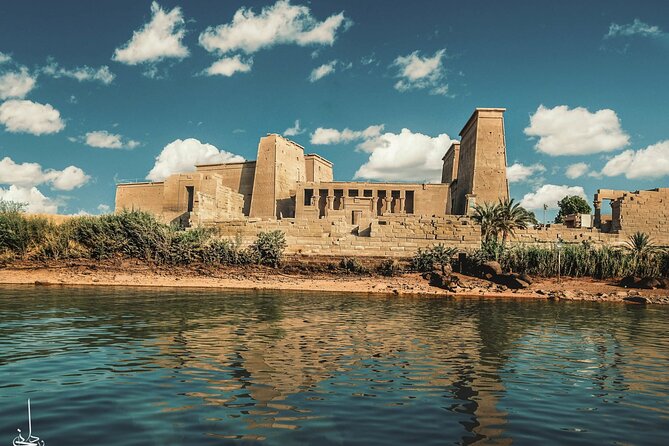
Aswan’s Temple of Philae is dedicated to Isis and sits on an island in a carefully designed setting. UNESCO helped relocate the temple when the Aswan Dam threatened the original site. The move preserved a remarkable group of shrines and sanctuaries, including Trajan’s Kiosk, also known as Pharaoh’s Bed.
You have about two hours at Philae. The island setting changes the mood from the desert temples farther north. Water surrounds the monuments, and the visit connects ancient Egypt with the major engineering projects that reshaped the Nile in the modern era.
The Aswan High Dam takes about 40 minutes. Built between 1960 and 1970, it is one of the world’s largest embankment dams. Its importance is not only technical. It changed flood control, power production, farming, and the fate of ancient sites such as Philae.
A sunset felucca ride is listed as an optional one-hour activity with no admission fee. This is the kind of add-on I would consider seriously. It gives you time away from temple walls and lets you see the Nile at a slower pace, with Aswan’s river setting doing most of the work.
The program also includes Abu Simbel as a shared trip without the ticket. Abu Simbel is one of the great reasons to extend a Nile itinerary to Aswan, but the wording is not fully clear about transport timing, entrance cost, and how the shared arrangement operates. Get those details in writing. It may be the most logistically demanding part of the package.
What life aboard the ship is like
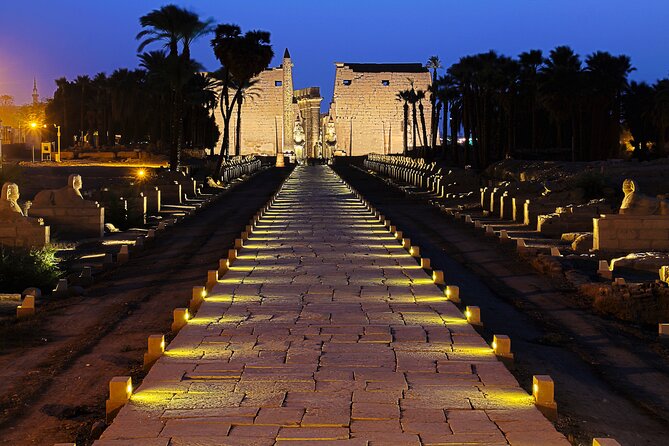
The ship is presented as an elegant floating hotel with comfortable cabins, attractive public areas, and a broad sundeck. You can expect four nights aboard and an open buffet for meals. Breakfast, lunch, and dinner are listed for all four cruise days.
The sundeck matters more than it may sound. A Nile cruise is not only about guided visits. Some of the best moments come while sitting quietly as the riverbanks pass by, watching rural life, palms, villages, and desert edges from the water. The reviews repeatedly praise the views, with particular appreciation for the Nile around Aswan and Lake Nasser.
Food is another praised feature. Several comments describe the meals positively, and the buffet format gives you choice. Still, buffet quality can vary from meal to meal, so I would treat this as a welcome convenience rather than book the cruise solely for dining.
The crew receives frequent praise for friendly service, helpfulness, and welcoming smiles. One particularly useful detail is that a guide helped during an emergency and that multilingual assistance was available. Those small acts matter on a trip where you are often moving early, visiting unfamiliar places, and managing several transfers.
Guide quality is likely to shape your experience more than the ship’s decoration. Mohamed Moniem and Mohamed Abdel Monem are named repeatedly for strong organization, historical explanations, energy, humor, and help with practical matters. The guide is expected to make the ancient sites understandable, not merely point out their names.
Shopping stops and optional extras
The package includes visits to a papyrus factory, an alabaster workshop, and a Nubian perfume laboratory in Aswan. These stops can be interesting if you want to understand traditional crafts and buy souvenirs, but they also use time that could otherwise go toward independent exploration or rest.
Go in with a clear plan. If you enjoy demonstrations and want to shop, these visits add local context. If you prefer ruins and river time, ask how long each stop lasts and whether participation is required.
A Nubian Village day trip is not included. The optional activity includes a Nubian house and authentic food, according to the supplied details. It could add a cultural side to the cruise, but you should budget for it separately and ask about the full schedule before adding another outing to an already active itinerary.
The hot-air balloon ride in Luxor is also extra. This is important because it appears in the experience title but is explicitly listed under what is not included. If the balloon is a major reason for booking, confirm the price, pickup time, weather policy, and whether the ride is arranged by the same provider.
Transfers, group size, and practical value
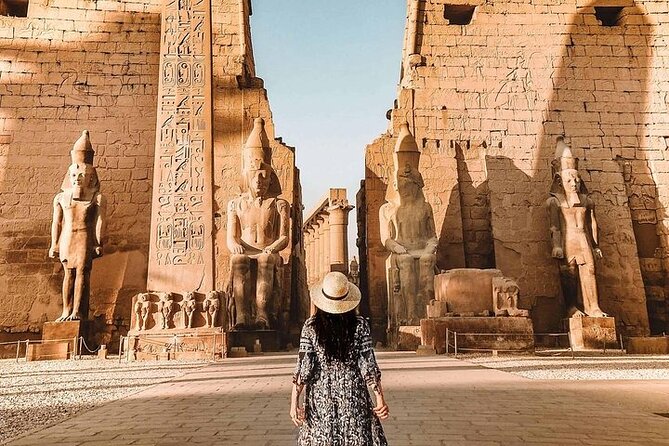
Pickup is offered, and all listed transfers use air-conditioned vehicles. At the end, a representative accompanies you to Aswan airport, Aswan train station, or an Aswan hotel. That final handoff is useful if you are continuing to Cairo or another Egyptian destination.
The maximum group size is 20 people. That is small enough for a guide to manage without turning every temple visit into a crowd exercise, though the actual group may be smaller or close to the limit. The cruise itself may involve other passengers beyond your excursion group, so do not assume the entire ship holds only 20 people.
One practical point from the experience feedback is the distance between Cairo and Luxor. If you are coming from Cairo, consider an internal flight or a sleeping train rather than treating the journey as a simple road transfer. The cruise begins in Luxor and ends in Aswan, so you should plan your arrival and departure around those cities.
Most people can participate, and the tour is near public transportation. That does not mean every stop is easy. The Valley of the Kings, Hatshepsut’s temple, and large temple compounds involve walking in sun and over uneven surfaces. Anyone with mobility concerns should ask for more detail before booking.
Free cancellation is available up to 24 hours before the local start time. Changes or cancellations inside that window are not accepted for a refund, so check your flight and train plans before the deadline.
Who should book this cruise?
I would recommend it to you if you want Egypt’s main Upper Nile sights arranged in one package, with your hotel moving along the river. It suits first-time visitors, families who value organized transfers, and anyone who prefers a guide to explain the monuments rather than exploring every site alone.
It is also a good match if you want a balance of archaeology and rest. You can spend the morning among temples, return to the ship, eat, sit on the sundeck, and watch the Nile instead of packing and unpacking every night.
I would be more cautious if you want a slow, independent trip. The itinerary is full, several visits are optional, and the shopping stops may not suit every traveler. You should also clarify all admission fees, the exact Abu Simbel arrangement, and the hot-air balloon supplement before committing.
Should you book the Luxor to Aswan Nile cruise?
Yes, if the confirmed inclusions match the advertised package. The route is excellent, the four-night format is efficient, and the strongest praise centers on exactly what matters most: the guides, crew, temple visits, meals, and views from the Nile.
Before booking, send three questions: Which entrance tickets are included? Is Abu Simbel transport included and are tickets extra? What is the exact cost and schedule for the hot-air balloon ride? If the answers are clear, $764.71 per person can represent solid value for a guided five-day journey through Luxor and Aswan.
FAQ
How long is the Nile cruise?
The experience lasts approximately five days and includes four nights of accommodation aboard the cruise ship.
Where does the cruise begin and end?
The itinerary begins in Luxor and ends in Aswan. After breakfast on the final day, a representative can accompany you to Aswan airport, Aswan train station, or an Aswan hotel.
Are meals included?
Yes. Four breakfasts, four lunches, and four dinners are listed as included. Meals are described as an open buffet.
Is Abu Simbel included?
An Abu Simbel temple trip is listed as included on a shared basis without the ticket. Because the site entry and exact transport details are not clearly explained, confirm those costs before booking.
Is the hot-air balloon ride included?
No. The hot-air balloon ride in Luxor is listed under exclusions, even though it appears in the experience title.
Are entrance tickets to the temples included?
The general inclusions say all sites mentioned in the program are included, but each itinerary stop is marked admission ticket not included. Ask the provider to clarify which entrance fees you must pay.
What is the maximum group size?
The tour has a maximum of 20 travelers.
Are transfers provided?
Yes. Air-conditioned transfers are included, pickup is offered, and end-of-tour transportation can be arranged to Aswan airport, train station, or hotels in Aswan.
Can I cancel for a full refund?
You can cancel up to 24 hours before the experience start time for a full refund. Cancellations or changes made less than 24 hours before the start time are not accepted for a refund.
More Ways to Reach Abu Simbel
- Luxor: Abu Simbel Temple Private Guided Day Trip with Lunch
★ 4.6 · 546 reviews - 4 Nights Luxor to Aswan Nile cruise with Abu Simbel&Air Balloon
★ 5.0 · 155 reviews - Luxor: Edfu, Kom Ombo, Abu Simbel Private Tour & Entry Fees
★ 4.2 · 112 reviews - Luxor: 4 Days Nile Cruise with Guided Tours & Abu Simbel
★ 4.5 · 104 reviews
More Nile Cruises in Luxor
- 5 Days Private Guided Nile River Cruise Tour from Luxor to Aswan
★ 5.0 · 229 reviews - Historia Hotel Nile Cruise, Mon. from Luxor 4 nts inc. Excursions
★ 5.0 · 185 reviews - From Luxor: 5-Day Nile Cruise to Aswan with Balloon Ride
★ 4.2 · 168 reviews - 4 Days Aswan and Luxor Nile cruise&Abu Simbel by plane from Cairo
★ 5.0 · 155 reviews
Just added around Luxor
- Private Tour foll day to East and West Banks of Luxor★ 5.0 · 23 reviews
- East and West Bank Luxor★ 5.0 · 23 reviews
- Full Day Tour to Luxor (East & West Bank)★ 5.0 · 23 reviews
- Big brother travel★ 5.0 · 23 reviews
- Luxor Day Tour :Valley of Kings & queen & Hatshepsut & Habu city★ 5.0 · 23 reviews
- Luxor: Scenic Camel or Horse Ride★ 3.9 · 24 reviews
- From Cairo: 4-Day Nile Cruise from Aswan to Luxor with Meals★ 4.4 · 24 reviews
- Traditional Egyptian Breakfast at the AlHabib Arabian Horse Farm★ 5.0 · 24 reviews
Abu Simbel Tours, compared.

4-Days Nile Cruise From Aswan To Luxor including Abu Simbel and Hot Air Balloon
Read our review →
4-Day 3-Night Nile Cruise from Aswan to Luxor including Abu Simbel, Air Balloon
Read our review →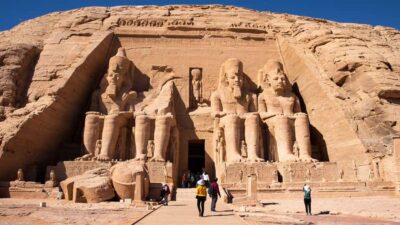
Abu Simbel Temple Private Guided Day Trip with Lunch
Read our review →4-Days Nile Cruise From Aswan To Luxor including Abu Simbel and Hot Air Balloon
Read our review →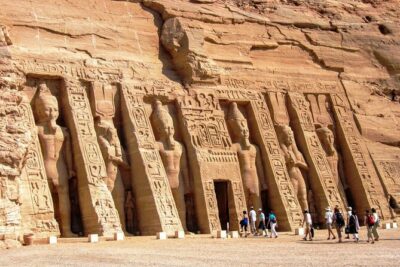
Private Day Tour to Abu Simbel Temples from Aswan
Read our review →4 Days Nile Cruise from Aswan to Luxor including Abu Simbel and Hot Air Balloon
Read our review →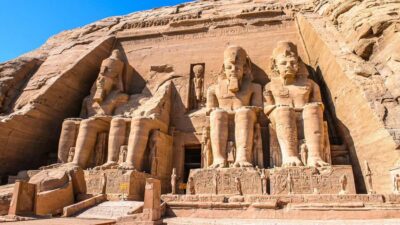
Browse the lists this tour appears in