
Reviewed · LUXOR TOURS
Private Habu Temple, Valley of the Artisans, Valley of the Queens from Luxor
Luxor’s quieter west side rewards curious visitors. This private six-hour tour links three important sites near ancient Thebes: the grand Temple of Ramesses III, the village where royal tomb workers lived, and the burial valley of queens and princes. I like the private vehicle and flexible pace, and I especially like that entry fees, hotel transfers, water, and snacks are included in the advertised package. The main drawback is the heat. With up to six hours outdoors and one report of temperatures near 110 F, an early start is not optional in the hotter months.
I also like the way this route shifts attention away from Luxor’s most famous stops. Habu Temple can feel remarkably calm compared with Karnak, while Deir el-Medina gives you a rare look at the people who made royal burial sites possible. The quality of the experience depends heavily on your guide, so it is worth confirming the language and selected tour option before you book.
In This Review
- The essential details at a glance
- Why this West Bank route is worth your morning
- Starting at 7:00 am on Luxor’s West Bank
- Habu Temple: Ramesses III in stone and color
- Deir el-Medina: the village behind the tombs
- Valley of the Queens: royal family burial in a smaller setting
- What the private format adds at $55
- Guide quality can make or break the day
- Practical advice for a better visit
- Should you book this Luxor West Bank tour?
- FAQ
- How long does the private tour last?
- What time does pickup begin?
- Are entrance fees included?
- Is lunch included?
- Is this a private tour?
- Can I cancel for a full refund?
The essential details at a glance
- Ramesses III’s Habu Temple takes center stage: Expect huge walls, well-preserved reliefs, and surviving traces of color in a setting that often feels quieter than Karnak or Luxor Temple.
- Deir el-Medina changes the story: You see the former home of the artisans who decorated royal tombs, not only the tombs of kings and queens.
- The Valley of the Queens adds royal family history: The valley held queens, princes, princesses, and members of the nobility from the New Kingdom.
- A private tour lets you ask questions freely: Guides such as Aliaa, Ahd, Reham, Sam, Susan, Ahmed, and Nermeen Melad received especially warm praise for clear explanations and personal attention.
- The package is built for convenience: Hotel or Nile cruise pickup, private air-conditioned transport, entrance fees, a guide, bottled water, and snacks reduce the number of details you must arrange.
- The heat is the serious practical issue: The tour begins around 7:00 am, but summer conditions can still make the final stop tiring.
Why this West Bank route is worth your morning
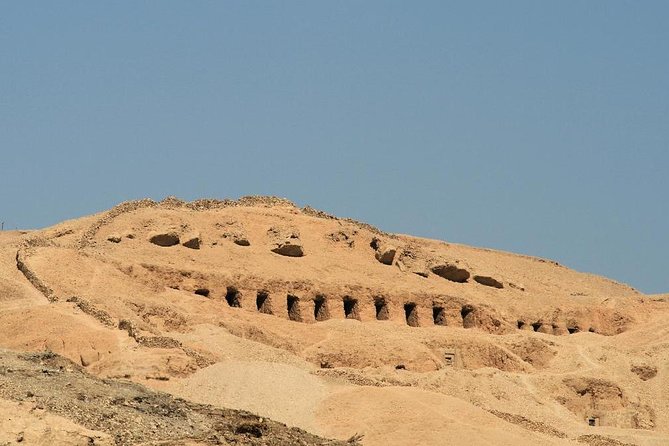
Luxor’s West Bank is the setting of ancient Thebes, where Egyptians built temples for the dead and cut tombs into the Theban Hills. Most first-time visitors head straight for the Valley of the Kings. This tour takes a different path, combining a major royal temple with two sites that explain the people and families behind the burial system.
That makes the route feel well balanced. Habu Temple gives you scale and ceremony. Deir el-Medina gives you ordinary domestic life, at least for a specialized community. The Valley of the Queens brings you back to royal burial and the religious customs surrounding death.
I think the route works best for anyone who already plans to see Luxor Temple, Karnak, or the Valley of the Kings and wants a less predictable half-day. It also suits a solo visitor or small group that wants to stop, ask questions, and take photos without following a large coach party.
The tour is listed at $55 per person, which is a fair price if your chosen option includes the stated entrance fees. Private air-conditioned transport, hotel pickup and drop-off, a licensed guide, water, and snacks are all covered. Lunch is not included, nor are tips, personal purchases, or optional visits.
One point deserves care: the general description says admission is included, while the additional information says entrance fees depend on the tour option selected. Check the exact package at booking. That small step prevents an unwelcome surprise at the ticket office.
More things to do in Luxor:
- Hurghada: Luxor Valley of the Kings & Tutankhamun Tomb Trip
★ 4.7 · 13,208 reviews - Luxor Day Trip from Hurghada Small Group & Tutankhamun Tomb
★ 4.8 · 5,366 reviews - Hot Air Balloon Ride in Luxor Egypt with Transfers Included
★ 5.0 · 4,319 reviews
Starting at 7:00 am on Luxor’s West Bank
Pickup is scheduled for 7:00 am from your Luxor hotel or Nile cruise. The supplied meeting information also lists a starting point at PJ2X+WMH on Salah Salem in Luxor City, so confirm the exact pickup arrangement if you are not staying at a standard hotel or are unsure where your cruise pickup will happen.
The drive crosses the Nile to the West Bank in a private, air-conditioned vehicle. That matters in Luxor. The sites are spread around the foothills, and moving between them by private car is much easier than arranging separate taxis under the midday sun.
Your guide accompanies you at each site. The best part of a private format is not simply having a car to yourself. It is being able to ask why a scene appears on a wall, request more time in a tomb, or move along when your attention starts to fade.
Guide quality appears to vary, as it can on any guide-led tour. Aliaa was praised for warmth and clear explanations, while Ahd was singled out for passion and willingness to answer questions. Sam was noted for reading hieroglyphs fluently, and guides including Reham, Ahmed, Susan, and Nermeen Melad were praised for patience, strong English, and thoughtful help with details. German and Spanish language guiding was also praised in individual accounts, but you should request your preferred language in advance rather than assume it.
Habu Temple: Ramesses III in stone and color
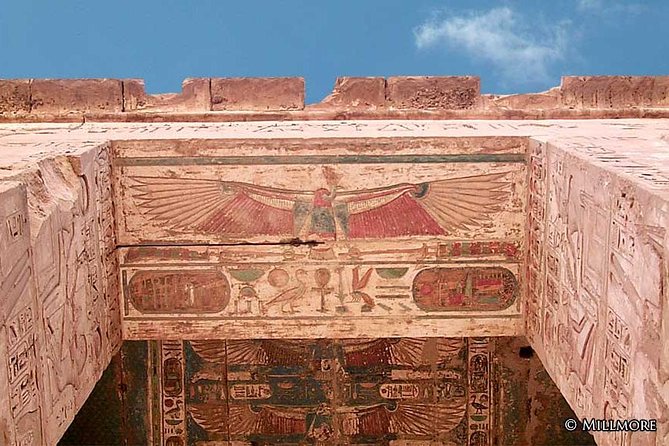
The first stop lasts about two hours, and that is the right amount of time for a temple of this size. Medinet Habu, also called Habu Temple, sits near the foot of the Theban Hills. The site is associated mainly with the mortuary temple of Ramesses III, a ruler of Egypt’s 20th Dynasty.
The temple is roughly 150 meters long and follows the traditional plan used for royal mortuary temples. Its design closely resembles the Ramesseum, the temple of Ramesses II. You pass through large architectural spaces covered with carved scenes, religious symbols, and royal imagery.
What makes Habu Temple especially rewarding is the condition of its decoration. Several accounts praise the preserved reliefs and remaining color on columns and ceilings. Egyptian monuments are often presented as bare stone, but these traces remind you that the original buildings were meant to be painted. Look closely at protected surfaces and ask your guide to point out where the color survives.
The walls also provide a lesson in Theban religion and burial rites. A strong guide can explain how the temple served the cult of the dead king, how offerings and rituals supported his continued existence, and how the images tied the king to the gods.
This is where guide quality matters most. Sam’s ability to read hieroglyphs would be valuable here, as would the clear, story-based approach praised in guides such as Reham and Ahd. You do not need to know Egyptian history before arriving, but you will get more from the visit if you ask simple questions: Who is shown here? What ritual is taking place? Why was this scene placed on this wall?
Habu Temple is also a good place to appreciate the quiet side of Luxor. It is not always as crowded as Karnak or Luxor Temple, yet its scale and decoration can compare favorably with both. One account called it better than those more famous temples in some ways. That is a matter of taste, but I understand the appeal: you can often give the walls your full attention instead of competing with a large flow of visitors.
The open setting means heat builds quickly. Wear a hat, use sunscreen, and keep the supplied water close. The wide stone courts offer impressive views toward the desert foothills, but they do not provide much relief when the sun is strong.
Deir el-Medina: the village behind the tombs
The second stop is Deir el-Medina, commonly called the Valley of the Artisans or Valley of the Workers. Plan on about two hours here.
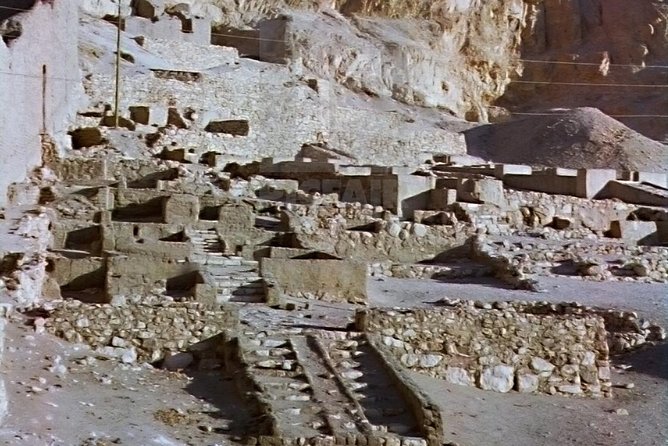
This ancient settlement housed the skilled workers who cut and decorated tombs in the Valley of the Kings during Egypt’s 18th, 19th, and 20th Dynasties, roughly 1550 to 1080 BC. The site changes your understanding of royal monuments. Instead of seeing only pharaohs and queens, you begin to picture the specialists who planned the scenes, prepared the walls, and carried out the decoration.
The remains of the village show that these artisans lived with their families in a dedicated community near their workplace. The attraction is not only the ruins above ground. The small tombs connected with the community are prized for their painted scenes, and the colors can look surprisingly fresh.
This stop received some of the strongest praise from people who expected the Valley of the Kings to be the main event. The village was described as a complete surprise, and several accounts considered the tomb paintings well worth the visit. I agree with the logic. Deir el-Medina offers a more personal scale than a giant royal temple. The scenes can reveal work, food, daily routines, and religious ideas in ways that feel close to human life.
Your guide can help you read the site in two ways. First, you learn how the settlement functioned. Second, you see how the artisans’ own tombs differ from the vast royal burial places they decorated. Ask your guide to distinguish the village remains from the tomb areas and to explain which tombs are open under your ticket option.
The main caution is that the exact number of tombs and access arrangements can depend on current opening rules and the selected entrance package. One account described visiting five tombs, while another included three tombs in the Valley of the Queens. Do not build your day around a fixed number unless your operator confirms it.
Deir el-Medina also adds walking over uneven ground. You should wear firm shoes and keep your water handy. The site is not difficult for most participants, and the tour information says most people can take part, but the heat can make short walks feel longer.
A few more Luxor trips worth weighing up
- Full Day Tour of Luxor West Bank Temples and Tombs (Private)
★ 5.0 · 722 reviews - Private Full-Day Luxor Highlights East and West Banks
★ 5.0 · 663 reviews - Luxor: Abu Simbel Temple Private Guided Day Trip with Lunch
★ 4.6 · 546 reviews - Luxor Private Full-Day Tour: Discover the East and West Banks of the Nile
★ 5.0 · 545 reviews
Valley of the Queens: royal family burial in a smaller setting
The final stop is the Valley of the Queens, known in ancient times as Ta-Set-Neferu, or the place of the Children of the Pharaoh. It served as a burial area for queens of the 18th, 19th, and 20th Dynasties, as well as princes, princesses, and members of the nobility.
The valley helps correct the common idea that Egyptian royal tombs were reserved only for kings. Here you encounter the wider royal family and the people who received burial places near the ruling household.
The tombs were maintained by mortuary priests, who carried out daily rituals and provided offerings and prayers for the dead. That detail gives the site a practical religious context. Burial was not a single ceremony followed by silence. The ancient system depended on repeated acts of care.
The great question for many visitors is Queen Nefertari’s tomb. It is widely regarded as one of Egypt’s finest decorated tombs, but access can change. One account specifically noted that Nefertari’s tomb was closed for renovation at the time, yet still found the Valley of the Queens worthwhile. That is useful advice: book this stop for the valley and its other tombs, not solely for Nefertari.
If Nefertari’s tomb is open under your selected option, ask your guide about the additional ticket and time needed. If it is closed, the visit can still offer painted burial chambers and a quieter alternative to the Valley of the Kings.
The timing of this final stop is worth considering. By now, you will have spent several hours in sun and dry heat. The early start helps, but it does not remove the problem. One account enjoyed the sites but wished for cooler weather, with temperatures close to 110 F. In summer, carry water, cover your shoulders, and keep your expectations realistic about how much detail you can absorb late in the morning.
What the private format adds at $55
At $55 per person, this tour offers good value for a visitor who wants transport and guiding handled in one booking. You receive private air-conditioned transfers, hotel pickup and return, a tour guide, bottled water, snacks, and the listed admission fees in the applicable option.
The private format is particularly useful for a solo visitor. A large group may move at the guide’s preferred pace, while a private tour lets you spend longer at Habu Temple or shorten a stop if the heat becomes too much. It also gives you room for questions. Several accounts valued being able to proceed at their own pace.
For couples and families, the value comes from simplicity. You do not need to arrange three separate site visits or negotiate transport between them. Group discounts are available, though the exact reduction is not stated, so ask before booking if you are traveling with several people.
Lunch is not included. The day lasts about six hours, and water and snacks are supplied, but you should plan separately if you want a full meal afterward or hope to eat during the excursion. Optional tours and personal items also cost extra.
Tips are not included. The amount is your choice, and it should reflect the quality of the guide and driver rather than feel like a hidden required fee.
Guide quality can make or break the day
The strongest praise is directed at the guides. That is worth taking seriously because the sites are visually powerful, but their meaning is not always obvious from the walls alone.
Aliaa was praised for kindness and strong subject knowledge, and her driver Mohamed was described as friendly and reliable. Ahd received praise for passion, while Reham was credited with answering questions and making the visit welcoming. Ahmed, Susan, Sam, Angie, Osama, Adel, and Nermeen Melad were also praised for clear explanations, patience, language ability, or help with photographs.
You may not receive a particular guide, so treat these names as examples of the standard you should hope for, not a guarantee. The tour provider is Emo Tours Egypt, and confirmation arrives at booking. If guide language is important, request it early.
One account had a less satisfying experience because the guide did not explain the history clearly and responded poorly to questions. That is the main reason I would prepare a few questions before departure. A private guide should make the sites easier to understand, not make you feel embarrassed for asking.
Some guides may also suggest an alternate stop. One Spanish-language account described replacing Deir el-Medina with two tombs in the Valley of the Nobles after the guide recommended the change. That may suit your interests, but the advertised route is Habu Temple, Deir el-Medina, and the Valley of the Queens. Confirm any substitution before agreeing if you specifically want all three.
Practical advice for a better visit
- Start with a full breakfast before the 7:00 am pickup, since lunch is not included.
- Bring a hat, sunscreen, and comfortable shoes. The sites include open courtyards, desert paths, and uneven ground.
- Ask in advance which entrance fees are included in your selected option, especially if Queen Nefertari’s tomb is a priority.
- Tell the guide if you care more about temple art, tomb painting, religious practice, or village life. The private format makes this useful.
- Carry a phone or camera for the desert views and architectural details, while following any photography rules at the tombs.
- Keep some time free after the tour. The advertised end is back at the meeting point after roughly six hours, but the exact pace can vary.
- If you want lunch, arrange it separately. The package includes water and snacks, not a meal.
The experience is free to cancel up to 24 hours before the start time for a full refund. Changes or cancellations made inside that 24-hour window are not accepted, using local time as the cutoff.
Should you book this Luxor West Bank tour?
I would book it if you want a private, well-organized route that goes beyond the Valley of the Kings. Habu Temple is the headliner, with its size, reliefs, and surviving color, while Deir el-Medina may be the most surprising stop for anyone interested in everyday life and the people behind royal art.
Choose this tour if you value a personal guide, hotel transport, and a half-day schedule. It is also a strong choice for solo visitors, couples, and small groups who want to ask questions and control the pace.
I would hesitate only if you are visiting during extreme heat, if you want a long sit-down lunch included, or if your main goal is Queen Nefertari’s tomb and its availability has not been confirmed. Otherwise, the combination of royal architecture, artisan tombs, and family burial grounds gives you a fuller picture of ancient Thebes for a reasonable price.
FAQ
How long does the private tour last?
The tour lasts approximately six hours, with about two hours planned at each of the three main stops.
What time does pickup begin?
Pickup is scheduled for 7:00 am from your hotel or Nile cruise in Luxor.
Are entrance fees included?
The advertised tour package includes entrance fees, but the additional information says admission depends on the tour option selected. Confirm the exact inclusions before booking.
Is lunch included?
No. Lunch is not included, although bottled water and snacks are provided.
Is this a private tour?
Yes. Only your group participates in the private activity.
Can I cancel for a full refund?
Yes, if you cancel at least 24 hours before the experience start time. Cancellations made less than 24 hours in advance are not refunded.
Just added around Luxor
- Private Tour foll day to East and West Banks of Luxor★ 5.0 · 23 reviews
- East and West Bank Luxor★ 5.0 · 23 reviews
- Full Day Tour to Luxor (East & West Bank)★ 5.0 · 23 reviews
- Big brother travel★ 5.0 · 23 reviews
- Luxor Day Tour :Valley of Kings & queen & Hatshepsut & Habu city★ 5.0 · 23 reviews
- Luxor: Scenic Camel or Horse Ride★ 3.9 · 24 reviews
- From Cairo: 4-Day Nile Cruise from Aswan to Luxor with Meals★ 4.4 · 24 reviews
- Traditional Egyptian Breakfast at the AlHabib Arabian Horse Farm★ 5.0 · 24 reviews
Luxor Tours, compared.
Luxor Valley of the Kings & Tutankhamun Tomb Trip
Read our review →
Luxor Day Trip from Hurghada Small Group & Tutankhamun Tomb
Read our review →
Shared Full-Day Tour to Luxor West and East Banks
Read our review →
Luxor Day Tour: Valley of Kings & Queens & Hatchepsut Temples
Read our review →
Full Day Tour to East and West Banks of Luxor
Read our review →
Valley of the Kings and Hatshepsut Temple Day Tour
Read our review →
2-Day Luxor Tour with Hotel, Balloon, & Boat Ride
Read our review →Browse the lists this tour appears in