
Reviewed · VALLEY OF THE KINGS TOURS
Private Tour: Luxor West Bank, Valley of the Kings and Hatshepsut Temple
Ancient Egypt feels close here. This four-hour private tour from Luxor brings you across the Nile to the Valley of the Kings, the Temple of Hatshepsut, and the Colossi of Memnon with a private Egyptologist guide. I like the early 7:00 a.m. start, which helps you handle the desert heat, and I like the freedom of a private vehicle and guide. The main drawback is the planned stop at an alabaster shop, which some people may find pushy rather than useful.
At $107.88 per person, the tour offers solid value for couples, families, and small groups who want hotel or port pickup without arranging several separate rides. You get transport, a guide, and admission to the main sites, but King Tutankhamun’s tomb costs extra, and non-English guide languages carry a stated 1,000 Egyptian pound supplement.
In This Review
- Key points before you book
- Why the West Bank deserves your morning
- Valley of the Kings: the heart of the tour
- Is King Tutankhamun’s tomb worth the extra cost?
- Hatshepsut Temple and the story of a female pharaoh
- Colossi of Memnon: a quick stop with a big scale
- The private guide makes the difference
- Transport, timing, and what four hours really means
- Price and the extra costs to watch
- Who should choose this private Luxor tour?
- Booking and cancellation details
- Should you book it?
- FAQ
- How long is the private Luxor West Bank tour?
- What time does the tour begin?
- What sites are included?
- How many tombs can I visit at the Valley of the Kings?
- Can the guide enter the tombs with me?
- Is King Tutankhamun’s tomb included?
- Is hotel pickup available?
- Is the tour private?
- What is included in the price?
- Can I cancel for a full refund?
Key points before you book
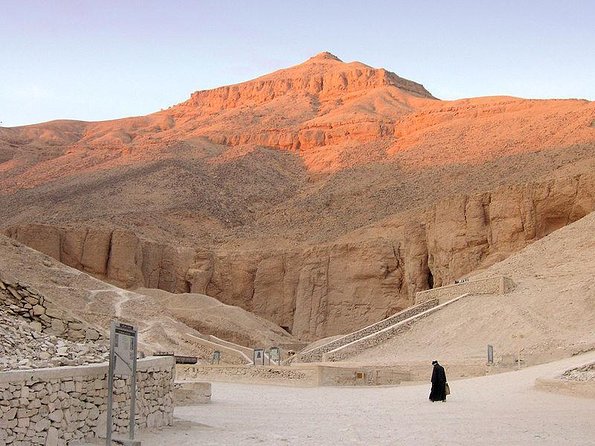
- Three major West Bank sights in four hours: You visit the Valley of the Kings, Hatshepsut Temple, and the Colossi of Memnon in one compact morning.
- Three Valley of the Kings tombs included: Your guide explains what to look for before you enter, since guides cannot accompany you inside.
- Private attention matters: The itinerary can be adjusted around your interests, questions, and pace.
- King Tut requires an extra ticket: His tomb is not part of the basic admission, so budget separately if it is a priority.
- The early start is practical: At 7:00 a.m., you have a better chance of exploring before the strongest afternoon heat.
- An alabaster stop may be included: You can look at hand-cut souvenirs, but you should not feel obliged to buy.
Why the West Bank deserves your morning
Luxor is split by the Nile. The East Bank held temples and much of ancient Thebes’ public life, while the West Bank became the place for royal tombs and funerary monuments. This tour focuses on the West Bank, where cliffs, dry valleys, painted tombs, and enormous stone temples create a very different day from a city sightseeing tour.
You are collected from a central Luxor hotel or the Luxor river port in an air-conditioned minivan. The crossing itself is brief, but your guide uses the drive to explain the area and the role of the Valley of the Kings. If you have a particular interest, such as royal succession, tomb decoration, ancient religion, or local life, say so early. The tour is private, so your questions can shape the commentary.
The 7:00 a.m. start is one of the tour’s strongest practical features. The West Bank offers little shade, and the pale stone at Hatshepsut Temple can be harsh under the sun. Bring sunglasses, a hat, and water. One useful tip from the experience feedback is especially worth following: the bright stone at Hatshepsut can be uncomfortable to look at without sunglasses.
More Valley of the Kings tours:
- Hurghada: Luxor Valley of the Kings & Tutankhamun Tomb Trip
★ 4.7 · 13,208 reviews - Luxor Day Tour: Valley of Kings & Queens & Hatchepsut Temples
★ 5.0 · 1,496 reviews - Luxor: Valley of the Kings and Hatshepsut Temple Day Tour
★ 4.4 · 1,404 reviews
Valley of the Kings: the heart of the tour
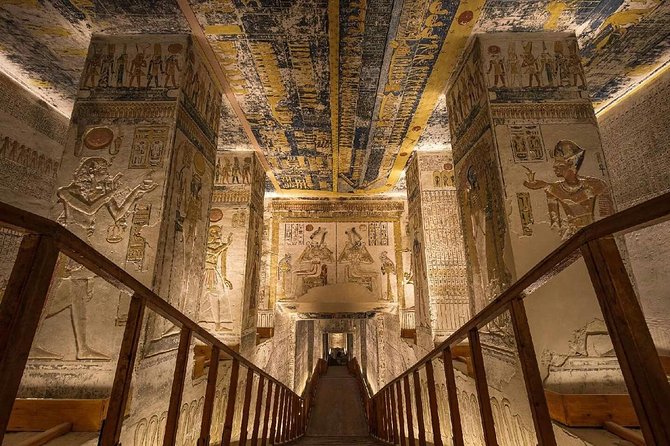
You spend about 90 minutes at the Valley of the Kings, the royal burial ground of ancient Thebes. The tombs were cut into the mountain rather than built as freestanding pyramids, helping protect the royal burials from view. The result is a remarkable underground world of sloping corridors, painted chambers, and hieroglyph-covered walls.
Admission includes visits to three tombs. The exact tombs can vary, so you should treat the included three as a chance to compare different layouts and decoration rather than expect one fixed set. Some tombs are long and steep, while others open into larger chambers. Your guide will explain the background before you enter, then leave you to explore independently because guides are not allowed inside the tombs.
That arrangement works well. A good briefing helps you notice details such as figures escorting the dead, painted gods, astronomical designs, and passages connected with the journey into the afterlife. Once inside, you can take your time instead of trying to listen to a speech in a crowded corridor.
The tombs are the tour’s most powerful stop. You are not simply looking at artifacts behind glass. You are walking through the actual spaces cut for pharaohs, with color and decoration still visible on the walls. The experience can feel more immediate than a museum visit, though the heat, uneven ground, and occasional tight passageways may be tiring.
Photography rules can change by site and are enforced inside the tombs, so follow your guide’s instructions. One useful point is clear: do not assume you can photograph everything underground. The best preparation is to pay attention to the explanations before entering and look closely once you are inside.
Is King Tutankhamun’s tomb worth the extra cost?
King Tutankhamun’s tomb requires an additional ticket paid directly at the site. The basic tour does not include it. You should decide before the morning begins if seeing Tut’s burial place is a personal priority, since the extra cost is separate from the advertised $107.88 price.
The tomb is famous because of Tutankhamun’s intact burial discovery and the public fascination surrounding the young king. The tour information also makes clear that visitors may see his mummy there. If that is the main reason you are visiting the Valley of the Kings, the added ticket may be worthwhile. If you mainly want painted tombs and a sense of the royal necropolis, the three included tombs already give you a strong visit.
Do not confuse the extra tomb ticket with the guide service. Your Egyptologist can explain the setting and what to notice, but you still enter the tombs on your own. That is normal for this site.
Hatshepsut Temple and the story of a female pharaoh
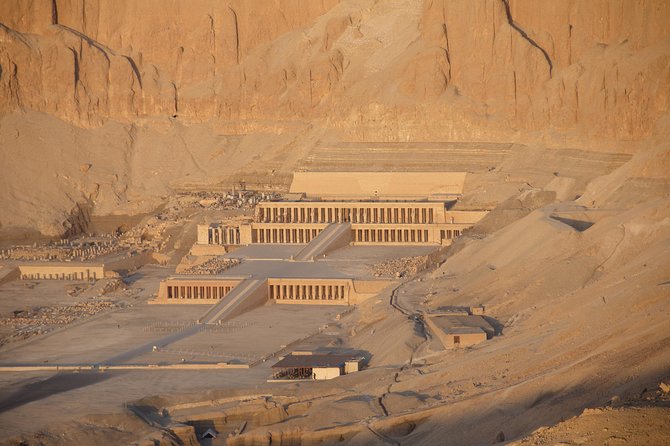
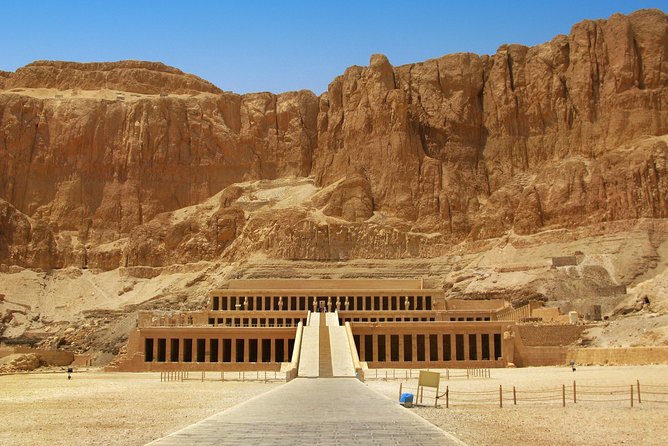
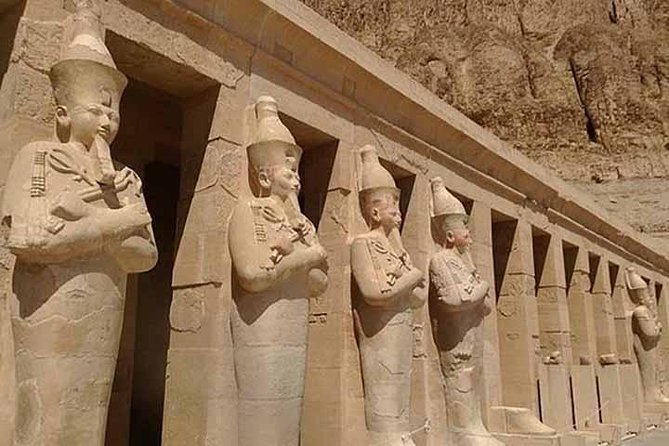
The next stop lasts about 80 minutes at the Temple of Hatshepsut at Deir el Bahari. The temple is built in broad terraces against the cliffs, with long lines of columns and open courtyards. Its formal design is a sharp contrast to the enclosed tombs you have just visited.
Your guide introduces Hatshepsut’s rise to power and the way she presented herself as a male ruler in official images. That story gives the temple more meaning than its famous terraces alone. Look at the statues, reliefs, and hieroglyphs with this political context in mind. The monument was not only a place of worship. It also communicated royal authority.
You have free time to walk through the courtyards and terraces after the introduction. I consider that important because Hatshepsut Temple rewards a slower look. The scale becomes easier to grasp when you step away from the main approach and study the cliff behind the upper terrace.
Some people find the temple less emotionally powerful than the Valley of the Kings. That is a fair reaction. The tombs offer close views of painted walls in confined spaces, while Hatshepsut Temple is more open, geometric, and reconstructed in appearance. If your main interest is ancient wall painting, the valley may be your favorite. If you enjoy architecture, royal politics, and wide views across the site, the temple may win you over.
The white stone can be dazzling in the morning sun. Sunglasses are not just a comfort item here. They help you look at the bright terraces and carved surfaces without squinting through the whole visit.
More Hatshepsut temple visits:
- Hurghada: Valley of Kings Hatshepsut & Karnak Luxor Day Trip
★ 4.5 · 375 reviews - Shared Day Tour to Valley of the Kings, Hatshepsut ,Memnon &lunch
★ 5.0 · 275 reviews - Private Half Day West Bank Tour to Valley of the Kings Queen Hatshepsut Temple and Colossi of Memnon
★ 5.0 · 268 reviews - Luxor Day Tour: Explore Valley of Kings, Queens, Hatshepsut& More
★ 5.0 · 251 reviews
Colossi of Memnon: a quick stop with a big scale
The final scheduled sight is a 20-minute photo stop at the Colossi of Memnon. These two huge seated statues represent Amenhotep III and once guarded the entrance to his funerary temple. The temple itself has largely disappeared, leaving the statues to mark the scale of what once occupied the site.
This is a brief stop, not a full archaeological visit. You will have time for photographs and a short explanation of the statues, their legends, and Roman-era graffiti carved into the stone. The colossi are easy to appreciate quickly, especially after hearing that they are the surviving remains of a much larger complex.
I would not book this tour for the Colossi alone. Compared with the Valley of the Kings and Hatshepsut Temple, the stop is less involved. Still, it breaks up the drive back and gives you one more clear view of monumental royal sculpture. For many people, 20 minutes is enough.
The private guide makes the difference
The basic route is easy to understand, but the quality of the morning depends heavily on the guide. The strongest feedback centers on guides who explain the tomb interiors clearly, answer questions about local life and religion, and know when to let you explore quietly.
Several guides are praised by name, including Yolanda, also spelled Yulanda in some feedback, Youla, and Ahmad. You should not assume a particular guide is guaranteed unless the operator confirms it, but these names give you an idea of the personal service people have appreciated. Yolanda is described as friendly, flexible, funny, and able to make the visit engaging for both adults and families. Youla is praised for her explanations and personable style. Ahmad receives praise for making the West Bank visit especially enjoyable.
The private format is useful if you dislike being moved from one sight to another in a large group. You can ask for more detail at a favorite tomb, request a quieter pace, or tell the guide when you have had enough of a subject. The tour lasts only four hours, so this flexibility matters.
The guide does not go into the tombs with you. That is a site rule, not a weakness in the service. The best guides compensate by giving you a focused preview before you walk in. If your guide is quiet at first, ask questions directly. One less enthusiastic experience improved once the visitor began asking for more detail.
Transport, timing, and what four hours really means
Pickup and drop-off are provided from central Luxor hotels or the river port. The private, air-conditioned minivan is a welcome feature after time in the sun. It also removes the need to negotiate separate transport across the Nile and between the sites.
Four hours is enough for the advertised route, but it is a compact schedule. About 90 minutes goes to the Valley of the Kings, about 80 minutes to Hatshepsut Temple, and 20 minutes to the Colossi. The remaining time covers driving, pickup, site access, and the guide’s introductions.
You should not expect a long lunch, a relaxed village walk, or several extra monuments within this time. Food and drinks are not included unless specifically stated. Eat before departure or bring what you need, keeping in mind that the tour begins early.
The route is best for people who want the major West Bank sights without giving the entire day to one archaeological area. If you want a slow photographic study of every tomb, a longer private tour would be more suitable. If you are visiting Luxor on a cruise schedule, the four-hour length can fit well around a port stay, but confirm your ship’s departure time carefully.
Price and the extra costs to watch
At $107.88 per person, this is not the cheapest way to cross the Nile, but the price includes several useful pieces: private transportation, hotel or port pickup and drop-off, a qualified Egyptologist, and admission to the Valley of the Kings and Hatshepsut Temple.
For two people, the private format costs more than joining a large coach. In return, you avoid waiting for strangers, and your guide can focus on your group. That makes the price easier to justify if you value time, comfort, and personal explanations.
Keep these additional expenses in mind:
- King Tutankhamun’s tomb is not included.
- Food and drinks are not included unless specified.
- A 1,000 Egyptian pound supplement applies to guide languages other than English.
- The Colossi of Memnon stop lists no admission included.
- The alabaster factory is an optional shopping opportunity, not part of the main archaeological experience.
The shopping stop deserves a candid warning. Some people enjoy seeing hand-cut alabaster pieces and may want a souvenir. Others dislike the sales pressure and feel it interrupts the ancient sites. Tell your guide politely if you are not interested in buying. The stop is not a reason to reject the whole tour, but it is worth knowing about before you book.
Who should choose this private Luxor tour?
I would choose this experience if you are visiting Luxor for the first time and want the essential West Bank sights explained in plain language. It suits couples, families, and small groups who want their own vehicle and do not want to spend the day following a large tour party.
It is also a good match for visitors who like a guide but want independent time inside the tombs. You receive context before entering, then get space to look around without a running commentary beside you.
You may want a different plan if you need a wheelchair-friendly itinerary, since the supplied details say most people can participate but do not provide specific accessibility information. Ask the operator before booking if mobility is a concern.
This tour also suits visitors who prefer an early start. If you dislike mornings, the 7:00 a.m. departure may feel demanding, but the timing helps avoid the worst heat and can make the sites more comfortable.
Booking and cancellation details
The experience has an average rating of 4.6 out of 5 from 111 ratings, with 90 percent recommending it. That is a strong record, especially for a short sightseeing tour where guide quality can shape the entire morning.
Confirmation is provided at booking, and free cancellation is available up to 24 hours before the local start time. Changes or cancellations made less than 24 hours before departure are not accepted for a refund.
Should you book it?
Book this tour if the Valley of the Kings is your main Luxor priority and you want Hatshepsut Temple added without arranging transport yourself. The private guide, air-conditioned minivan, early departure, and three included tombs make the $107.88 price reasonable for a small group.
Before paying, decide if you want King Tutankhamun’s tomb, ask about the guide language supplement, and prepare yourself for the alabaster stop. If you can accept those details, this is a focused and well-paced introduction to Luxor’s West Bank, with enough free time to enjoy the monuments rather than simply photograph them from a distance.
FAQ
How long is the private Luxor West Bank tour?
The tour lasts approximately four hours.
What time does the tour begin?
The stated start time is 7:00 a.m.
What sites are included?
The tour includes the Valley of the Kings, the Temple of Hatshepsut at Deir el Bahari, and a photo stop at the Colossi of Memnon.
How many tombs can I visit at the Valley of the Kings?
Admission includes visits to three tombs.
Can the guide enter the tombs with me?
No. Guides are not permitted inside the tombs, but the Egyptologist explains what to look for before you enter.
Is King Tutankhamun’s tomb included?
No. A separate ticket for King Tutankhamun’s tomb is payable directly if you choose to visit it.
Is hotel pickup available?
Yes. Pickup and drop-off are offered from central Luxor hotels or the Luxor river port.
Is the tour private?
Yes. Only your group participates in the private activity.
What is included in the price?
The price includes a qualified Egyptologist guide, hotel or port pickup and drop-off, private air-conditioned minivan transport, and admission to the Valley of the Kings and Hatshepsut Temple.
Can I cancel for a full refund?
Yes, if you cancel at least 24 hours before the experience start time. Cancellations made less than 24 hours before the start are not refunded.
Just added around Luxor
- Luxor Day Tour :Valley of Kings & queen & Hatshepsut & Habu city★ 5.0 · 23 reviews
- Luxor: Scenic Camel or Horse Ride★ 3.9 · 24 reviews
- From Cairo: 4-Day Nile Cruise from Aswan to Luxor with Meals★ 4.4 · 24 reviews
- Traditional Egyptian Breakfast at the AlHabib Arabian Horse Farm★ 5.0 · 24 reviews
- 5 Days 4 Nights from Luxor to Aswan on Gentle Breeze Dahabyia★ 4.5 · 24 reviews
- Private Transfer From Luxor To Abu Simbel or vice versa★ 5.0 · 24 reviews
- Luxor: East and/or West Banks Guided Tour with Lunch★ 4.4 · 24 reviews
- 2 Day Short Break in Luxor Package★ 5.0 · 25 reviews
Valley of the Kings Tours, compared.
Luxor Valley of the Kings & Tutankhamun Tomb Trip
Read our review →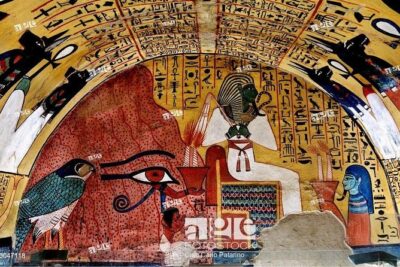
Luxor Day Tour: Valley of Kings & Queens & Hatchepsut Temples
Read our review →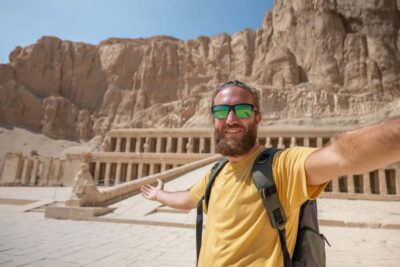
Valley of the Kings and Hatshepsut Temple Day Tour
Read our review →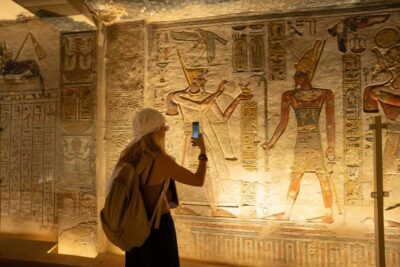
Luxor Tour with Valley of Kings, Karnak & Tut Tomb
Read our review →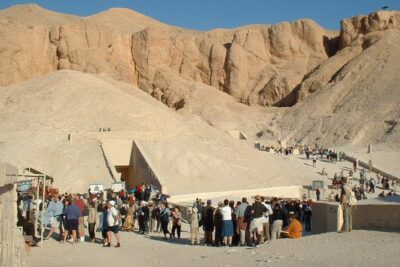
Valley of Kings, Hatchepsut Temple ,Karnak & Luxor-DayTour
Read our review →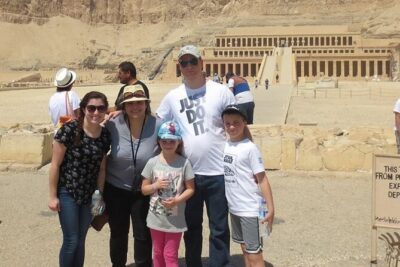
Small Group Excursion to Luxor Valley of the Kings from Hurghada
Read our review →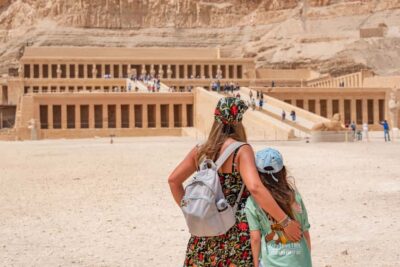
Valley of Kings Hatshepsut & Karnak Luxor Day Trip
Read our review →
Valley of the Kings and Queens Guided Tour with Lunch
Read our review →Browse the lists this tour appears in