
Reviewed · LUXOR TOURS
Private Tour to Valley of the Queens, Valley of the Artisans, and Habu Temple
The quieter side of ancient Thebes awaits. This five-hour private tour takes you beyond Luxor’s best-known monuments to the Valley of the Queens, Deir el-Medina, and the Temple of Ramses III at Medinet Habu. I like the thoughtful mix of royal tombs, worker housing, and grand temple art. I also like that transport, entrance fees, bottled water, and a private Egyptologist guide are included.
The main consideration is guide quality. Several guides, including Moses, Hesham, and Ali, received especially warm praise for clear explanations and a relaxed pace. But one poor experience involved limited explanations and difficult-to-understand English. Since the guide can make or break a history-heavy outing, I would confirm your language needs and ask for a guide who welcomes questions.
In This Review
- The five details that matter most
- Why this West Bank combination works
- Starting at the Valley of the Queens
- Seeing the workers’ village at Deir el-Medina
- Reading the walls of Medinet Habu
- What private touring changes
- Is $57 a fair price?
- Timing, comfort, and practical planning
- Who should choose this tour?
- Should you book the Valley of the Queens and Habu Temple tour?
- FAQ
- How long does the private Luxor tour last?
- What sites are included?
- Is hotel pickup included?
- Is private transportation included?
- Are entrance fees included?
- Is Nefertari’s tomb included?
- Is a guide included?
- Is bottled water provided?
- Can the itinerary be changed?
- What is the cancellation policy?
The five details that matter most
- Three different views of ancient Egypt: You see royal burial places, the village of the craftsmen who made the tombs, and a major temple built to celebrate a king.
- Valley of the Queens access: The visit includes three tombs connected with queens and royal sons, with the exact open tombs subject to site conditions.
- Deir el-Medina is the surprise highlight: You explore the remains of the settlement where artisans and workmen lived while creating royal tombs.
- Medinet Habu preserves brilliant decoration: Ramses III’s temple includes battle scenes, religious ceremonies, and festival images.
- Private transport saves time: Hotel and cruise ship pickup in Luxor, an air-conditioned vehicle, and return transport are included.
- The price covers the costly basics: At $57 per person, entrance fees, guide service, transfers, water, taxes, and service charges are built in.
Why this West Bank combination works
Luxor’s West Bank can feel like a greatest-hits parade: famous tombs, famous temples, then another famous tomb. This tour takes a more focused route. It links three places that explain how Theban society worked, from royal burial to skilled labor to royal ceremony.
At the Valley of the Queens, you see where members of the royal family were buried. At Deir el-Medina, you meet the people who planned and decorated many of those tombs. At Medinet Habu, you see the king presenting himself as warrior, ruler, and religious leader.
I like this progression because the sites are not interchangeable. The tombs are intimate and enclosed. Deir el-Medina is about daily life and work. Medinet Habu is broad, formal, and political. In roughly five hours, you get three very different kinds of ancient Egyptian archaeology.
The tour is also useful if you have already visited the Valley of the Kings. One person used the flexibility of the private arrangement to substitute the Valley of the Kings after seeing Medinet Habu previously. That kind of adjustment is one of the strongest reasons to choose a private outing instead of a fixed group schedule.
More things to do in Luxor:
- Hurghada: Luxor Valley of the Kings & Tutankhamun Tomb Trip
★ 4.7 · 13,208 reviews - Luxor Day Trip from Hurghada Small Group & Tutankhamun Tomb
★ 4.8 · 5,366 reviews - Hot Air Balloon Ride in Luxor Egypt with Transfers Included
★ 5.0 · 4,319 reviews
Starting at the Valley of the Queens
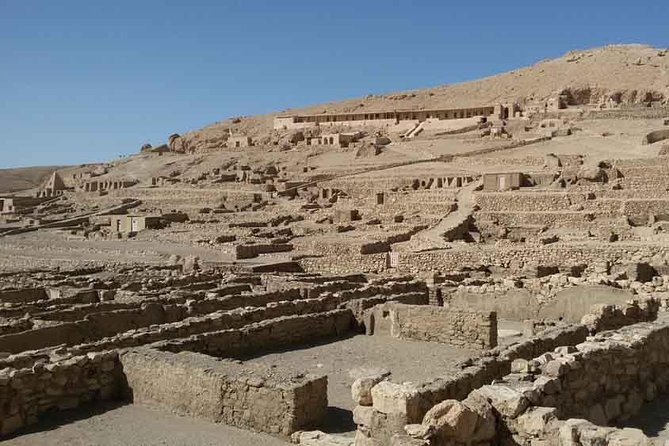
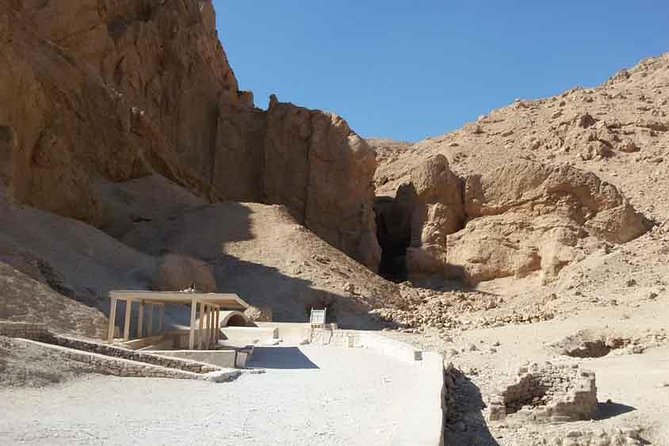
Your guide picks you up at your Luxor hotel or Nile cruise ship and drives to the Theban Necropolis on the West Bank. The Valley of the Queens is known in ancient Egyptian terms as Ta-Set-Neferu, often translated as the place of beauty. More than 90 tombs are known there, though only a selection is available to enter.
The tombs here are generally smaller than the grand royal tombs in the Valley of the Kings. A typical plan includes an entrance passage, short halls, and a burial chamber. That compact design makes the visit feel more personal. You are not simply walking through a giant monument. You are moving through spaces designed for a particular royal family member.
The planned visit includes three tombs associated with queens and royal sons. Names connected with the site include Amun-her-khepeshef, Seth-her-khopsef, Khaemwaset, and a Ramessid prince. The exact tombs open to the public can change, so do not treat the online description as a guarantee of every single chamber.
Nefertari’s tomb is the famous special case. It is not included in the standard price, and the information provided says it is currently closed. If it reopens, the extra charge is paid directly in Egyptian pounds. You should ask about its status before setting your expectations, and you should not assume its entrance is part of the $57 price.
A guide is particularly useful here. Tomb decorations can look like a beautiful collection of figures unless someone explains who is being shown, what the scenes mean, and how the burial space fits into Egyptian beliefs. Still, you should have time to look on your own. Some people appreciated being allowed to wander quietly after the guide’s explanation, while another wished the guide had entered the tombs instead of sending the group in alone.
That difference is worth clarifying at the start. Ask your Egyptologist to give the explanation beside each tomb and to tell you whether they will accompany you inside. Site rules may affect this, but a private tour gives you a better chance to request the style you prefer.
Seeing the workers’ village at Deir el-Medina
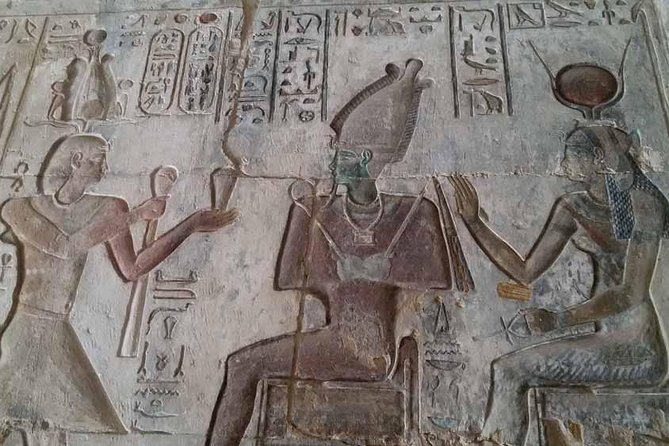
Deir el-Medina, also called the Valley of the Artisans, is the most distinctive stop on this route. The settlement was known as Set Maat, or the Place of Truth. It housed the artisans and workmen responsible for constructing and decorating royal tombs during the 18th, 19th, and 20th Dynasties of the New Kingdom, from about 1550 to 1080 BC.
Here, the focus shifts from pharaohs to the skilled people behind the monuments. You see the remains of the village, a Ptolemaic temple, and decorated private tombs connected with Sennedjem and Inherkau. The settlement’s ruined walls may not have the immediate grandeur of a temple facade, but they help you picture the organized community that supported the royal burial industry.
I consider this the tour’s most useful historical contrast. The Valley of the Queens shows the final resting place of royalty. Deir el-Medina helps explain who built those tombs and where they lived between assignments. It turns ancient Egypt from a parade of kings into a society of workers, families, religious practice, and administration.
The small temple is dedicated to Hathor and Maat. It sits within a mud-brick enclosure and belongs to the Ptolemaic period, much later than the New Kingdom village. Your guide should help you keep those dates and layers separate. Without that context, the site can seem like one continuous ruin.
The tombs of Sennedjem and Inherkau are especially important because they offer finely decorated burial spaces outside the royal family. Their paintings can give you a closer look at the hopes and religious ideas of individuals who were not pharaohs. Several people who enjoyed this tour singled out the workers’ tombs and the Valley of the Artisans as a highlight.
Plan for about an hour here. The ground is uneven in places, and conditions can be harsh in the heat. The tour information says most people can participate, but you should be comfortable walking around archaeological ruins and entering tombs. If you are traveling with someone who tires easily, tell the guide early. One guide, Ash or a similar name remembered by the guest, was praised for being patient with an older mother who felt unwell.
Reading the walls of Medinet Habu
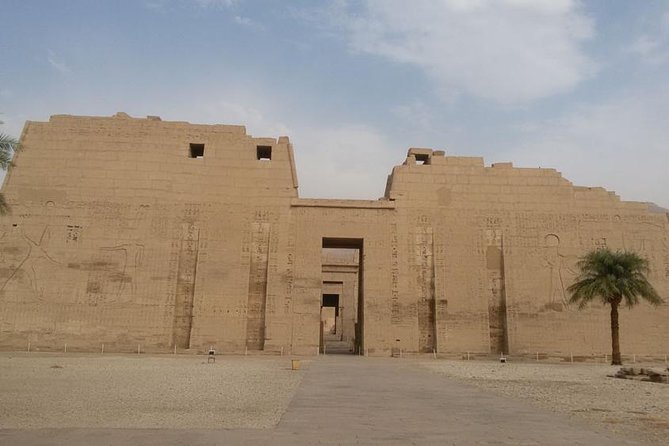
The final major stop is the Temple of Medinet Habu, the memorial temple of Ramses III. It is described as the best-preserved of the New Kingdom memorial temples, and its condition makes the site rewarding even if you have already seen Karnak, Luxor Temple, or the Valley of the Kings.
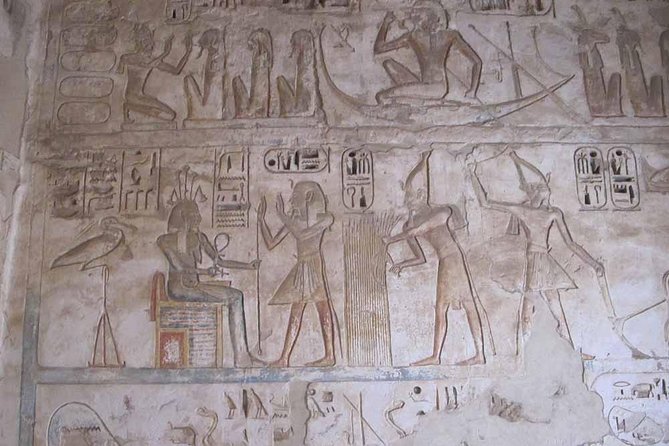
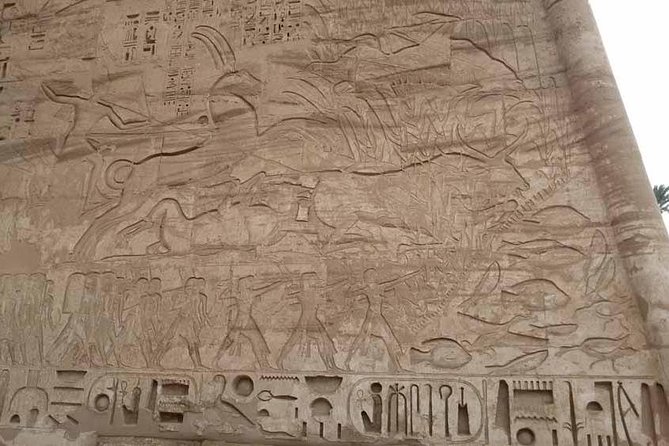
Ramses III was the last great warrior pharaoh of the New Kingdom. His temple presents a carefully planned picture of royal power. Military scenes and inscriptions show his victories, while other decorations record rituals and festivals. This is not history written from a neutral point of view. It is the king’s public case for his own strength and divine favor.
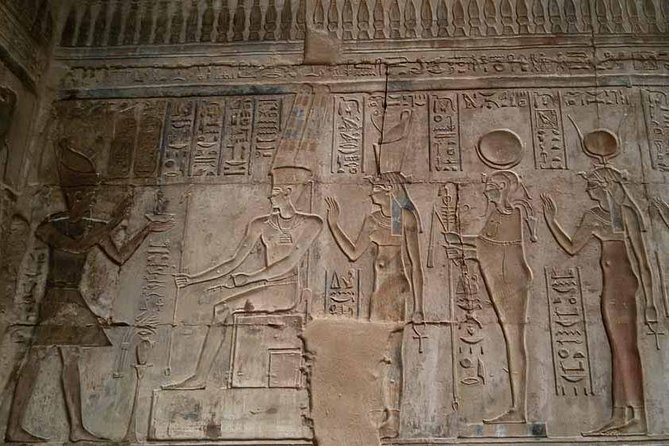
Look closely at the color that remains on the reliefs. Ancient temples were not meant to be plain stone monuments. Their surfaces were painted, and Medinet Habu still gives you a strong sense of that original visual effect. The preserved decoration is one reason this temple can feel more immediate than a heavily weathered site.
The complex also included a royal palace attached to the south side of the open forecourt. Priests’ homes and administrative buildings were arranged around the temple. That layout matters because it shows the monument as an institution, not merely a place for ceremonies. It needed staff, records, storage, housing, and daily management.
Give the guide room to explain the battle scenes and festival images, but also reserve time to stand quietly before the walls. The best visit is not a race from inscription to inscription. At your own pace, you can compare the formal images of Ramses III with the smaller, more personal scenes seen earlier at Deir el-Medina.
The one-hour estimate is enough for a solid introduction, but it may feel short if you want every relief explained. A guest who had already visited Habu Temple arranged a different stop instead, which shows how the private format can work for repeat visitors. If Medinet Habu is new to you, I would keep it in the program.
A few more Luxor trips worth weighing up
- Full Day Tour of Luxor West Bank Temples and Tombs (Private)
★ 5.0 · 722 reviews - Private Full-Day Luxor Highlights East and West Banks
★ 5.0 · 663 reviews - Luxor: Abu Simbel Temple Private Guided Day Trip with Lunch
★ 4.6 · 546 reviews - Luxor Private Full-Day Tour: Discover the East and West Banks of the Nile
★ 5.0 · 545 reviews
What private touring changes
The vehicle is private, air-conditioned, and included from pickup through return. That matters on Luxor’s West Bank, where the sites are spread out and outdoor heat can drain your energy. You are not waiting for a large coach to collect a group at every stop.
The private format also lets you control the pace. You can spend longer at a favorite tomb, shorten a stop if the heat becomes uncomfortable, or ask about adding another place if time allows. Guests praised arrangements that included extra stops, including the Tombs of the Nobles, and one outing was altered to suit what the group had already seen.
Do not assume every change is guaranteed. The advertised route is the Valley of the Queens, Deir el-Medina, and Medinet Habu. Extra stops depend on opening hours, driving time, entrance rules, and your guide’s judgment. Still, it is worth asking at pickup if you have already visited one of the listed sites.
Your Egyptologist is the main interpreter, while the driver handles the road and vehicle. The company names guides such as Azab, Moses, Hesham, Ali, and Emad among the people who have led this experience. Ali received praise for his strong command of the subject, Moses for excellent guiding, and Hesham for a relaxed but thorough pace.
The experience is not perfectly consistent. One guest found the English difficult to understand and felt the explanations stayed close to a rehearsed script. Another felt there was not enough explanation at the sites. I would treat this as a practical warning, not a reason to dismiss the tour outright: send your preferred language and interests when booking, then tell the guide whether you want long explanations, quiet viewing time, or both.
Is $57 a fair price?
At $57 per person, this is a solid value if you want a guided West Bank outing without arranging each piece yourself. The cost includes pickup and return in Luxor, private air-conditioned transport, entrance fees to the listed sites, an Egyptologist guide, bottled water, taxes, and service charges.
Entrance fees can make independent sightseeing less simple than it first appears. Here, the standard admissions are bundled into the quoted price, so you have a clearer idea of your day’s cost. The extra charge for Nefertari’s tomb, if it reopens, is separate and paid in Egyptian pounds.
The price works best for a couple, family, or small group that values privacy. Group discounts are offered, though the amount is not stated, so ask for the current total before booking. If you are alone, the per-person price may feel less attractive than a shared trip, but you gain control over the pace and pickup location.
Tips and personal extras are not listed as included. One person questioned why a driver should still receive money, so I would plan for tipping separately and ask the operator what is customary. That avoids surprise cash requests at the end of the morning.
Timing, comfort, and practical planning
The tour lasts about five hours, with roughly one hour at each principal stop. The remaining time covers pickup, driving between sites, and return to your hotel or ship. That makes this a manageable half-day rather than a full day of monuments.
Wear shoes suited to archaeological ground and expect heat and exposed walking. The information provided does not promise shade or special mobility arrangements, though most people can participate. If you have mobility concerns, ask before booking rather than assuming the ruins and tomb entrances will be easy.
Bring the questions you want answered. For example, ask how the royal family used the Valley of the Queens, how the workers’ village was organized, and why Medinet Habu includes both military scenes and festival rituals. A private guide can adjust the conversation far better when you give them a clear starting point.
The experience is available for pickup from Luxor hotels and Nile cruise ships. Confirmation is received when you book. Free cancellation is available if you cancel at least 24 hours before the start time. Changes or cancellations made inside that 24-hour window are not accepted for a refund.
Who should choose this tour?
I would choose it if you have already seen the main Luxor sights and want a different West Bank day. It also suits first-time visitors who prefer smaller tombs, working communities, and temple reliefs over a checklist of only the biggest monuments.
Families and mixed-age groups may appreciate the private vehicle and flexible pace. Couples can avoid the stop-and-go rhythm of a large group. History fans will get the most from it if they enjoy comparing royal monuments with the lives of the people who made them.
I would hesitate if you need a guaranteed specialist guide in a particular language and cannot confirm that in advance. I would also think twice if your main goal is Nefertari’s tomb, since that extra tomb is listed as closed and, if reopened, costs more.
Should you book the Valley of the Queens and Habu Temple tour?
Book it if you want a well-priced, private introduction to three less-visited Luxor sites and you value included transport and entrance fees. The best parts are the contrast between royal and workers’ tombs, the preserved art at Medinet Habu, and the freedom to adjust the pace.
Before you go, confirm which tombs are open, ask about Nefertari’s current status, and make clear how much guiding you want inside the tombs. If the company pairs you with a strong Egyptologist such as Moses, Hesham, or Ali, this can be one of the more rewarding half-days on Luxor’s West Bank.
FAQ
How long does the private Luxor tour last?
The experience lasts approximately five hours, including transport between Luxor, the West Bank sites, and your return location.
What sites are included?
The tour includes the Valley of the Queens, the Valley of the Artisans at Deir el-Medina, and the Temple of Medinet Habu, built by Ramses III.
Is hotel pickup included?
Yes. Pickup and return are provided from hotels and Nile cruise ships in Luxor.
Is private transportation included?
Yes. Transfers are provided in a private, air-conditioned vehicle.
Are entrance fees included?
Yes. Entrance fees for the listed sites are included in the tour price.
Is Nefertari’s tomb included?
No. Nefertari’s tomb has an additional charge if it reopens, paid directly in Egyptian pounds. The information provided lists it as closed.
Is a guide included?
Yes. A qualified Egyptologist guide accompanies the private activity.
Is bottled water provided?
Yes. Bottled water is included during the tour.
Can the itinerary be changed?
The private format may allow adjustments, and some outings have been tailored around places already visited. Extra changes are not guaranteed, so ask the operator or guide in advance.
What is the cancellation policy?
You can cancel at least 24 hours before the start time for a full refund. Cancellations or changes made less than 24 hours before the start time are not accepted for a refund.
Just added around Luxor
- Private Tour foll day to East and West Banks of Luxor★ 5.0 · 23 reviews
- East and West Bank Luxor★ 5.0 · 23 reviews
- Full Day Tour to Luxor (East & West Bank)★ 5.0 · 23 reviews
- Big brother travel★ 5.0 · 23 reviews
- Luxor Day Tour :Valley of Kings & queen & Hatshepsut & Habu city★ 5.0 · 23 reviews
- Luxor: Scenic Camel or Horse Ride★ 3.9 · 24 reviews
- From Cairo: 4-Day Nile Cruise from Aswan to Luxor with Meals★ 4.4 · 24 reviews
- Traditional Egyptian Breakfast at the AlHabib Arabian Horse Farm★ 5.0 · 24 reviews
Luxor Tours, compared.
Luxor Valley of the Kings & Tutankhamun Tomb Trip
Read our review →
Luxor Day Trip from Hurghada Small Group & Tutankhamun Tomb
Read our review →
Shared Full-Day Tour to Luxor West and East Banks
Read our review →
Luxor Day Tour: Valley of Kings & Queens & Hatchepsut Temples
Read our review →
Full Day Tour to East and West Banks of Luxor
Read our review →
Valley of the Kings and Hatshepsut Temple Day Tour
Read our review →
2-Day Luxor Tour with Hotel, Balloon, & Boat Ride
Read our review →Browse the lists this tour appears in