
Reviewed · FULL-DAY
Full Day Private Luxor East & West Bank Tour With Egyptian Lunch
Luxor rewards a day planned well. This private tour packs Karnak Temple, Luxor Temple, the Valley of the Kings, and Hatshepsut’s temple into eight to nine hours, with a guide and hotel transfers included. I like the focused route and the private vehicle, which means your group is not held up by a large bus making endless hotel stops.
I also like the generous time allowed at the major sights, especially the three hours set aside for the Valley of the Kings. The main caution is cost: at $200 per person, this is not a budget outing, and temple entrance fees must be paid separately despite the itinerary displaying admission-ticket wording in places. Confirm the exact ticket costs before you go.
In This Review
- Key points at a glance
- Why this private Luxor day works
- Karnak Temple: two hours among colossal columns
- Luxor Temple: a city-side monument with a long life
- Crossing to the West Bank and entering the Valley of the Kings
- Hatshepsut’s temple beneath the limestone cliffs
- Lunch and the value of a private vehicle
- Is $200 per person a fair price?
- Guide style, safety, and shopping concerns
- Who should book this Luxor experience?
- Should you book the East and West Bank tour?
- FAQ
- What time does the tour start?
- How long does the tour last?
- Which attractions are included in the route?
- Is hotel pickup and drop-off included?
- Are entrance fees included in the price?
- Can I cancel for a full refund?
Key points at a glance
- Four major sights, not a dozen rushed photo stops: The day concentrates on Luxor’s essential temples and tombs.
- Private door-to-door transport: Hotel pickup and drop-off save time and spare you from waiting for other groups.
- Two hours at Karnak and Luxor Temple: That gives you room to look closely rather than simply collect photographs.
- Three hours in the Valley of the Kings: This is the longest stop and the historical centerpiece of the West Bank.
- Lunch is included, entrance tickets are not: Build admission fees and a tip into your daily budget.
- Guide quality matters: Names associated with the company include Ahmed Awad, Dr. Azab, Mohammed Zayed, and Ahmed Sliem, with praise focused on clear explanations, patience, safety, and flexibility.
Why this private Luxor day works
Luxor is split by the Nile. The East Bank holds the great temple complexes and the modern city. The West Bank contains the royal tombs and funerary temples, set against dry hills and limestone cliffs.
That geography makes a private vehicle useful. You are not merely moving between nearby museums. You are crossing from one side of the river to the other, and each stop requires walking, waiting, and time to absorb what you are seeing. A private guide can also adjust the pace for your group, at least in principle, rather than following a fixed coach schedule.
The tour begins at 7:30 a.m., a sensible start for a full day. You will want the cooler morning hours for the West Bank, though this route places the East Bank first. The day is still long, and the Egyptian heat can make the final stop feel harder than the first. Wear light clothing, use sun protection, and carry water.
The vehicle is air-conditioned, but one report connected with the company noted that the air conditioning did not work especially well during a hot day. I would treat that as a practical warning rather than a standard feature of every vehicle. Ask about the vehicle and air conditioning when confirming your pickup.
More things to do in Luxor:
- Hurghada: Luxor Valley of the Kings & Tutankhamun Tomb Trip
★ 4.7 · 13,208 reviews - Luxor Day Trip from Hurghada Small Group & Tutankhamun Tomb
★ 4.8 · 5,366 reviews - Hot Air Balloon Ride in Luxor Egypt with Transfers Included
★ 5.0 · 4,319 reviews
Karnak Temple: two hours among colossal columns
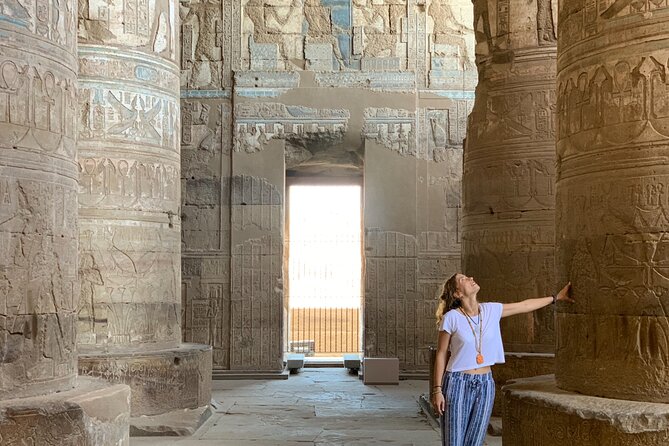
Karnak is not one temple in the simple sense. It is a huge religious precinct covering more than 100 hectares, larger than some ancient cities. Its courtyards, pylons, halls, sanctuaries, and columns were built and altered over many centuries.
Two hours is a good allocation here. You can see the scale of the site, pause in the famous columned hall, and give your guide time to explain how different rulers added their own layers to the complex. Without a guide, the sheer size can make Karnak feel like a grand collection of stones. With a good explanation, the separate courts and monuments begin to make sense.
I would pay attention to how the temple was organized. Ancient Egyptian temples were not designed as open public squares. Their spaces became more restricted as you moved inward toward the sacred areas. Even if your guide gives the basic story rather than an academic lecture, that structure helps explain why Karnak feels like a progression rather than a single building.
The drawback is simple: Karnak is big. Two hours lets you see the main areas, but not every corner. If you prefer a slow archaeological visit, this full-day route may leave you wishing for more time. For a first visit, though, the schedule gives you a solid introduction without allowing one enormous site to consume the whole day.
Luxor Temple: a city-side monument with a long life
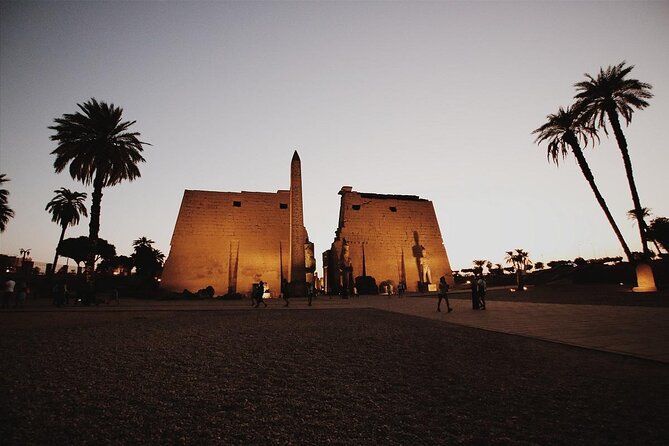
Luxor Temple is more compact than Karnak, but it carries a different mood. It sits on the East Bank near the modern city and was built over many generations by rulers including Amenhotep III, Ramses II, and Tutankhamun.
The temple was linked to the annual coronation ceremony and to the renewal of the king’s authority. Its ancient purpose was not simply to house statues or provide a dramatic setting. It was part of a religious ceremony that connected the pharaoh with Amun and the idea of rebirth.
Your two-hour stop should allow enough time to study the entrance, columns, statues, and processional spaces. This is where a guide’s storytelling can be especially useful. The names of rulers and gods can blur together after several Egyptian sites in one day, so a guide who can keep the story clear is worth having.
The order of the tour also has a practical benefit. You see the East Bank temples together before crossing to the royal burial grounds. That creates a useful contrast: Karnak and Luxor Temple show public religious power, while the West Bank sites focus on death, burial, and the afterlife.
Crossing to the West Bank and entering the Valley of the Kings
The Valley of the Kings is the longest stop, with approximately three hours planned. That is the right priority. The West Bank served as a burial area from around 2100 BC, while the famous royal tombs belong mainly to the New Kingdom period from 1550 to 1069 BC.
The valley was chosen partly because of its isolation and because it sits beneath Al Qurn, the pyramid-shaped mountain peak known as The Horn. The setting is severe and dry, a sharp change from the green strip around the Nile. The royal tombs were cut into the rock rather than built as free-standing pyramids.
There are 63 known tombs in the Valley of the Kings, but you should not assume that every tomb is open or covered by the basic admission ticket. Access can change, and some tombs require additional payment. The supplied tour details clearly say entrance fees are not included, so ask your guide which tombs are part of the standard ticket and what extras cost.
Three hours gives you time to visit the available tombs without treating each one as a quick tunnel. Look at the painted walls and ceilings, but also notice the practical design. These spaces were made to protect the pharaoh’s body and burial goods, while the decoration provided religious guidance for the journey after death.
Walking conditions matter here. You will be outside in direct sun, then moving through tomb passages that can feel close and steep. Anyone uncomfortable in confined spaces should mention it to the guide. The tour is described as suitable for most people, but that does not mean every tomb will feel easy for every person.
The Valley is also where a private guide can save frustration. The best guide assignments associated with Jakada Tours Egypt have been praised for clear historical explanations, helping people feel safe, and adapting the pace when someone felt unwell. Dr. Azab, Ahmed Awad, Mohammed Zayed, and Ahmed Sliem are names connected with strong feedback about the company’s Egypt tours. Your assigned guide may be different, so the actual quality will depend on who leads your group.
More trips with lunch in Luxor:
- Luxor : Full Day Tour to Luxor West and East Banks & Lunch
★ 5.0 · 870 reviews - Luxor: Karnak Temple and Luxor Temple Tour with Lunch
★ 4.4 · 658 reviews - From Luxor: Guided Tour to East or West Banks with Lunch
★ 4.5 · 604 reviews - Luxor: Abu Simbel Temple Private Guided Day Trip with Lunch
★ 4.6 · 546 reviews
Hatshepsut’s temple beneath the limestone cliffs
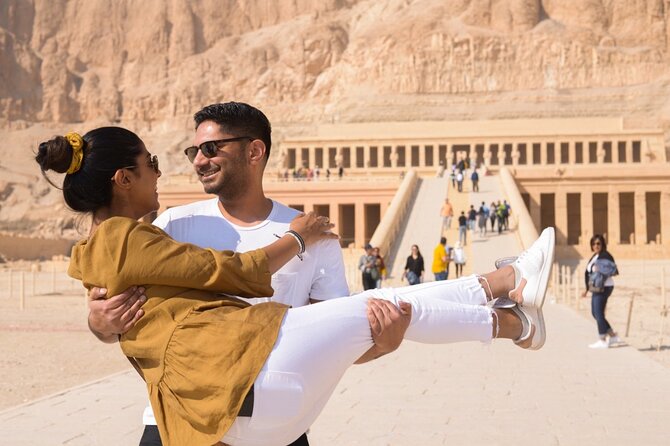
The Temple of Hatshepsut at Deir el Bahari is the final listed stop, with about two hours. It is an impressive place to end the archaeological portion of the day because the setting does much of the work before your guide says a word.
Rugged limestone cliffs rise nearly 300 meters above the desert plain. At their foot, Hatshepsut’s temple is arranged in broad terraces and partly cut into the rock. Its clean lines can look surprisingly modern beside the cliffs.
Hatshepsut ruled as pharaoh, an unusual position for a woman in ancient Egypt. The temple helped present her authority in religious and political terms. Ask your guide to explain how the monument supported that message, rather than treating it only as a photogenic building.
Much of what you see has been reconstructed. That does not make the site unimportant, but it is worth knowing what you are looking at. Some sections give a strong sense of the original design, while other areas reflect years of repair and archaeological work.
Two hours is ample for walking up the terraces, looking at the reliefs, and taking in the relationship between the temple and cliffs. By this stage, though, you may be tired. The combination of sun, walking, and several major sites makes comfortable shoes and a realistic pace essential.
Lunch and the value of a private vehicle
Lunch is included, which is helpful on a long sightseeing day. One account connected with the company praised the food as plentiful and tasty, with many choices. That information comes from a broader Egypt touring experience rather than a detailed menu for this exact day, so I would not book this tour based on a particular dish.
The more important point is convenience. You do not need to stop sightseeing to arrange your own meal, and lunch gives you a proper break before or after the West Bank visits. Tell the operator about dietary needs when booking, since the available information does not specify vegetarian, vegan, allergy, or religious-diet arrangements.
The private transfer is one of the strongest reasons to choose this outing over a large group tour. Your group gets hotel pickup, a dedicated air-conditioned vehicle, and drop-off at the end. You are not waiting for strangers to return from a shop or searching for the correct bus after a temple visit.
Private does not mean leisurely. Four major sites in one day still create a demanding schedule. The advantage is control over the pace and the explanations, not unlimited time. If you want to linger for hours at Karnak or explore many extra tombs, consider splitting the East and West Banks across two days.
Is $200 per person a fair price?
At $200 per person, this tour makes the most sense for a small group that values time and personal service. The price covers the vehicle, guide, hotel transfers, and lunch. It does not cover temple entrance fees or tipping, so the final cost will be higher.
The value improves as your group size grows, especially if the private rate is shared among several people. Group discounts are offered, but the exact terms are not provided, so ask for the current price before booking.
Compared with arranging separate taxis, a guide, and lunch yourself, the package offers simplicity. You are paying for coordination as much as transport. That can be useful in Luxor, where the four sites are spread across both banks and the day requires careful timing.
The value is weaker for a solo visitor focused mainly on saving money. A group tour may cost less, though it usually gives you less control. It is also weaker for anyone who wants a slow, specialist visit to every tomb and temple. This is a highlights day, not a study tour.
Guide style, safety, and shopping concerns
The strongest praise connected with Jakada Tours Egypt centers on the guides. Ahmed Awad is repeatedly described as friendly, attentive, careful with arrangements, and able to make ancient history easier to understand. Dr. Azab is praised for patience, site knowledge, photography help, and making people feel safe. Mohammed Zayed is described as flexible and attentive to comfort, while Ahmed Sliem is praised for tailoring the experience to individual interests.
Those are useful qualities in Luxor. A guide should do more than recite dates. You need someone who can explain why Karnak differs from Luxor Temple, how royal tombs functioned, and why Hatshepsut’s monument looks so different from the temples on the East Bank.
The company’s wider touring feedback also refers to alabaster shopping stops and local purchases. They are not listed in this four-stop itinerary, so do not assume they are included. If your guide suggests an extra stop, ask whether it is optional, how long it will take, and whether it changes the route.
Safety support is another practical plus. The company’s guides have been praised for helping people feel secure and for assisting when someone became unwell. You should still carry personal medication, stay hydrated, and tell your guide early if the heat or walking becomes too much.
Who should book this Luxor experience?
I would choose this tour if you have only one full day in Luxor and want the four major sights handled in a sensible order. It suits couples, families, and small groups who prefer a private guide to a fixed coach schedule.
It also suits people who want context. Karnak, Luxor Temple, the Valley of the Kings, and Hatshepsut’s temple can feel like a lot of names and stonework without help. A strong guide gives the monuments a human story and helps you notice details you might otherwise pass.
I would hesitate if you are traveling on a tight budget, dislike early starts, or want an unhurried archaeological day. The itinerary is full, and entrance tickets add to the advertised price. Anyone with serious mobility limits should ask the operator for more details before reserving, since the tour is described as suitable for most people but no specific accessibility information is supplied.
Free cancellation is available if you cancel at least 24 hours before the local start time. Within 24 hours, the payment is not refunded, and late changes are not accepted.
Should you book the East and West Bank tour?
Book it if you want Luxor’s essential sights in one private day, with transport, lunch, and a guide already arranged. The route is well chosen, the private vehicle saves time, and the three-hour Valley of the Kings visit receives the attention it deserves.
Before paying, confirm three things: the exact entrance fees, the guide assigned to your group, and the vehicle’s air-conditioning condition. If those details are clear and you accept a busy day, this is a practical way to see both sides of Luxor without wasting time on large-group delays.
FAQ
What time does the tour start?
The tour starts at 7:30 a.m.
How long does the tour last?
The experience lasts approximately eight to nine hours.
Which attractions are included in the route?
The tour visits Karnak Temple, Luxor Temple, the Valley of the Kings, and the Temple of Hatshepsut at Deir el Bahari.
Is hotel pickup and drop-off included?
Yes. Hotel pickup and drop-off are included, along with a private air-conditioned vehicle.
Are entrance fees included in the price?
No. Temple and sight entrance fees are listed as an extra cost. Tipping is also not included.
Can I cancel for a full refund?
Yes, if you cancel at least 24 hours before the experience start time. Cancellations within 24 hours are not refunded, and changes made within that period are not accepted.
More Full-Day in Luxor
- Luxor: Shared Full-Day Tour to Luxor West and East Banks
★ 4.5 · 1,812 reviews - Full Day Tour to East and West Banks of Luxor
★ 5.0 · 1,449 reviews - Full Day Tour of Luxor West Bank Temples and Tombs (Private)
★ 5.0 · 722 reviews - Private Full-Day Luxor Highlights East and West Banks
★ 5.0 · 663 reviews
Just added around Luxor
- Private Tour foll day to East and West Banks of Luxor★ 5.0 · 23 reviews
- East and West Bank Luxor★ 5.0 · 23 reviews
- Full Day Tour to Luxor (East & West Bank)★ 5.0 · 23 reviews
- Big brother travel★ 5.0 · 23 reviews
- Luxor Day Tour :Valley of Kings & queen & Hatshepsut & Habu city★ 5.0 · 23 reviews
- Luxor: Scenic Camel or Horse Ride★ 3.9 · 24 reviews
- From Cairo: 4-Day Nile Cruise from Aswan to Luxor with Meals★ 4.4 · 24 reviews
- Traditional Egyptian Breakfast at the AlHabib Arabian Horse Farm★ 5.0 · 24 reviews
Full-Day, compared.

Shared Full-Day Tour to Luxor West and East Banks
Read our review →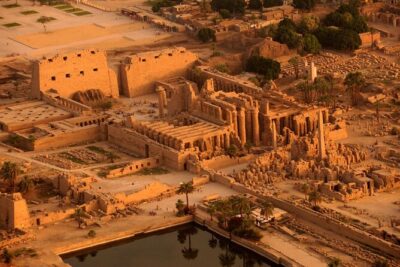
Full Day Tour to East and West Banks of Luxor
Read our review →

Private Full-Day Tour of Historical Alexandria
Read our review →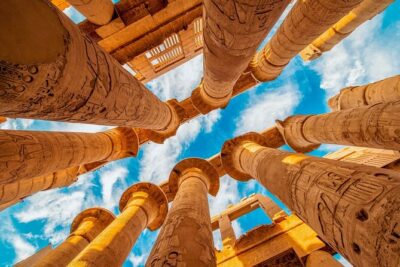
Full Day Tour to Luxor West and East Banks & Lunch
Read our review →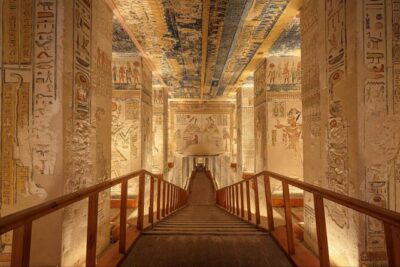
Full Day Tour of Luxor West Bank Temples and Tombs (Private)
Read our review →Browse the lists this tour appears in